High-yield USMLE images
StepGenie explanation infographics for Step 1 and Step 2 CK. Free to view, no account needed.
What are high-yield USMLE images?
They are single-panel diagrams that carry the reasoning behind a question rather than a photograph of a finding. The gallery below holds StepGenie's own explanation infographics, one per practice question, covering Step 1 and Step 2 CK across 21 subjects and organ systems. Each one names the concept it teaches and links back to the topic it belongs to.
Where these come from
Every image here was drawn by StepGenie to explain one of its own practice questions. None of them are NBME material, and none are copies of third-party clinical photographs or radiographs. The images that accompany a question stem are excluded from these pages for exactly that reason.
24 images across the exam
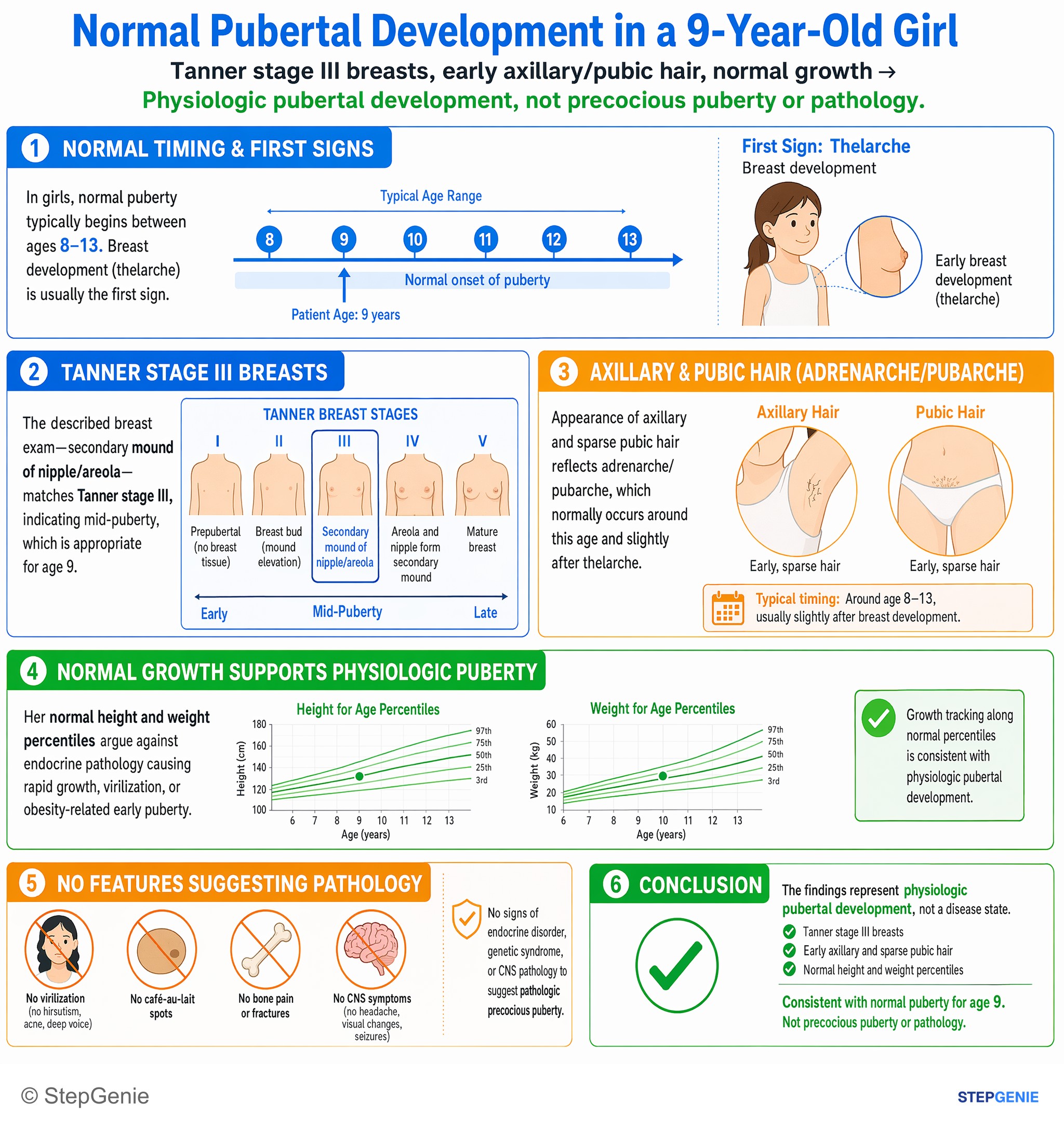
Normal puberty: Tanner stage III breasts, early axillary/pubic hair, normal growth percentiles → physiologic pubertal development, not…
USMLE Step 1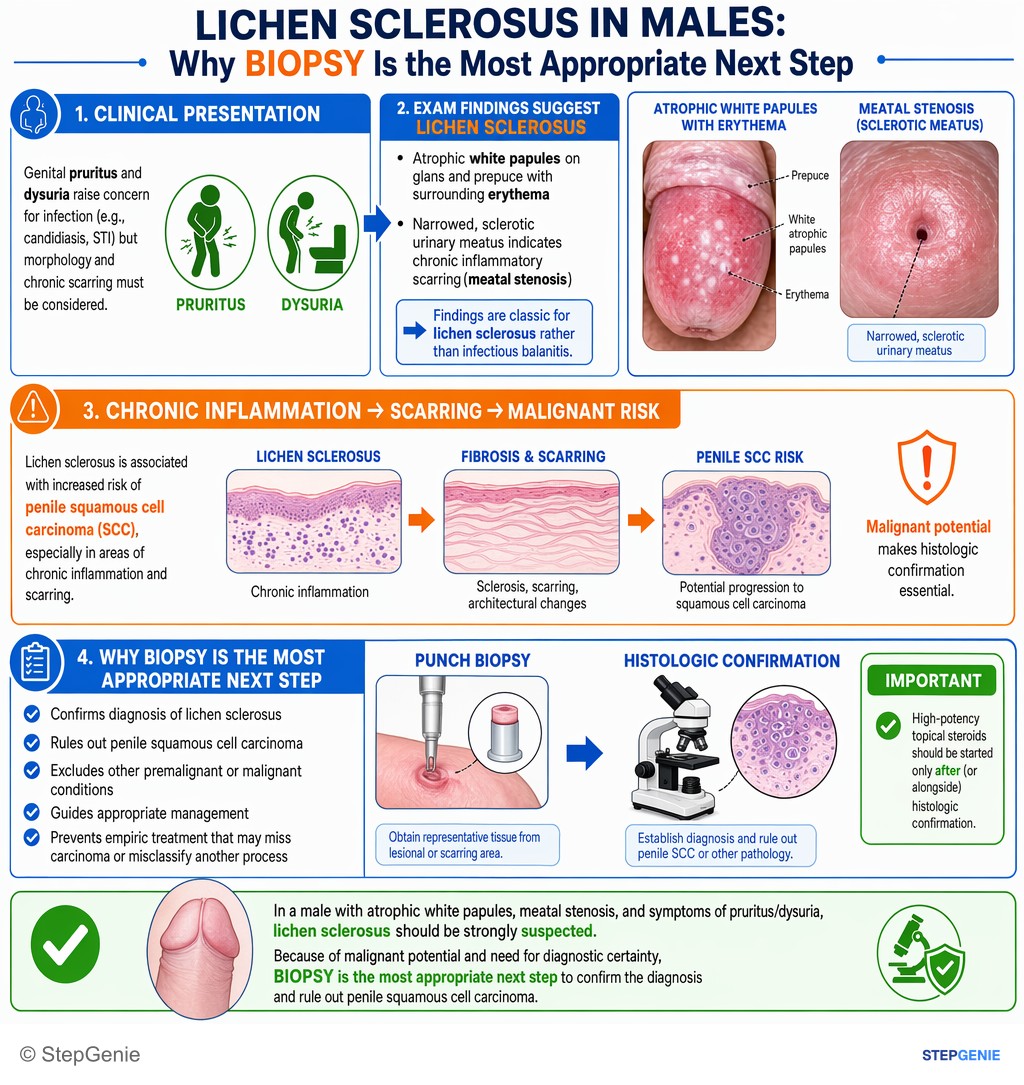
Lichen sclerosus in a male (atrophic white papules, meatal stenosis) requires biopsy to confirm and rule out penile SCC.
USMLE Step 2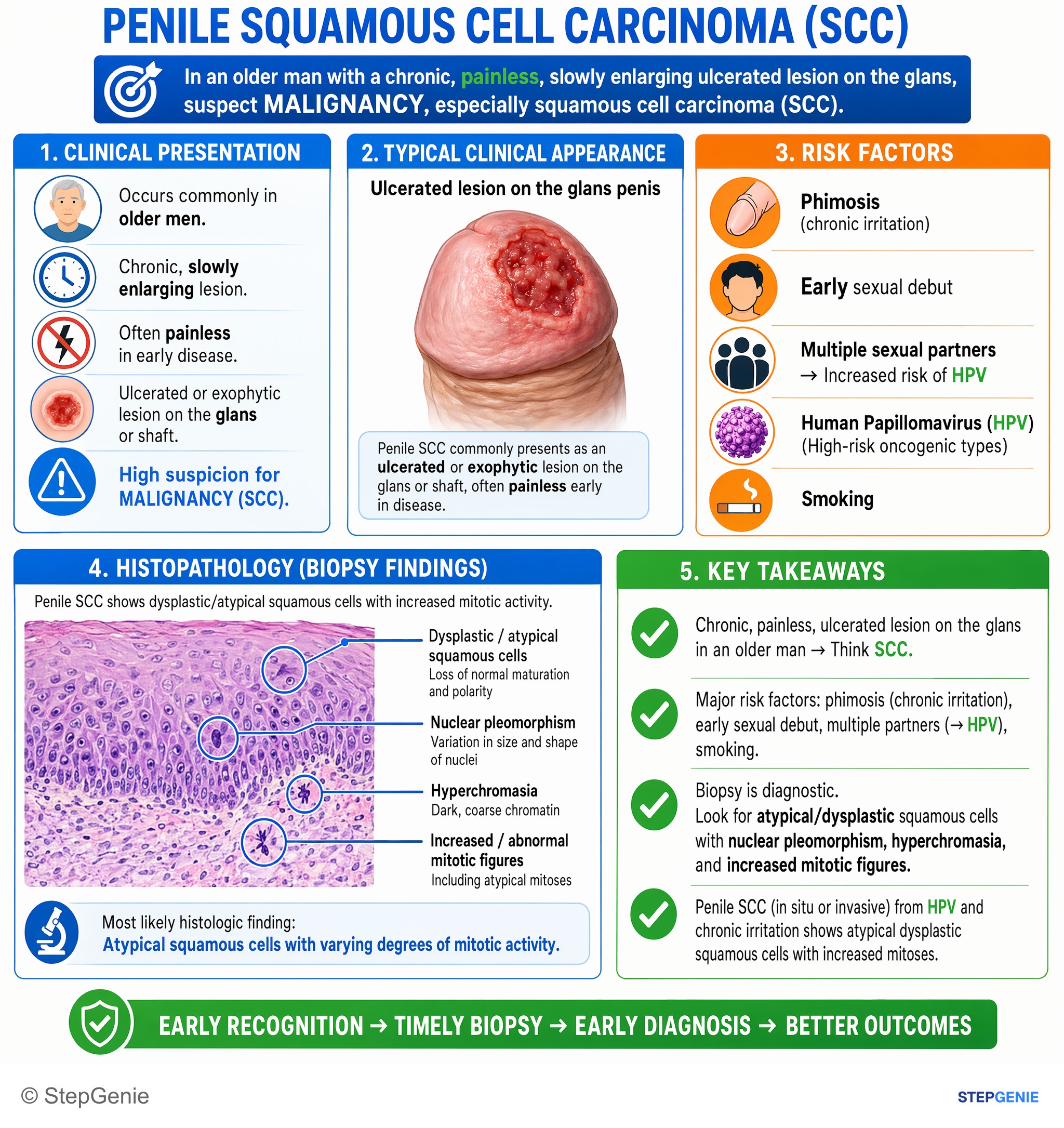
Penile squamous cell carcinoma in situ/invasive from HPV and chronic irritation shows atypical dysplastic squamous cells with increased…
USMLE Step 1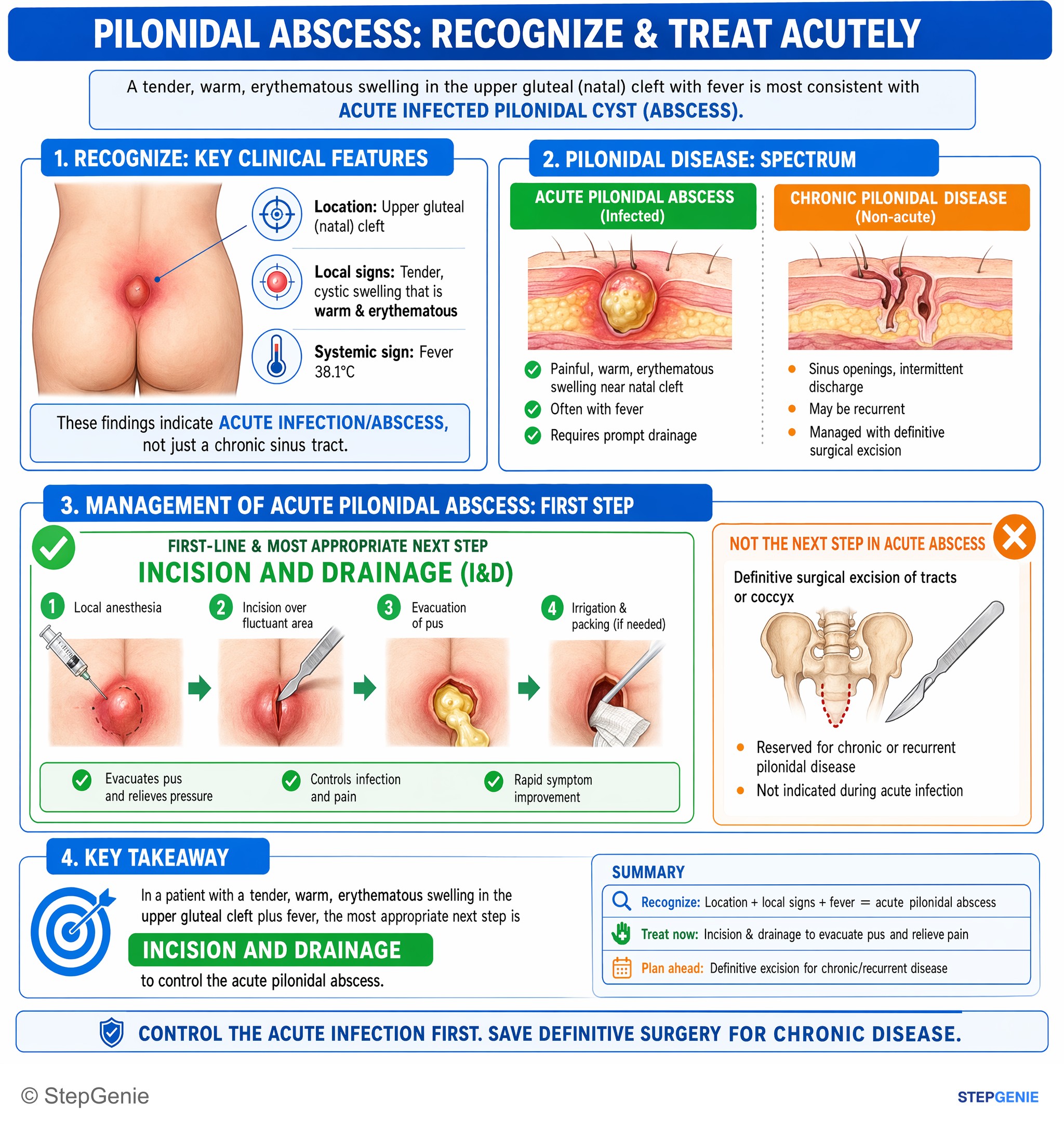
Pilonidal abscess presents as a painful, warm, erythematous cyst near the natal cleft; acute management is incision and drainage with…
USMLE Step 2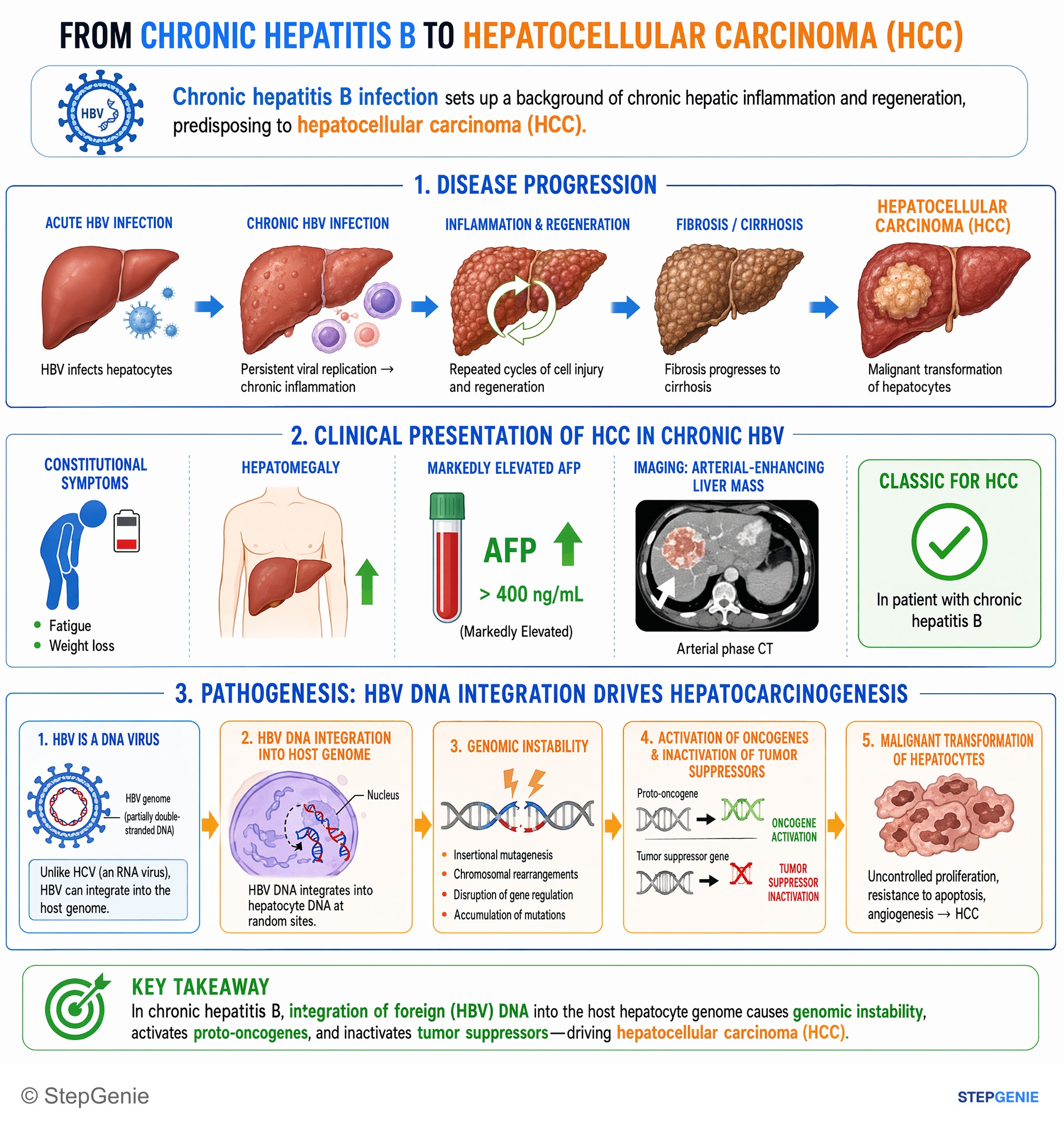
Hepatocellular carcinoma in chronic hepatitis B arises via HBV DNA integration causing genomic instability and oncogene activation in…
USMLE Step 1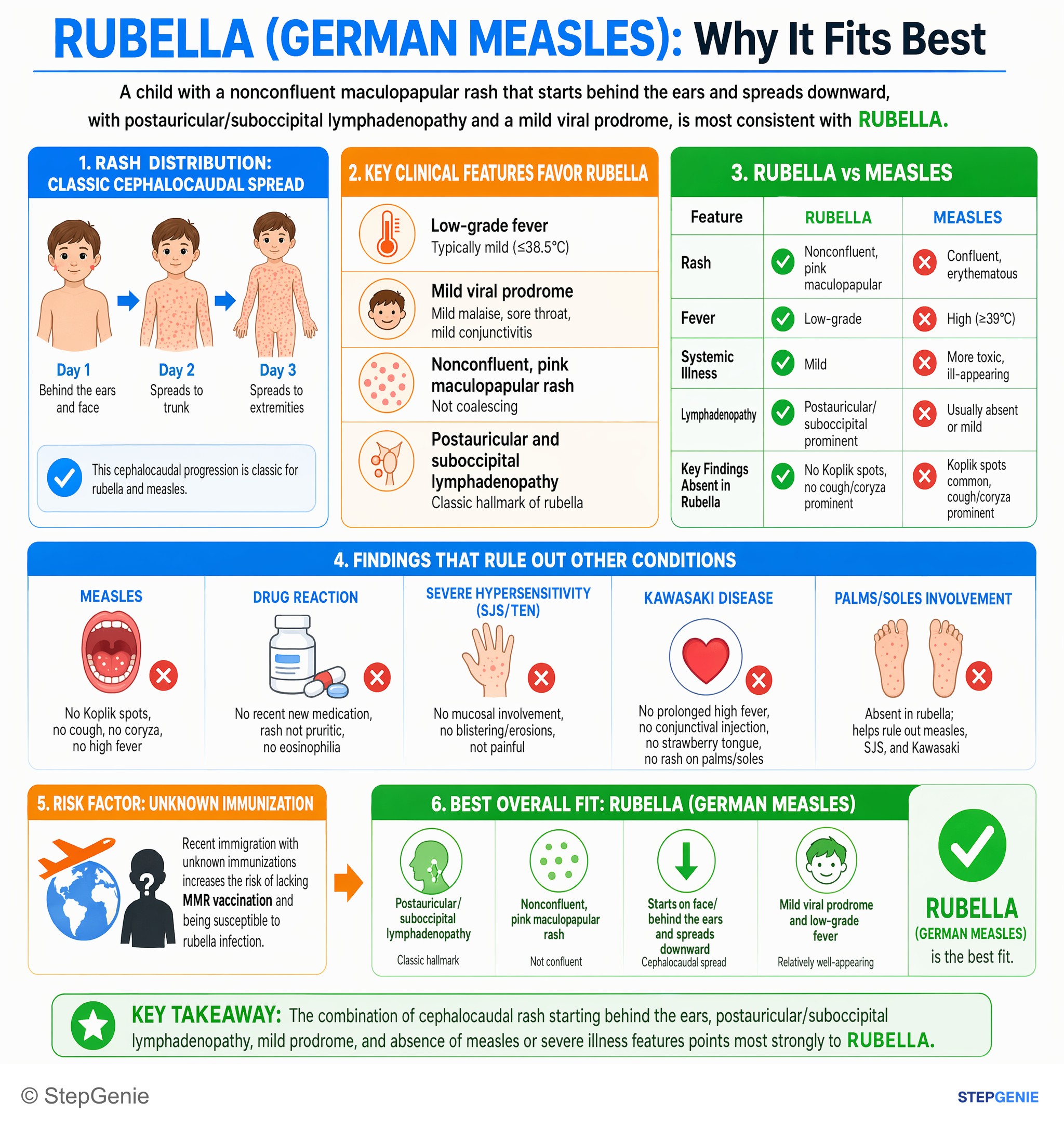
Rubella causes postauricular/suboccipital lymphadenopathy and a nonconfluent pink maculopapular rash starting on face/behind ears then…
USMLE Step 2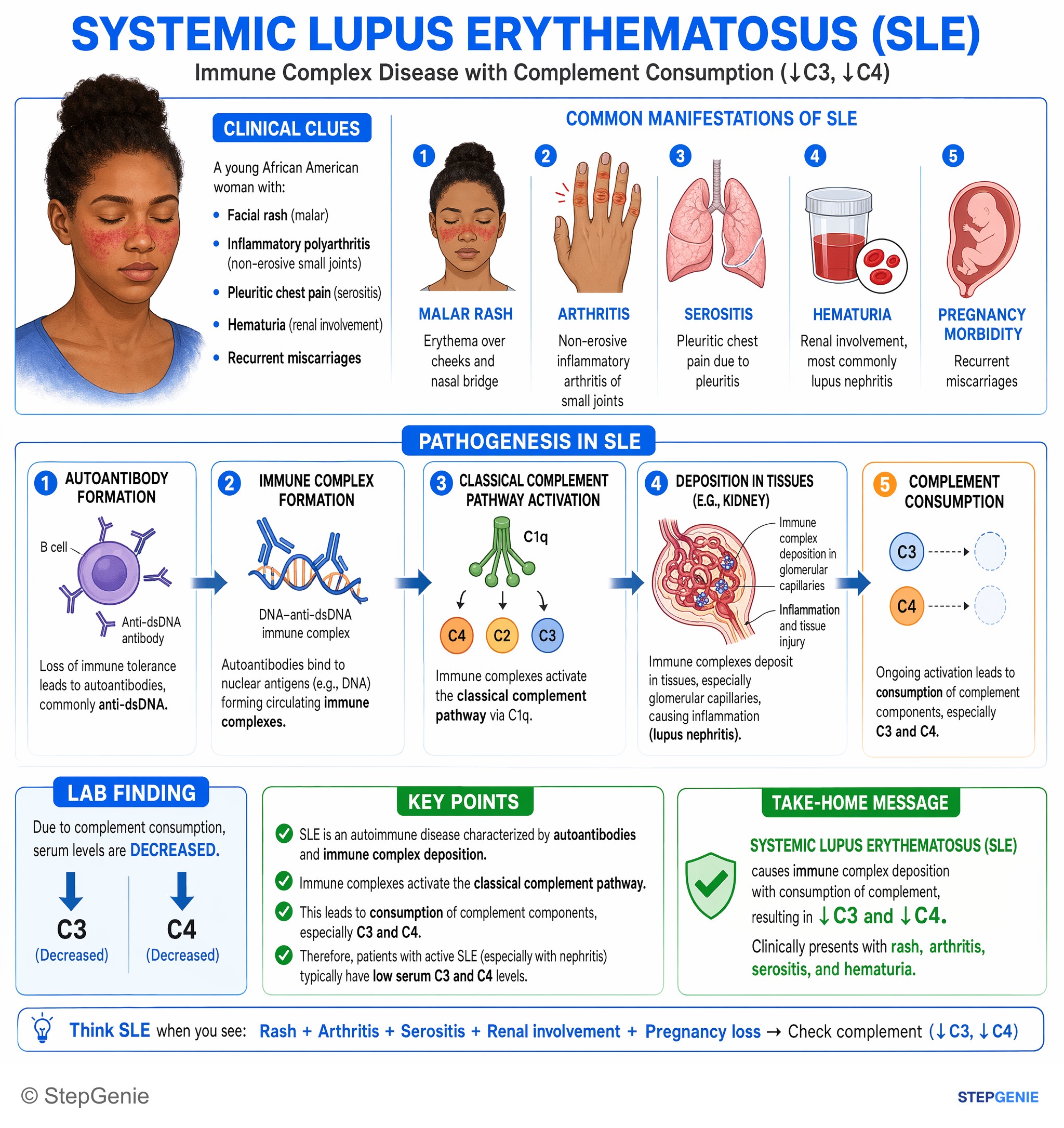
Systemic lupus erythematosus (SLE) causes immune complex deposition with consumption of complement (↓C3, ↓C4), presenting with rash…
USMLE Step 1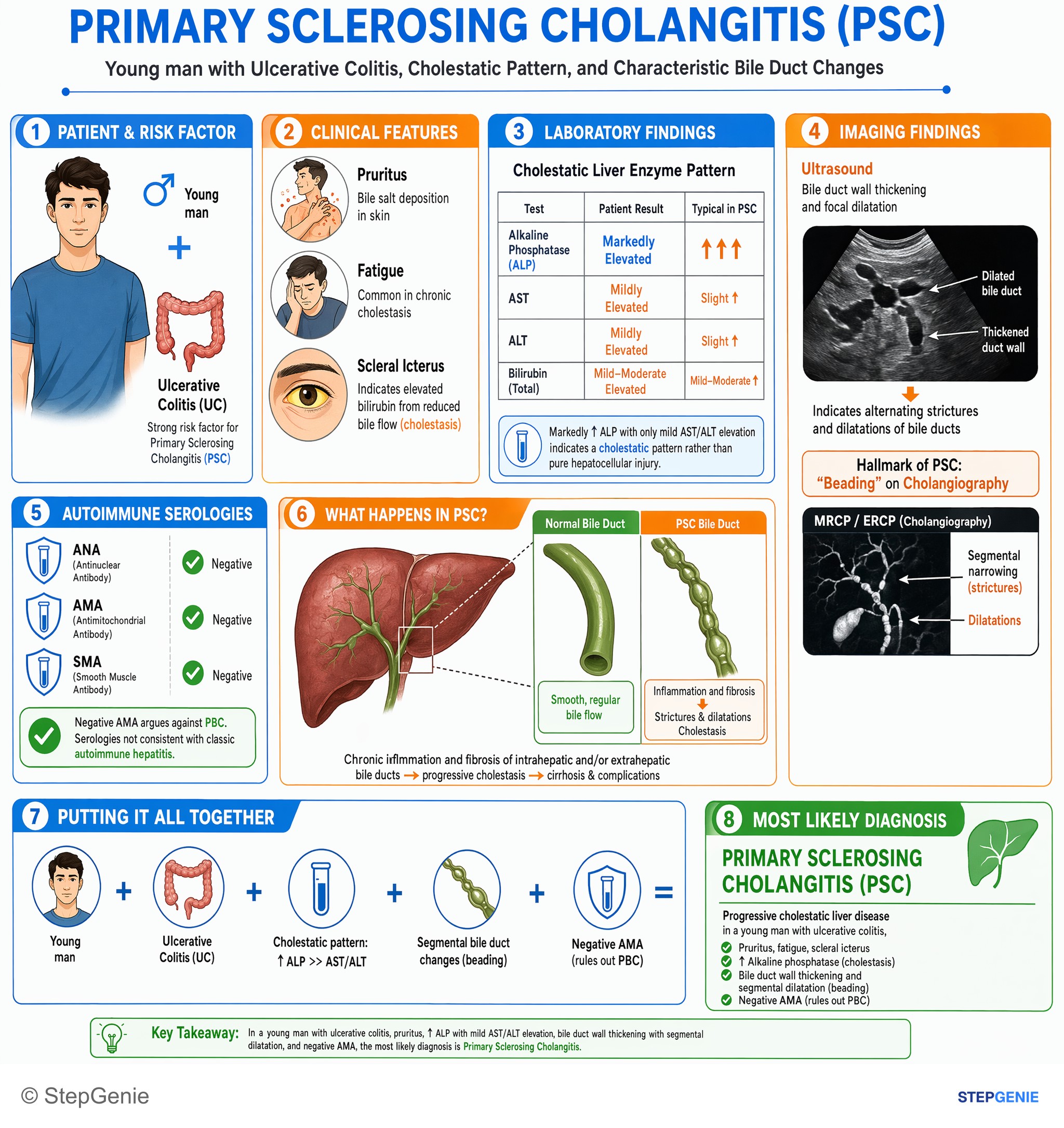
Primary sclerosing cholangitis: progressive cholestatic liver disease in young man with ulcerative colitis, pruritus, ↑ALP, and bile duct…
USMLE Step 2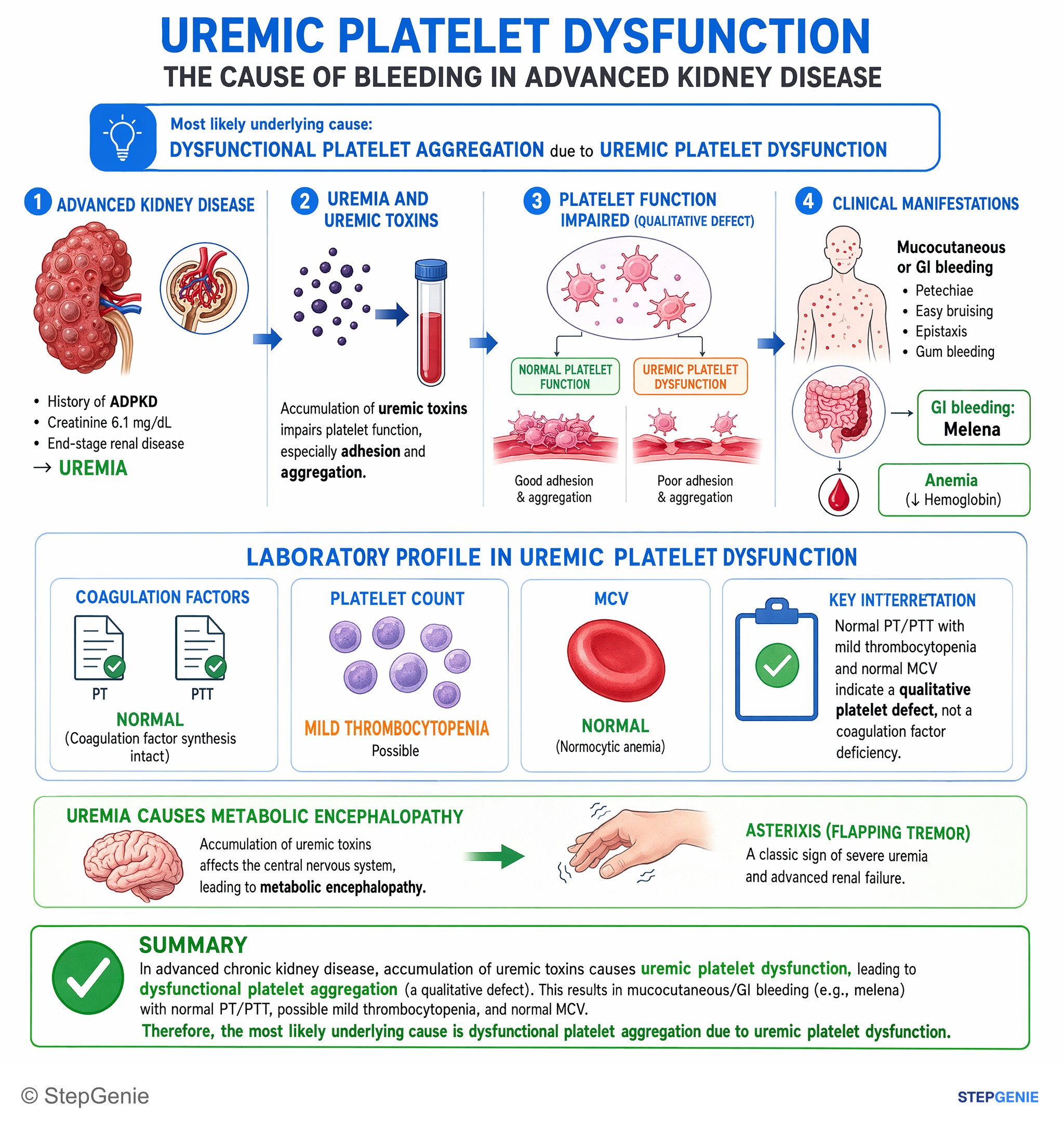
Uremic platelet dysfunction from advanced chronic kidney disease causes qualitative platelet defects → mucocutaneous/GI bleeding with…
USMLE Step 1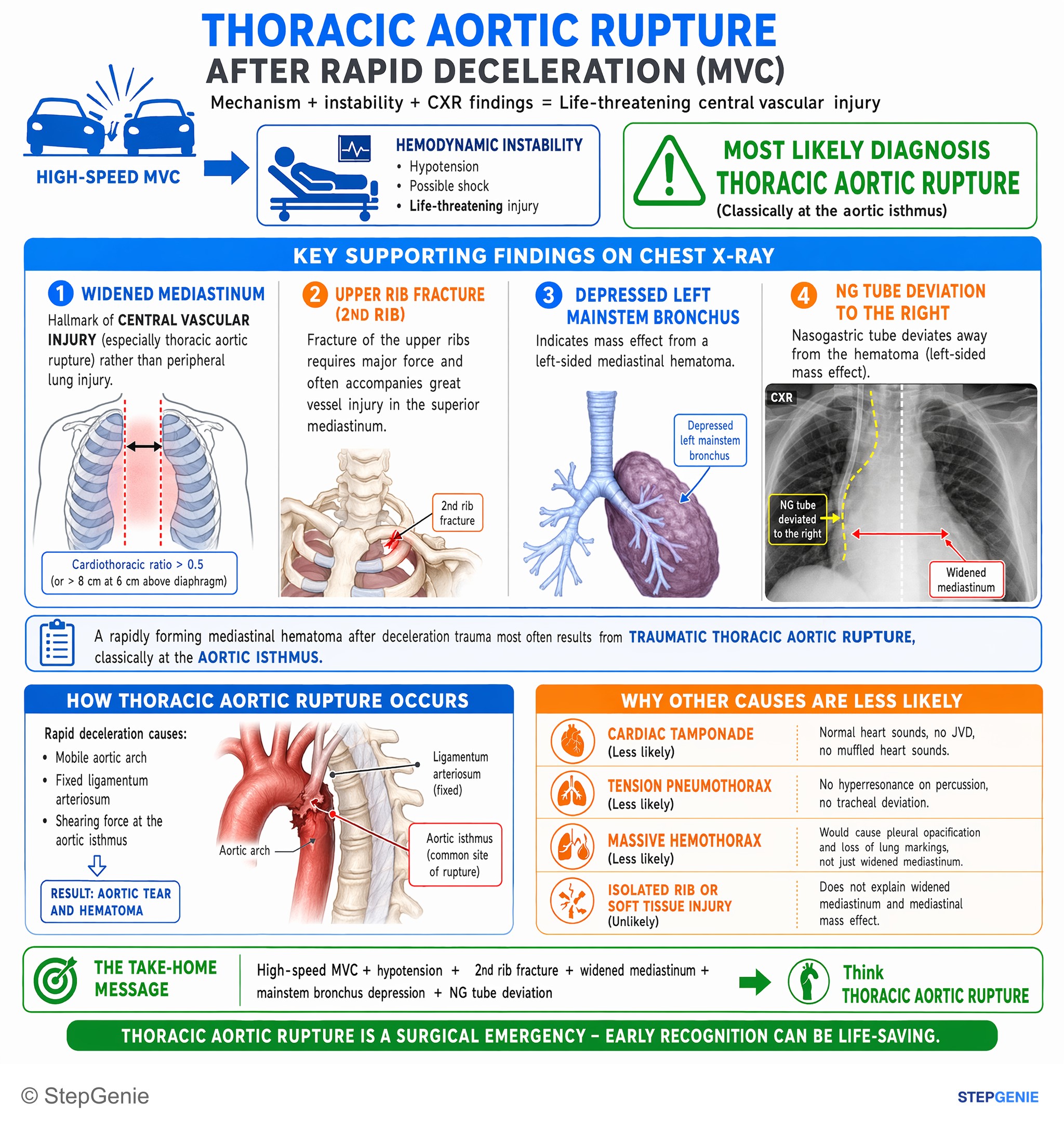
Thoracic aortic rupture after rapid deceleration: hypotension, chest trauma, rib fracture, widened mediastinum, mainstem bronchus…
USMLE Step 2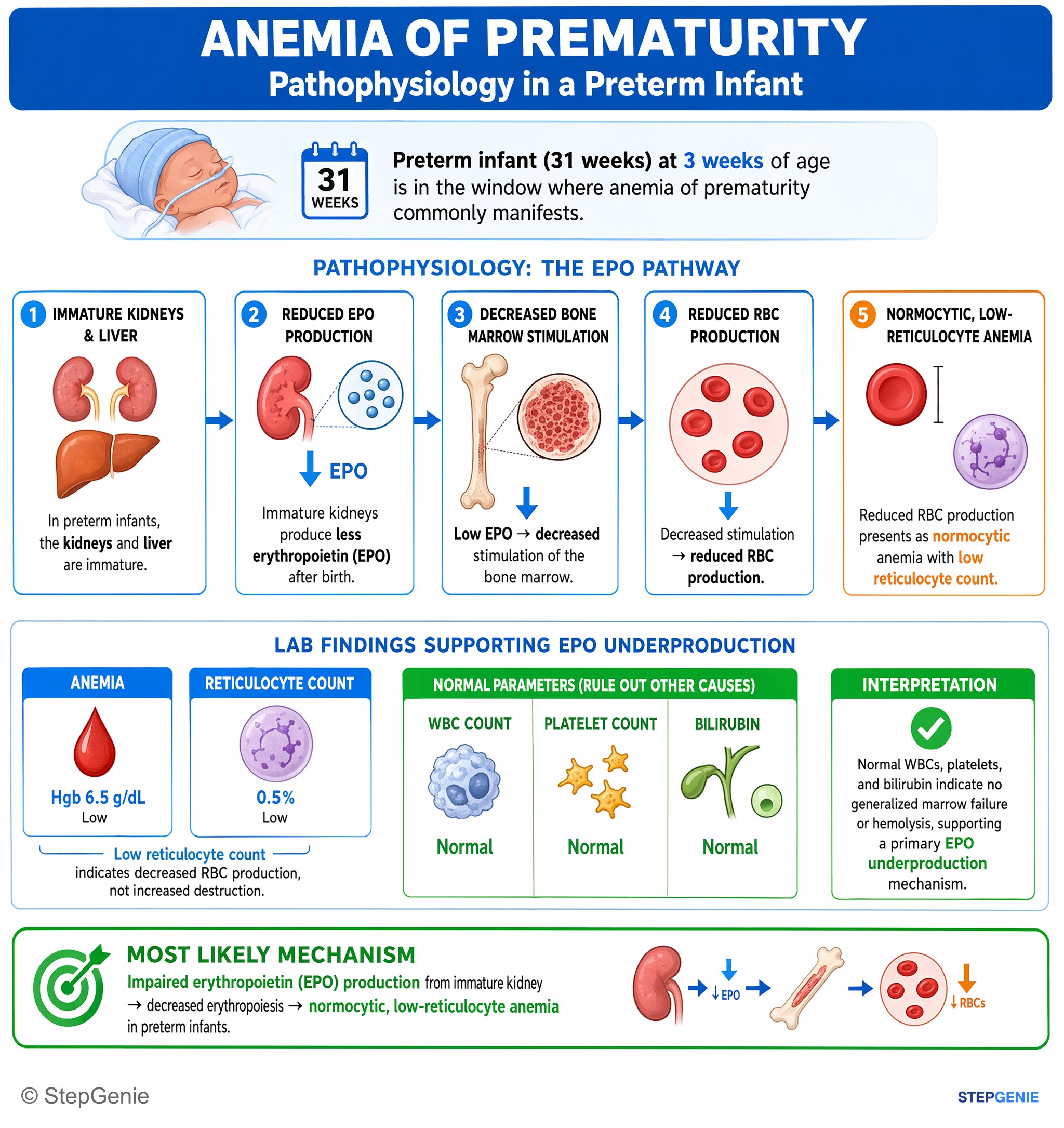
Anemia of prematurity: low EPO from immature kidney → decreased erythropoiesis → normocytic, low-reticulocyte anemia in preterm infants.
USMLE Step 1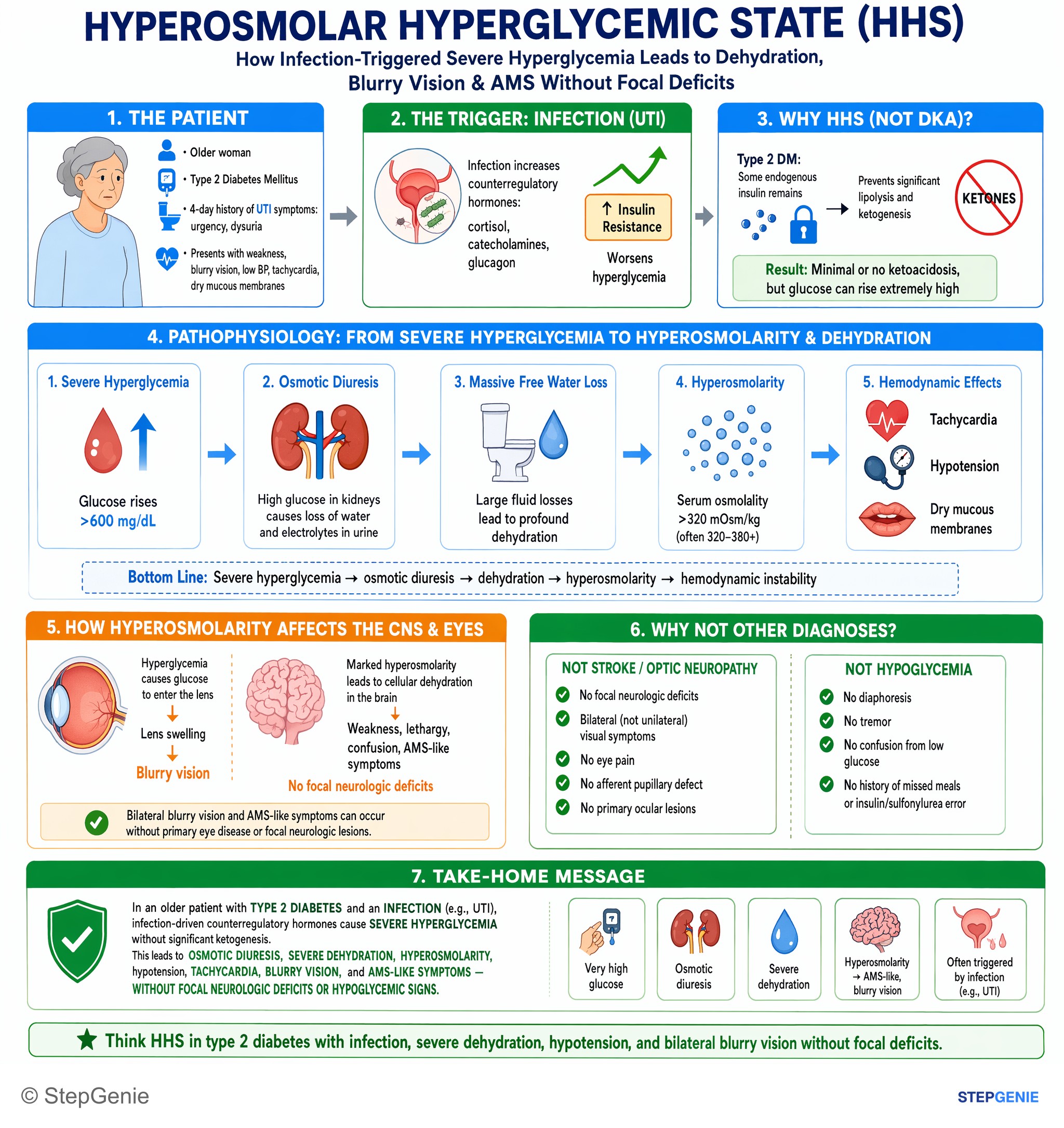
Hyperosmolar hyperglycemic state from infection-induced severe hyperglycemia: dehydration, hypotension, blurry vision, AMS symptoms, but…
USMLE Step 2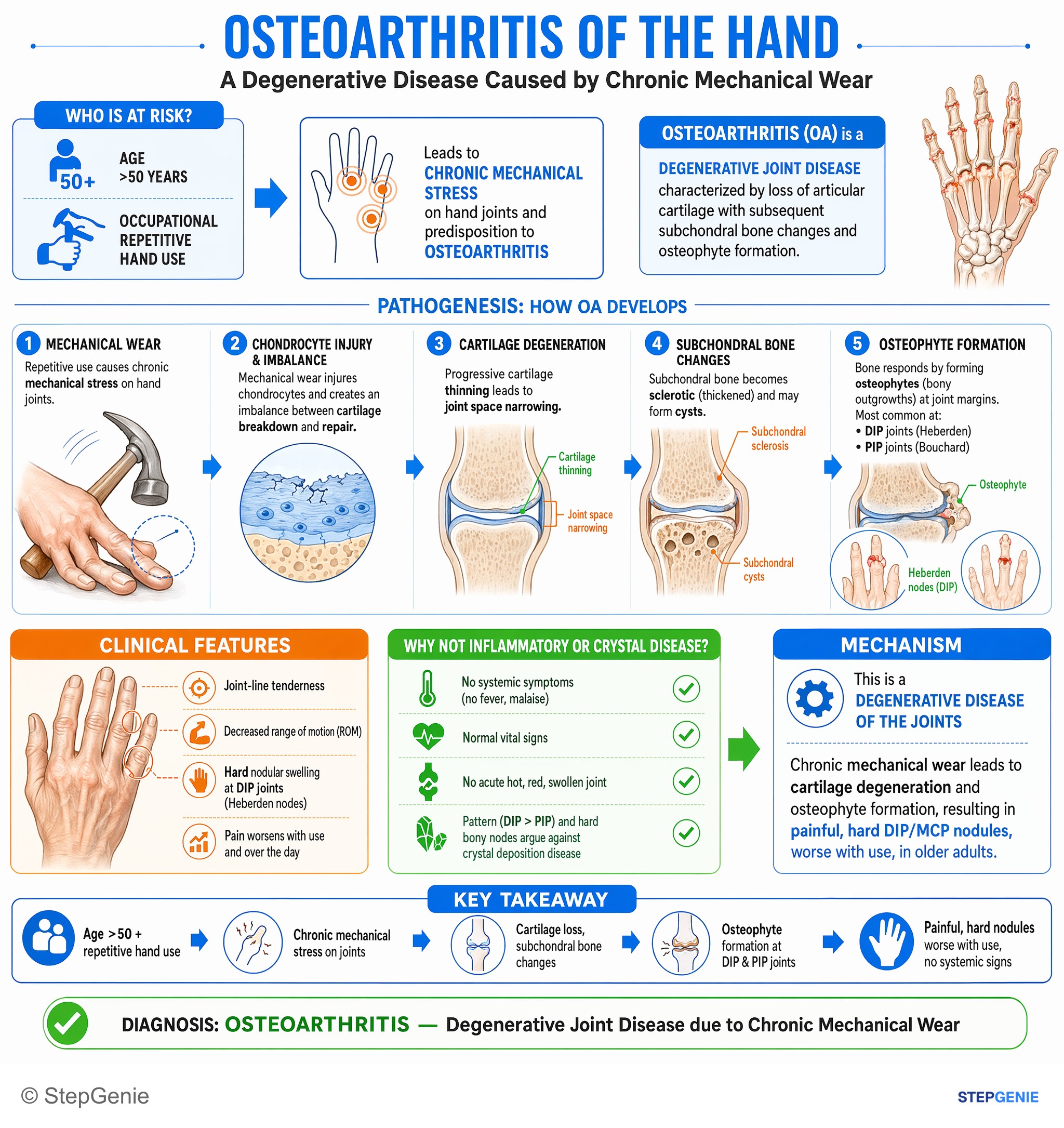
Osteoarthritis from chronic mechanical wear → cartilage degeneration and osteophyte formation → painful, hard DIP/MCP nodules, worse with…
USMLE Step 1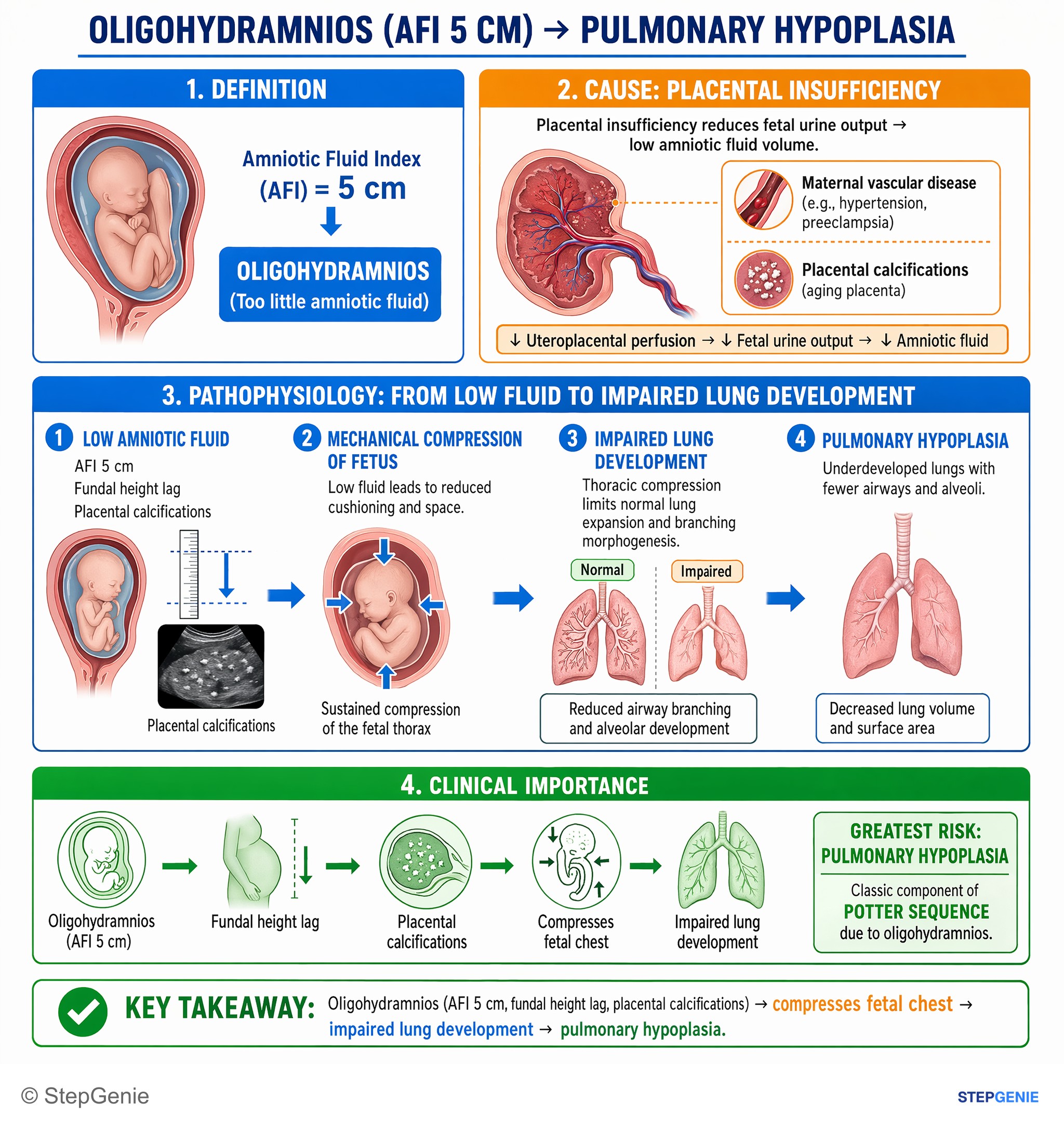
Oligohydramnios (AFI 5 cm, fundal height lag, placental calcifications) compresses fetal chest → impaired lung development → pulmonary…
USMLE Step 2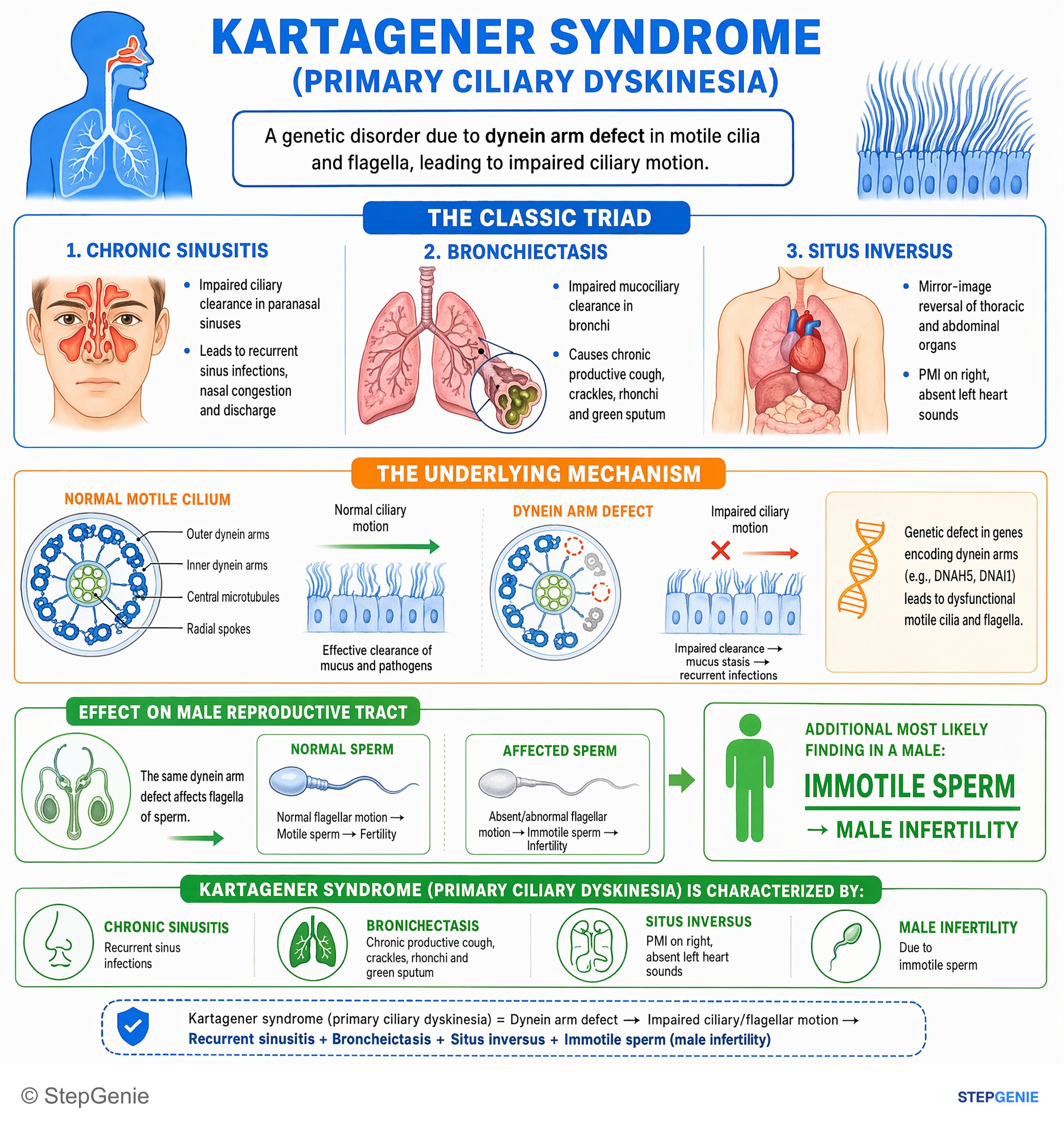
Kartagener syndrome (primary ciliary dyskinesia): dynein arm defect → recurrent sinusitis, bronchiectasis, situs inversus, and male…
USMLE Step 1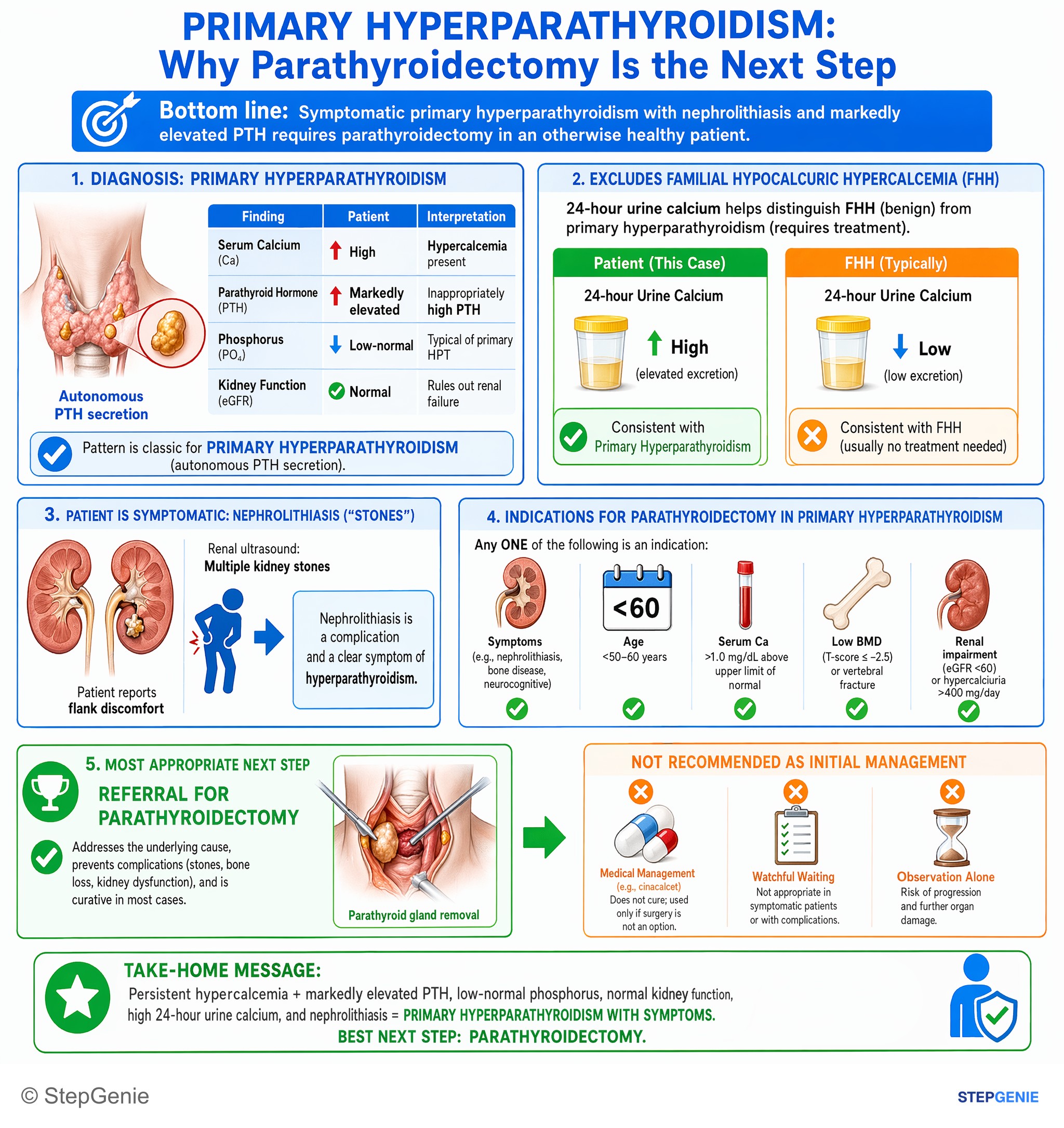
Primary hyperparathyroidism with symptomatic nephrolithiasis and marked PTH elevation requires parathyroidectomy in an otherwise healthy…
USMLE Step 2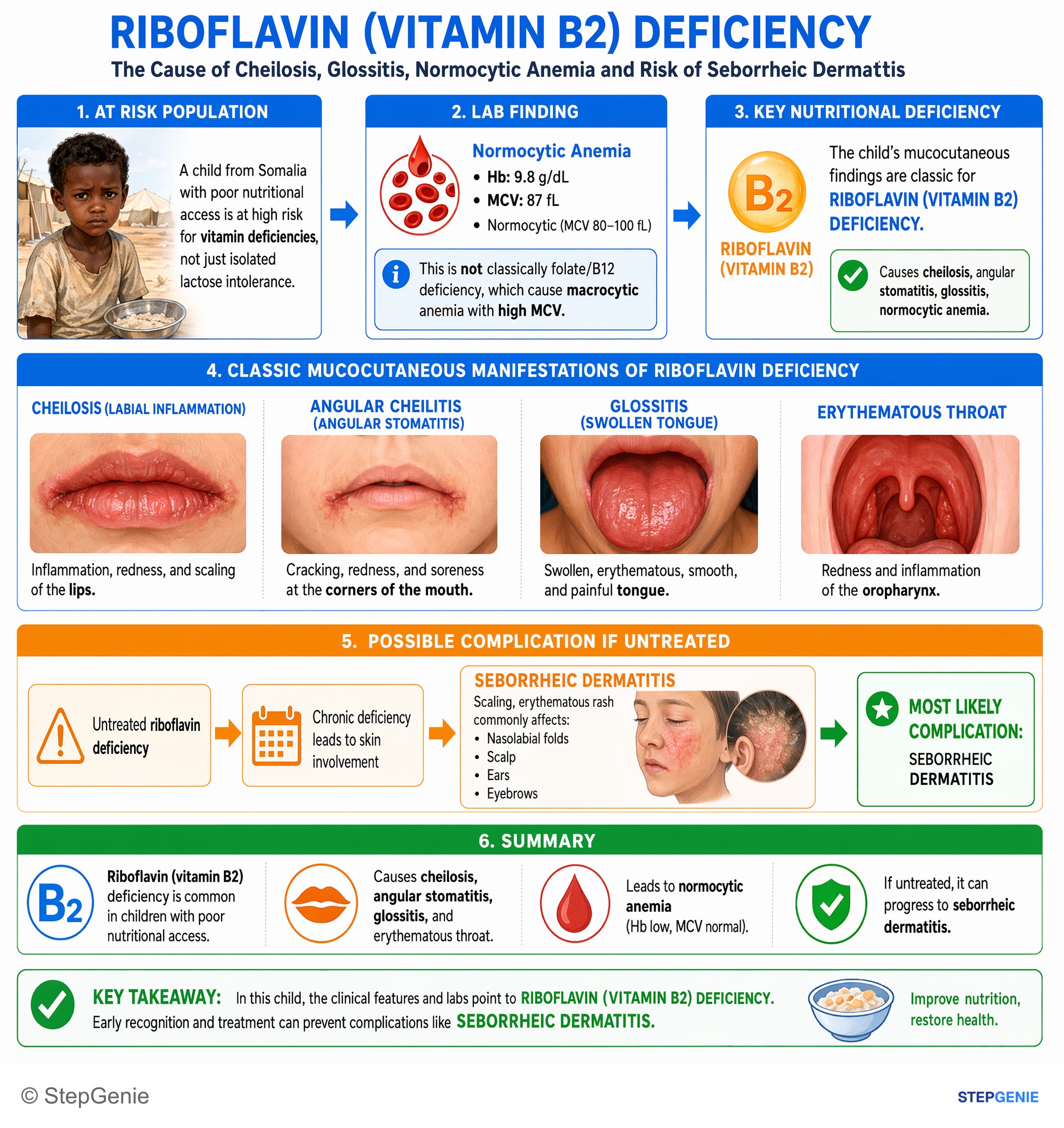
Riboflavin (vitamin B2) deficiency causes cheilosis, glossitis, angular stomatitis, normocytic anemia, and can progress to seborrheic…
USMLE Step 1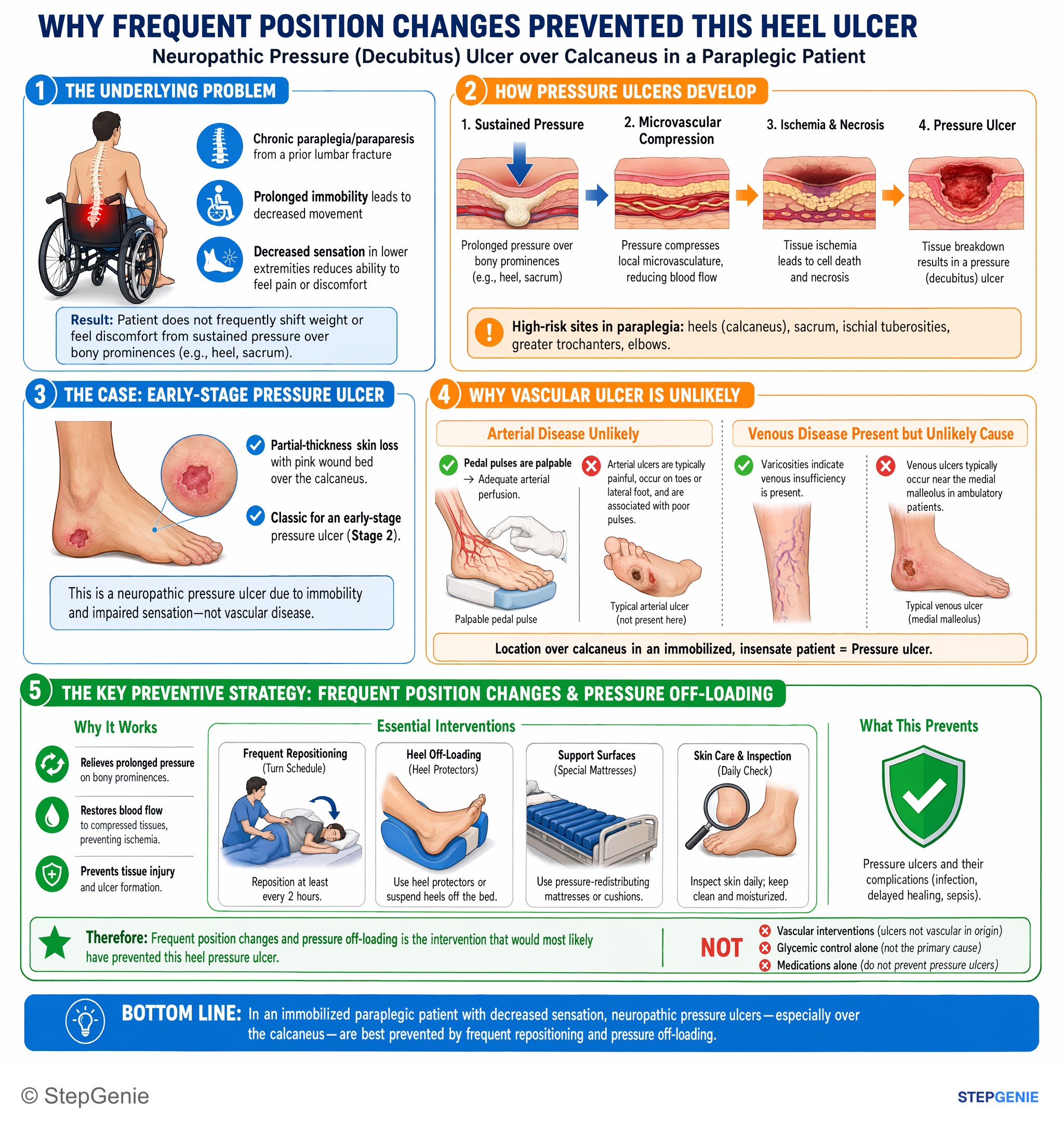
Neuropathic pressure ulcer over calcaneus in paraplegic patient is best prevented by frequent repositioning/pressure off-loading, not…
USMLE Step 2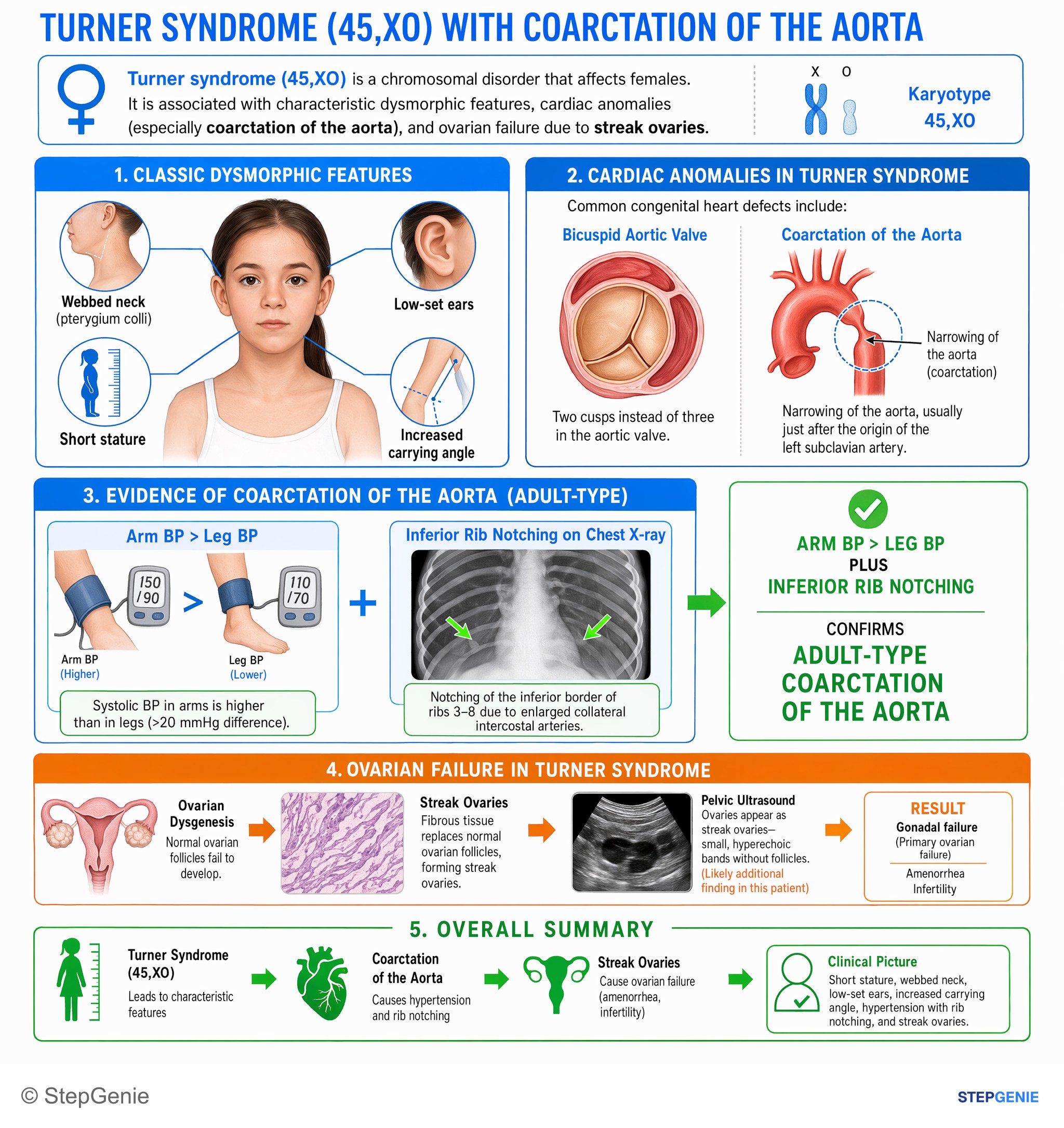
Turner syndrome with coarctation of the aorta → streak ovaries causing ovarian failure, short stature, webbed neck, and hypertension with…
USMLE Step 1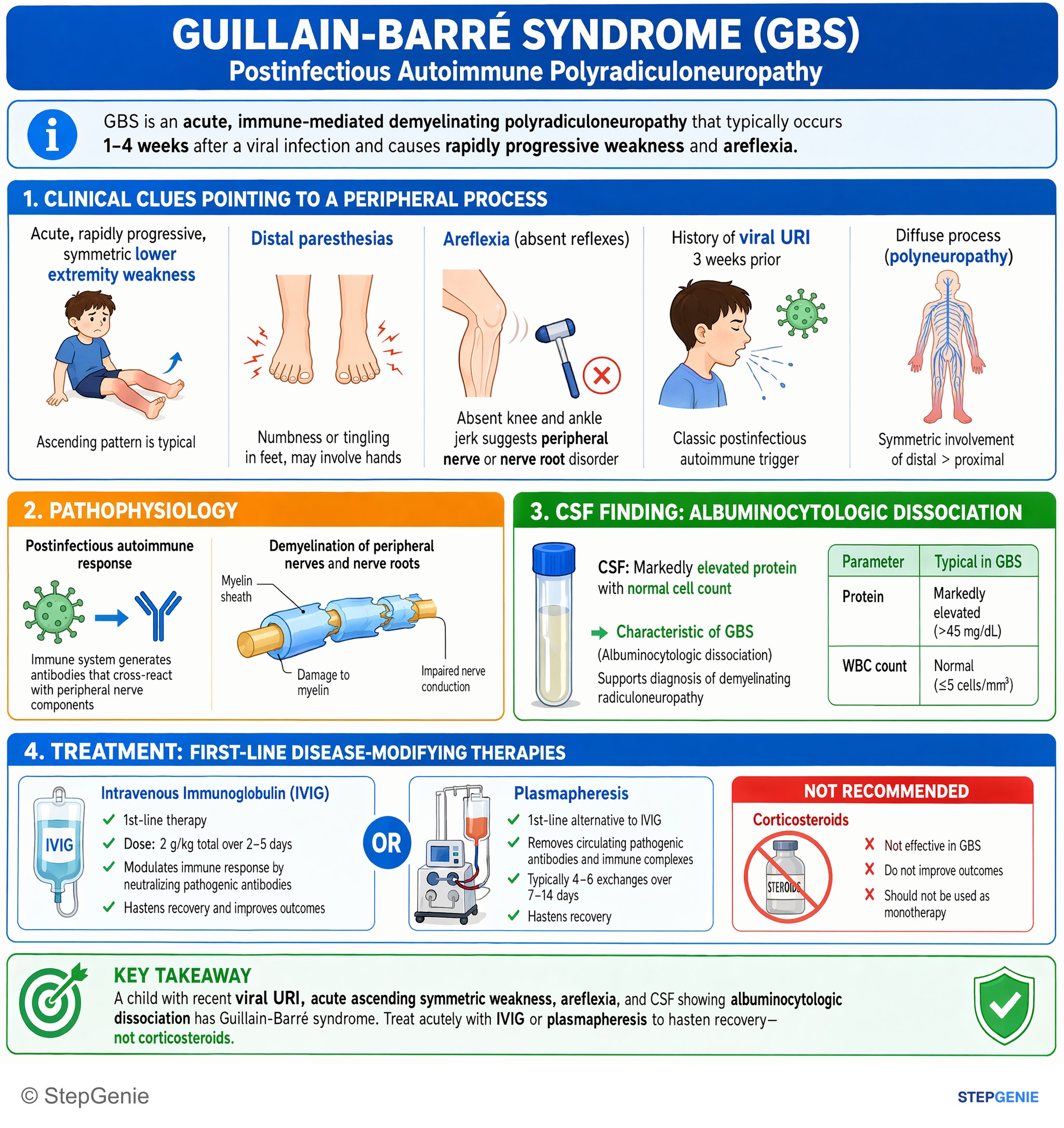
Guillain-Barré syndrome after viral URI with acute ascending weakness and albuminocytologic dissociation is treated acutely with IVIG or…
USMLE Step 2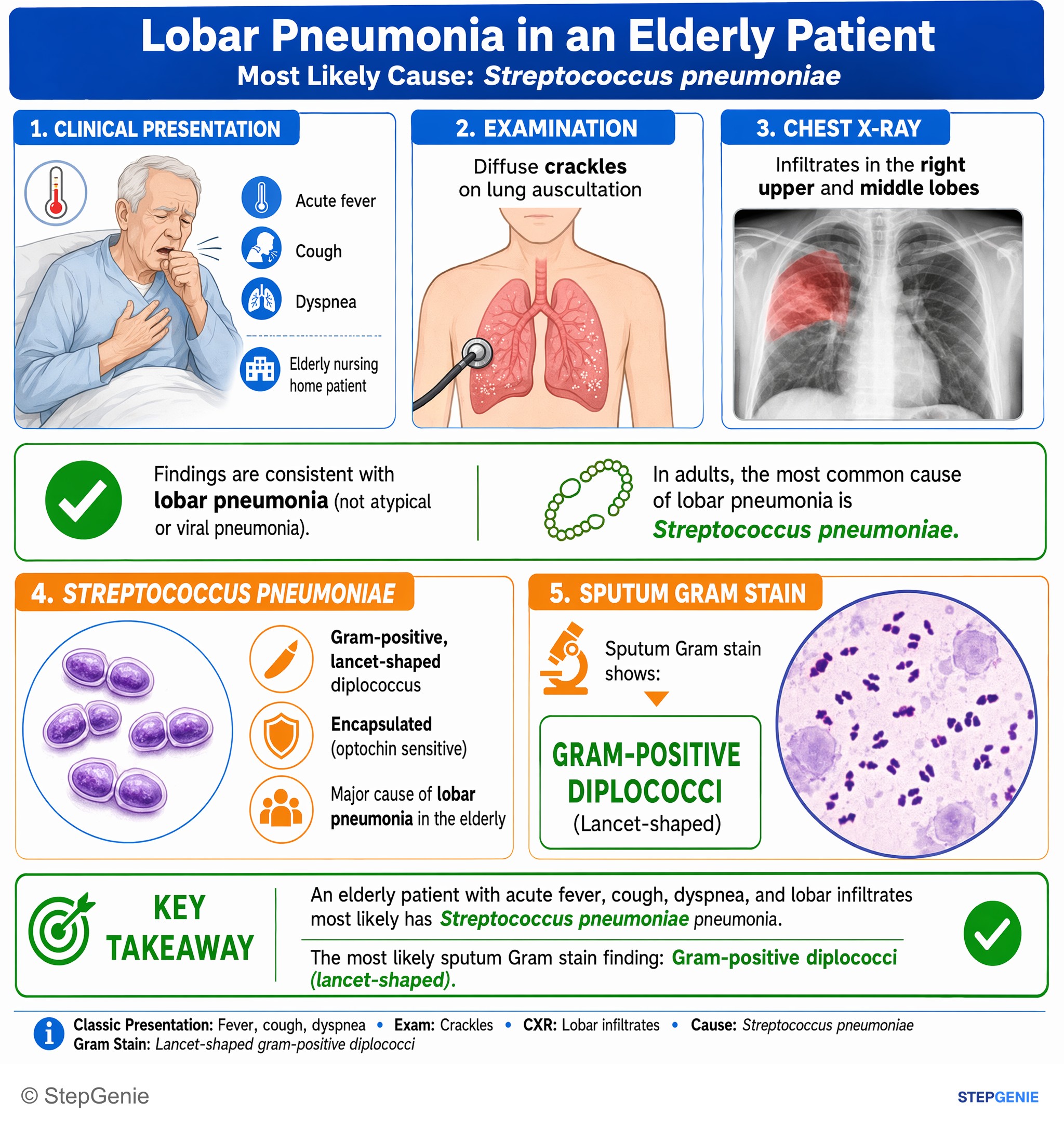
Streptococcus pneumoniae causes classic lobar pneumonia with fever, cough, dyspnea in elderly; sputum Gram stain shows lancet-shaped…
USMLE Step 1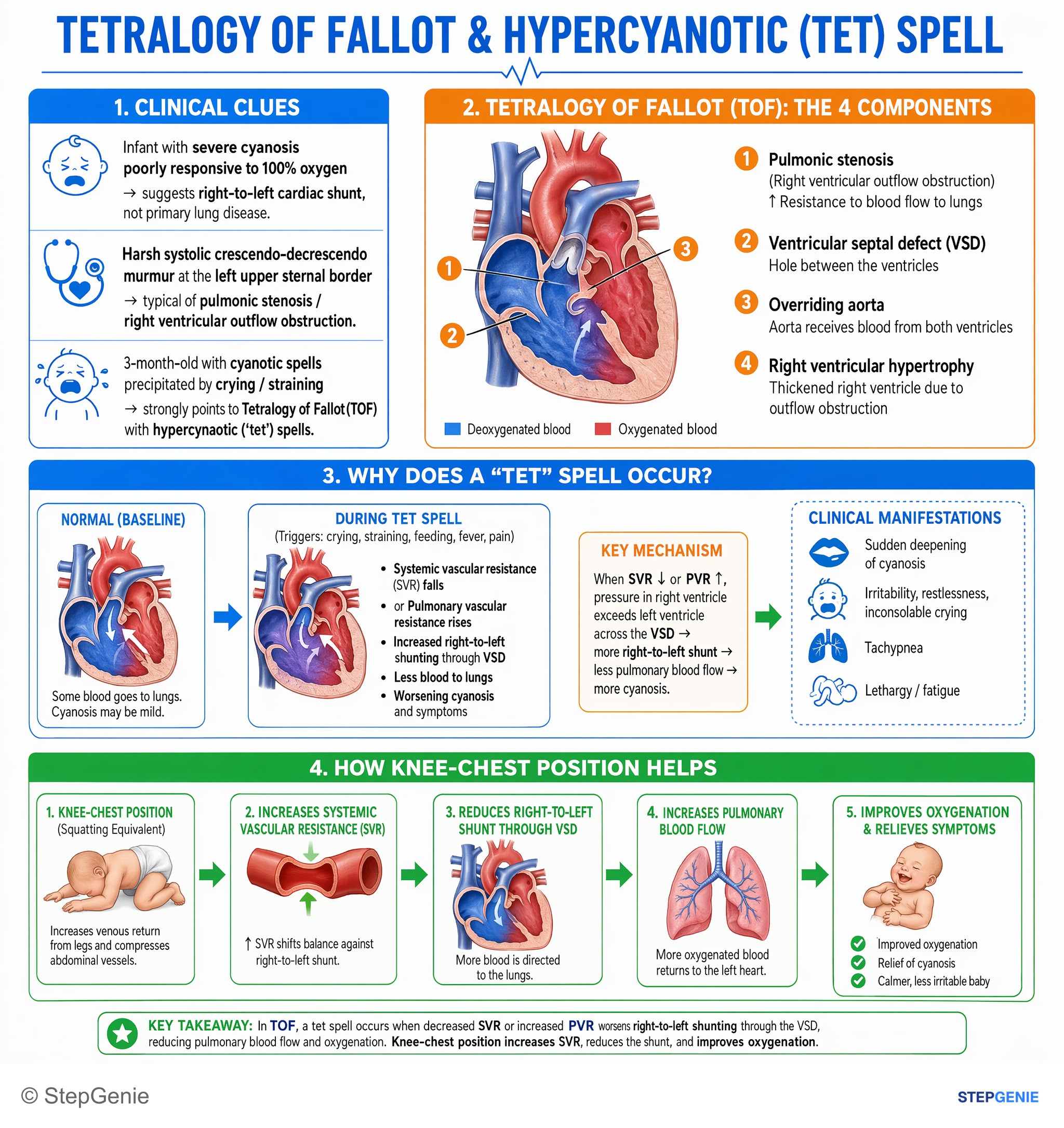
Tetralogy of Fallot hypercyanotic (tet) spell: right-to-left shunt worsens with decreased SVR; knee-chest position increases SVR and…
USMLE Step 2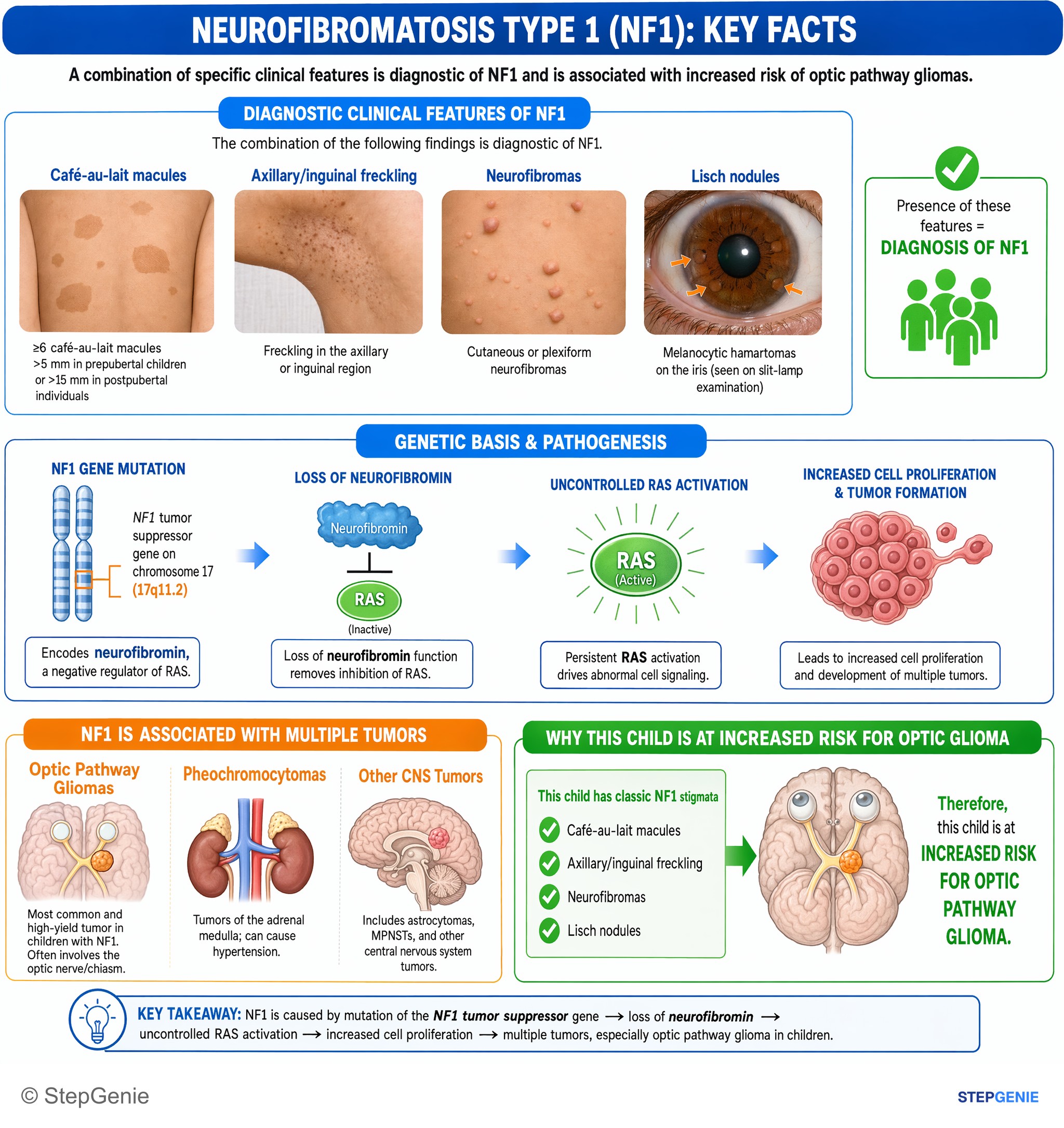
Neurofibromatosis type 1 (café-au-lait spots, axillary freckling, neurofibromas, Lisch nodules) is associated with increased risk of optic…
USMLE Step 1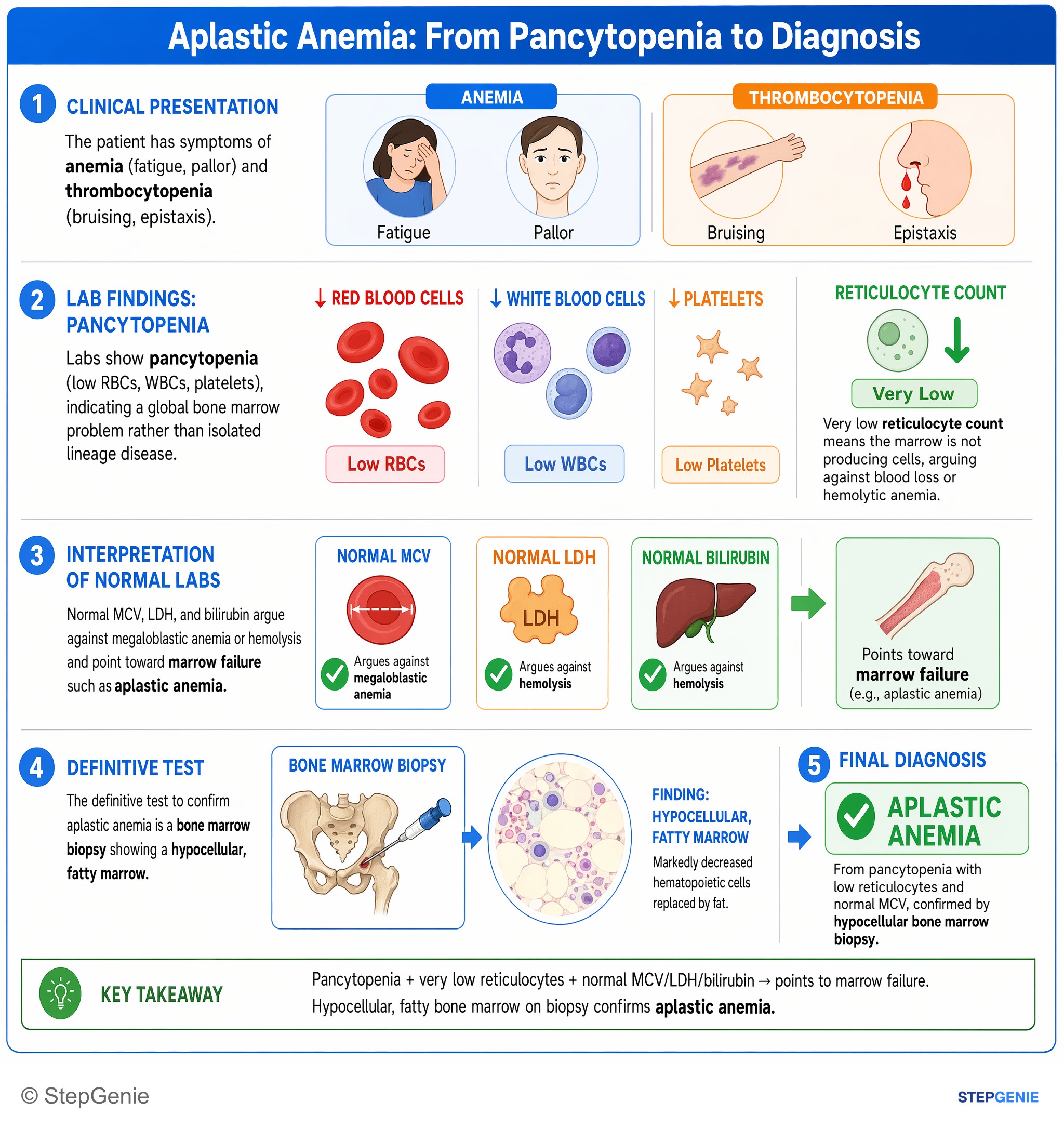
Aplastic anemia from pancytopenia with low reticulocytes and normal MCV is confirmed by hypocellular bone marrow biopsy.
USMLE Step 2Showing 24 of 3,962 publishable infographics. Counted from StepGenie's own explanation-image library on October 28, 2026; an image is listed when its question is active, has a full structured explanation, passed verification and carries no unresolved report.
Browse images by system
Each page below carries that system's own images, an overview of what the set covers, and a link to the matching practice-question topic.
Counts are of publishable images per system, taken from StepGenie's explanation-image library on October 28, 2026. A question that belongs to both an organ system and a discipline is counted under each, so the per-system figures add up to more than the total.
Frequently asked questions
Are these NBME images?
No. Every image on this page is drawn by StepGenie for one of its own practice questions. The NBME does not publish its exam images, and nothing here is copied from a real NBME form or from a third-party atlas. What these share with the exam is the reasoning being tested, not the artwork.
What makes an image high yield for Step 1?
An image is worth your time when it settles something you keep getting wrong. These are drawn from questions students have already worked through, so each one exists to fix a specific confusion — a pathway step, a lesion level, a hormone axis — rather than to summarize a chapter.
Do these images give away the answer to the question?
Yes. Each image is the explanation for a question, so it states the diagnosis and the reasoning behind it. If you would rather try the question first, open the free question preview and work through three questions before any explanation appears.
Can I use these without an account?
Yes. Everything on these pages is free to view and needs no sign-in. The in-app image library is the version with search and with filters by subject, system and topic, and that one needs a free StepGenie account.
Which exams do these images cover?
Step 1 and Step 2 CK. Every image belongs to an active question tagged to one of those two steps. Step 3 questions in the bank do not carry this family of explanation images, so no Step 3 material appears here.
Related pages
See the images where they belong
In the app each of these sits at the end of the question it explains, next to the step-by-step reasoning and a panel for every wrong option. The image library is searchable by subject, system and topic. Both are free to start.