High-yield psychiatry images for the USMLE
StepGenie explanation infographics. Free to view, no account needed.
What do StepGenie's psychiatry images cover?
Each psychiatry image is a StepGenie infographic drawn for one of its own practice questions. Most of them put duration, severity and functional impairment on one axis, because those three are what separate diagnoses that share the same symptom list.
Anxiety and trauma-related disorders, personality and impulse control disorders, substance use disorders and mood disorders carry most of this set. Somatoform and sleep disorders, psychotic disorders, neurodevelopmental and neurocognitive disorders, eating disorders and normal development make up the rest.
Psychiatry questions are usually decided by a threshold rather than by a symptom, and thresholds are what these images make visible. A panel that places brief psychotic disorder, schizophreniform disorder and schizophrenia on a single timeline settles a whole family of questions, because the symptoms in the vignette are identical and only the duration differs. The bereavement and adjustment panels work the same way.
The substance use images cover intoxication and withdrawal as a pair, which matters: the answer often depends on which side of that pair the patient is on, and reading the two states apart from each other is how students get them the wrong way round.
Psychopharmacology panels sit in the pharmacology gallery rather than here, since those questions are decided by receptor and side-effect profile. If a psychiatry question turns out to be a drug question, that is the page to check.
Topics in this set
Labels are the question-bank topics these images are filed under. Step 1 and Step 2 file some of the same material under different names, so a few labels here merge both.
Psychiatry explanation images
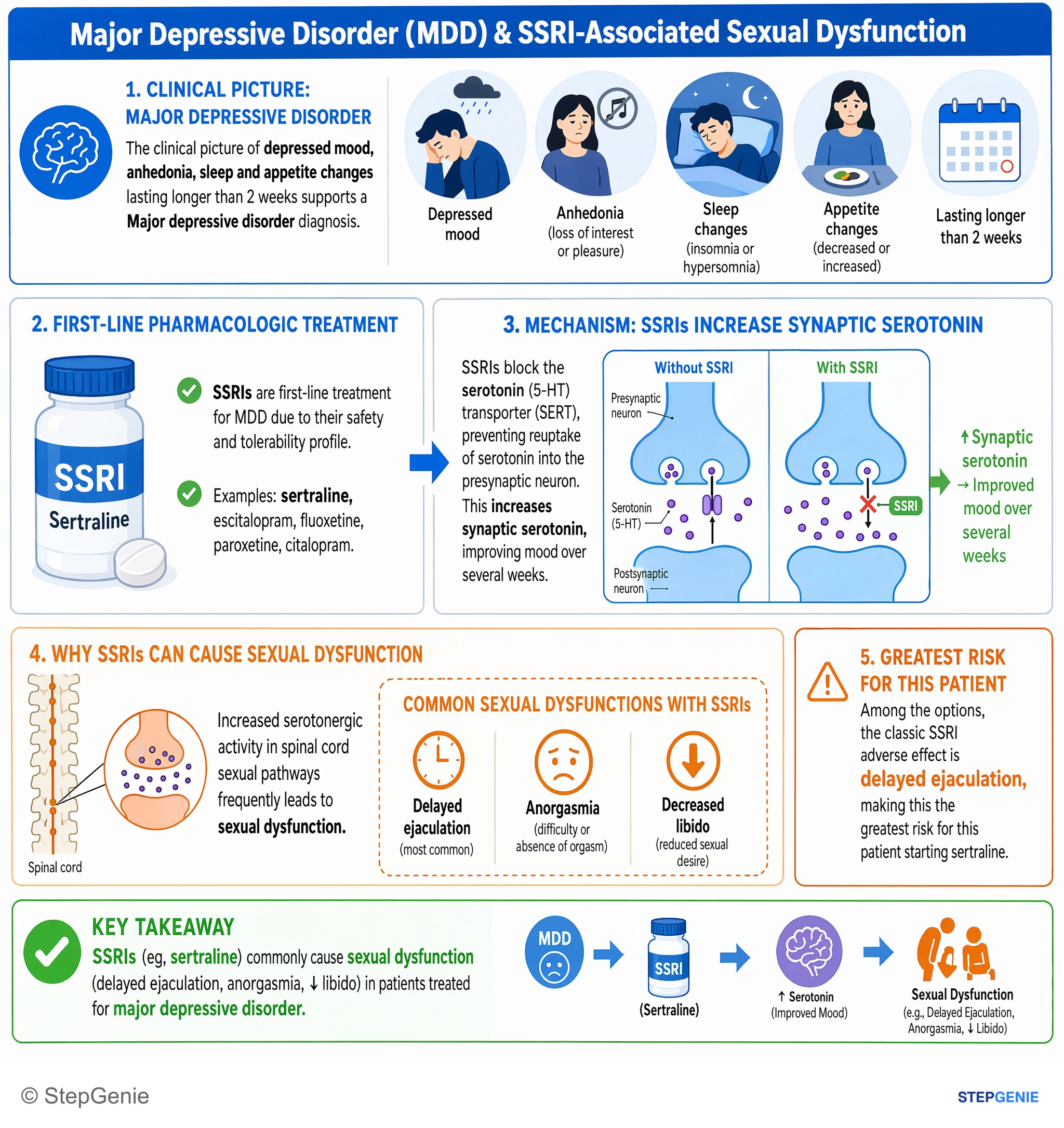
SSRIs (eg, sertraline) commonly cause sexual dysfunction (delayed ejaculation, anorgasmia, ↓libido) in patients treated for major…
USMLE Step 1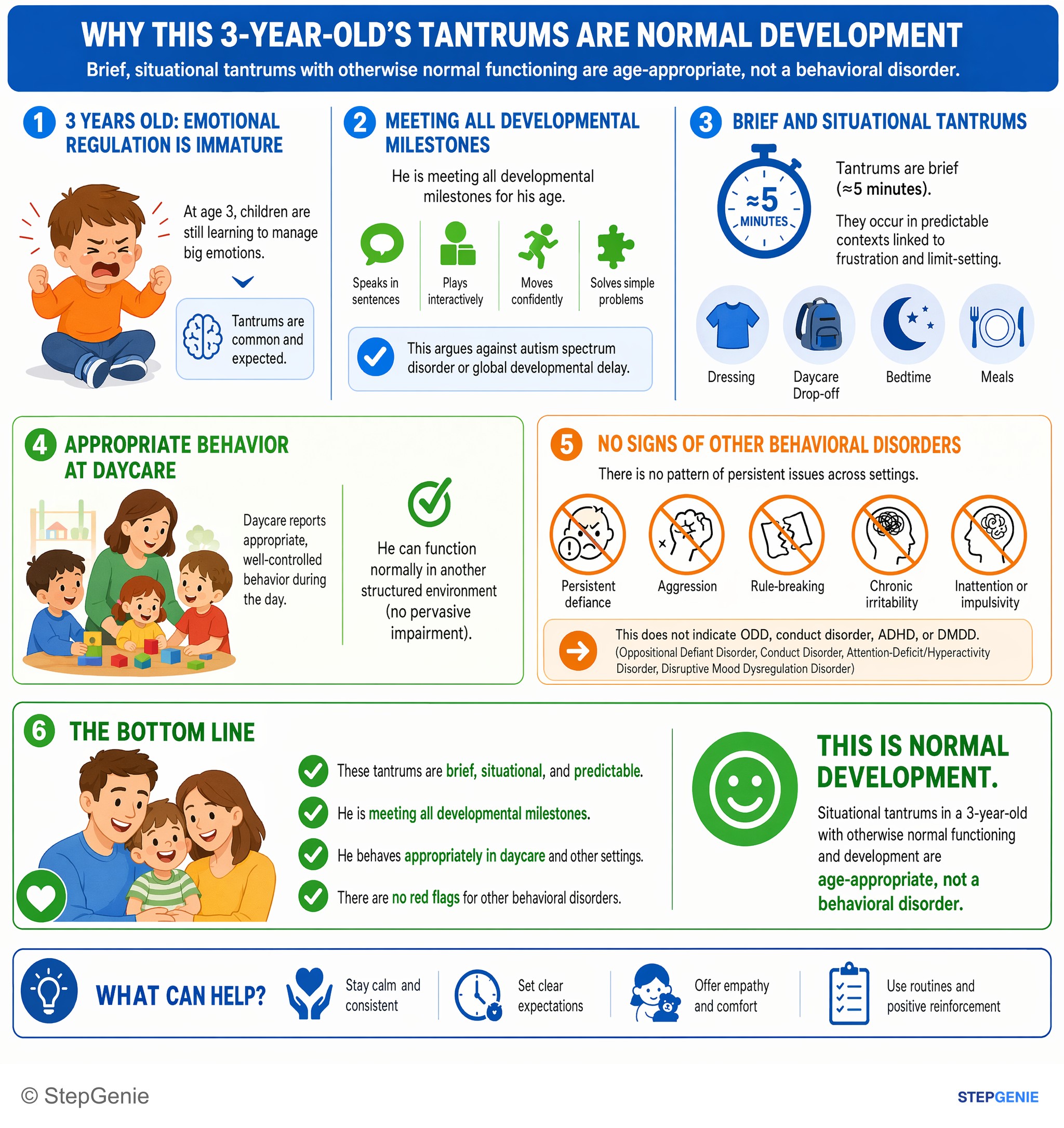
Normal development: Brief, situational tantrums in a 3-year-old with otherwise normal functioning and development are age-appropriate, not…
USMLE Step 2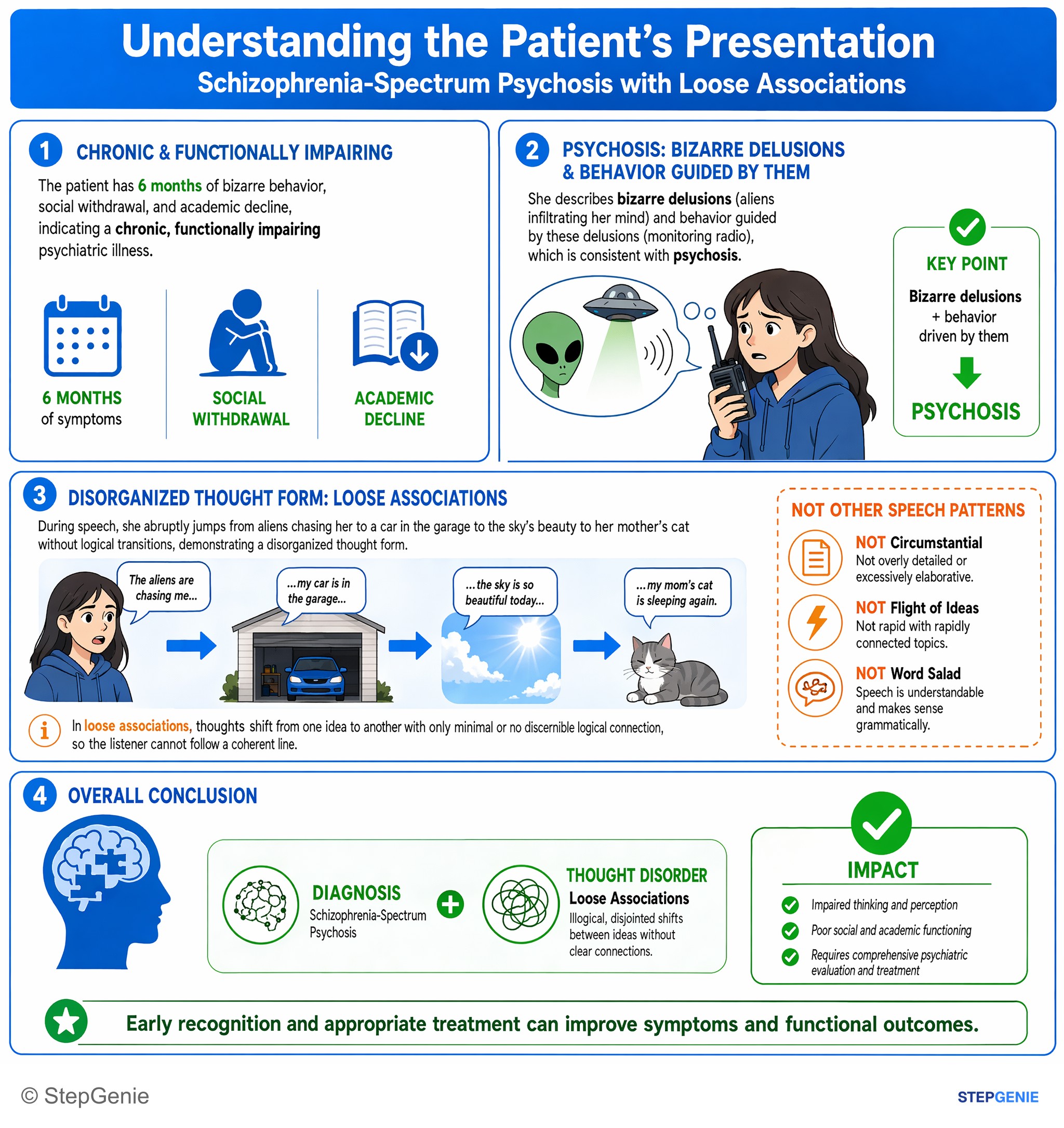
Schizophrenia-spectrum psychosis with loose associations: illogical, disjointed shifts between ideas without clear connections in the…
USMLE Step 1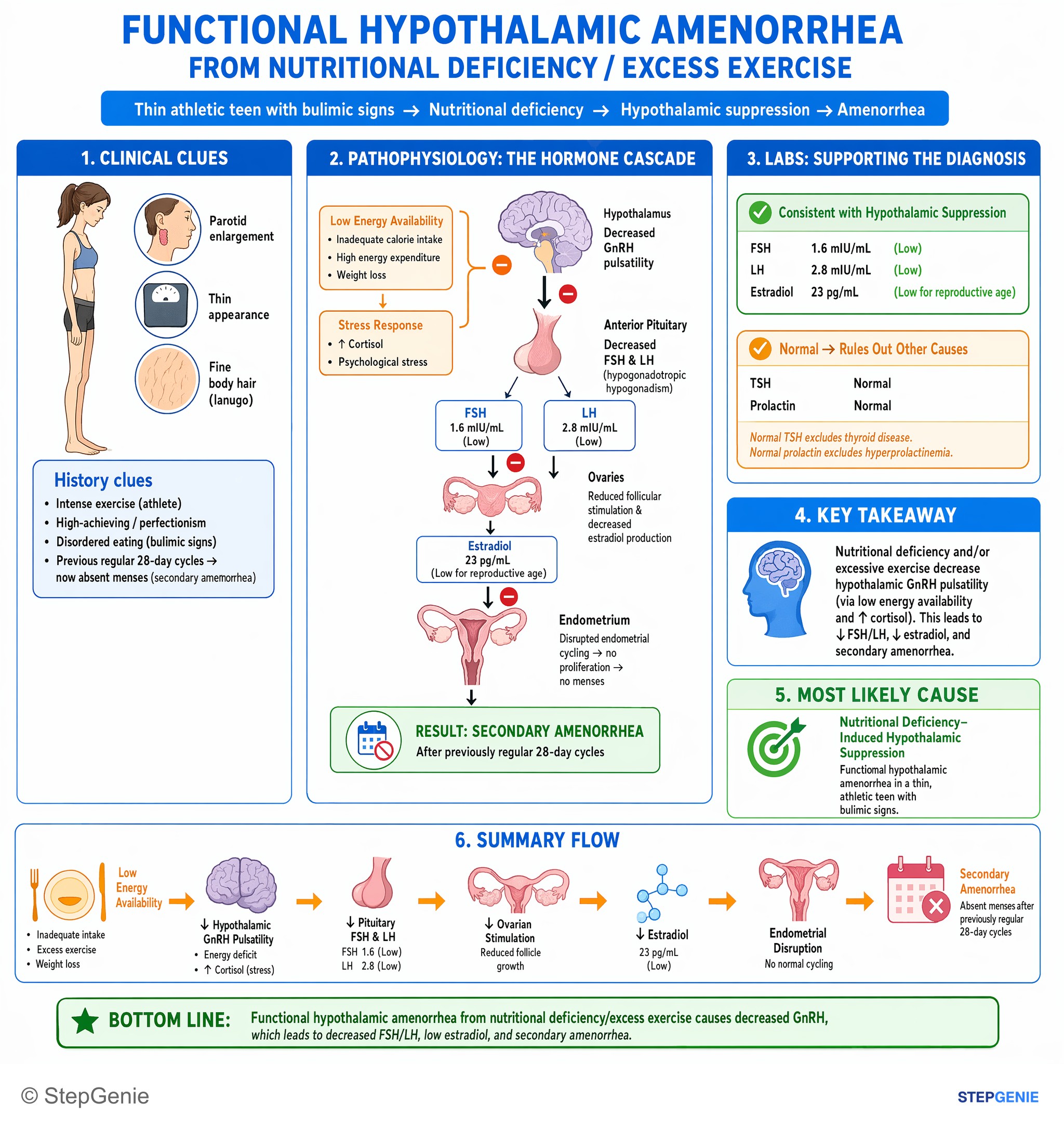
Functional hypothalamic amenorrhea from nutritional deficiency/excess exercise → ↓ GnRH → ↓ FSH/LH → low estradiol → secondary amenorrhea…
USMLE Step 2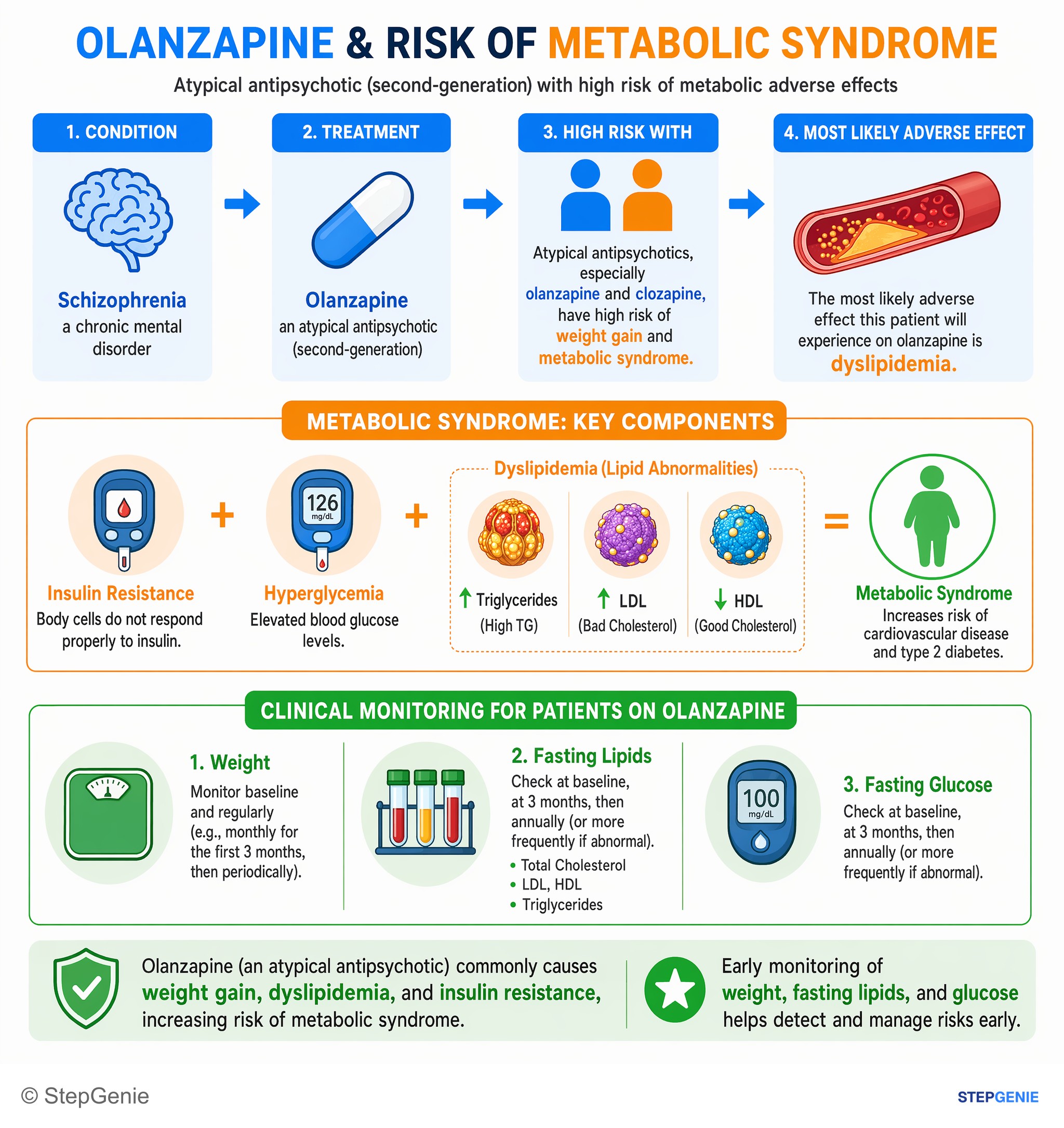
Olanzapine (an atypical antipsychotic) commonly causes weight gain, dyslipidemia, and insulin resistance, increasing risk of metabolic…
USMLE Step 1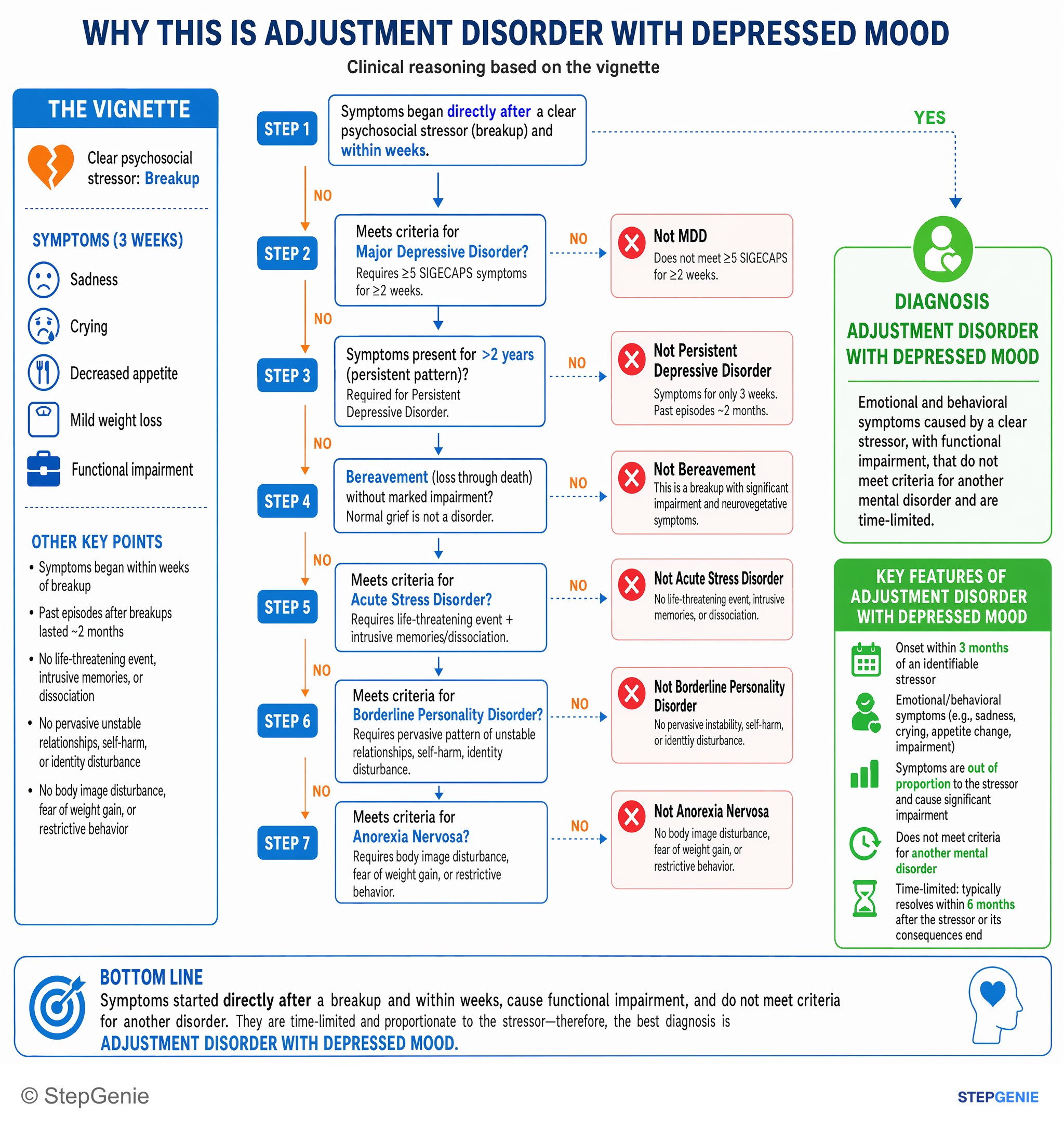
Adjustment disorder with depressed mood: emotional/behavioral symptoms within 3 months of stressor, out of proportion but not meeting…
USMLE Step 2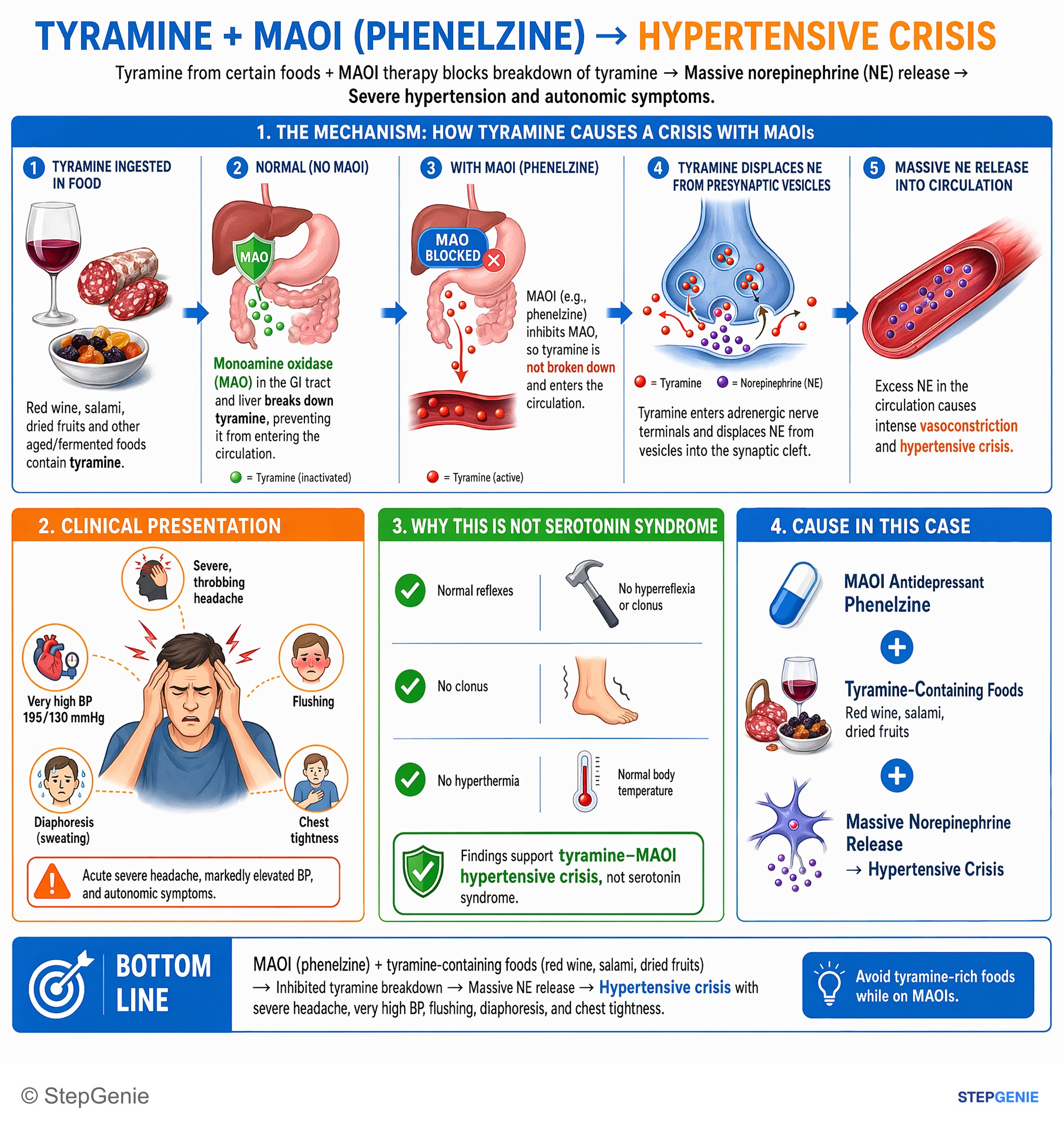
**Hypertensive crisis from MAOI (phenelzine) + tyramine-containing foods (wine, salami, dried fruits) causing acute severe headache…
USMLE Step 1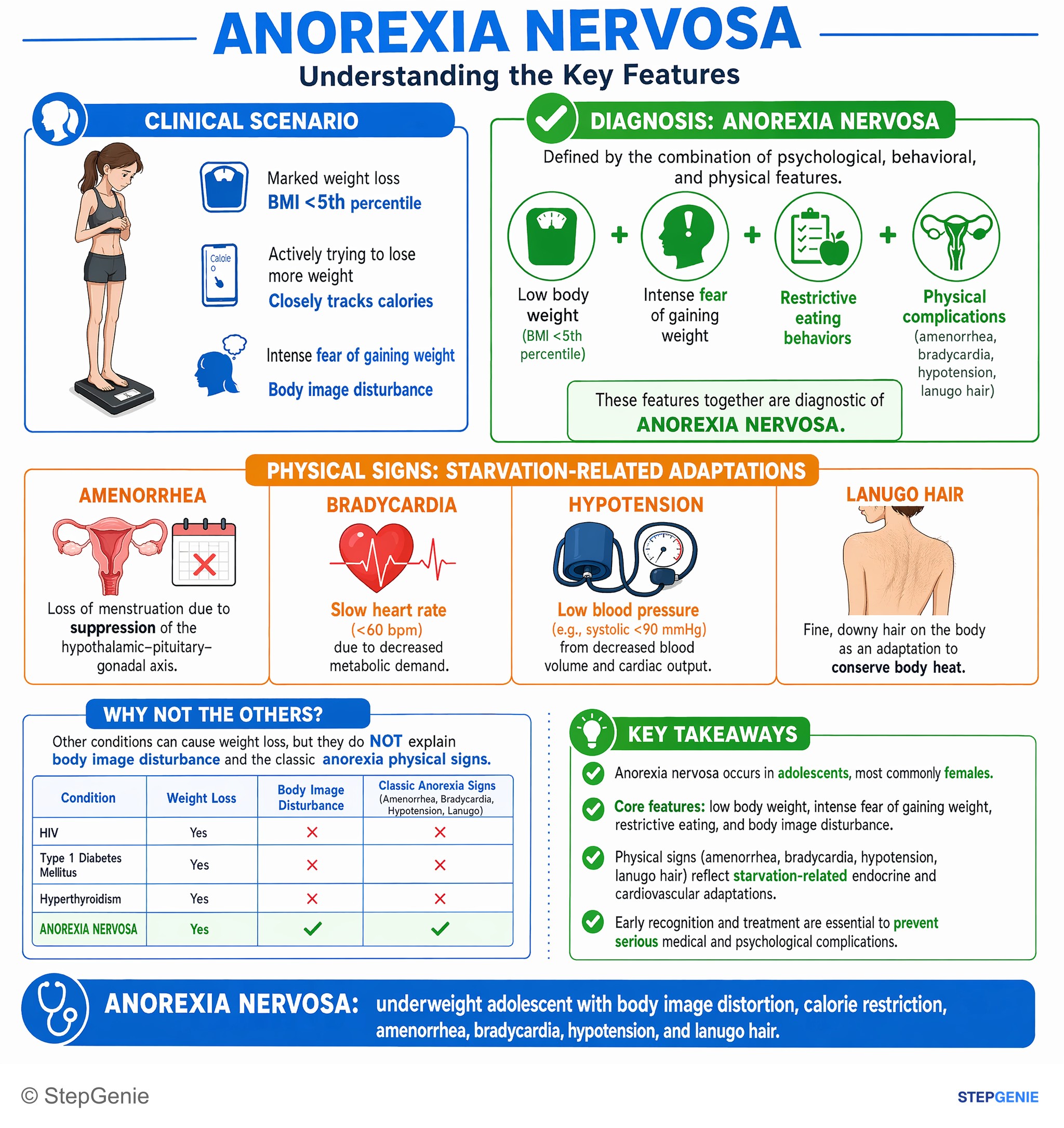
Anorexia nervosa: underweight adolescent with body image distortion, calorie restriction, amenorrhea, bradycardia, hypotension, and lanugo…
USMLE Step 2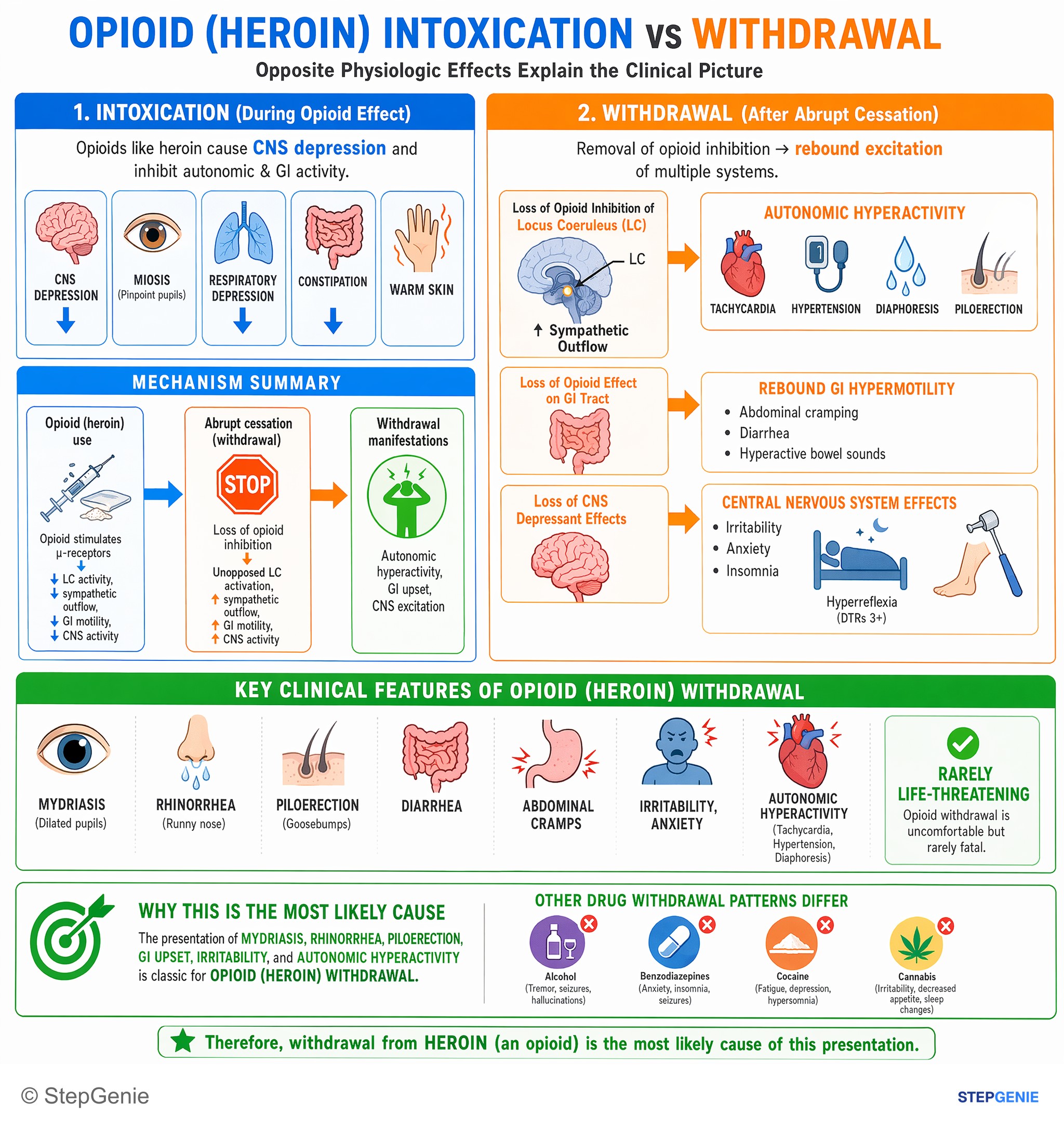
Opioid (heroin) withdrawal causes mydriasis, rhinorrhea, piloerection, diarrhea, abdominal cramps, irritability, autonomic hyperactivity…
USMLE Step 1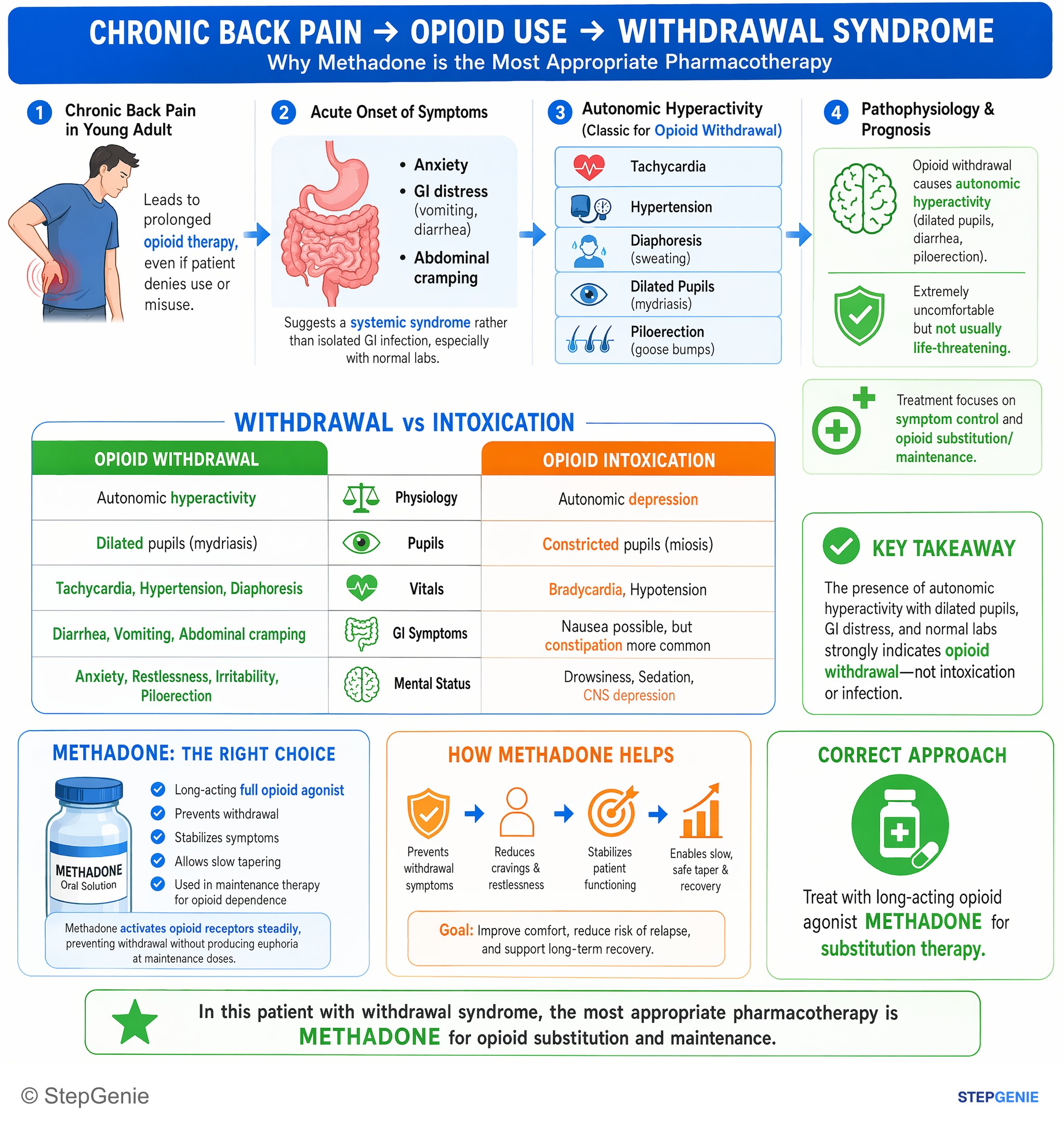
Opioid withdrawal causes autonomic hyperactivity (dilated pupils, diarrhea, piloerection); treat with long-acting opioid agonist methadone…
USMLE Step 2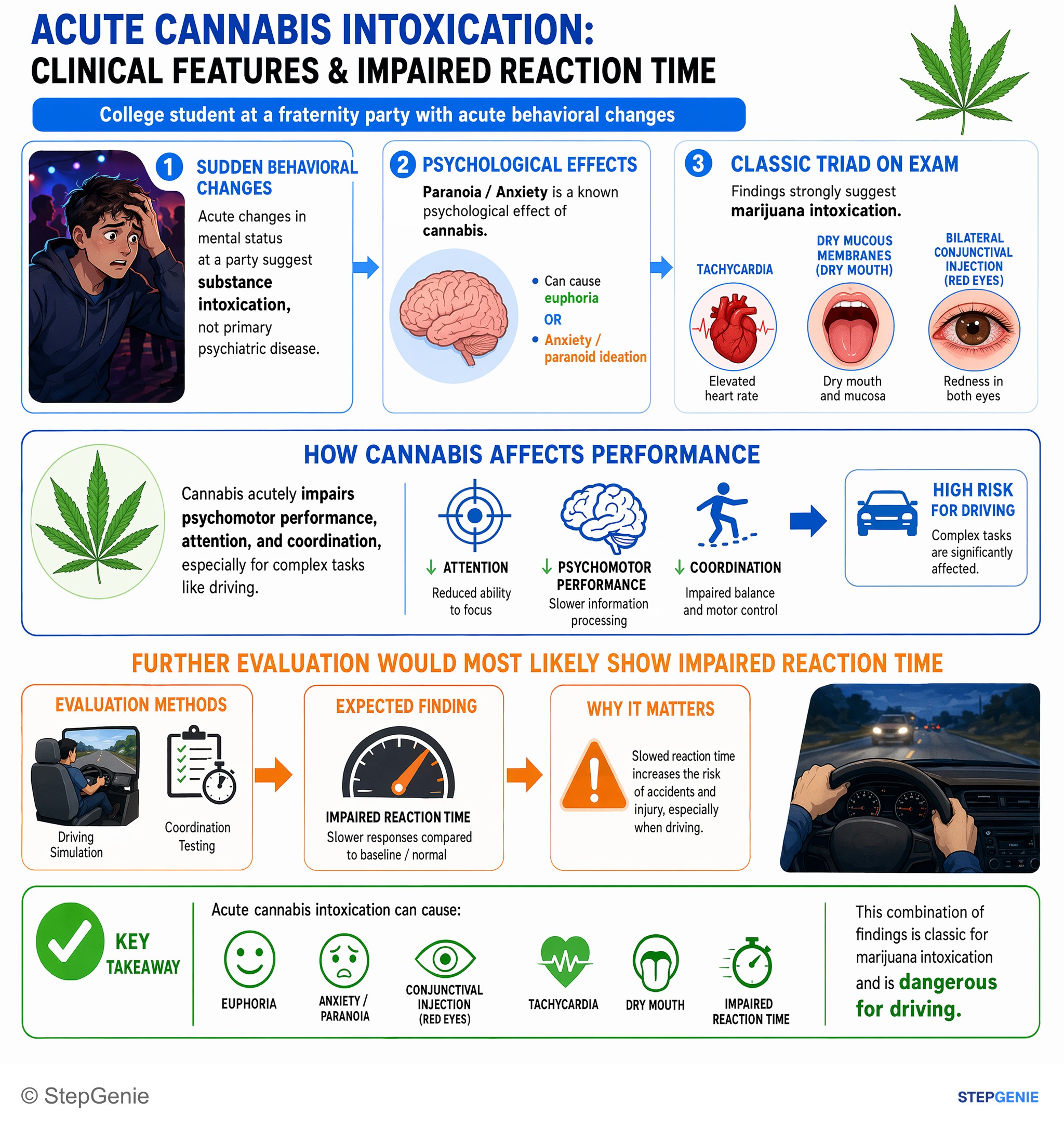
Acute cannabis intoxication causes euphoria, anxiety/paranoia, conjunctival injection, tachycardia, dry mouth, and impaired reaction time…
USMLE Step 1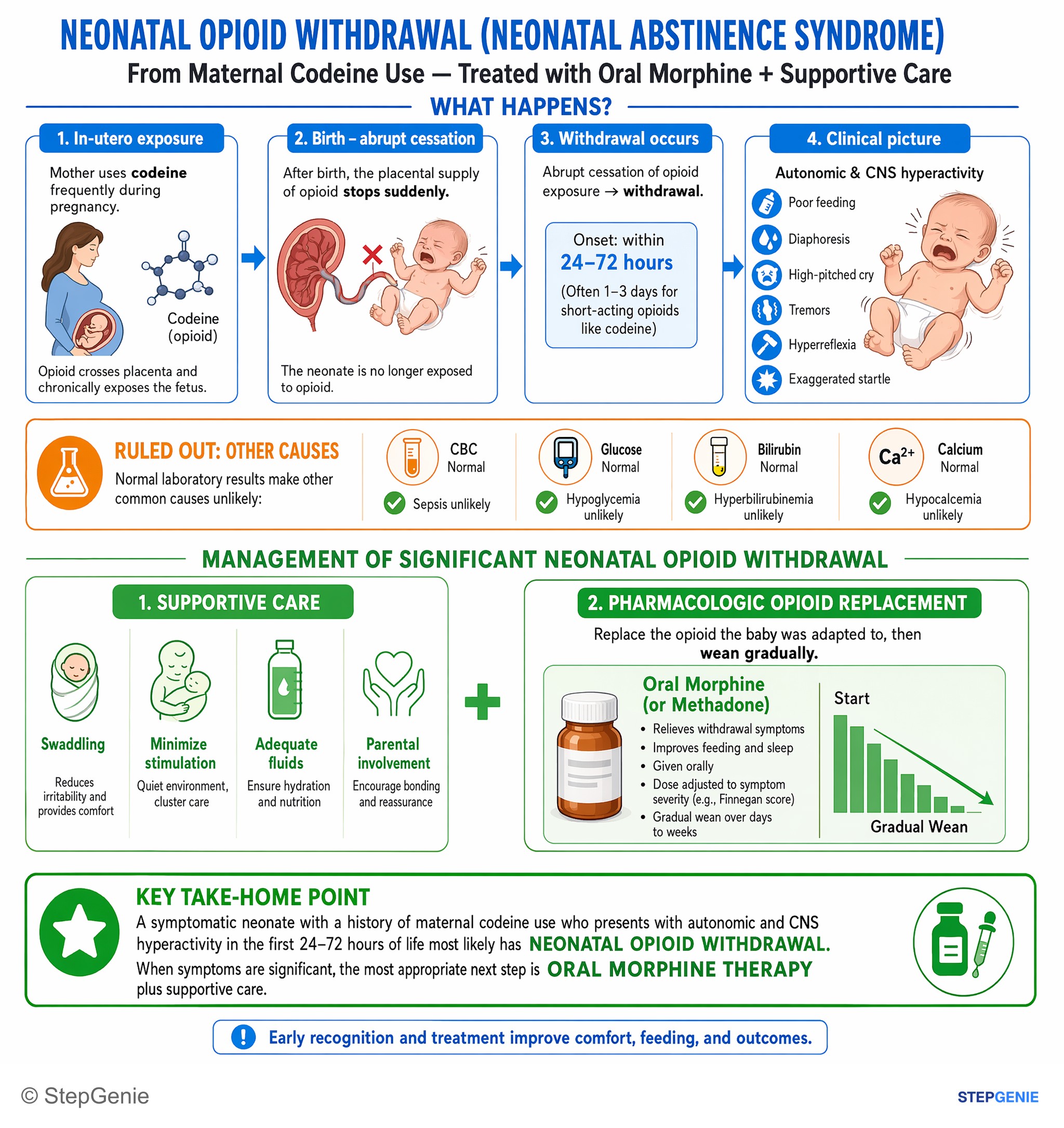
Neonatal opioid withdrawal (neonatal abstinence syndrome) from maternal codeine use is treated with oral morphine plus supportive care…
USMLE Step 2199 publishable psychiatry infographics in the library — 23 from Step 1 questions and 176 from Step 2 CK, counted on October 29, 2026. This page shows 48 of them, alternating the two steps. An image is listed when its question is active, has a full structured explanation, passed verification and carries no unresolved report.
This page caps out at 48 images. 151 more psychiatry infographics sit in the in-app image library, where they are searchable and filterable by subject, system and topic.
Open the image libraryPractice the questions behind these images
Each image explains one question. The psychiatry topic page has the written explanations and the question sets, and the preview lets you answer three questions without an account.
Other image sets
Study psychiatry with the image attached
In the app, each of these sits at the end of the question it explains, alongside the step-by-step reasoning and a panel for every option you did not pick. Starting is free.
Start practicing free