High-yield pediatrics images for the USMLE
StepGenie explanation infographics. Free to view, no account needed.
What do StepGenie's pediatrics images cover?
Each pediatrics image is a StepGenie infographic drawn for one of its own practice questions. Nearly all of them are age-anchored: the same finding means different things at two weeks, two years and twelve years, and the panel makes that dependence explicit.
Congenital and developmental anomalies lead this set, followed by bacterial infections, bone and joint injuries and infections, viral infections, congenital heart disease, intestinal and colorectal disorders, and ear, nose and throat disease. Neurodevelopmental disorders, red cell disorders, nutrition and normal behavior and development fill in the rest.
Age is the discriminator in most pediatric questions, so the images are drawn around it. A vomiting-in-the-newborn panel separates pyloric stenosis from malrotation and from duodenal atresia by the age at presentation and the character of the vomit before anything else is considered, which is the sequence that gets the answer right. The developmental milestone panels serve a different purpose: they give a reference you can check a vignette against without having to recall an entire chart.
Because pediatrics is filed as a discipline, its images also appear under the organ system each question belongs to. Congenital heart lesions, for example, show up here and under cardiology.
Vaccination schedule and newborn screening panels are reference material rather than drills. Use them to check an answer you were unsure of, not as something to work through from beginning to end in one sitting.
Topics in this set
Labels are the question-bank topics these images are filed under. Step 1 and Step 2 file some of the same material under different names, so a few labels here merge both.
Pediatrics explanation images
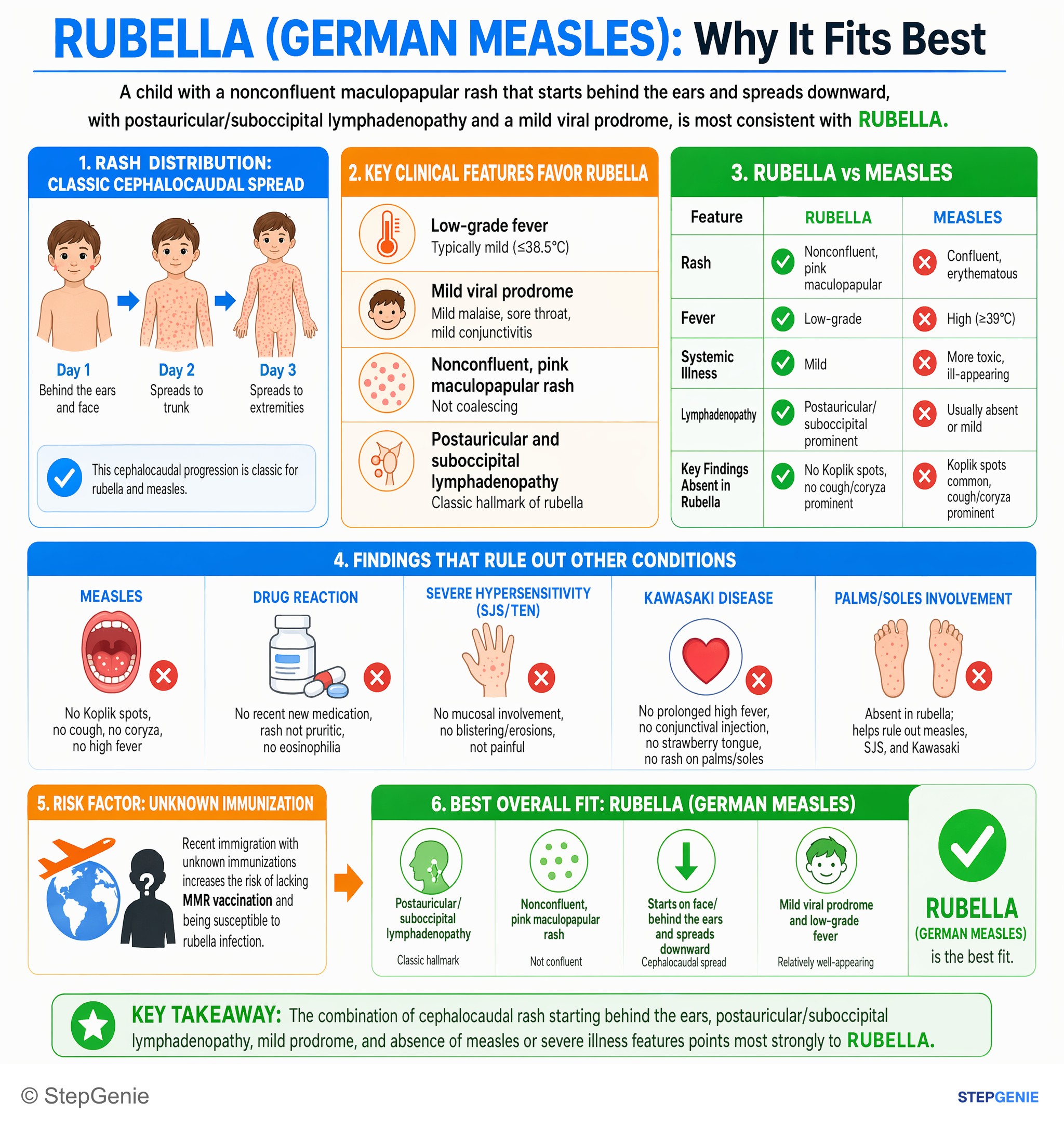
Rubella causes postauricular/suboccipital lymphadenopathy and a nonconfluent pink maculopapular rash starting on face/behind ears then…
USMLE Step 2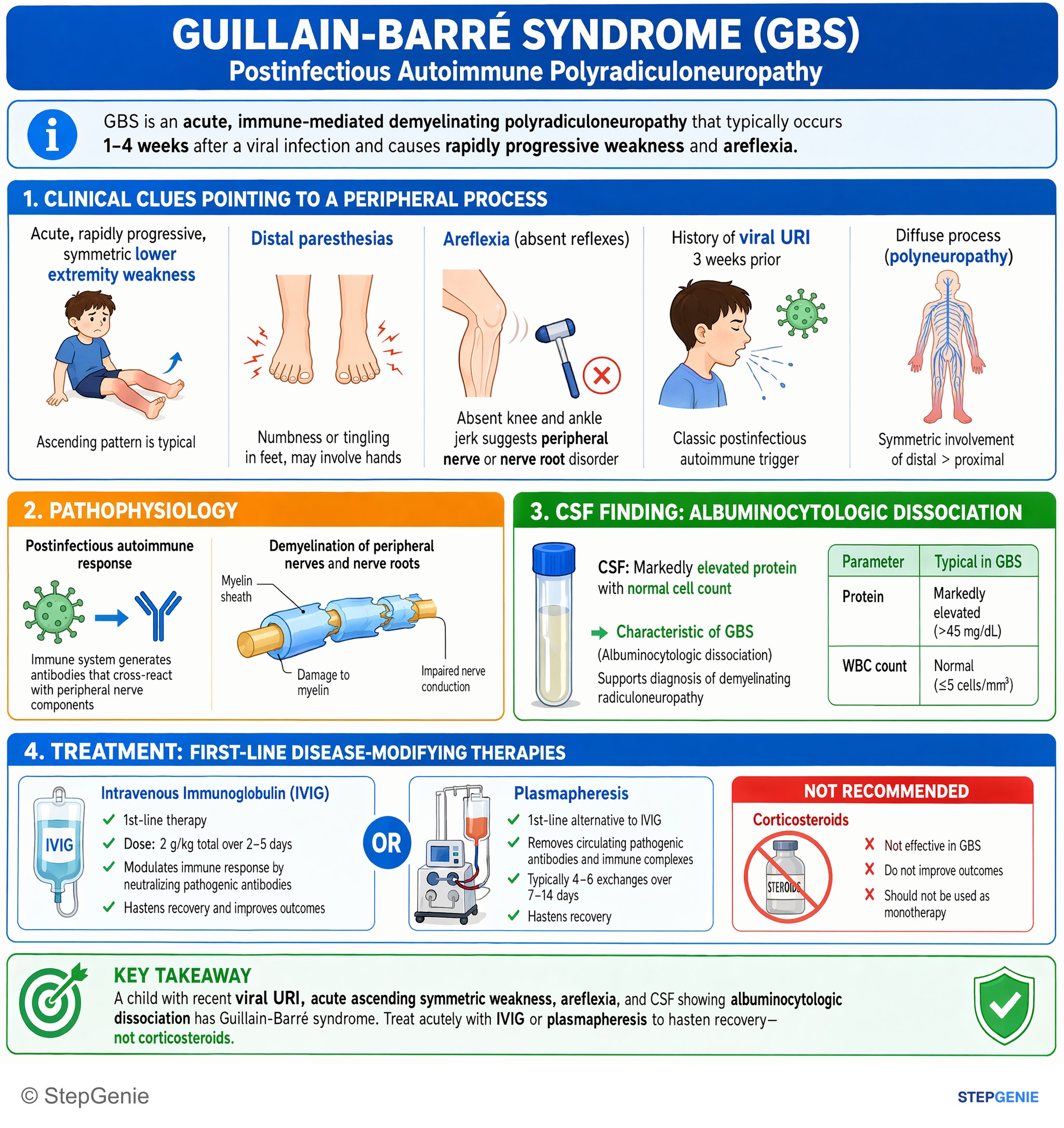
Guillain-Barré syndrome after viral URI with acute ascending weakness and albuminocytologic dissociation is treated acutely with IVIG or…
USMLE Step 2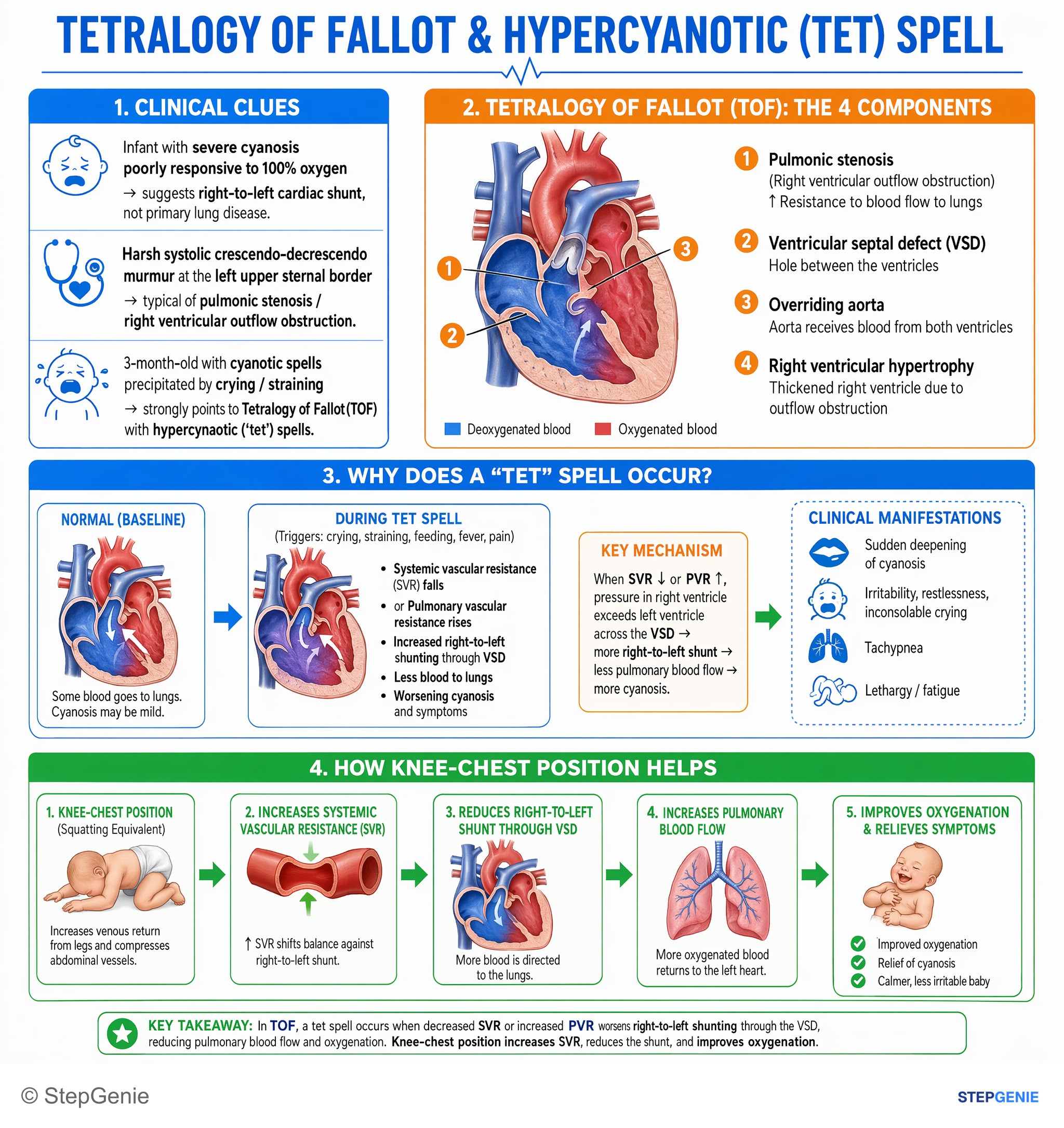
Tetralogy of Fallot hypercyanotic (tet) spell: right-to-left shunt worsens with decreased SVR; knee-chest position increases SVR and…
USMLE Step 2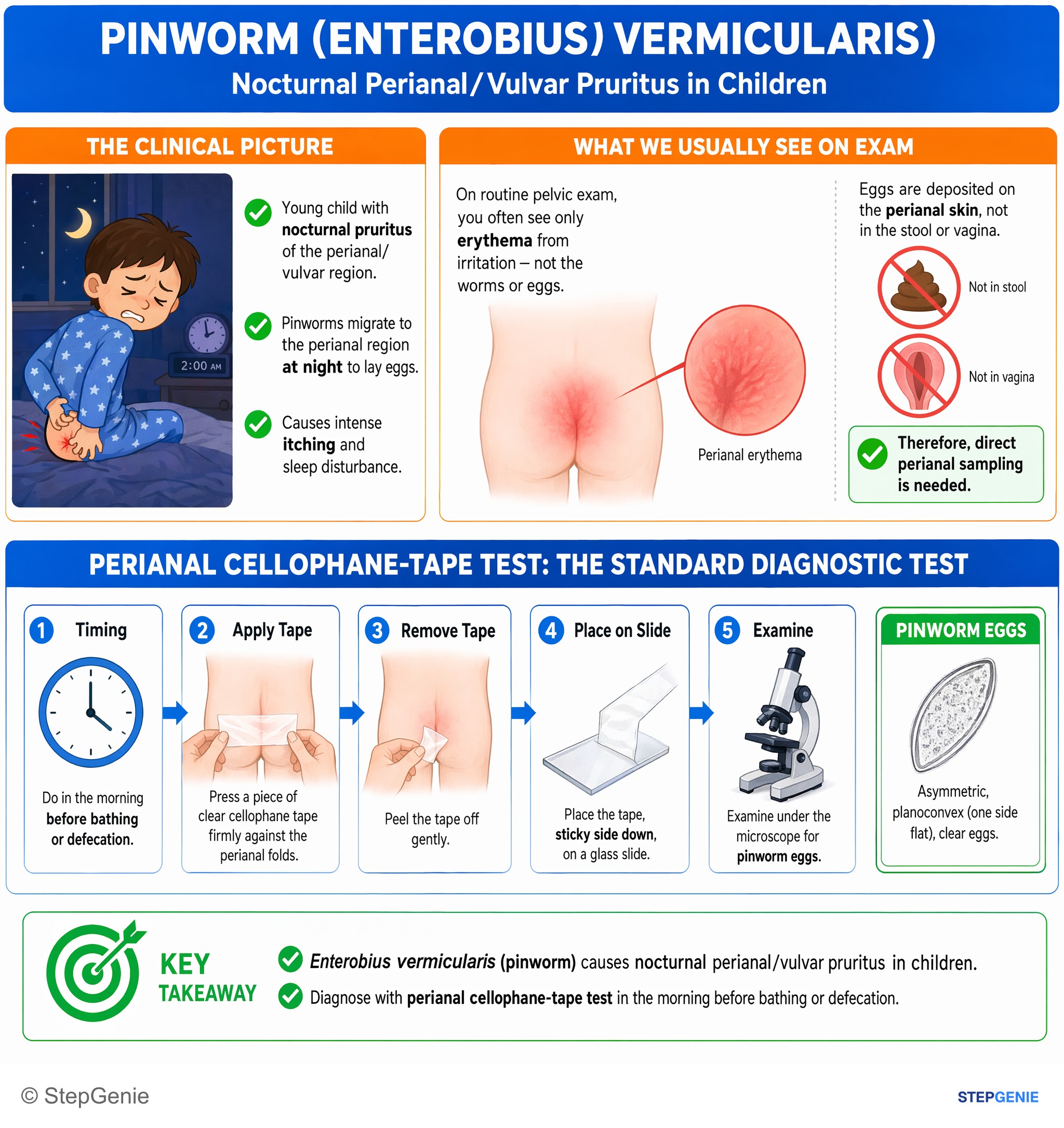
Enterobius vermicularis (pinworm) causes nocturnal perianal/vulvar pruritus in children; diagnose with perianal cellophane-tape test in…
USMLE Step 2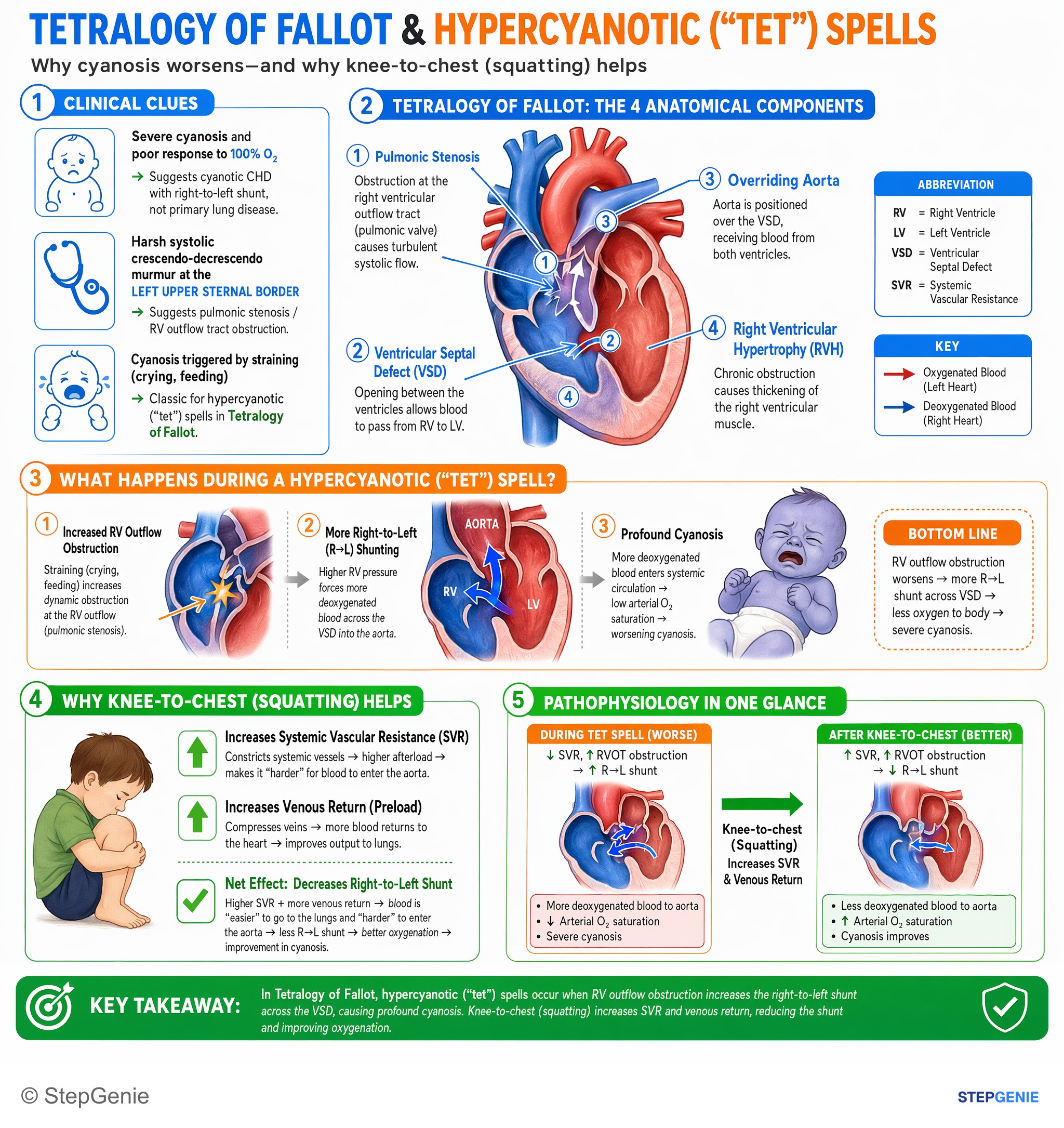
Tetralogy of Fallot hypercyanotic (“tet”) spell: RV outflow obstruction worsens R→L shunt; squatting/knee-chest increases SVR, reducing…
USMLE Step 2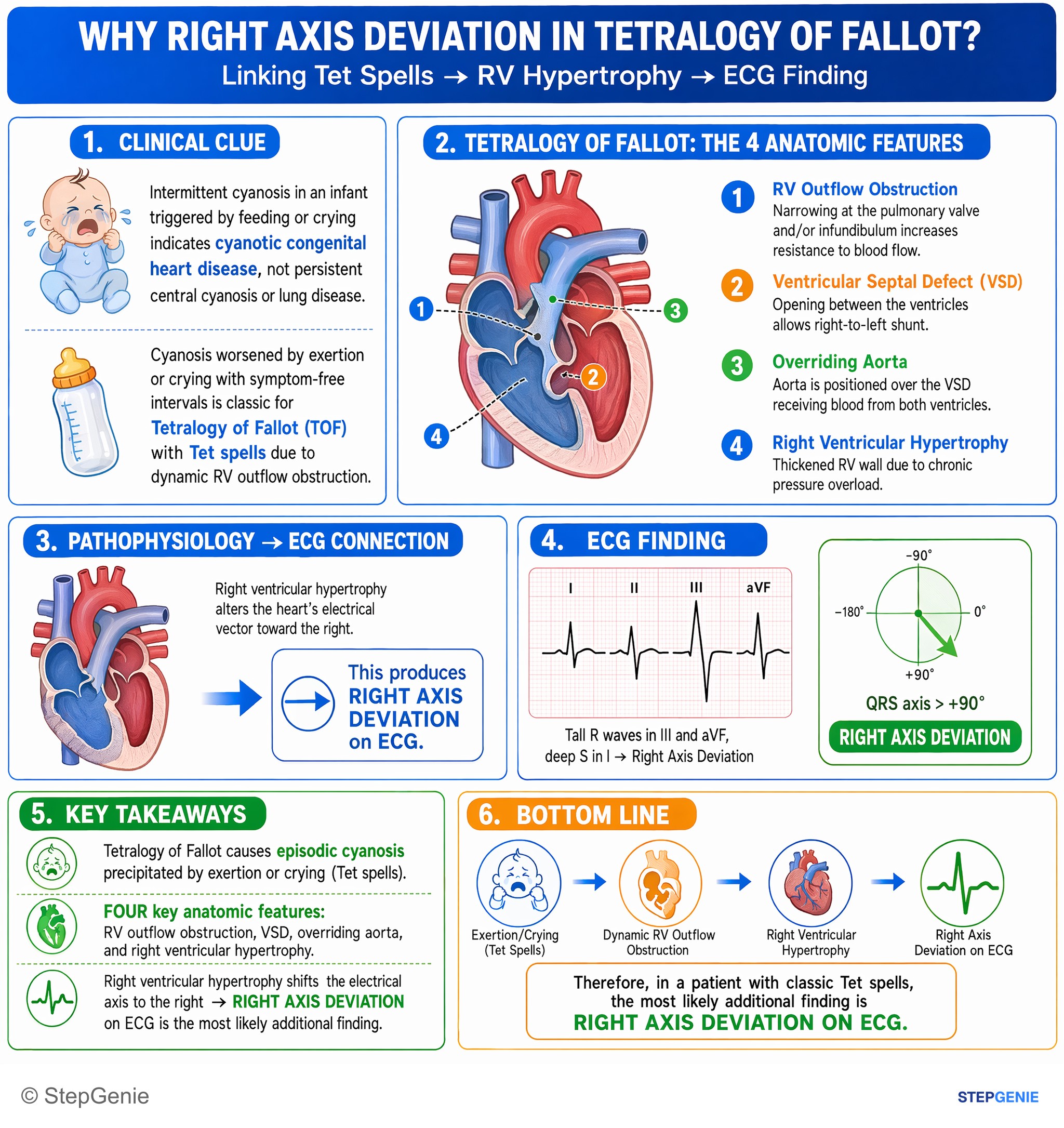
Tetralogy of Fallot causes episodic cyanosis precipitated by exertion/crying; RV hypertrophy produces right axis deviation on ECG.
USMLE Step 2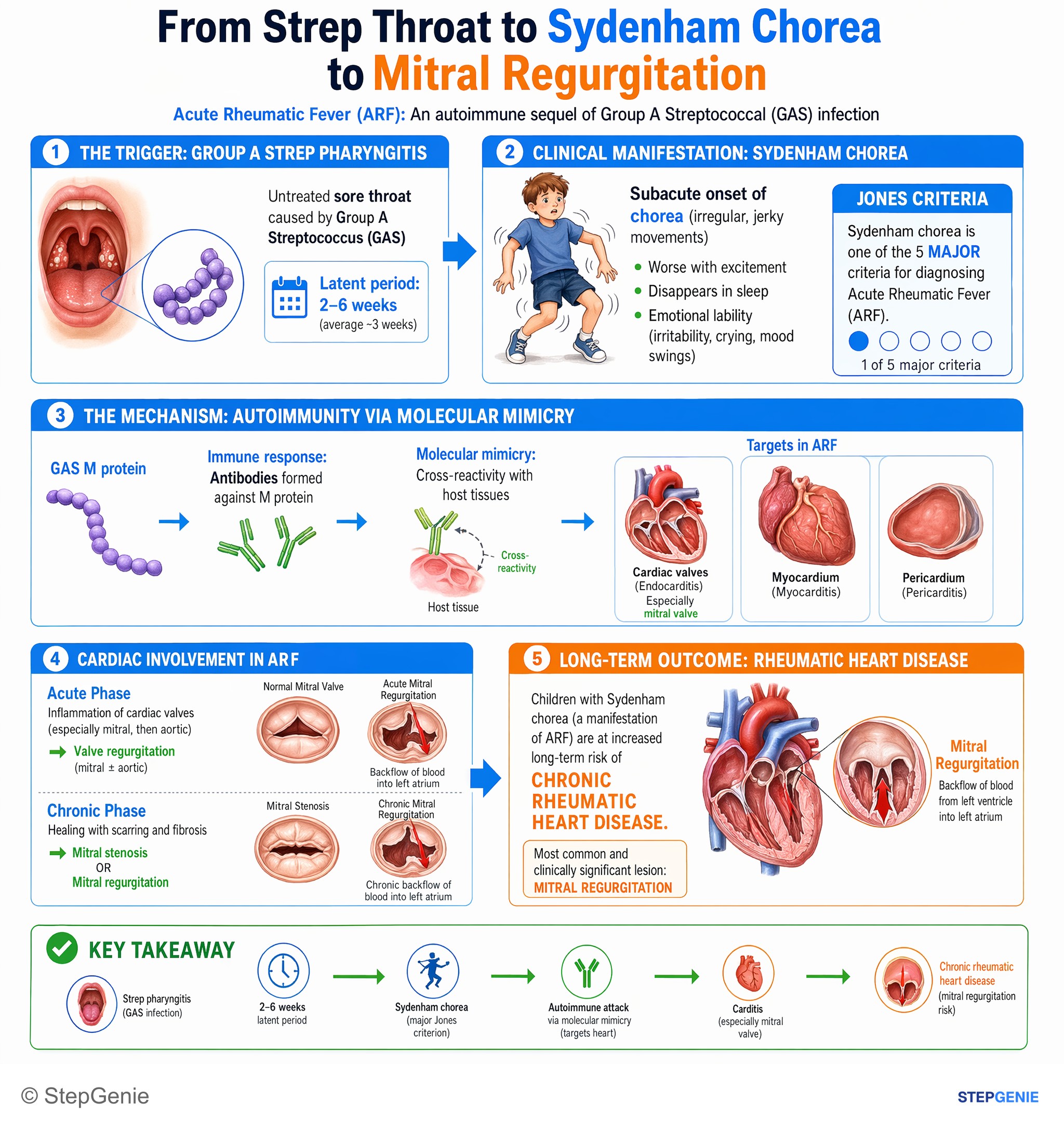
Sydenham chorea from acute rheumatic fever after strep pharyngitis → autoimmune carditis targeting valves → chronic mitral regurgitation…
USMLE Step 2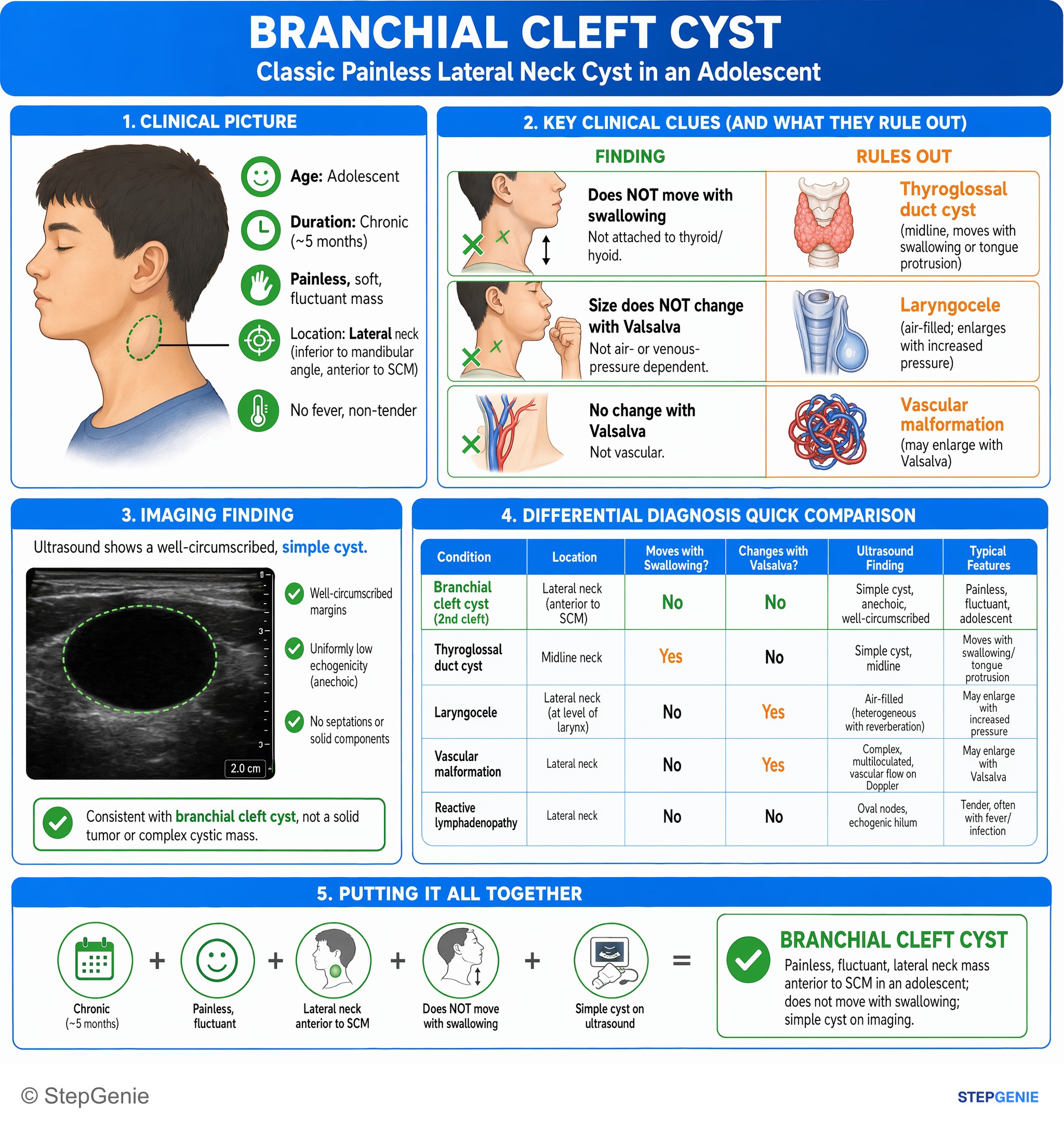
Branchial cleft cyst: painless, fluctuant, lateral neck mass anterior to SCM in adolescent; does not move with swallowing; simple cyst on…
USMLE Step 2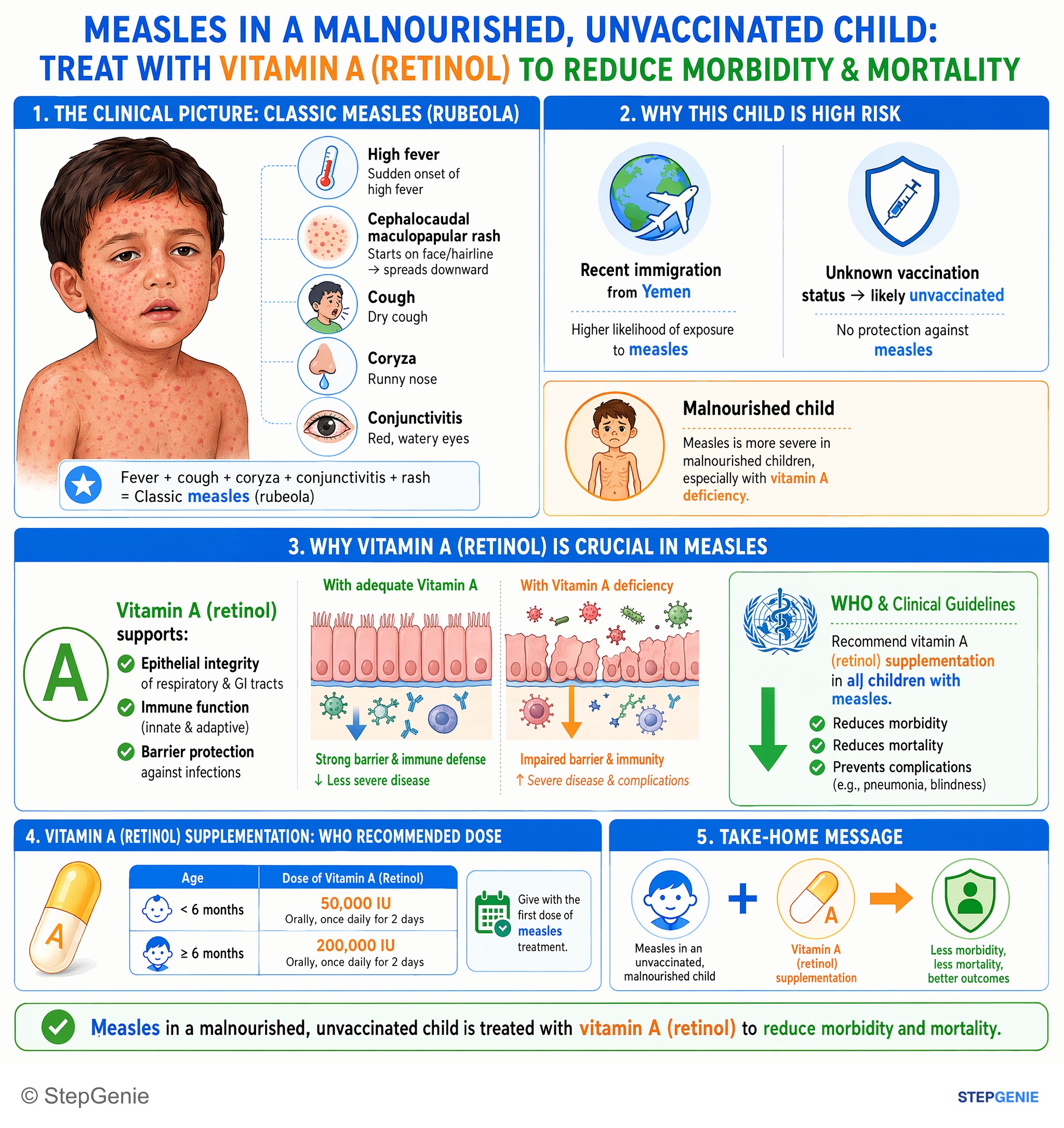
Measles in a malnourished, unvaccinated child is treated with vitamin A (retinol) to reduce morbidity and mortality.
USMLE Step 2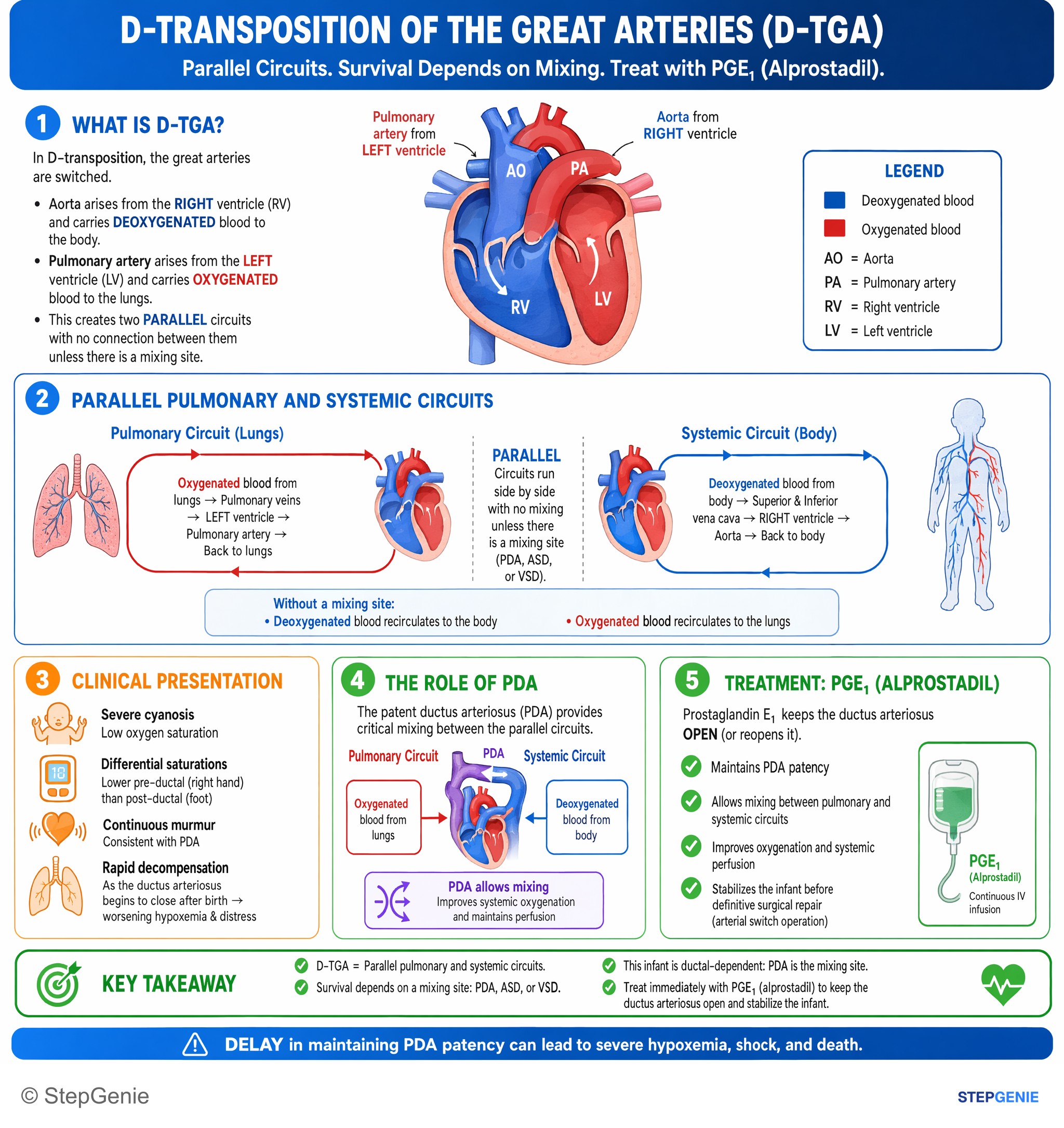
D-transposition of the great arteries: parallel pulmonary/systemic circuits; survival depends on PDA/ASD/VSD. Treat with PGE1…
USMLE Step 2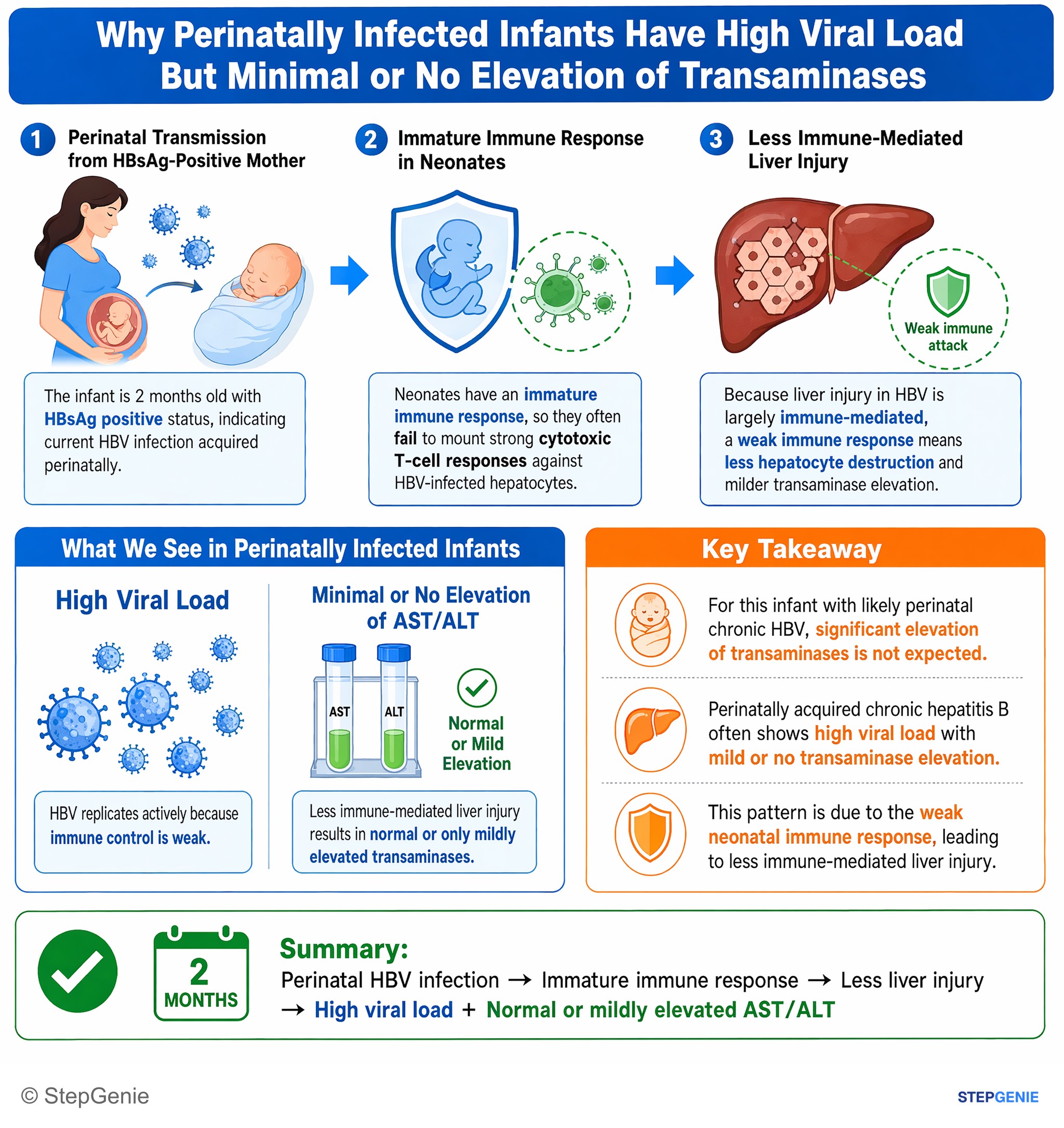
Perinatally acquired chronic hepatitis B often shows high viral load with mild or no transaminase elevation due to weak neonatal immune…
USMLE Step 2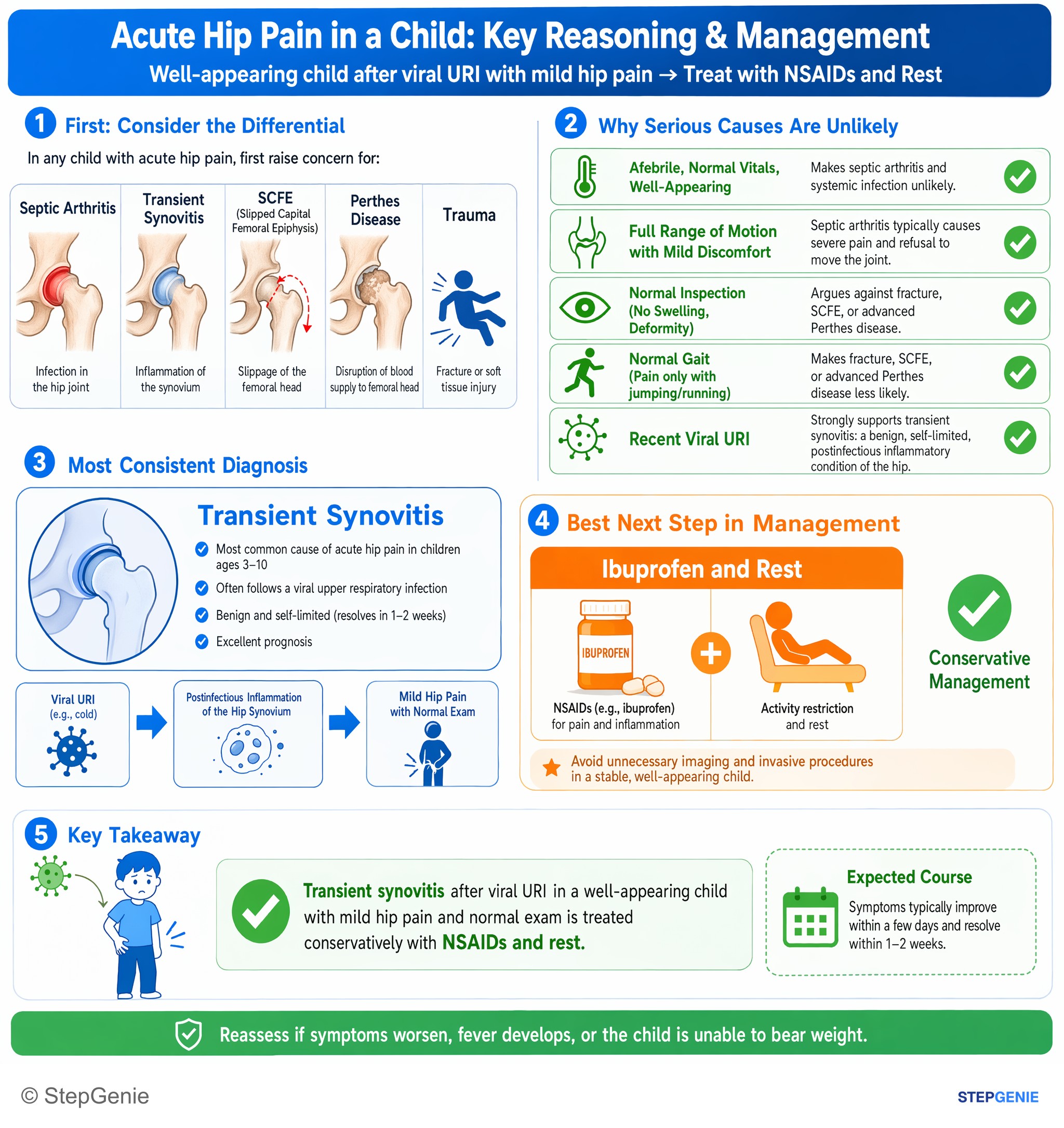
Transient synovitis after viral URI in a well-appearing child with mild hip pain and normal exam is treated conservatively with NSAIDs and…
USMLE Step 2367 publishable pediatrics infographics in the library — all of them from Step 2 CK questions, counted on October 29, 2026. This page shows 48 of them. An image is listed when its question is active, has a full structured explanation, passed verification and carries no unresolved report.
This page caps out at 48 images. 319 more pediatrics infographics sit in the in-app image library, where they are searchable and filterable by subject, system and topic.
Open the image libraryPractice the questions behind these images
Each image explains one question. The pediatrics topic page has the written explanations and the question sets, and the preview lets you answer three questions without an account.
Other image sets
Study pediatrics with the image attached
In the app, each of these sits at the end of the question it explains, alongside the step-by-step reasoning and a panel for every option you did not pick. Starting is free.
Start practicing free