High-yield biostatistics & epidemiology images for the USMLE
StepGenie explanation infographics. Free to view, no account needed.
What do StepGenie's biostatistics & epidemiology images cover?
Each biostatistics image is a StepGenie infographic drawn for one of its own practice questions. The set is small and mixed: one panel works through positive predictive value on a two-by-two table, another separates incidence from prevalence, another shows where a case-control study draws its controls from. They are the diagrams behind the calculations, not a survey of the topic.
This is the smallest gallery on the site by a wide margin, and the page says so rather than padding itself out — the count under the grid is the exact figure. The images that exist cover incidence and prevalence, positive and negative predictive value, study design and interpretation, and epidemiology and population health.
Biostatistics is unusual on the exam in that almost every question reduces to one diagram. Sensitivity and specificity are read down the columns of a two-by-two table, predictive values are read across the rows, and the reason predictive value changes with prevalence while sensitivity does not is visible on the table itself rather than something you have to accept on trust. An image that makes that visible once tends to hold.
If you want more coverage than this page offers, the topic hub for biostatistics has the written explanations and the practice questions, and the question bank carries considerably more biostatistics items than the illustrated subset shown here.
Selection bias, confounding and the rest of the study-design traps are not illustrated in this set yet. Those questions and their written explanations are in the question bank; this page only claims what it actually shows.
Topics in this set
Labels are the question-bank topics these images are filed under. Step 1 and Step 2 file some of the same material under different names, so a few labels here merge both.
Biostatistics & Epidemiology explanation images
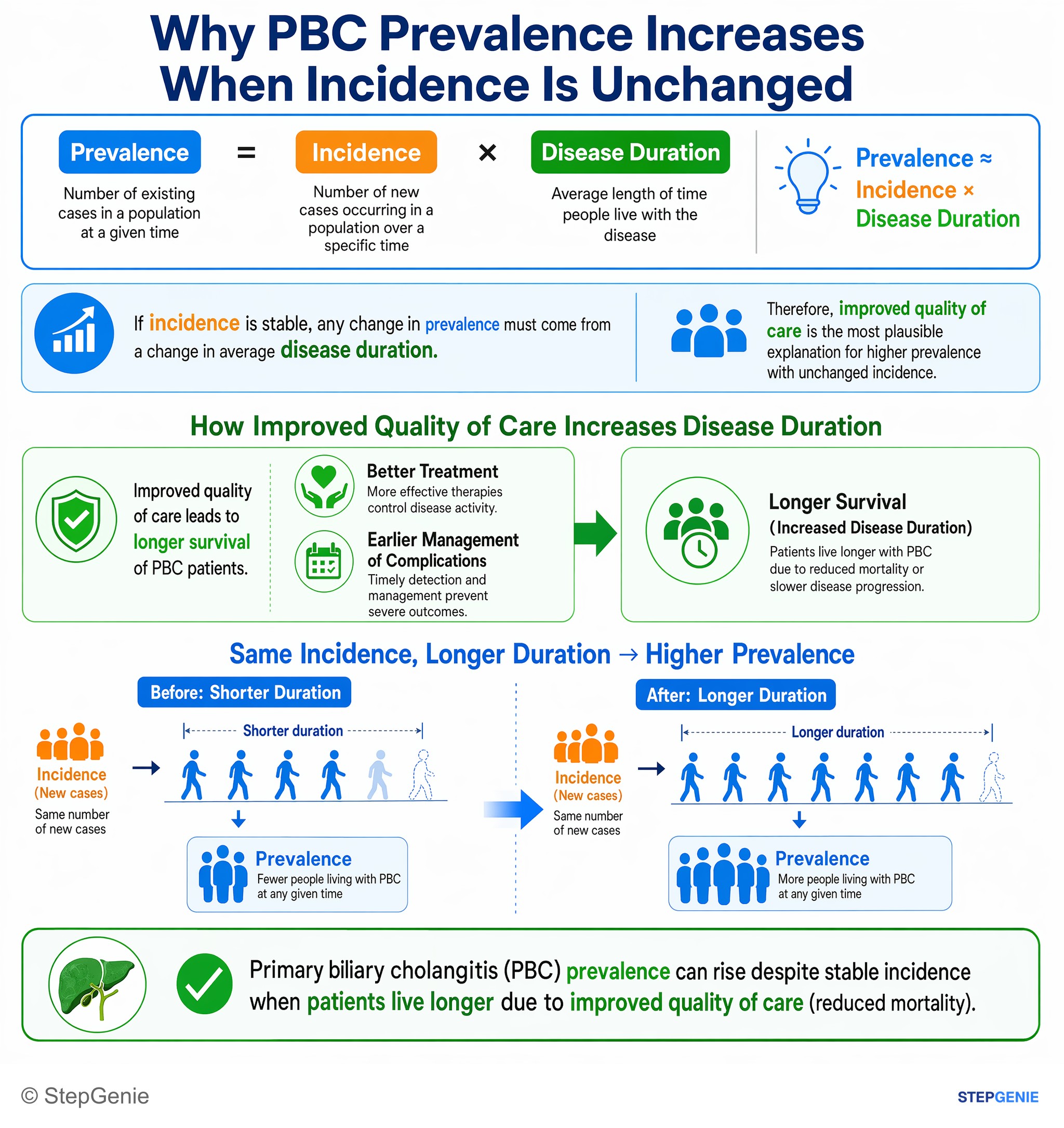
Primary biliary cholangitis prevalence can rise despite stable incidence when patients live longer due to improved quality of care…
USMLE Step 1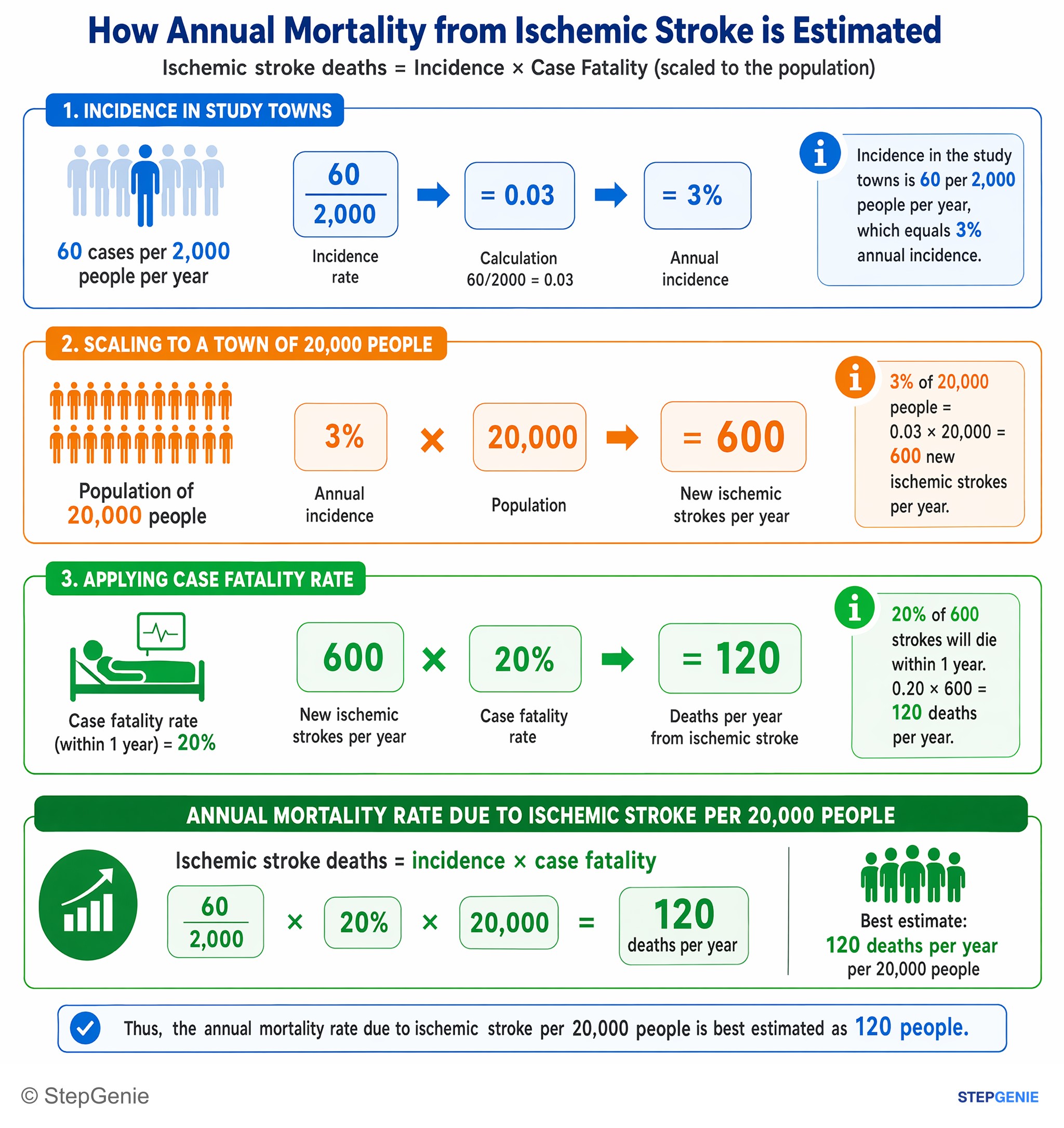
Ischemic stroke deaths = incidence × case fatality. Here: 60/2000 × 20% scaled to 20,000 → 120 annual deaths.
USMLE Step 1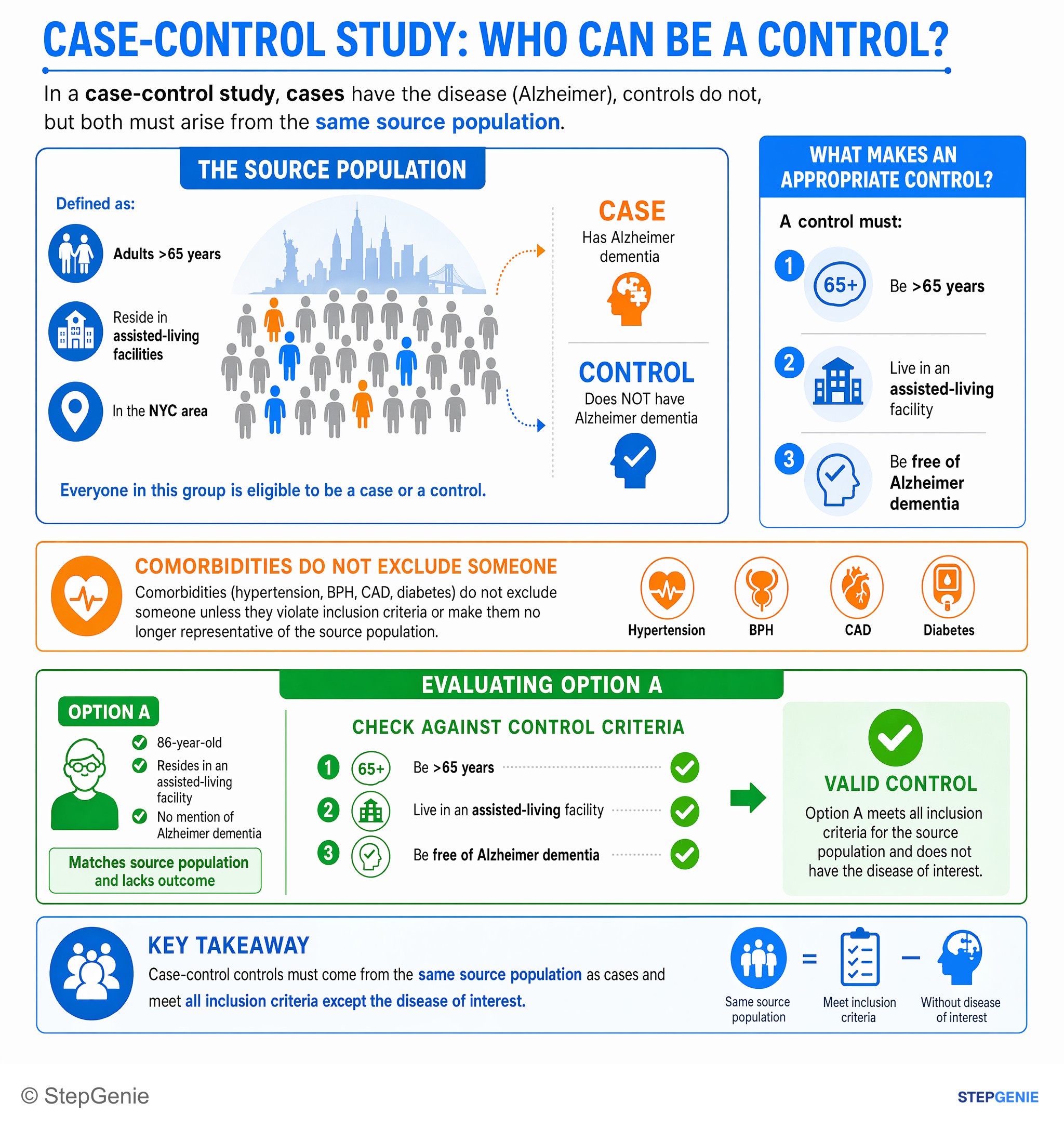
Case-control controls must come from the same source population as cases and meet all inclusion criteria except the disease of interest.
USMLE Step 1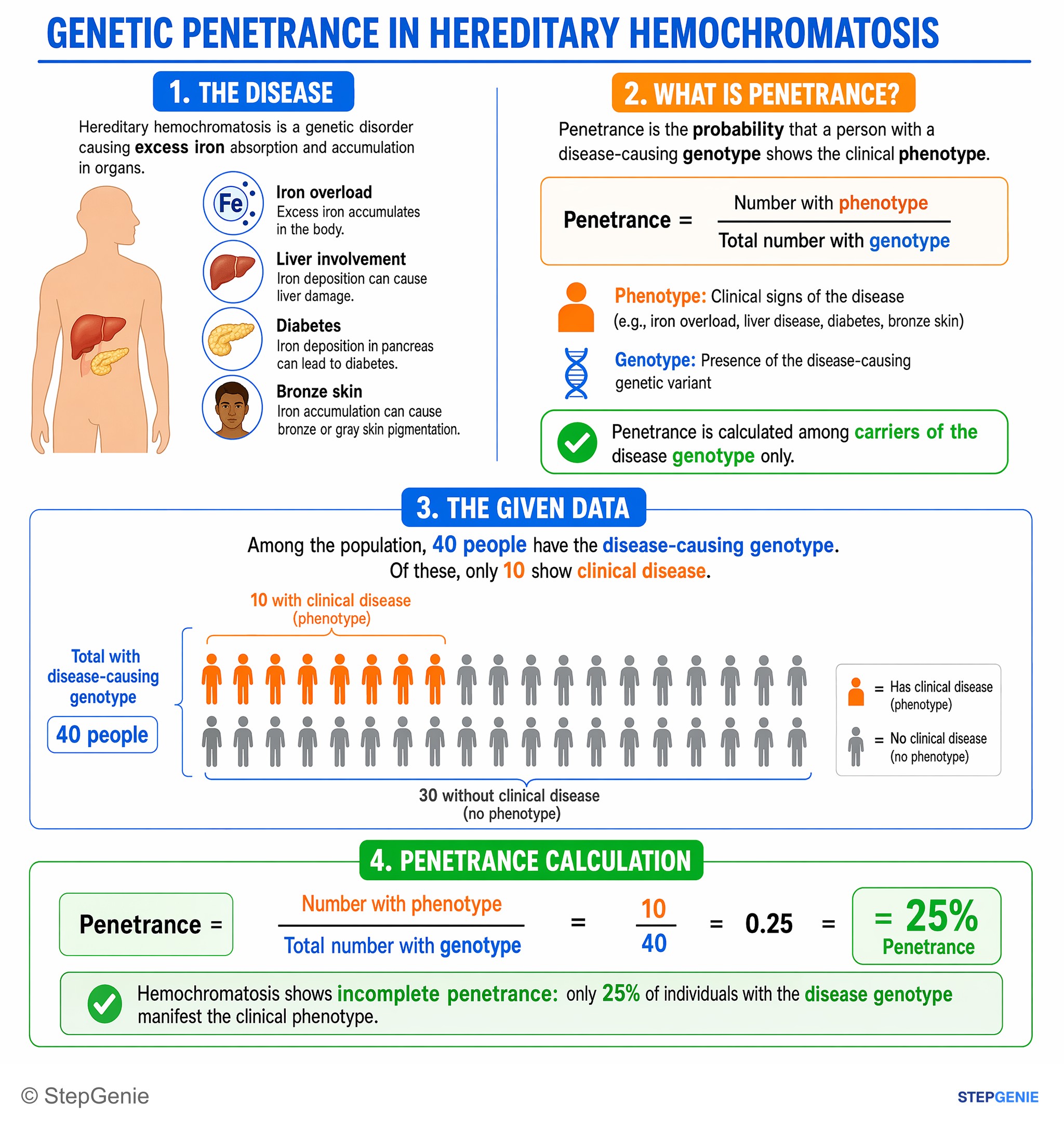
Hemochromatosis: incomplete penetrance; penetrance = affected with phenotype / total with genotype = 10/40 = 25%.
USMLE Step 1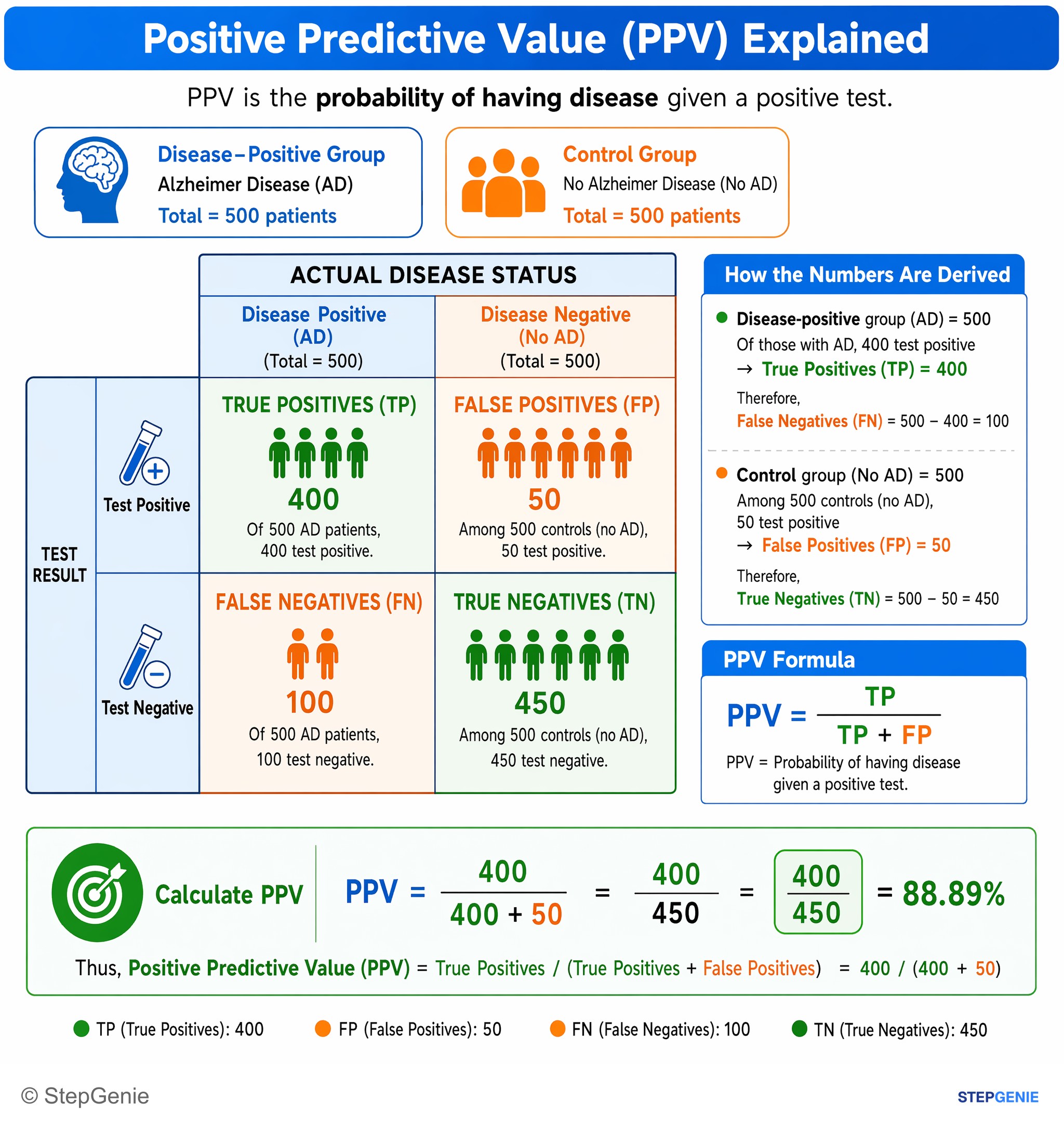
Positive predictive value (PPV) = true positives / (true positives + false positives). Here: 400 / (400 + 50).
USMLE Step 15 publishable biostatistics & epidemiology infographics in the library — all of them from Step 1 questions, counted on October 29, 2026. An image is listed when its question is active, has a full structured explanation, passed verification and carries no unresolved report.
Practice the questions behind these images
Each image explains one question. The biostatistics & epidemiology topic page has the written explanations and the question sets, and the preview lets you answer three questions without an account.
Other image sets
Study biostatistics & epidemiology with the image attached
In the app, each of these sits at the end of the question it explains, alongside the step-by-step reasoning and a panel for every option you did not pick. Starting is free.
Start practicing free