High-yield behavioral science & ethics images for the USMLE
StepGenie explanation infographics. Free to view, no account needed.
What do StepGenie's behavioral science & ethics images cover?
Each ethics and behavioral science image is an infographic StepGenie drew for one of its own practice questions. They set out the decision rule the question is testing — who consents, what may be disclosed, when confidentiality breaks — rather than illustrating a disease.
Medical ethics and jurisprudence carry most of this small set, with communication and interpersonal skills next and almost nothing else.
Ethics questions are decided by a rule with named exceptions, and that structure is exactly what a diagram holds well. A capacity panel separates capacity from competence and lists what has to be true for a patient to consent, which is usually the whole question. A confidentiality panel puts the duty on one side and the specific reporting exceptions on the other, so the answer stops depending on whether the exception happens to come to mind.
The communication images are more about the order of a conversation than about a rule — acknowledge, then explore, then advise. That order is worth learning as a shape, because Step 2 CK answer choices are frequently the same content in a different sequence, and only one sequence is correct.
Healthcare delivery, insurance structures and the levels of prevention are not covered by this set — it is ethics and communication, and the page does not pretend otherwise. For the policy and prevention questions, the behavioral science topic page and the question bank are where to go.
Topics in this set
Labels are the question-bank topics these images are filed under. Step 1 and Step 2 file some of the same material under different names, so a few labels here merge both.
Behavioral Science & Ethics explanation images
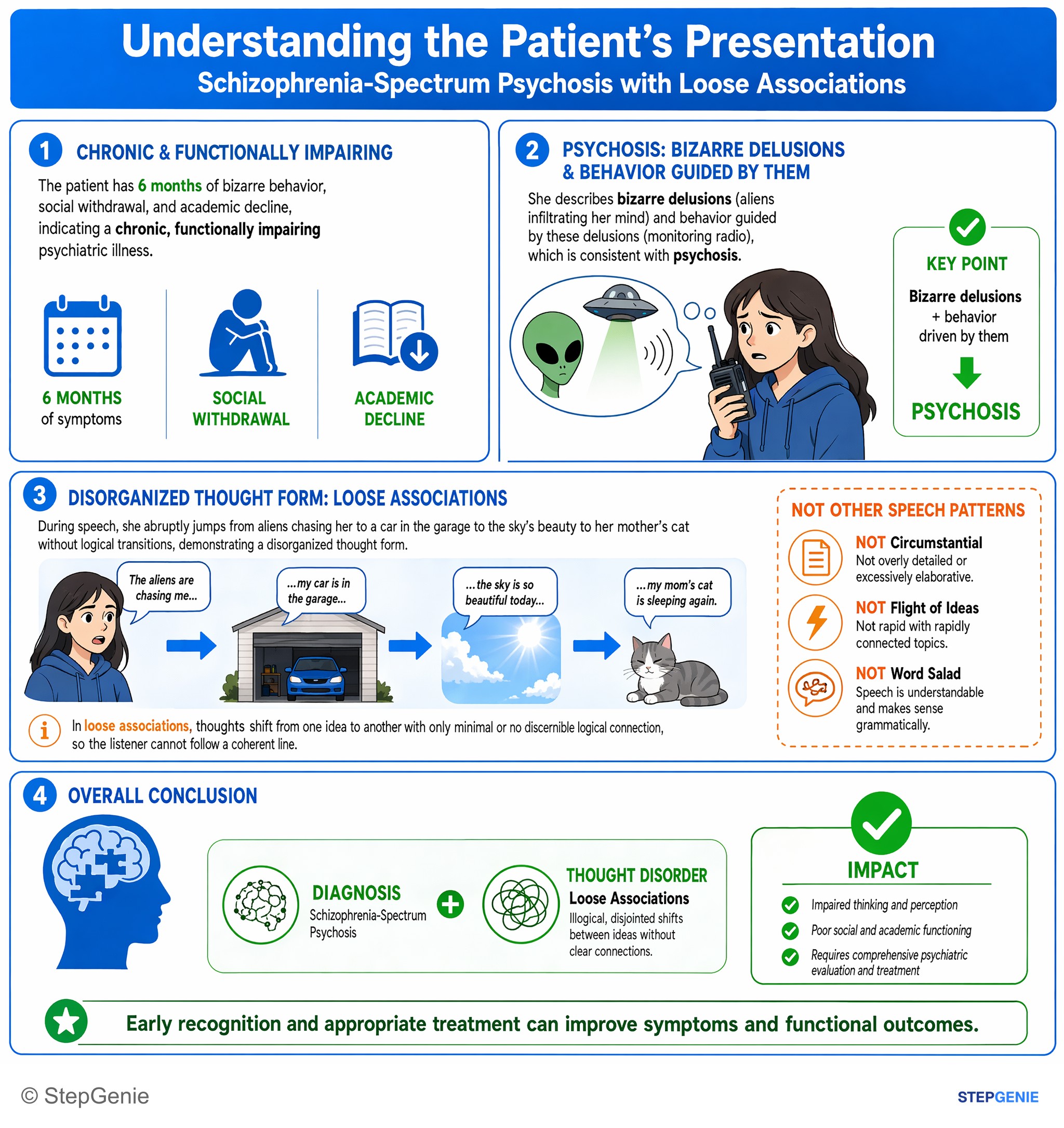
Schizophrenia-spectrum psychosis with loose associations: illogical, disjointed shifts between ideas without clear connections in the…
USMLE Step 1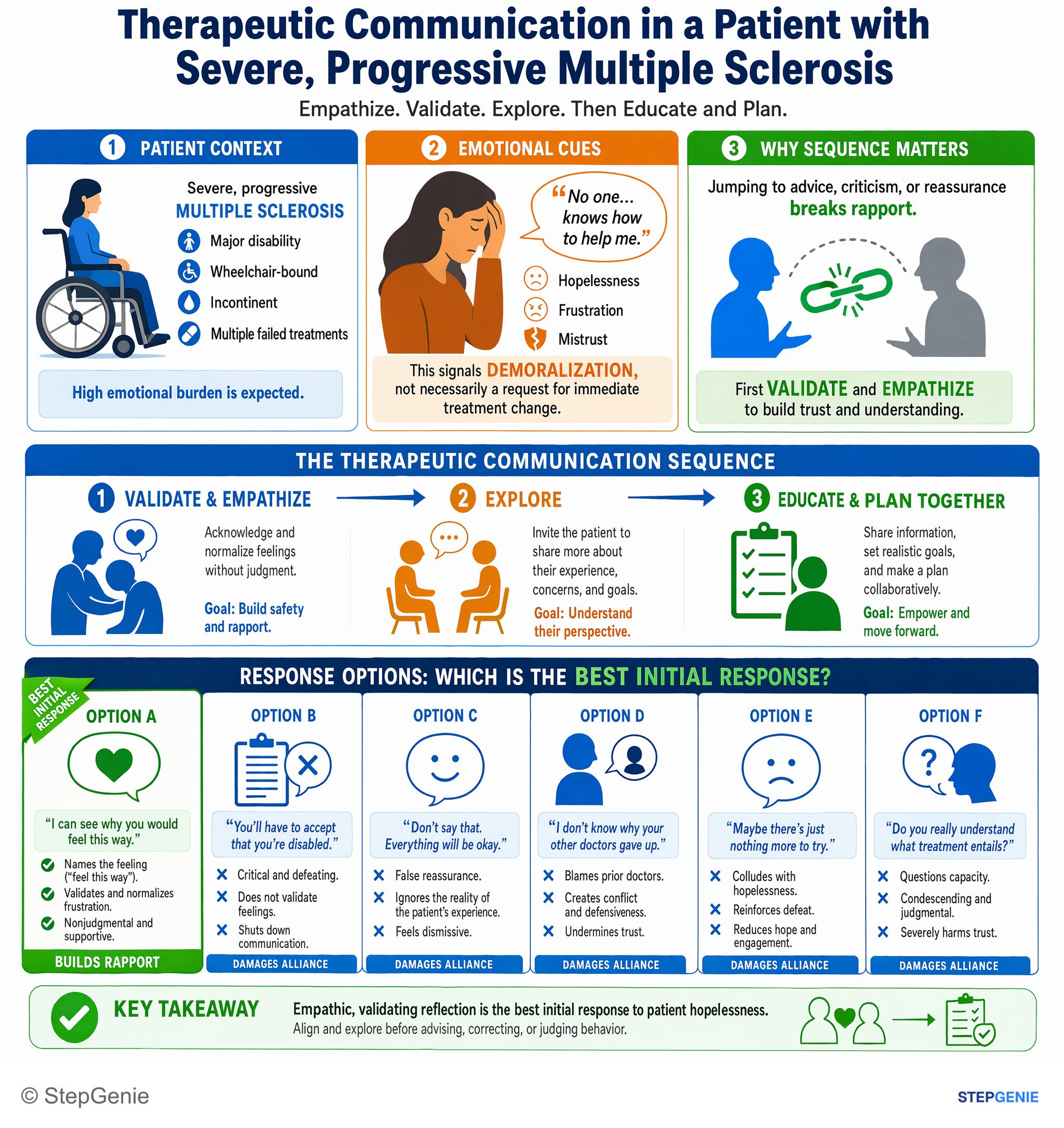
Empathic, validating reflection is the best initial response to patient hopelessness; align and explore before advising, correcting, or…
USMLE Step 2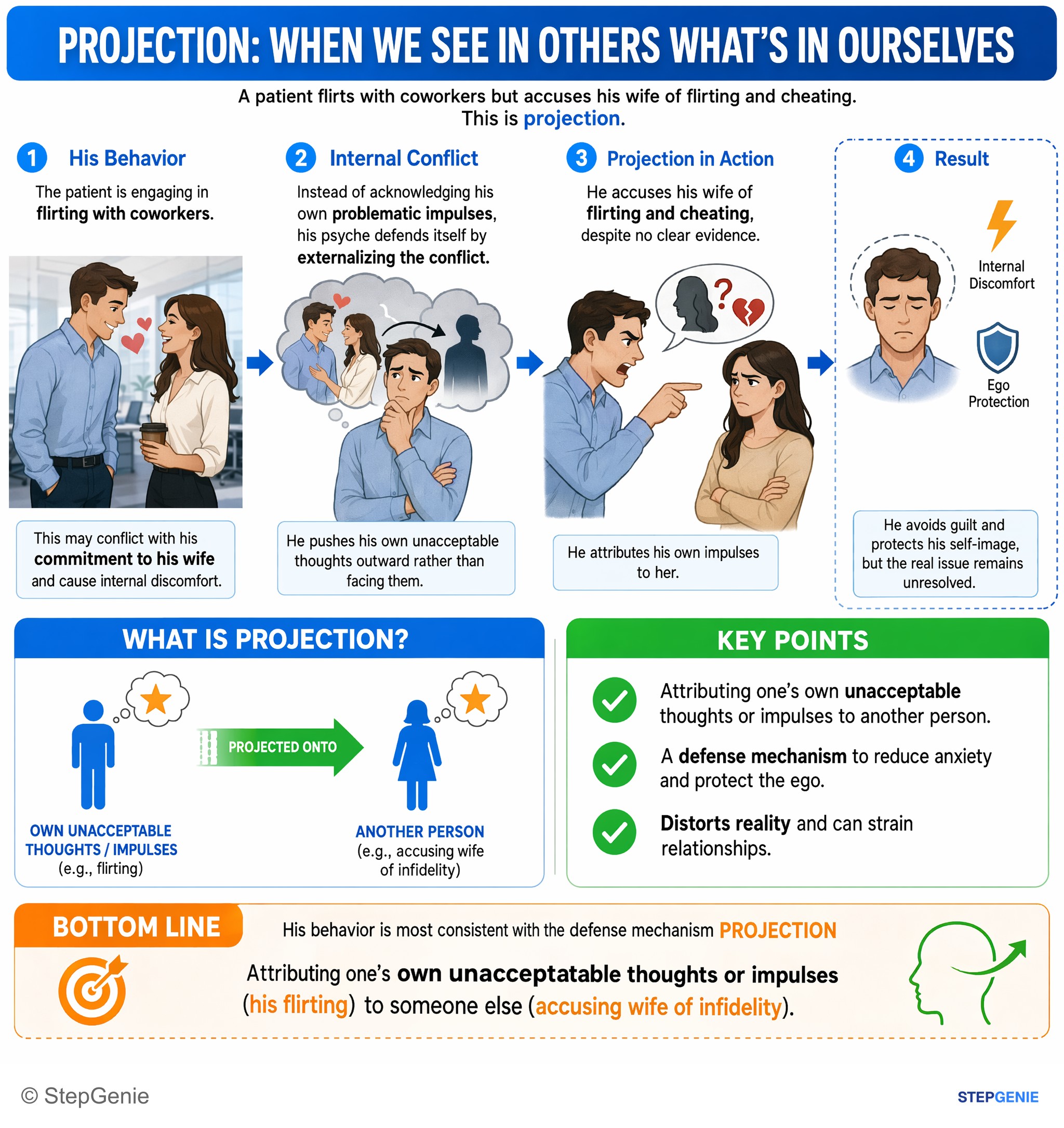
Projection: Attributing one’s own unacceptable thoughts or impulses (his flirting) to someone else (accusing wife of infidelity).
USMLE Step 1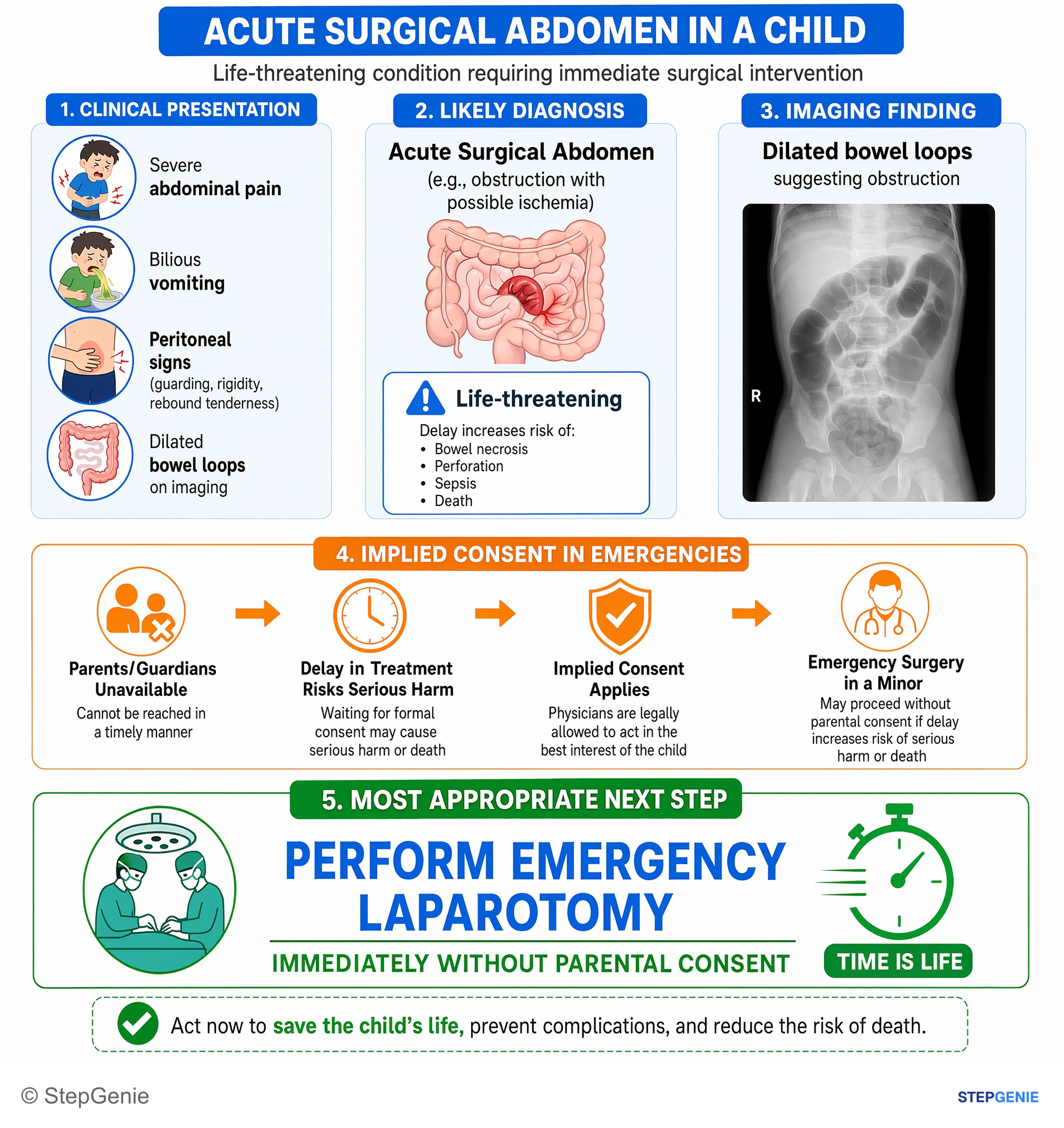
Emergency surgery in a minor: life-threatening condition → physicians may treat without parental consent if delay increases risk of…
USMLE Step 2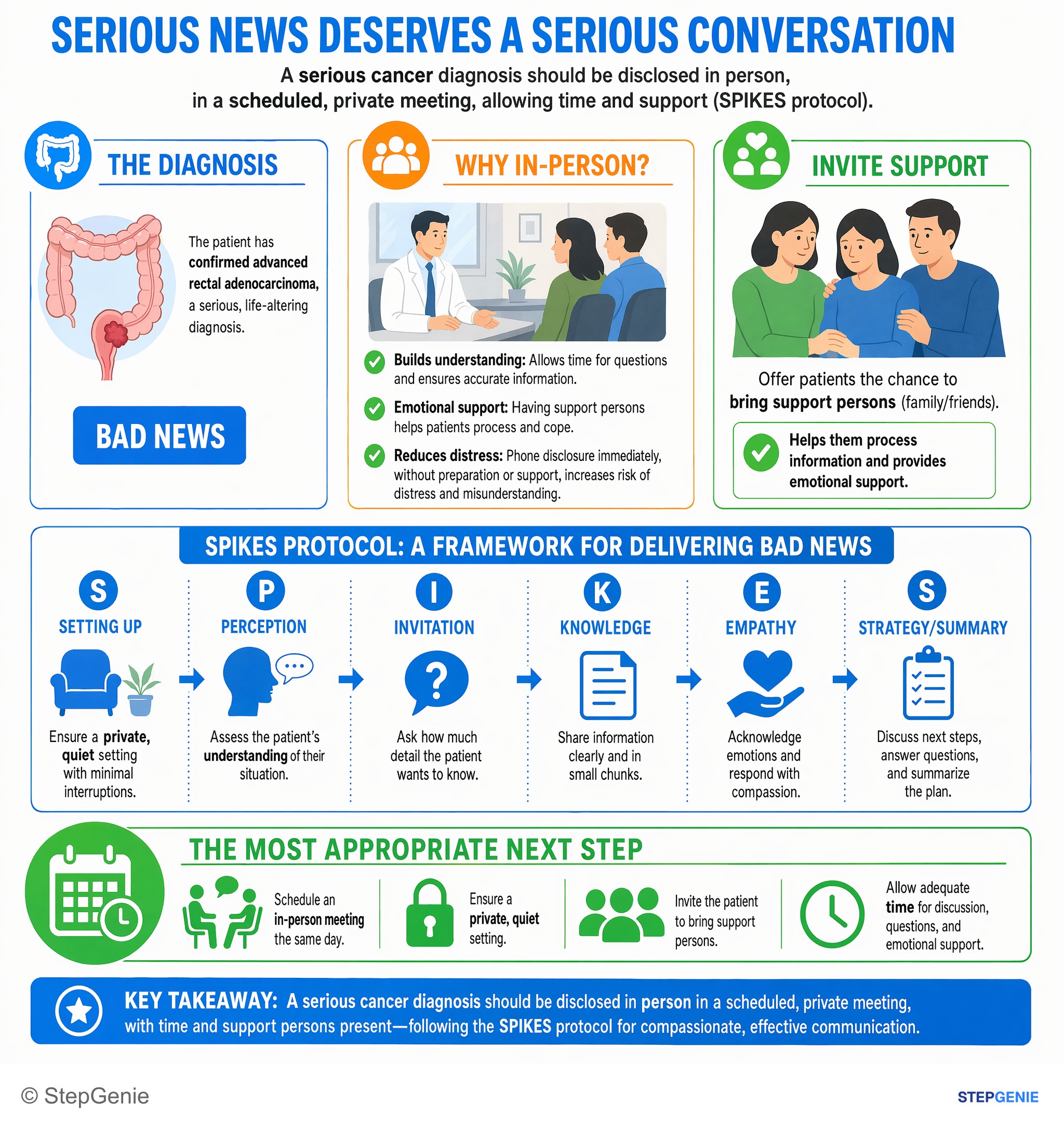
Serious cancer diagnosis should be disclosed in person in a scheduled, private meeting, allowing time and support persons (SPIKES protocol).
USMLE Step 2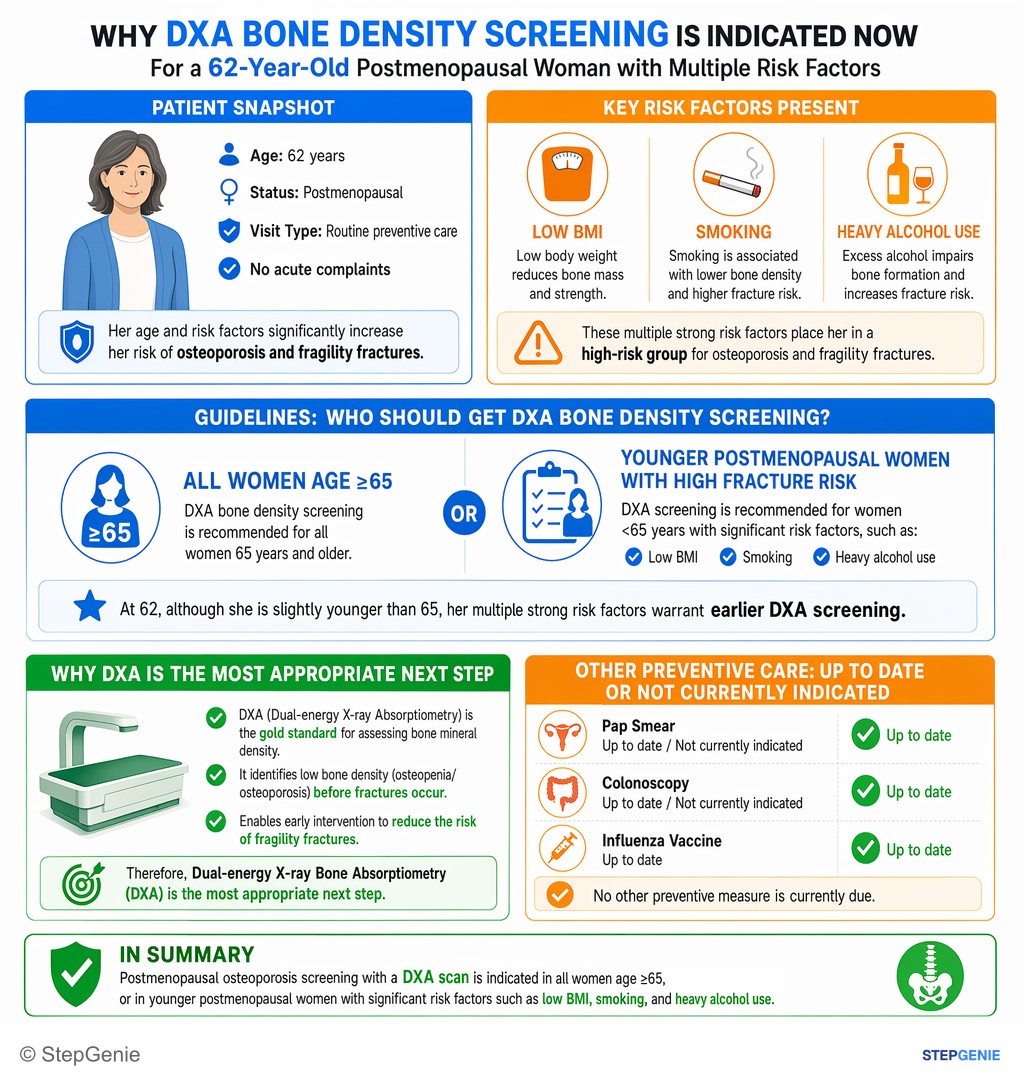
Postmenopausal osteoporosis screening with DXA scan is indicated in all women age ≥65 or younger women with significant risk factors (low…
USMLE Step 2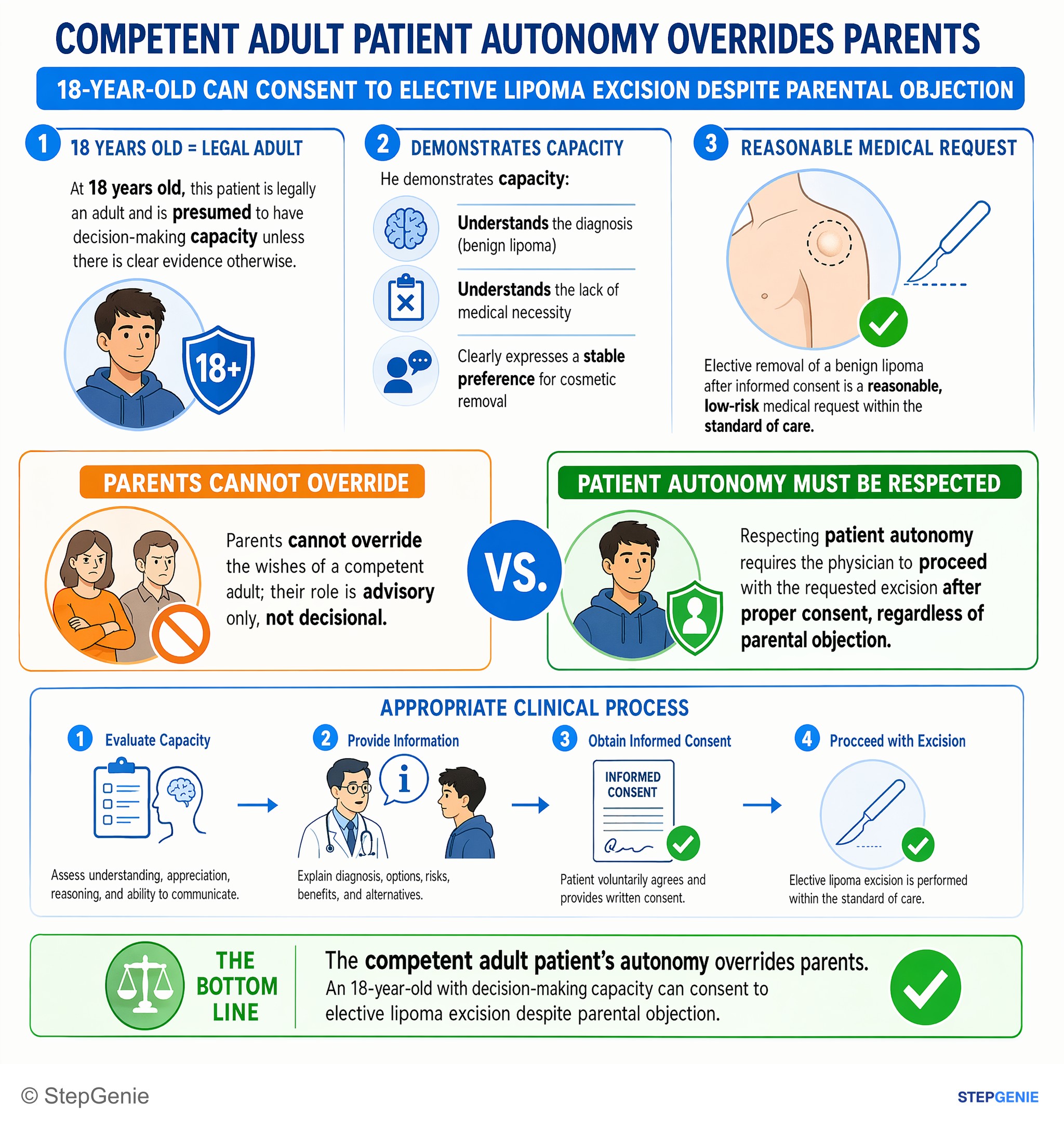
Competent adult patient autonomy overrides parents; 18-year-old can consent to elective lipoma excision despite parental objection.
USMLE Step 2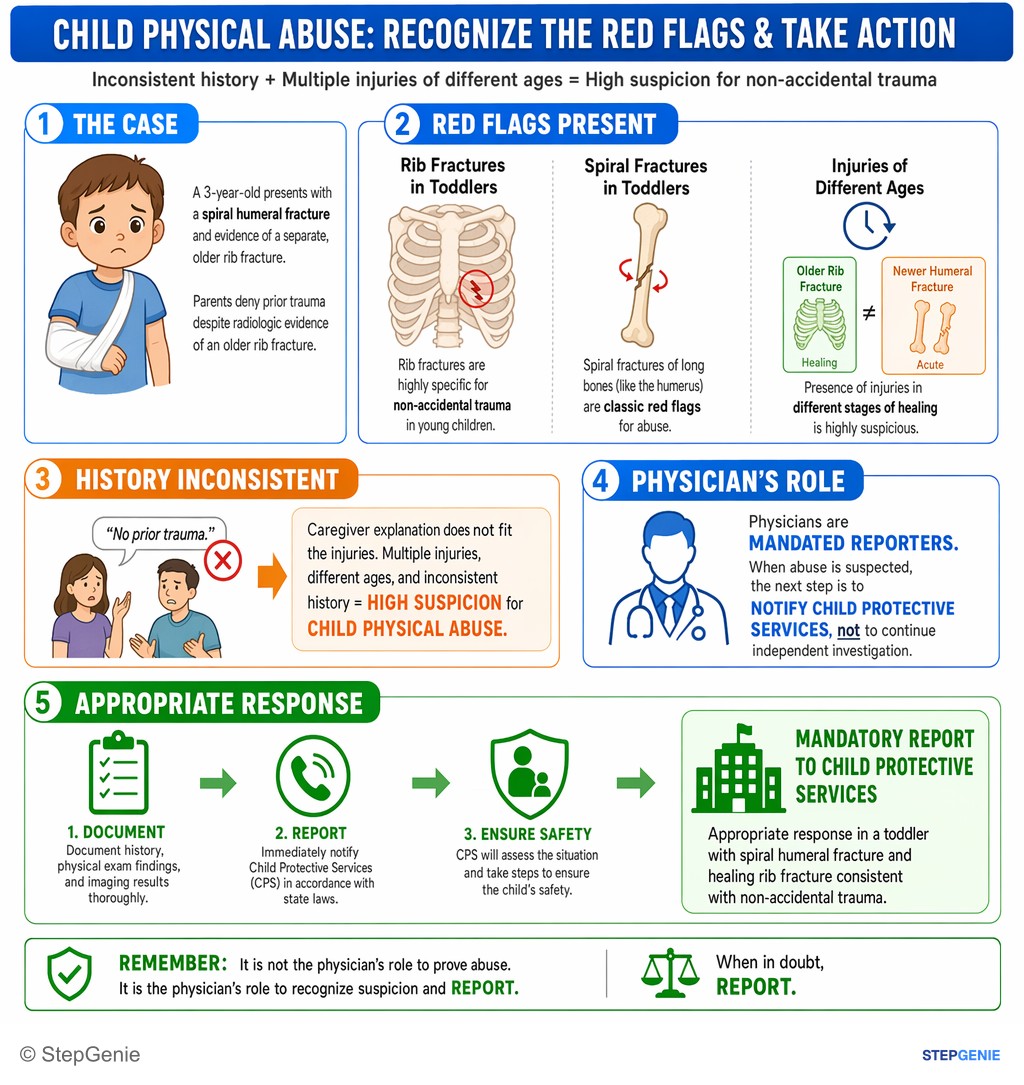
Child physical abuse: non-accidental trauma with spiral humeral fracture plus healing rib fracture in toddler → mandatory report to Child…
USMLE Step 2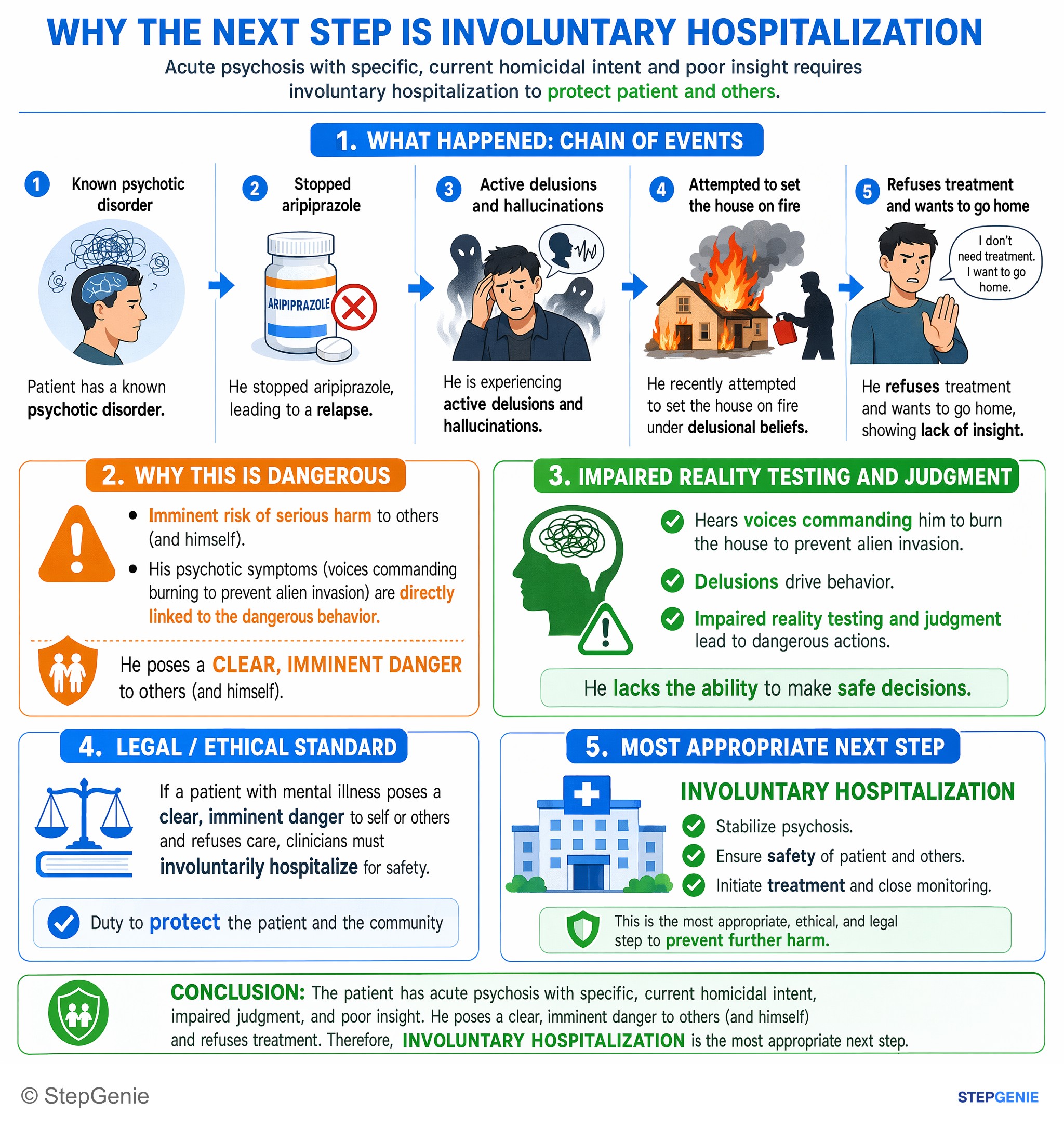
Acute psychosis with specific, current homicidal intent and poor insight requires involuntary hospitalization to protect patient and others.
USMLE Step 2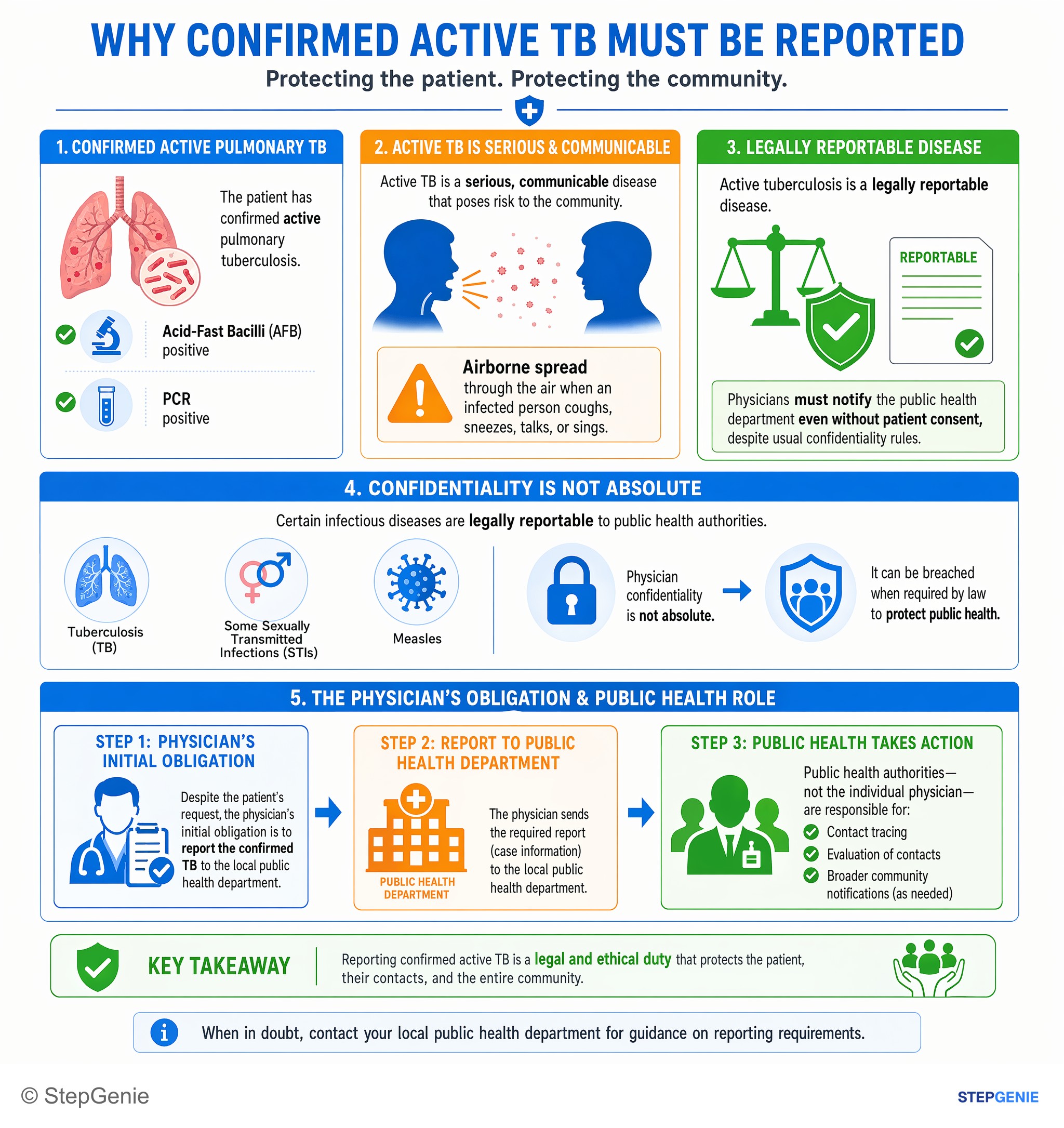
Active tuberculosis is a legally reportable disease; physicians must notify the public health department even without patient consent…
USMLE Step 2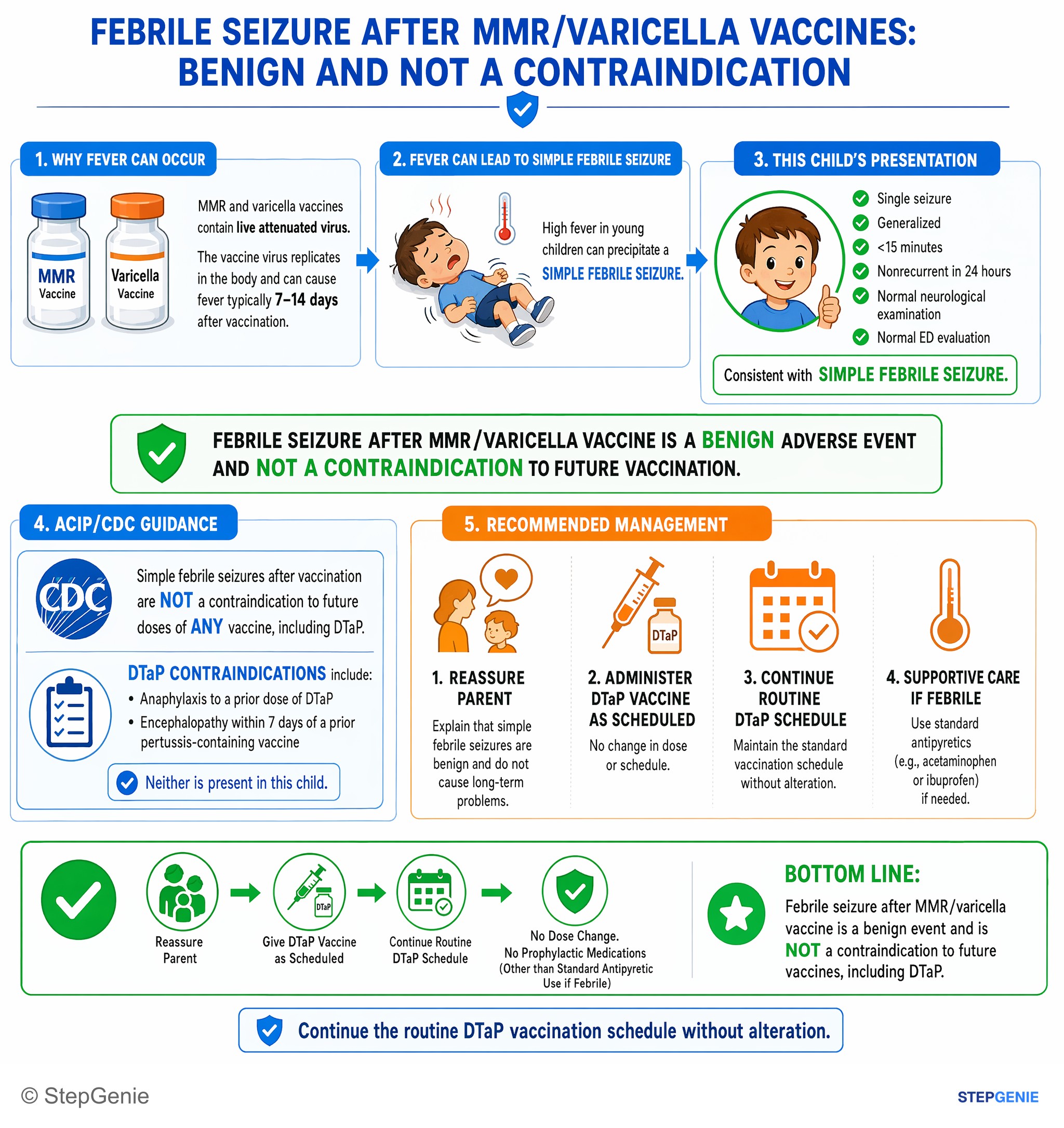
Febrile seizure after MMR/varicella is a benign adverse event and not a contraindication; continue routine DTaP vaccination schedule…
USMLE Step 2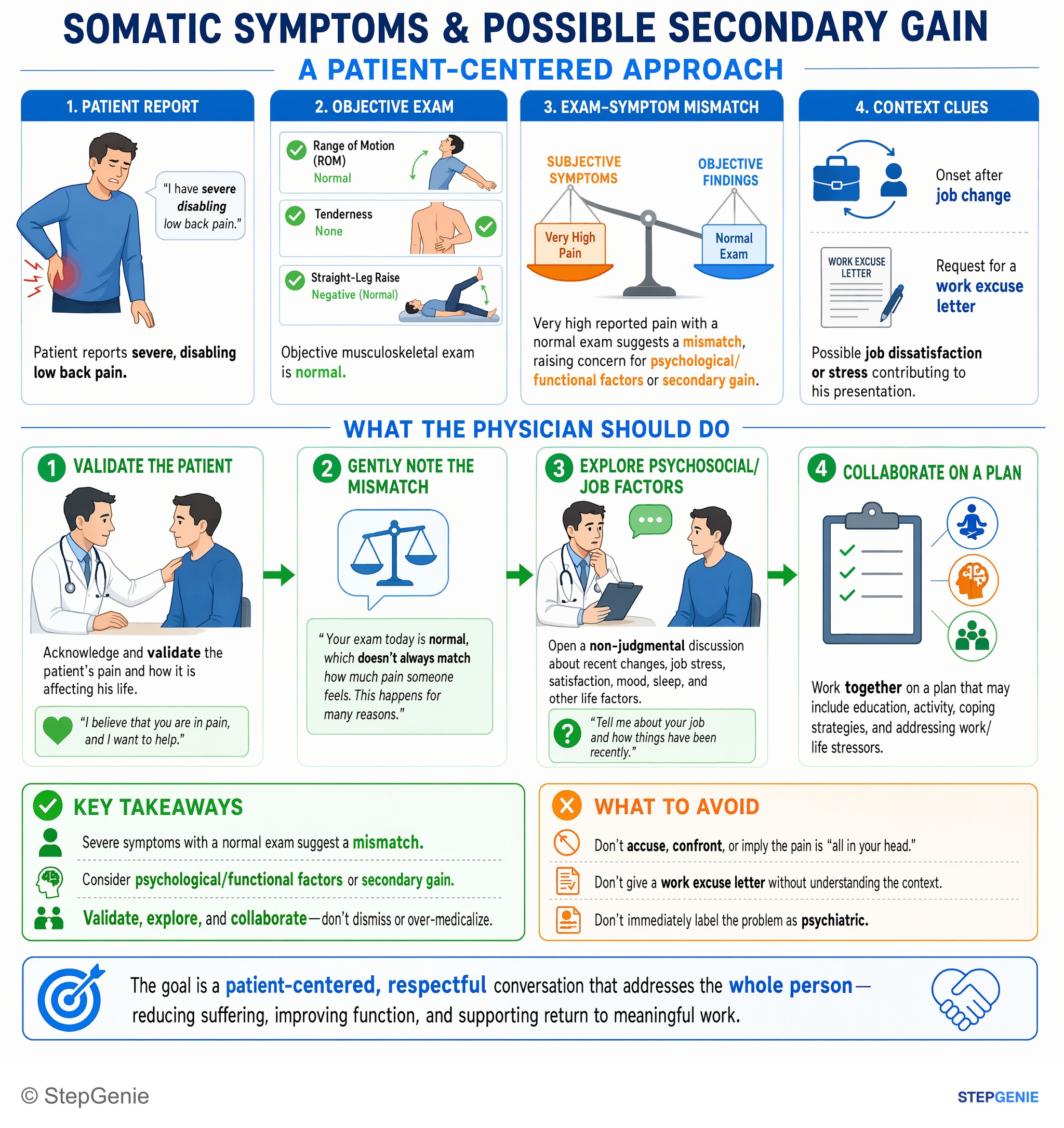
Somatic symptom/possible secondary gain: validate distress, gently note exam–symptom mismatch, and explore psychosocial/job stressors…
USMLE Step 227 publishable behavioral science & ethics infographics in the library — 2 from Step 1 questions and 25 from Step 2 CK, counted on October 29, 2026. An image is listed when its question is active, has a full structured explanation, passed verification and carries no unresolved report.
Practice the questions behind these images
Each image explains one question. The behavioral science & ethics topic page has the written explanations and the question sets, and the preview lets you answer three questions without an account.
Other image sets
Study behavioral science & ethics with the image attached
In the app, each of these sits at the end of the question it explains, alongside the step-by-step reasoning and a panel for every option you did not pick. Starting is free.
Start practicing free