High-yield cardiology images for the USMLE
StepGenie explanation infographics. Free to view, no account needed.
What do StepGenie's cardiology images cover?
Each cardiology image is a single-panel infographic StepGenie draws for one of its own practice questions. It redraws the reasoning behind that question's answer — the murmur, the pressure change, the drug's site of action — so the chain from finding to diagnosis sits in one picture.
Cardiology images are drawn for Step 1 and Step 2 CK questions in close to equal numbers, and the count under the grid gives the current split. Aortic and peripheral artery disease, congenital lesions, heart failure and shock, and valvular disease carry most of the images; cardiac arrhythmias, hypertension, myopericardial disease and the cardiovascular drug classes fill in the rest.
Because every image was drawn to close a specific question, it argues rather than summarizes. A coarctation panel shows where the pressure gradient appears and why the femoral pulse lags. A Heyde syndrome panel runs valve to shear stress to von Willebrand factor to colonic bleeding, which is the link a murmur table cannot carry.
Use them the way you would use a whiteboard right after getting a question wrong. Read the caption, cover the image, and rebuild the chain out loud. Whichever arrow you cannot say is the concept to go back to — not the whole system.
Two related sets sit elsewhere. Congenital lesions overlap heavily with the pediatrics gallery, and the ischemic heart disease panels are easier to read after the pharmacology images on antiplatelet and anticoagulant mechanisms.
Topics in this set
Labels are the question-bank topics these images are filed under. Step 1 and Step 2 file some of the same material under different names, so a few labels here merge both.
Cardiology explanation images
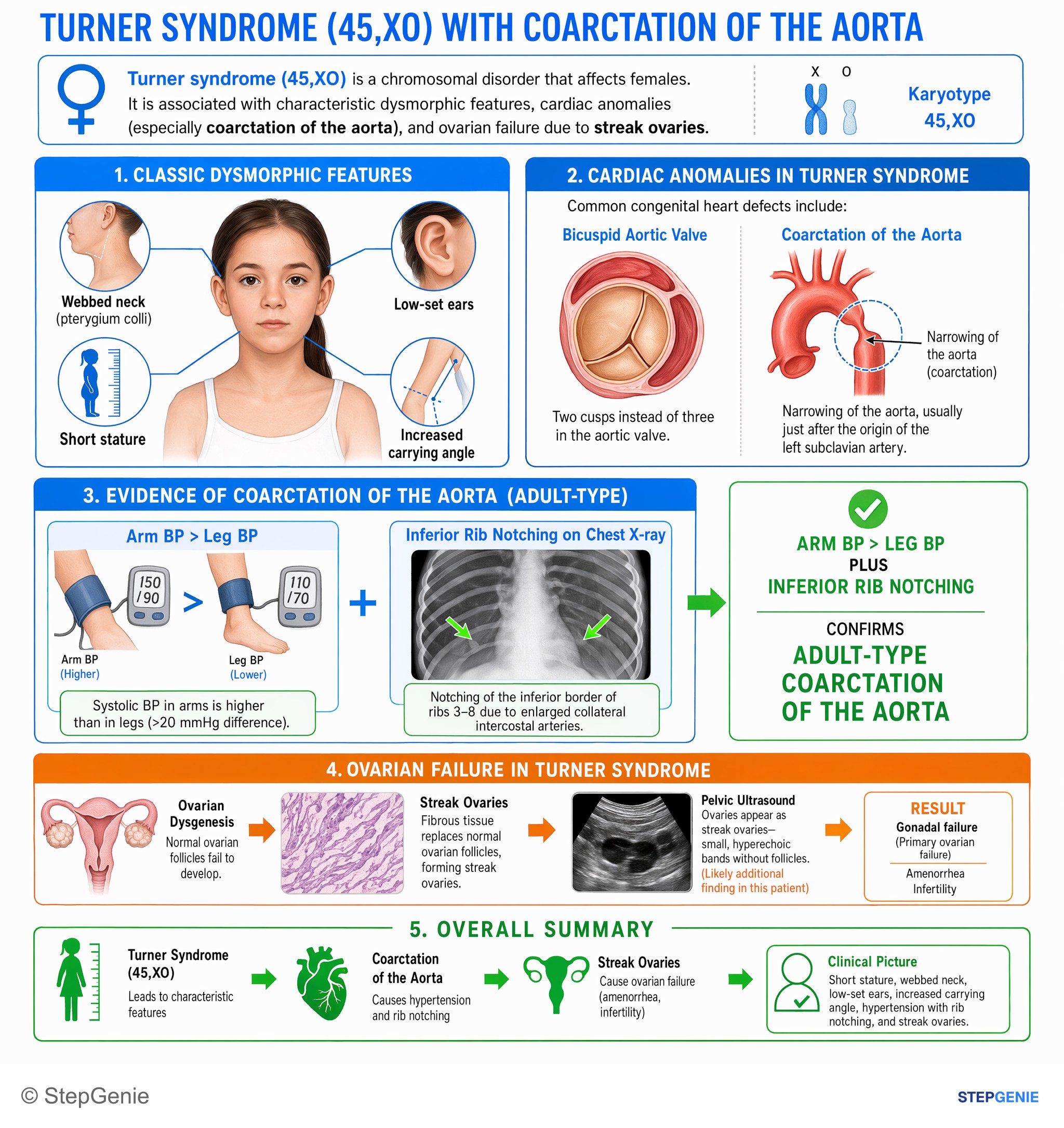
Turner syndrome with coarctation of the aorta → streak ovaries causing ovarian failure, short stature, webbed neck, and hypertension with…
USMLE Step 1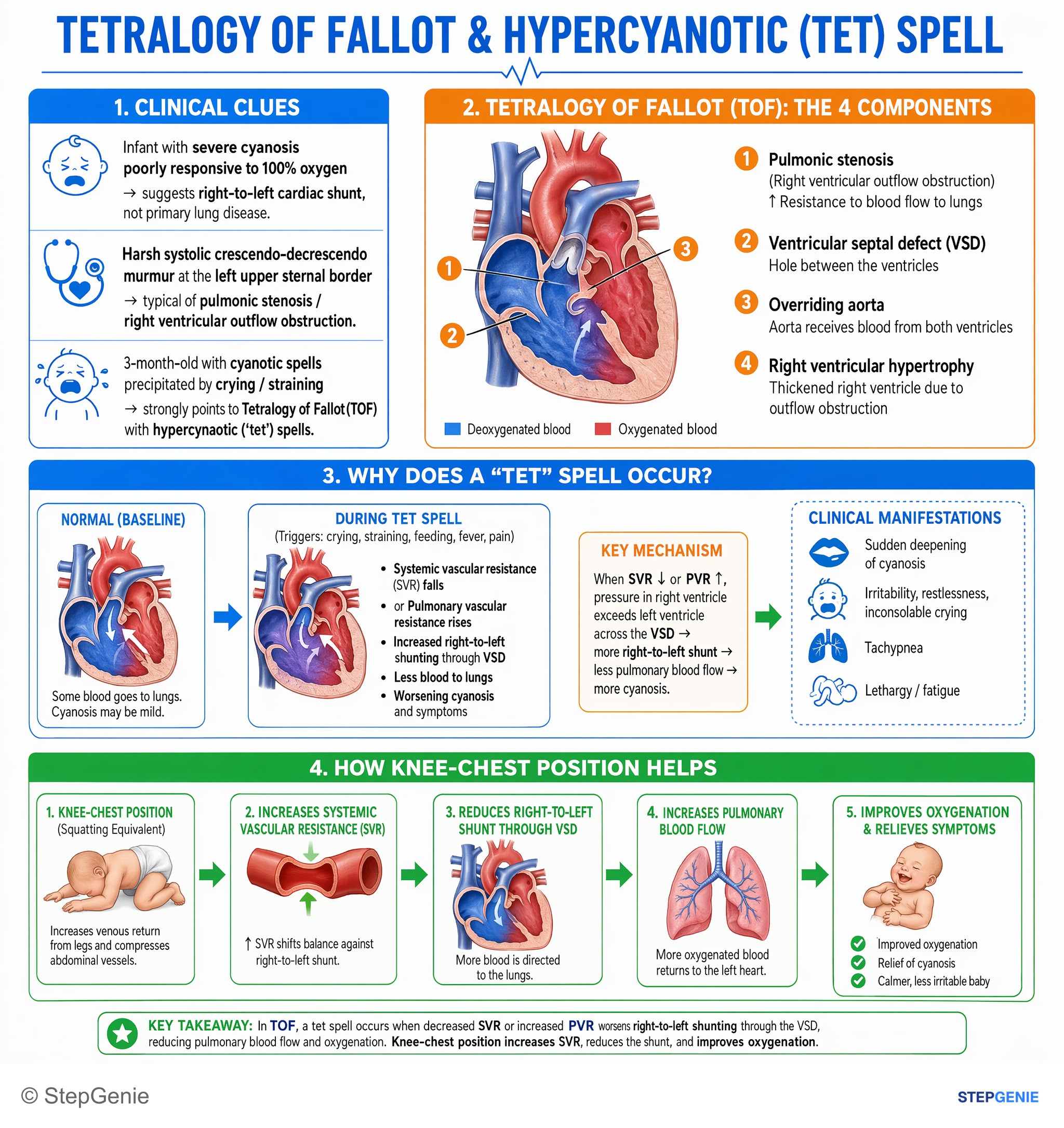
Tetralogy of Fallot hypercyanotic (tet) spell: right-to-left shunt worsens with decreased SVR; knee-chest position increases SVR and…
USMLE Step 2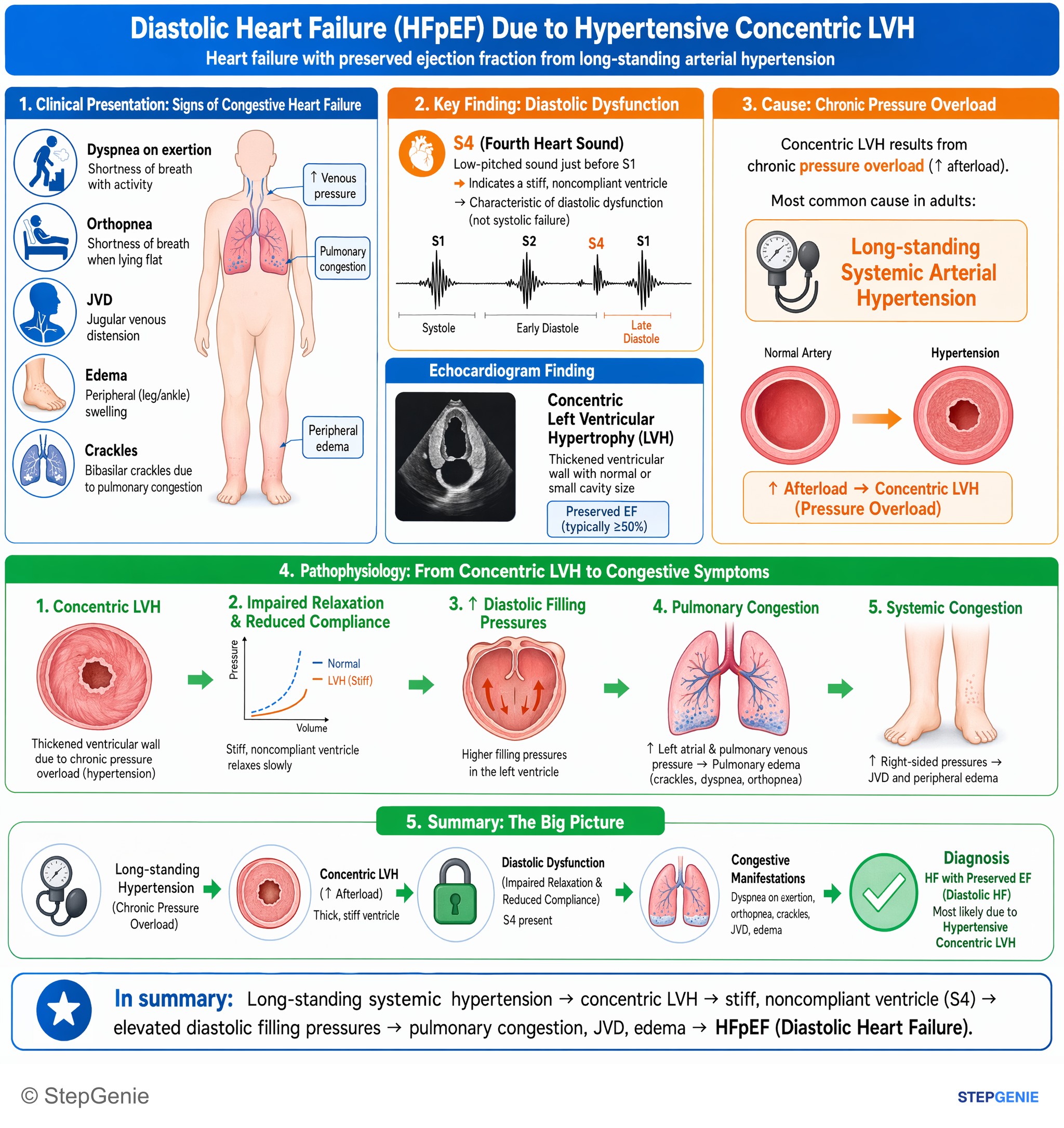
Heart failure with preserved ejection fraction (diastolic HF) from long-standing hypertensive concentric LV hypertrophy → pulmonary…
USMLE Step 1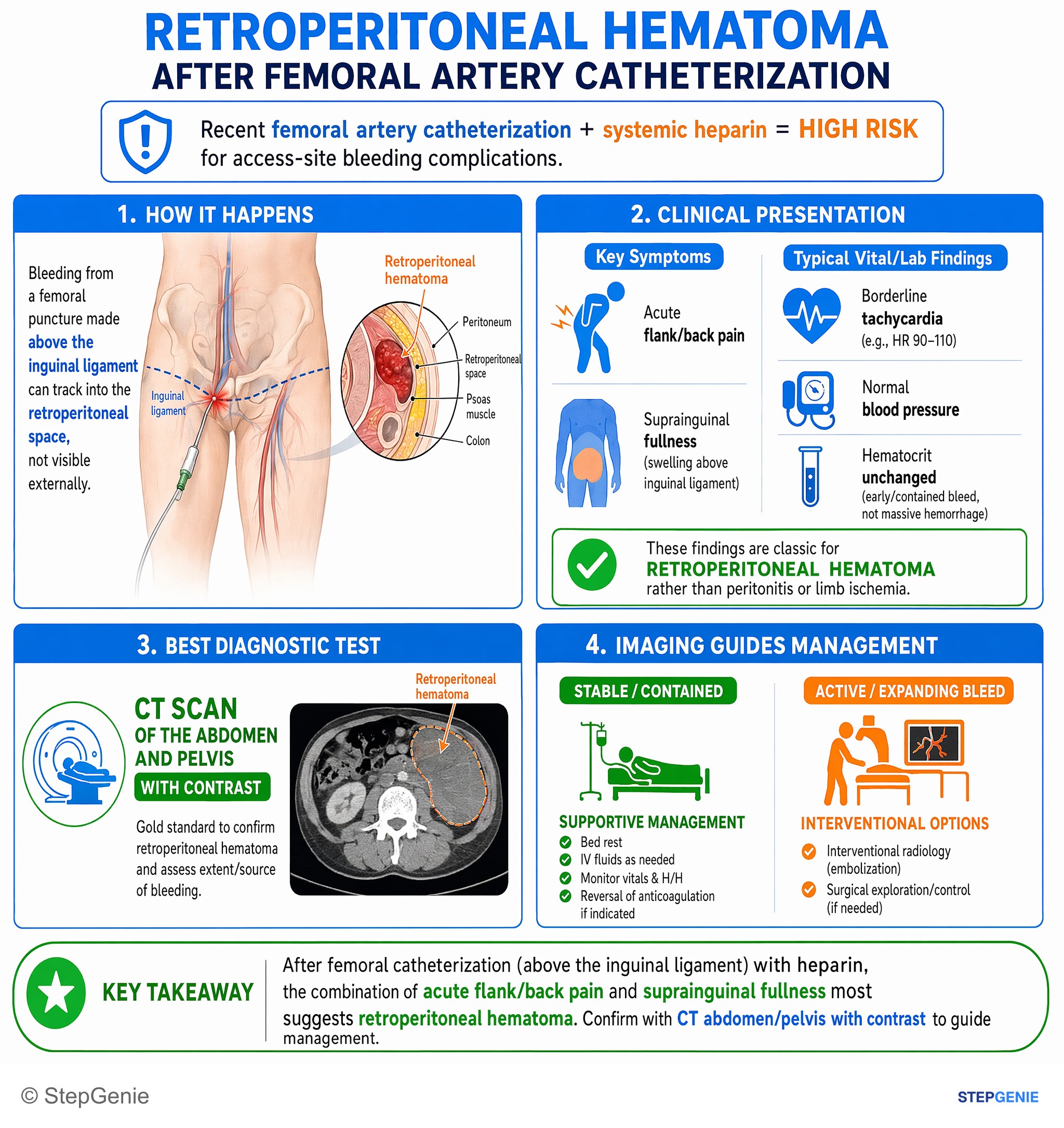
Retroperitoneal hematoma after femoral catheterization presents with acute flank/back pain and suprainguinal fullness; diagnose with CT…
USMLE Step 2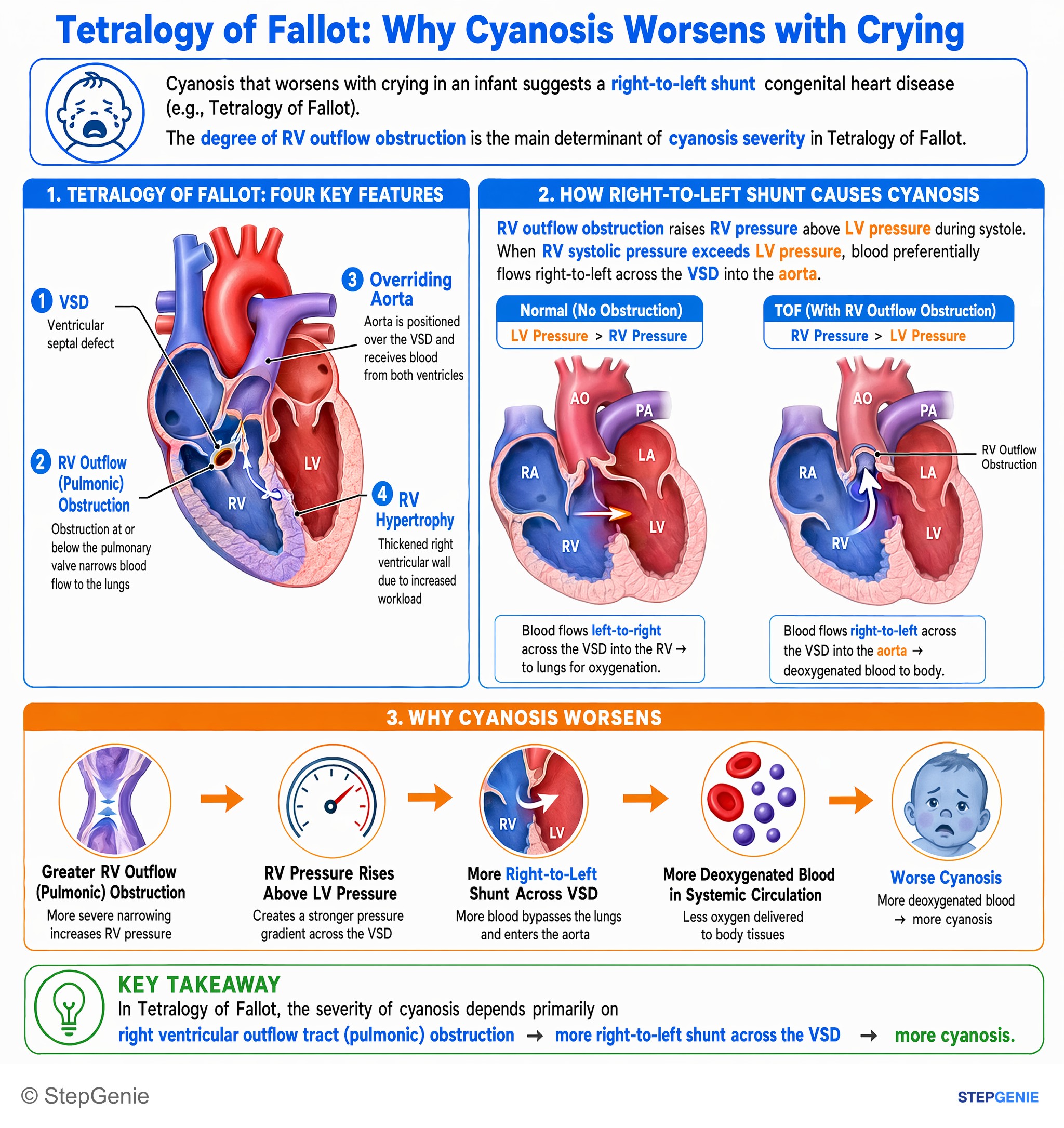
Tetralogy of Fallot cyanosis severity depends primarily on **right ventricular outflow tract (pulmonic) obstruction → more right-to-left…
USMLE Step 1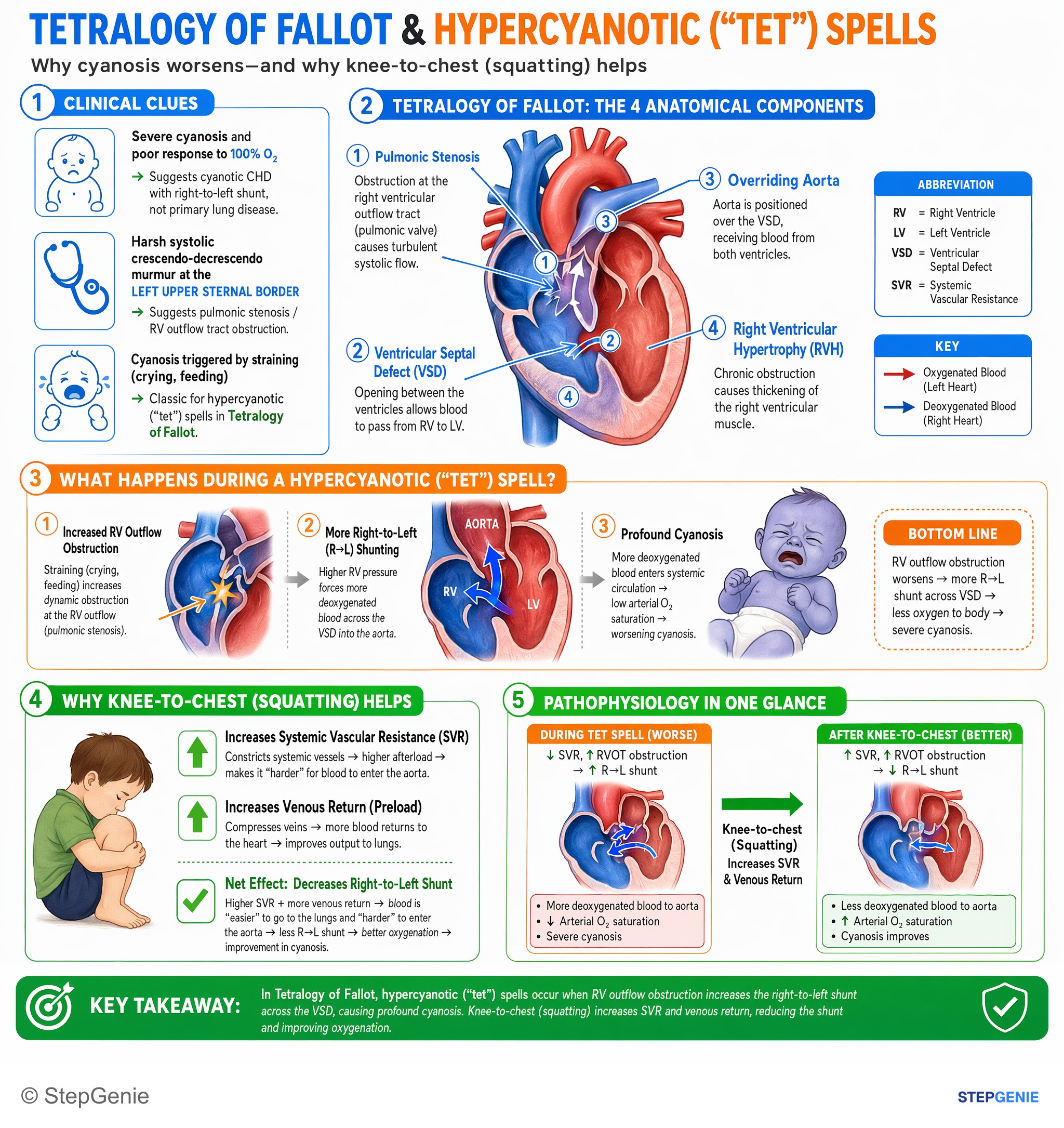
Tetralogy of Fallot hypercyanotic (“tet”) spell: RV outflow obstruction worsens R→L shunt; squatting/knee-chest increases SVR, reducing…
USMLE Step 2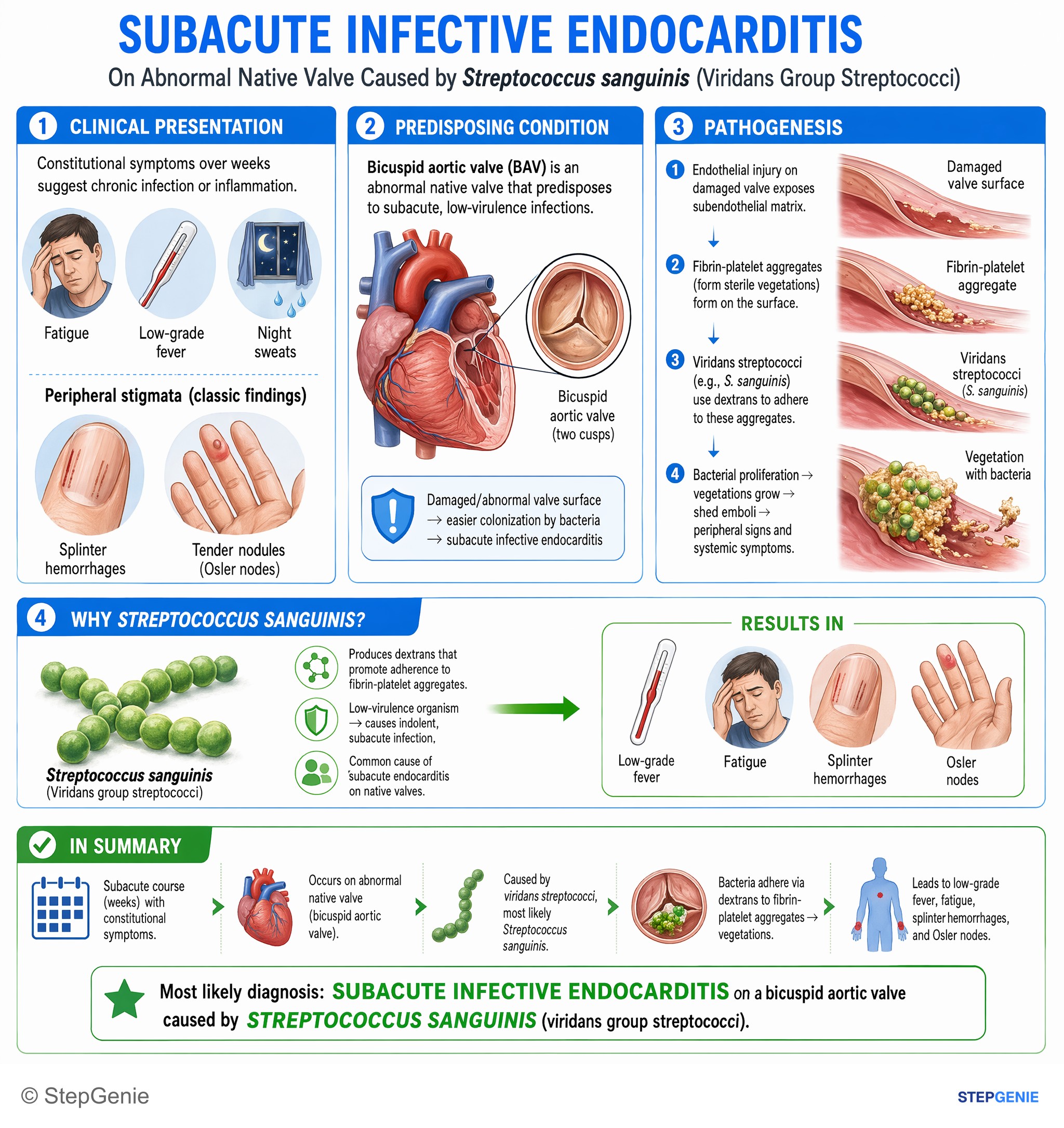
Subacute infective endocarditis on abnormal valve (bicuspid aortic) by viridans streptococci (S sanguinis) causing low-grade fever…
USMLE Step 1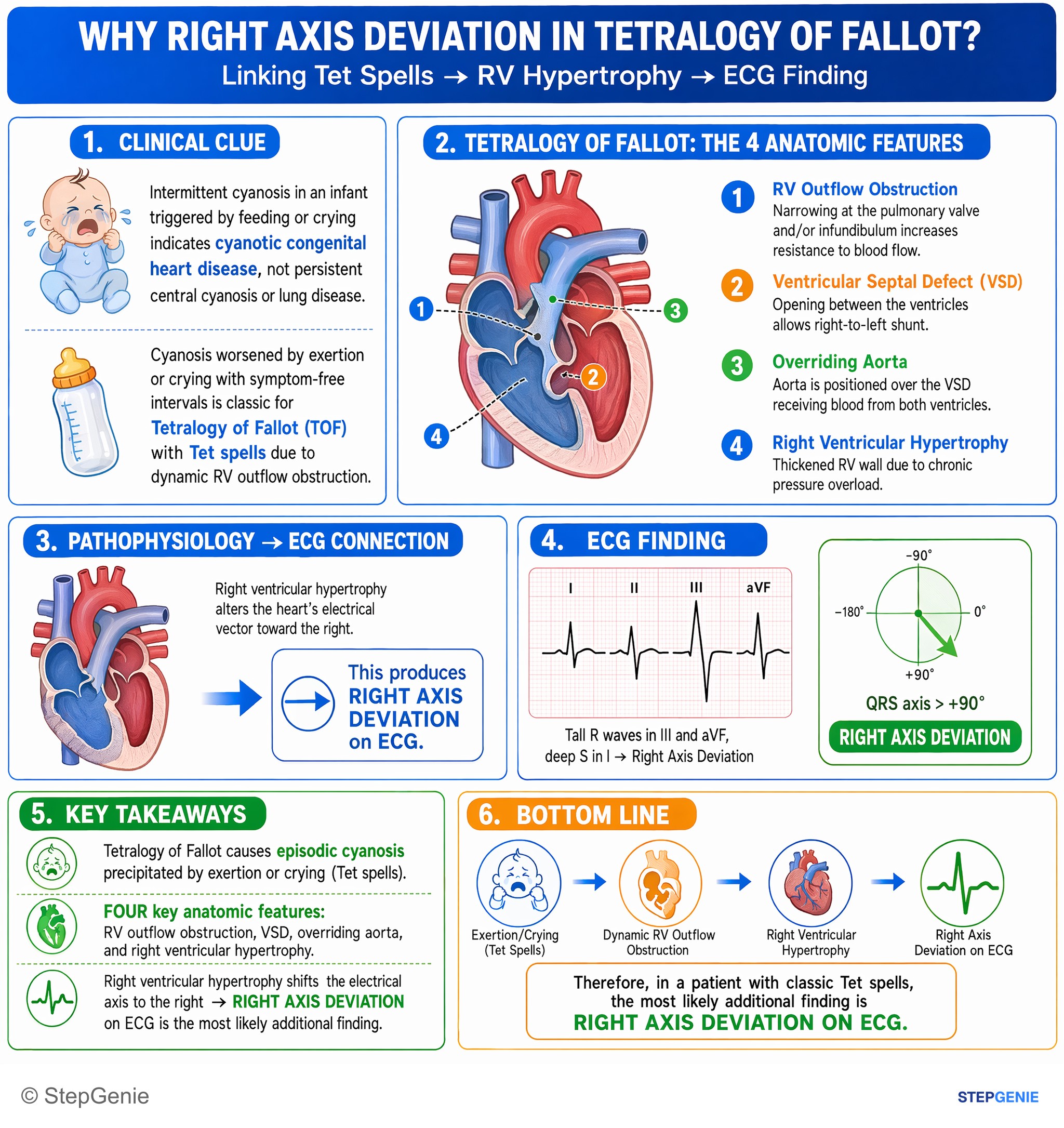
Tetralogy of Fallot causes episodic cyanosis precipitated by exertion/crying; RV hypertrophy produces right axis deviation on ECG.
USMLE Step 2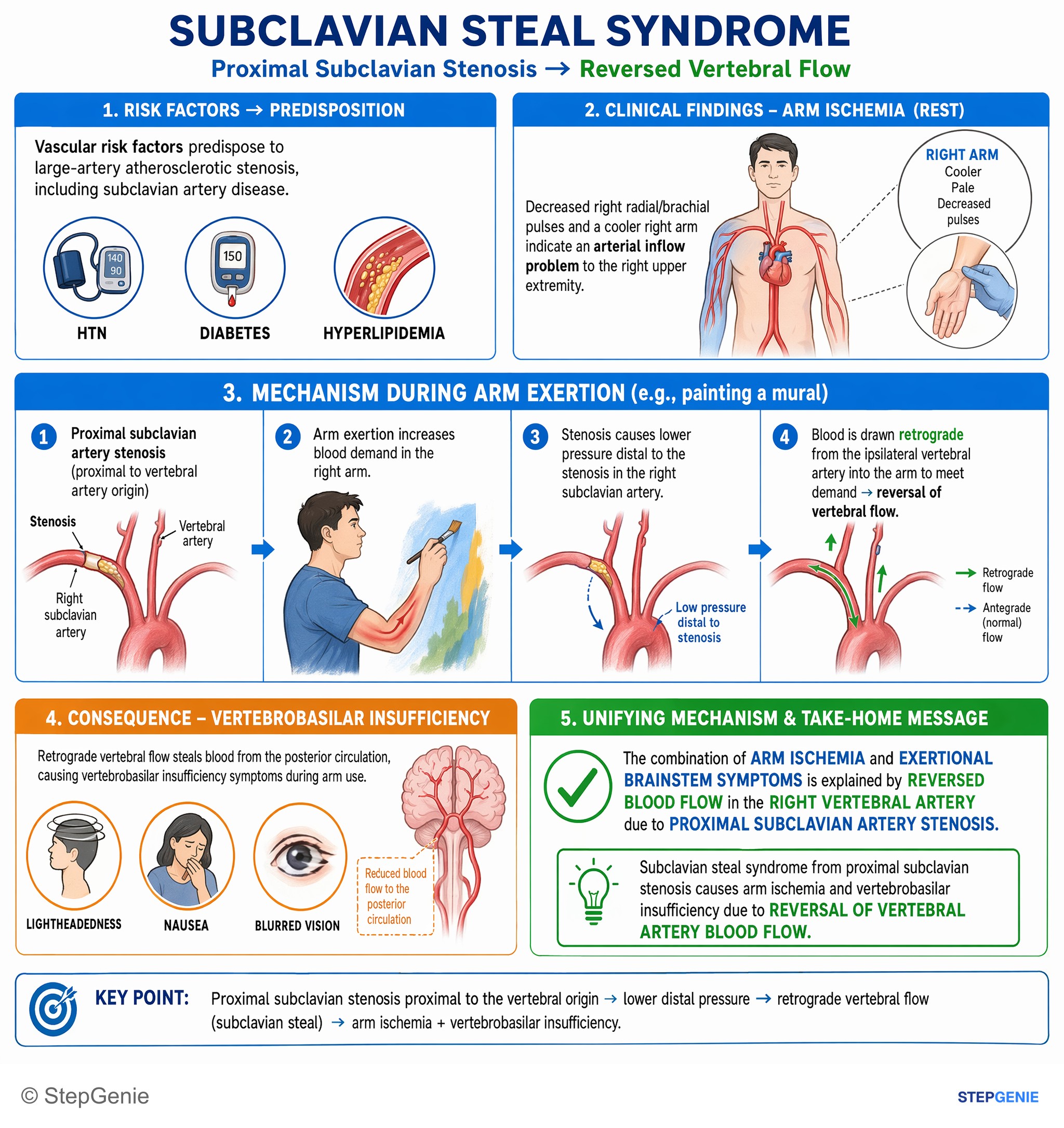
Subclavian steal syndrome from proximal subclavian stenosis causes arm ischemia + vertebrobasilar insufficiency due to reversal of…
USMLE Step 1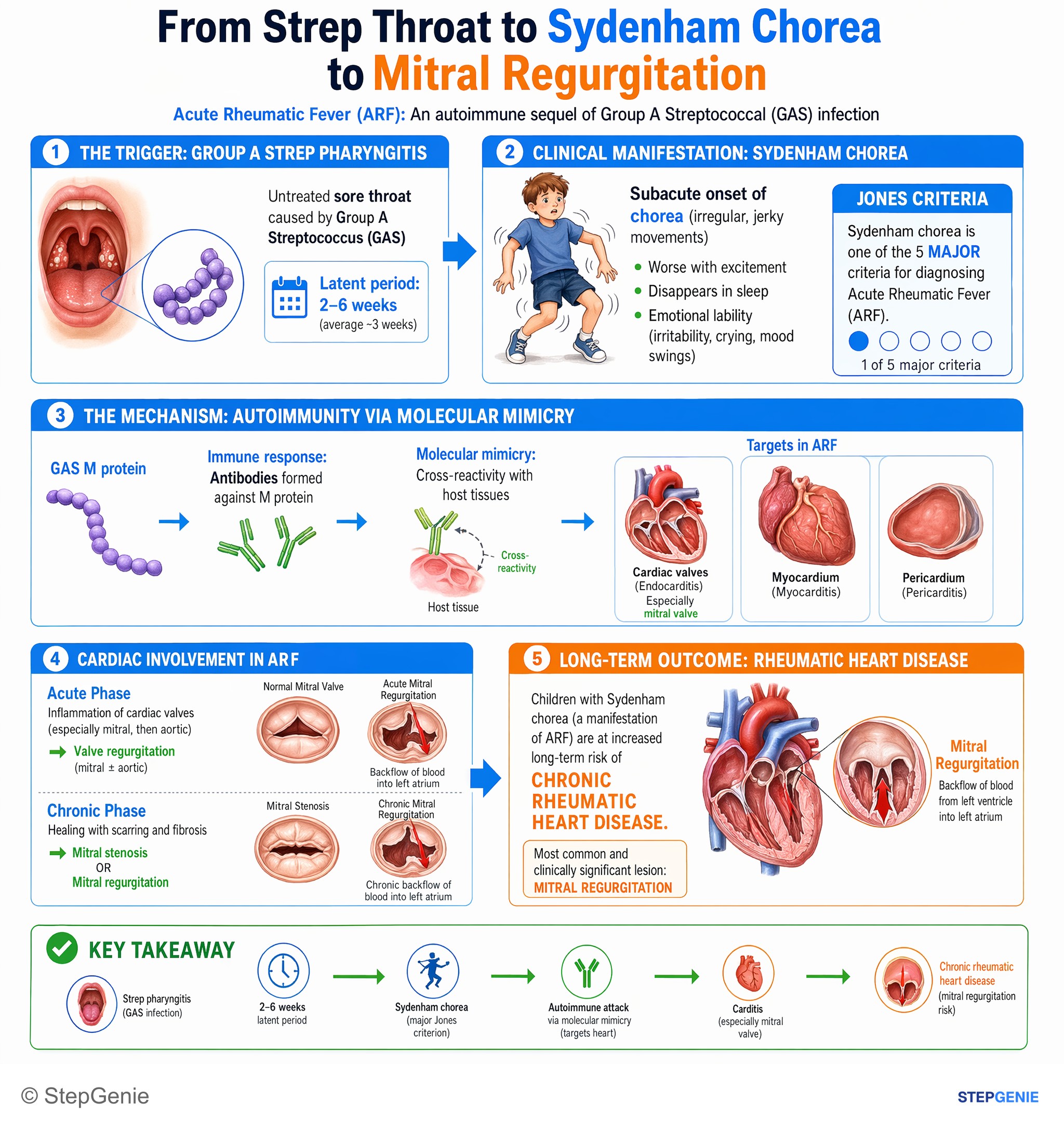
Sydenham chorea from acute rheumatic fever after strep pharyngitis → autoimmune carditis targeting valves → chronic mitral regurgitation…
USMLE Step 2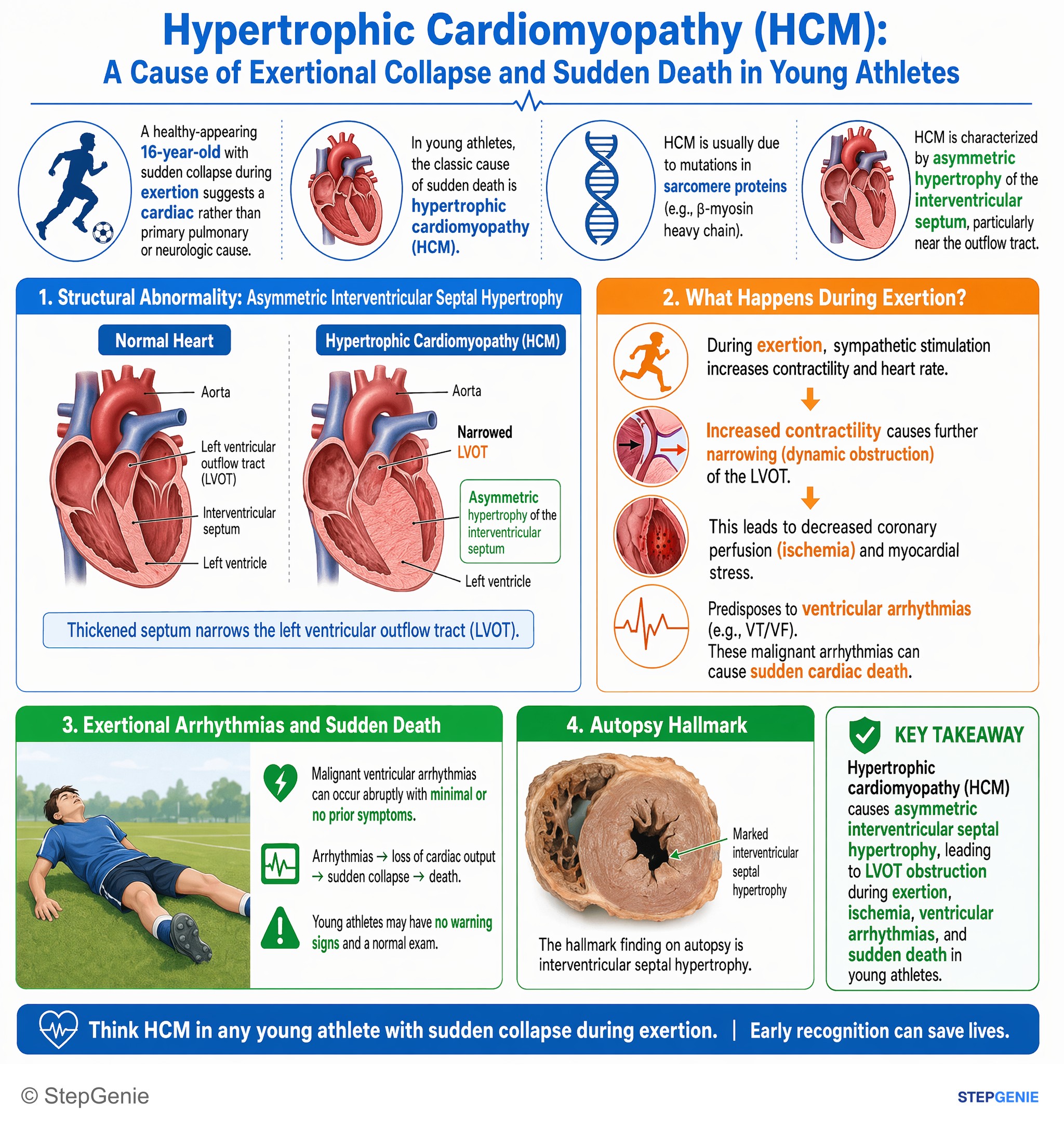
Hypertrophic cardiomyopathy with asymmetric interventricular septal hypertrophy causes exertional arrhythmias and sudden death in young…
USMLE Step 1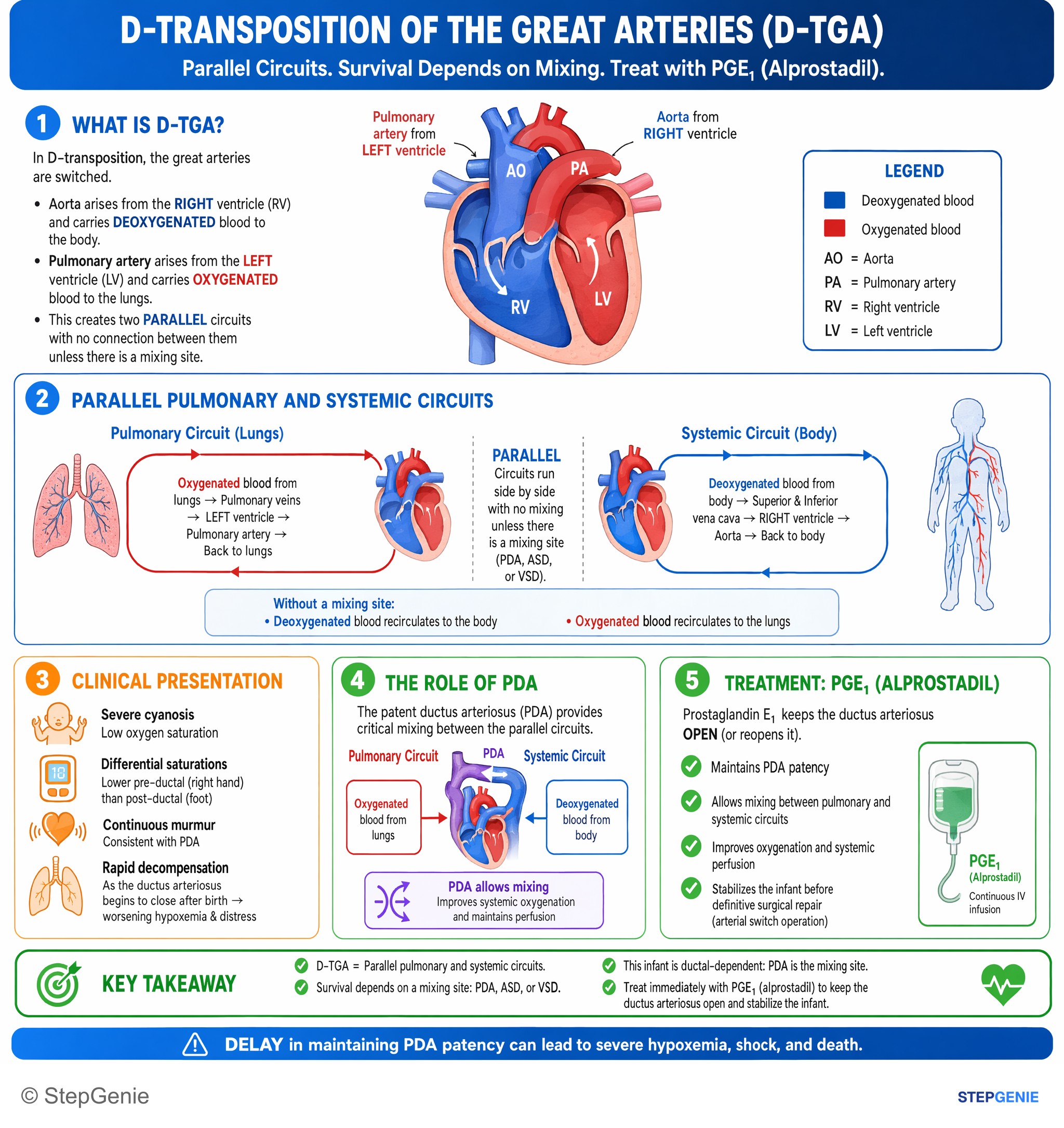
D-transposition of the great arteries: parallel pulmonary/systemic circuits; survival depends on PDA/ASD/VSD. Treat with PGE1…
USMLE Step 2366 publishable cardiology infographics in the library — 185 from Step 1 questions and 181 from Step 2 CK, counted on October 29, 2026. This page shows 48 of them, alternating the two steps. An image is listed when its question is active, has a full structured explanation, passed verification and carries no unresolved report.
This page caps out at 48 images. 318 more cardiology infographics sit in the in-app image library, where they are searchable and filterable by subject, system and topic.
Open the image libraryPractice the questions behind these images
Each image explains one question. The cardiology topic page has the written explanations and the question sets, and the preview lets you answer three questions without an account.
Other image sets
Study cardiology with the image attached
In the app, each of these sits at the end of the question it explains, alongside the step-by-step reasoning and a panel for every option you did not pick. Starting is free.
Start practicing free