High-yield neurology images for the USMLE
StepGenie explanation infographics. Free to view, no account needed.
What do StepGenie's neurology images cover?
Each neurology image is an infographic StepGenie drew to explain one of its own practice questions. Most are localization pictures: where the lesion is, which tract it interrupts, and what that predicts on exam. The caption states the conclusion the image is arguing for.
The neurology set leans toward the two things that decide neurology questions: localization and time course. Neurodegenerative disorders and dementias form the largest block, followed by spinal cord disorders, toxic and drug-related neuropathies, CNS infections, cerebrovascular disease, and peripheral nerve and muscle disease. CNS tumors, traumatic brain injury and seizure disorders each carry a smaller group.
Cord and peripheral nerve images are the ones worth sitting with. A hemisection panel puts the ipsilateral dorsal column loss beside the contralateral spinothalamic loss on the same body diagram, which is faster to internalize than any sentence about decussation levels. Dementia panels do the opposite job: they separate look-alike syndromes by the feature that actually distinguishes them, such as early gait failure versus early visual hallucinations.
Read them against a blank body diagram. Name the tract, then the side, then the level, and only then check the image. The gap between your answer and the picture is the revision list.
Stroke territory panels are the exception to that method. Those are worth reading first and reciting later, because the vascular map is the part that is hardest to reconstruct from memory.
Topics in this set
Labels are the question-bank topics these images are filed under. Step 1 and Step 2 file some of the same material under different names, so a few labels here merge both.
Neurology explanation images
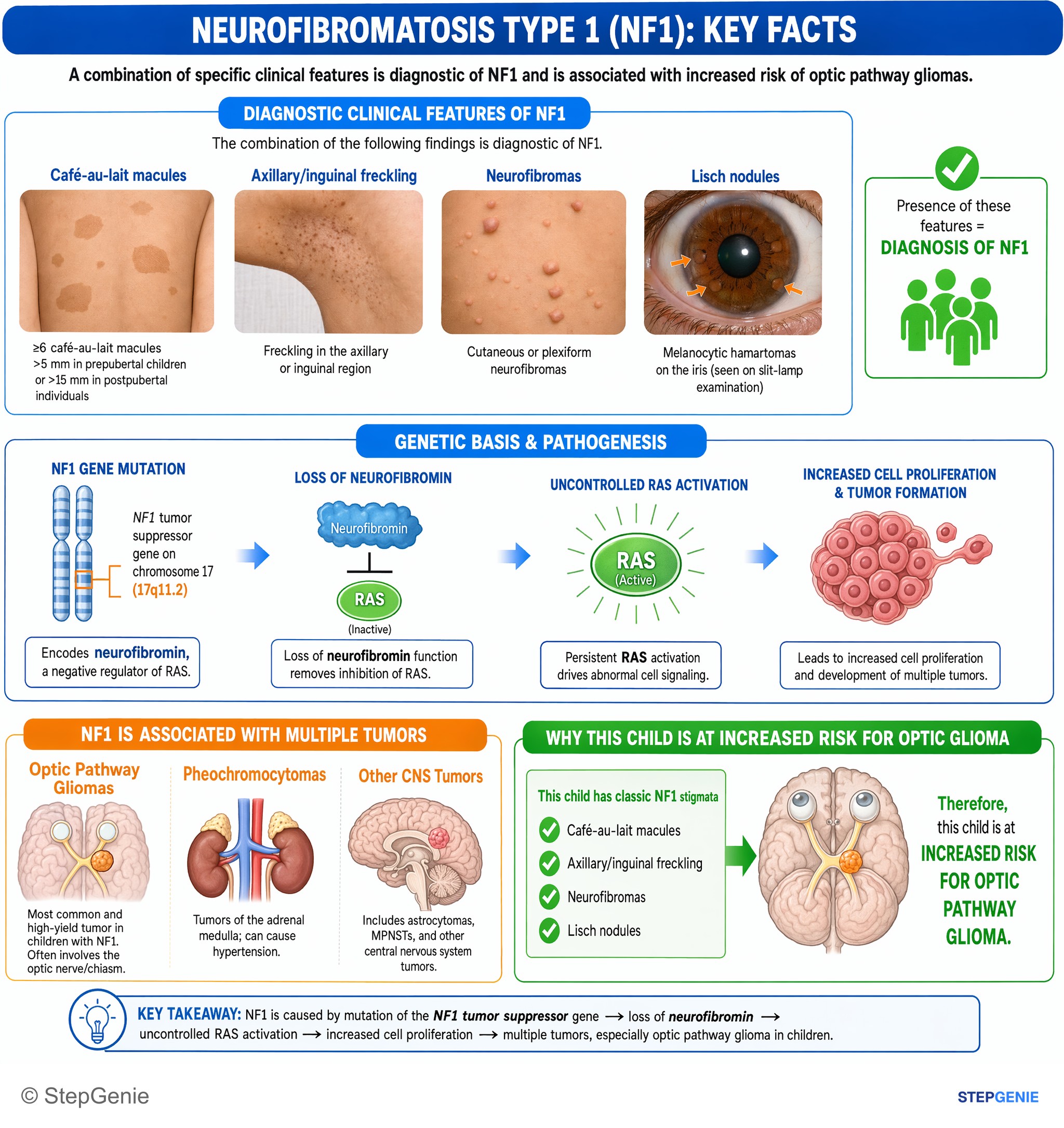
Neurofibromatosis type 1 (café-au-lait spots, axillary freckling, neurofibromas, Lisch nodules) is associated with increased risk of optic…
USMLE Step 1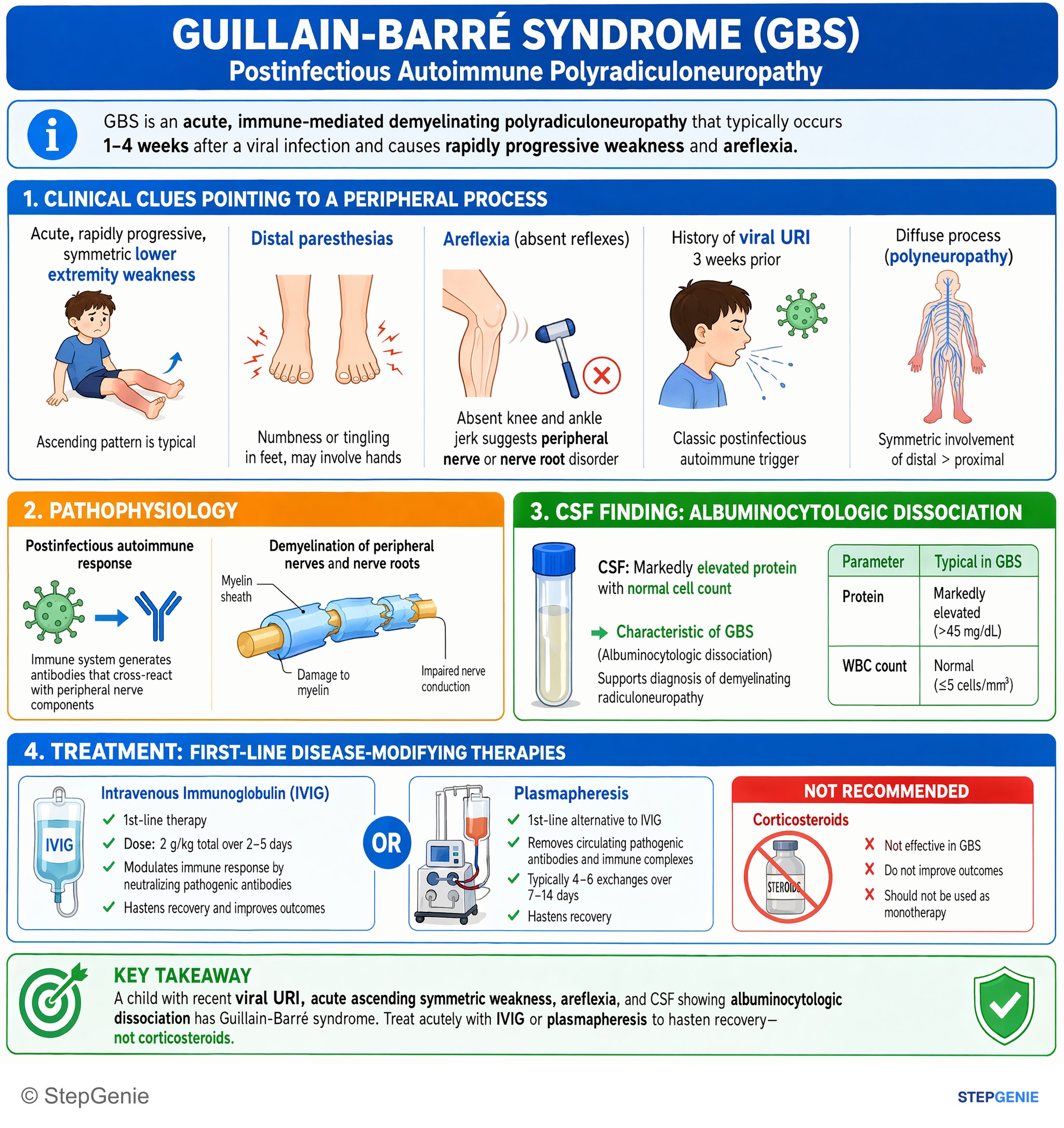
Guillain-Barré syndrome after viral URI with acute ascending weakness and albuminocytologic dissociation is treated acutely with IVIG or…
USMLE Step 2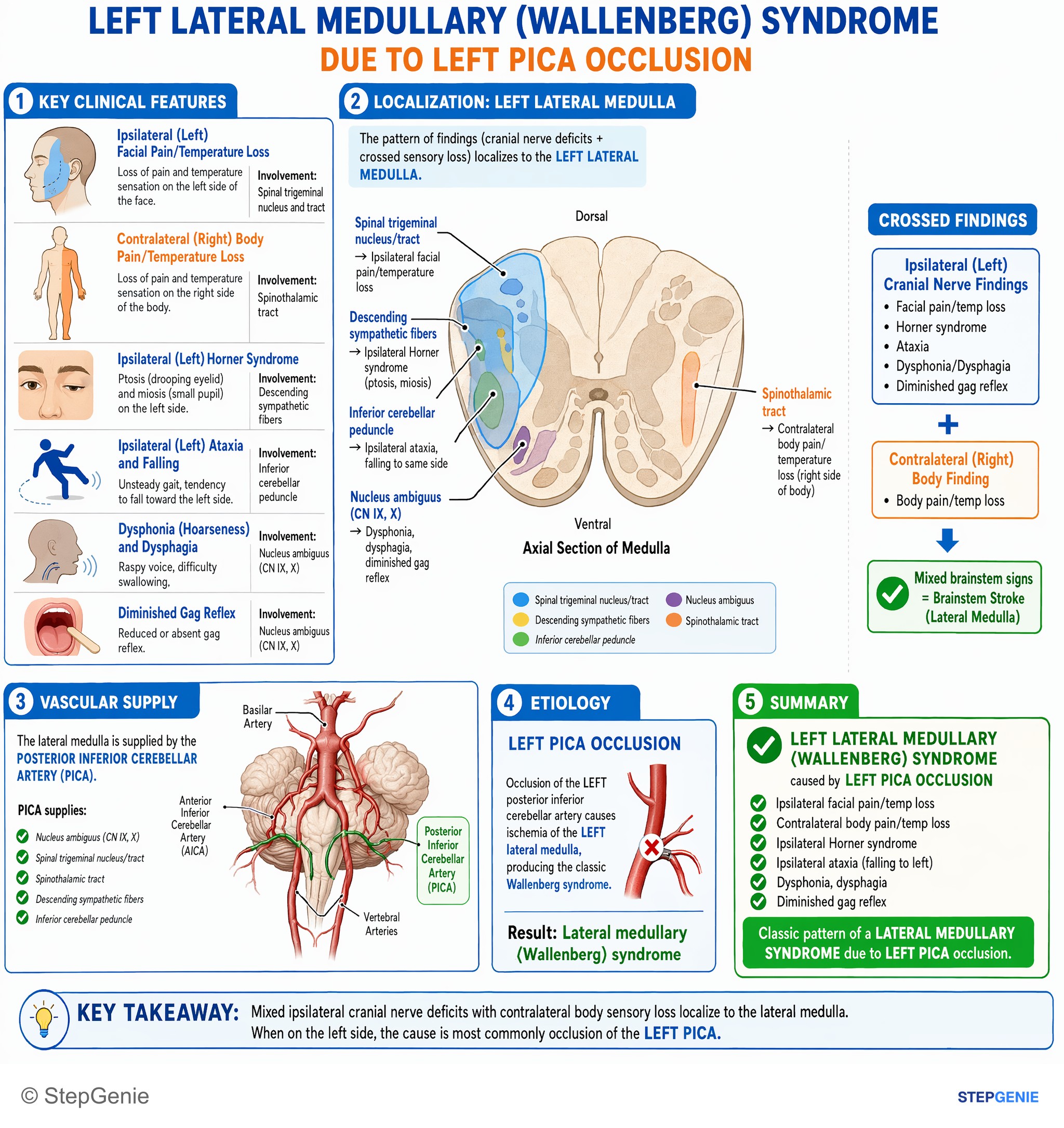
Lateral medullary (Wallenberg) syndrome from left PICA occlusion causes ipsilateral facial pain loss, contralateral body pain loss…
USMLE Step 1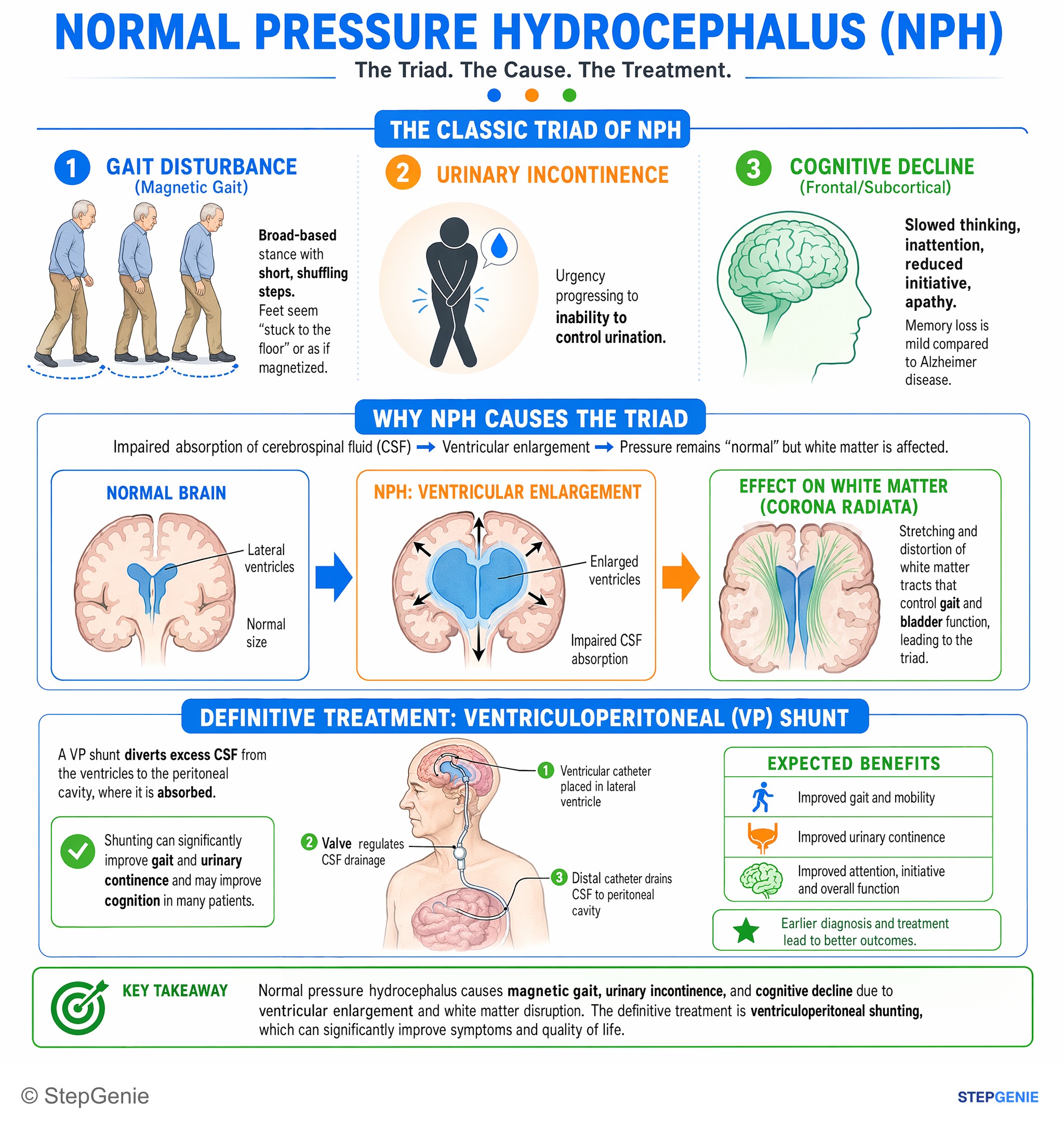
Normal pressure hydrocephalus causes magnetic gait, urinary incontinence, and cognitive decline; treated with ventriculoperitoneal…
USMLE Step 2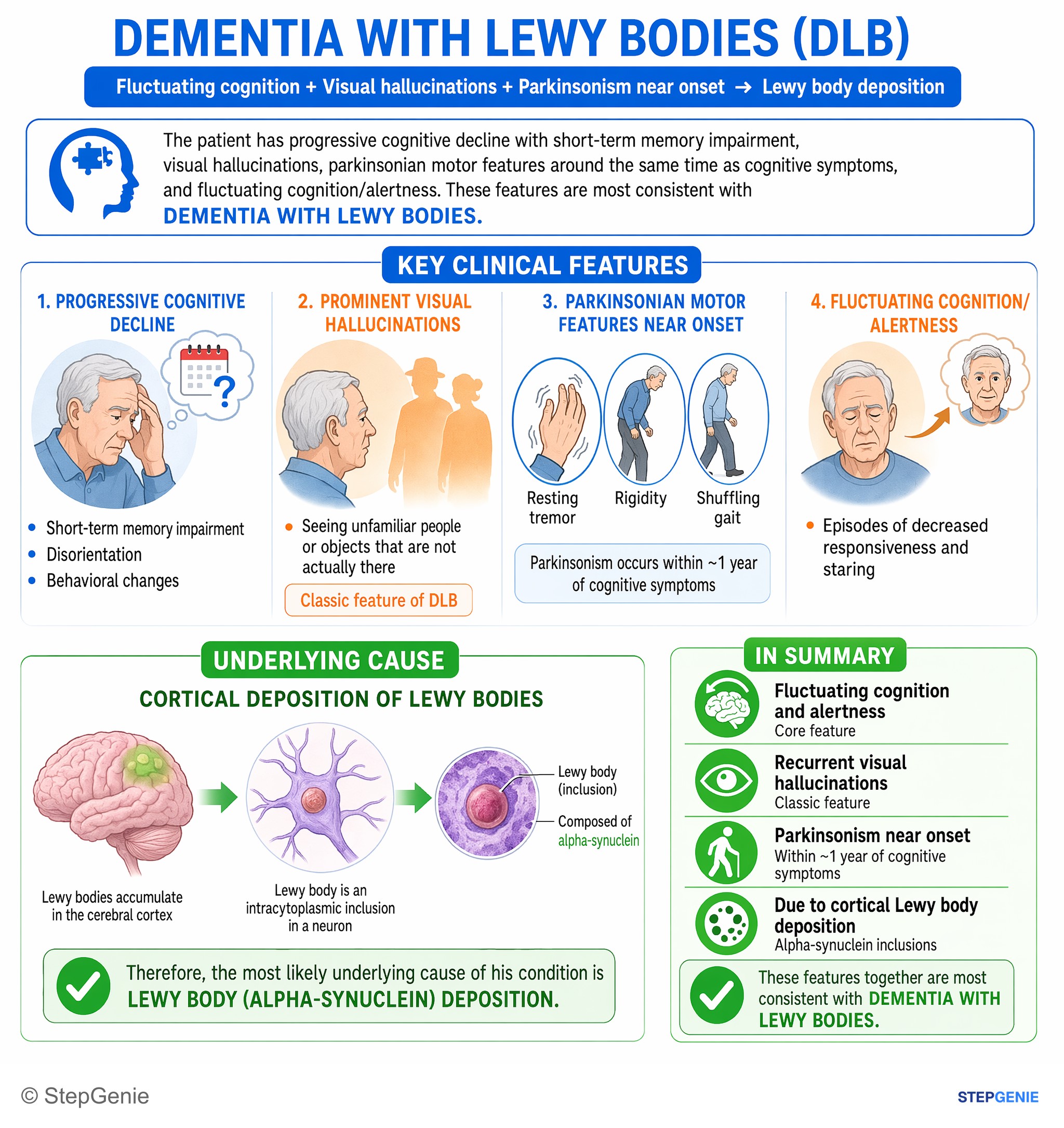
Dementia with Lewy bodies: fluctuating cognition, visual hallucinations, parkinsonism near onset; due to cortical Lewy body…
USMLE Step 1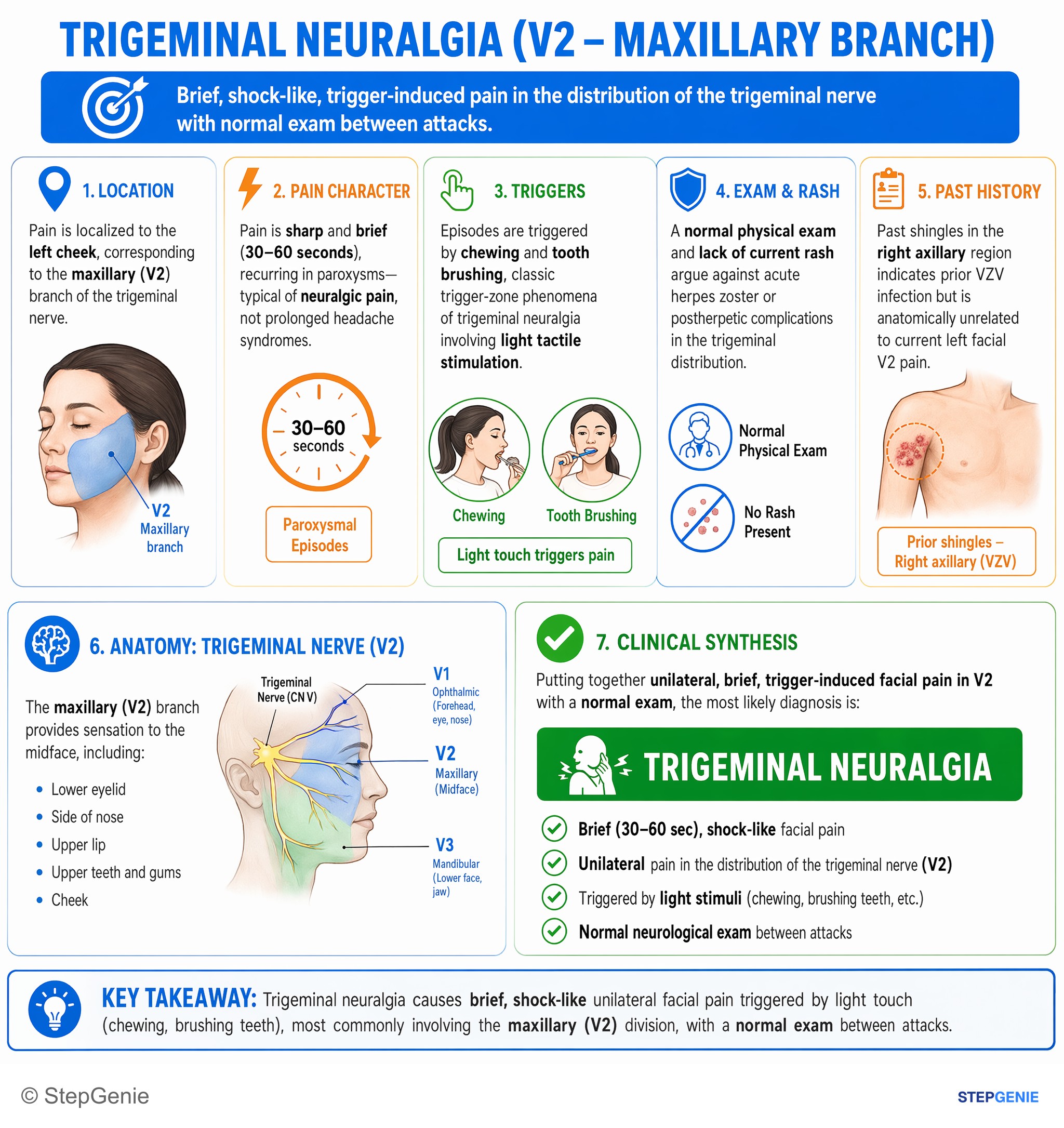
Trigeminal neuralgia causes brief, shock-like unilateral facial pain triggered by light stimuli (chewing, brushing teeth), with normal…
USMLE Step 2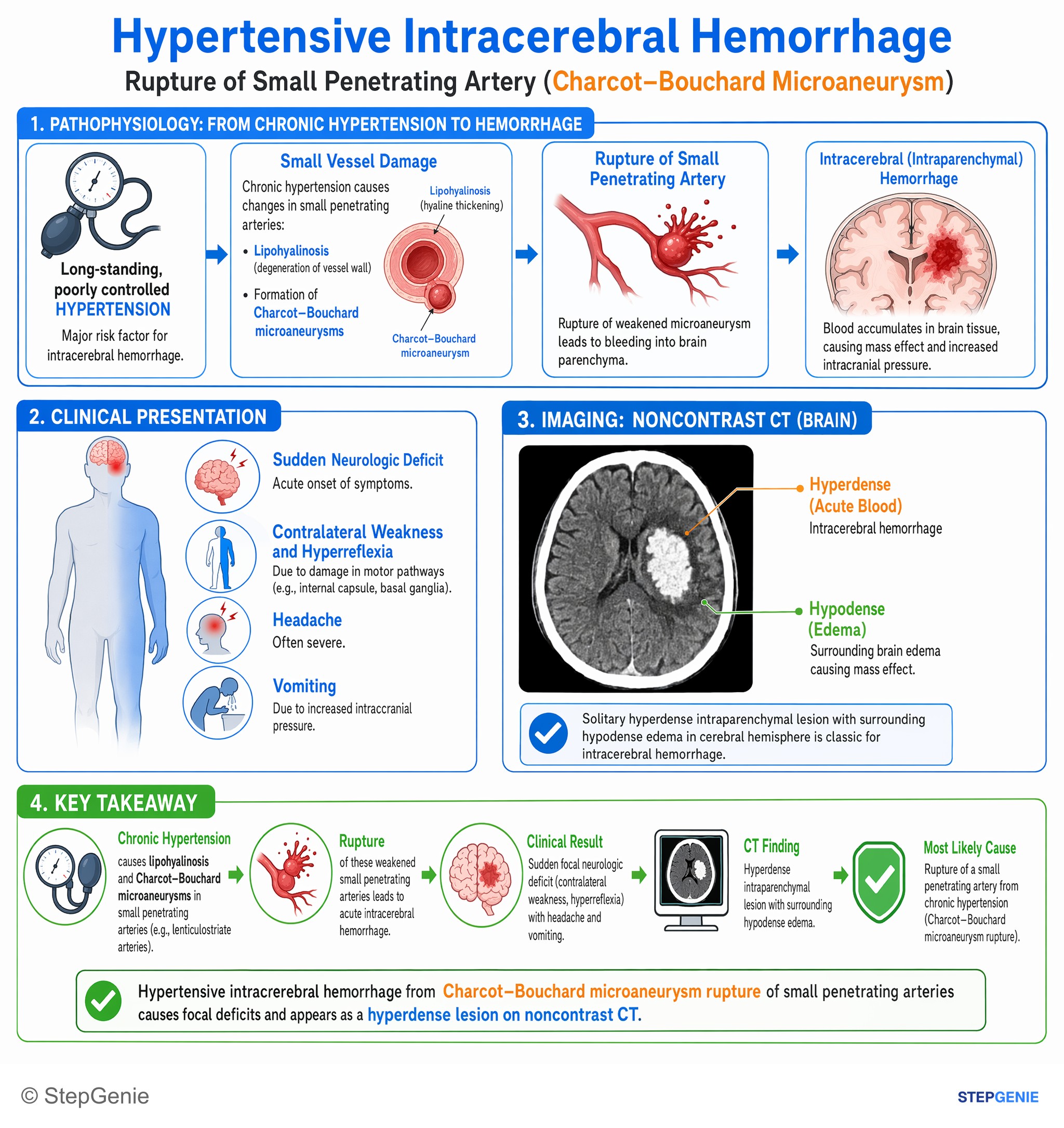
Hypertensive intracerebral hemorrhage from Charcot-Bouchard microaneurysm rupture of small penetrating arteries causes focal deficits and…
USMLE Step 1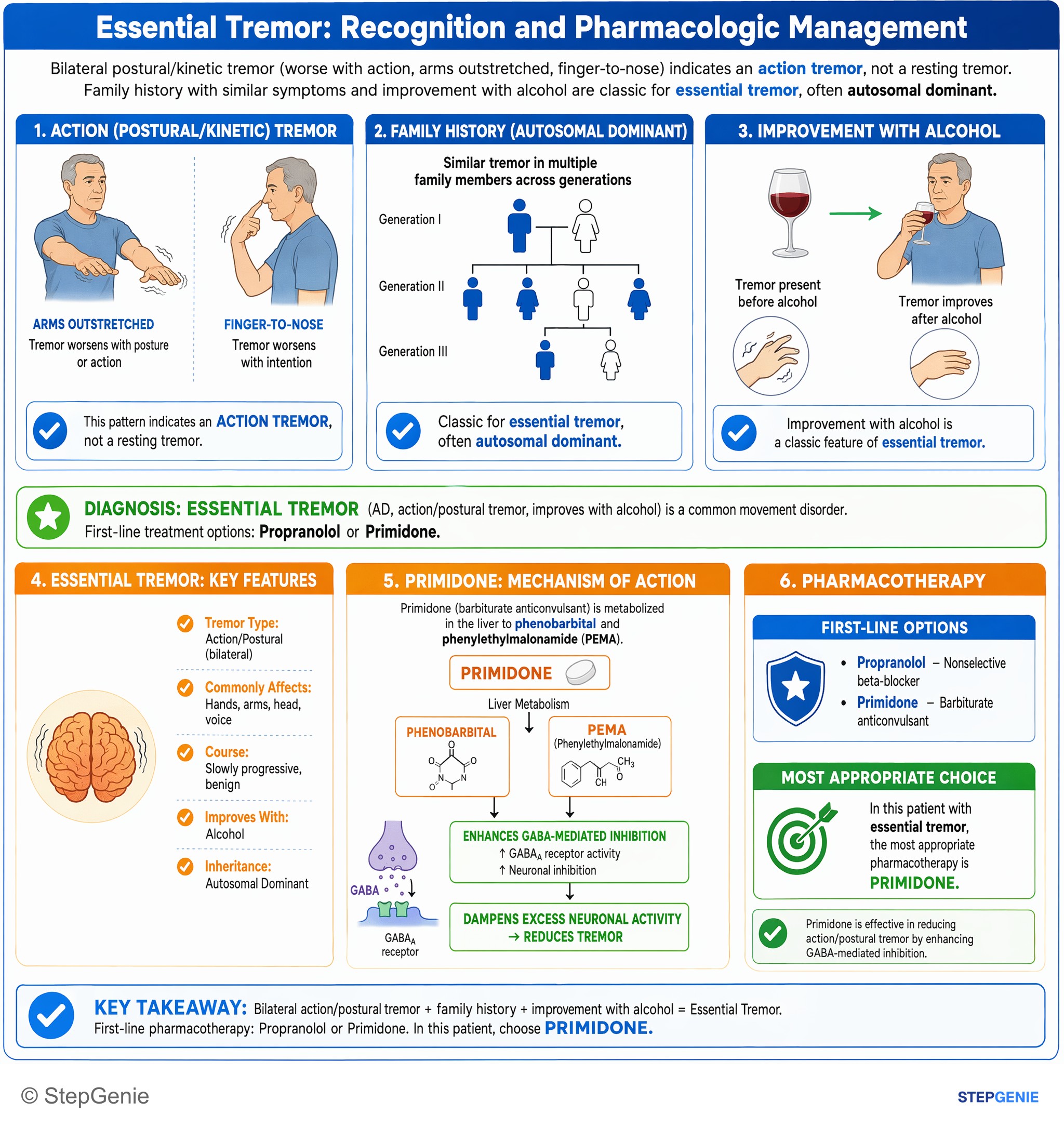
Essential tremor (AD, action/postural tremor, improves with alcohol) is treated first-line with nonselective beta-blockers (propranolol)…
USMLE Step 2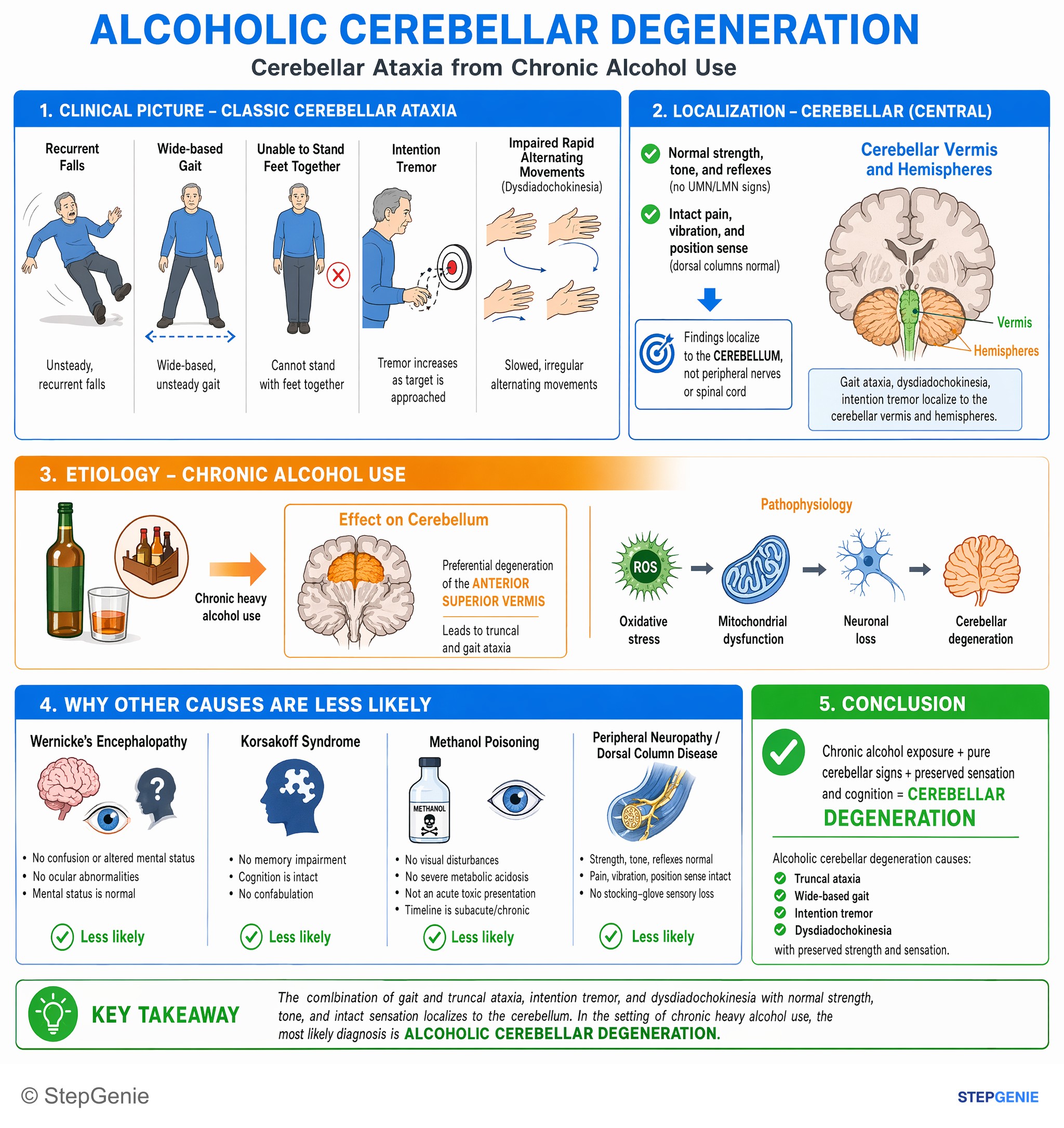
Alcoholic cerebellar degeneration causes truncal ataxia, wide-based gait, intention tremor, and dysdiadochokinesia with preserved strength…
USMLE Step 1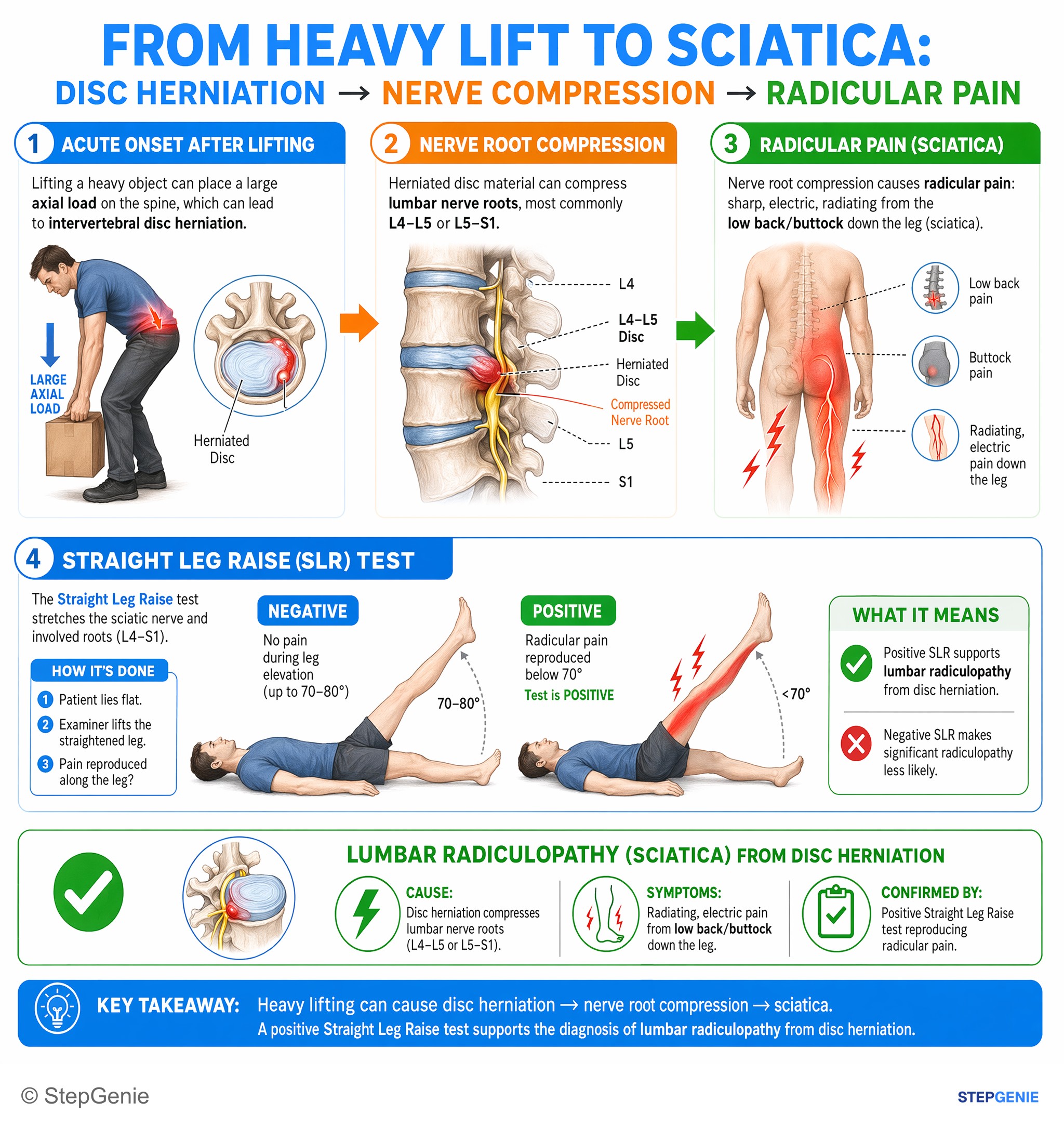
Lumbar radiculopathy (sciatica) from disc herniation causes radiating, electric leg pain; confirmed by positive straight leg raise test.
USMLE Step 2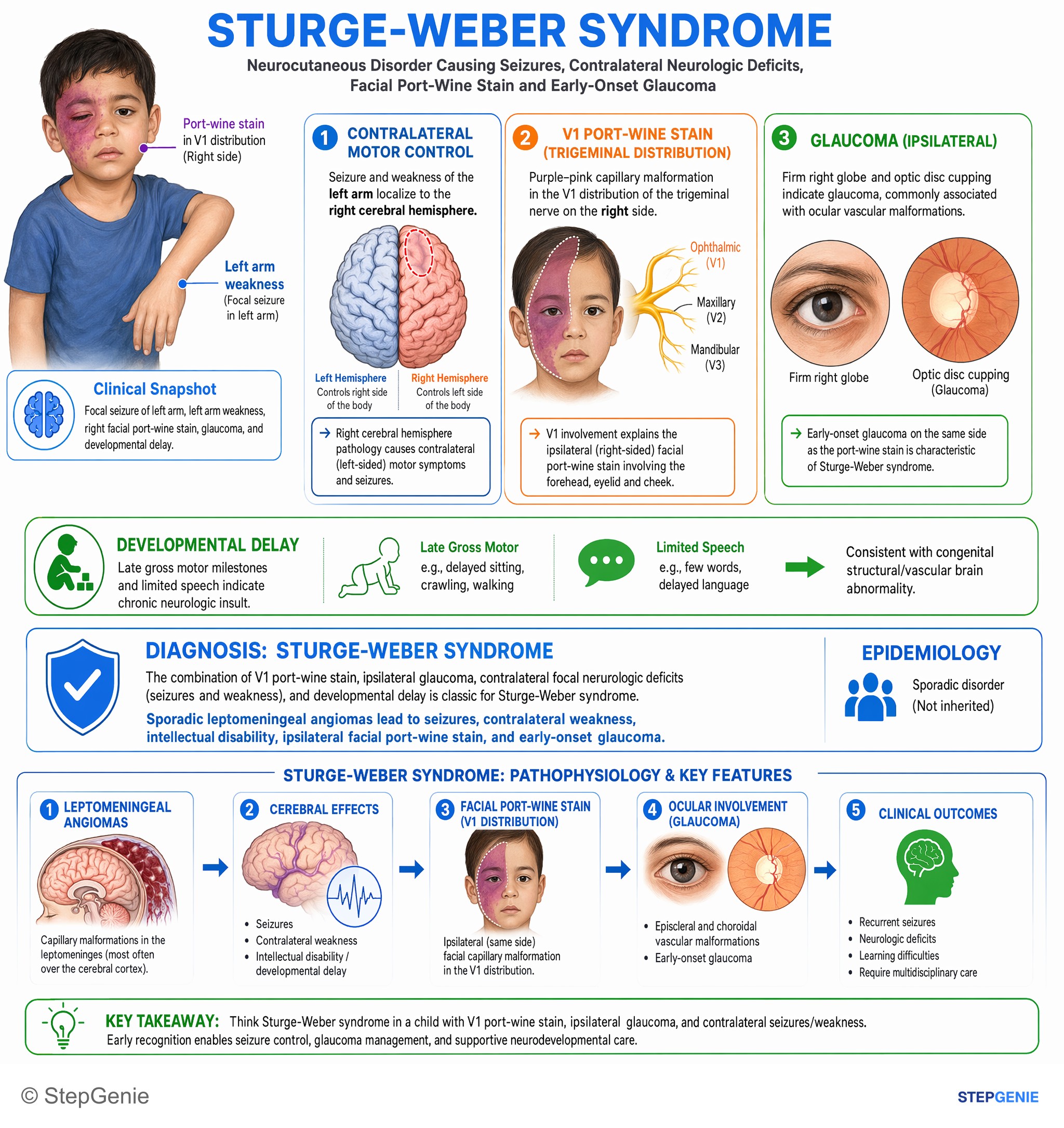
Sturge-Weber syndrome: sporadic leptomeningeal angiomas → seizures, contralateral weakness, intellectual disability, ipsilateral facial…
USMLE Step 1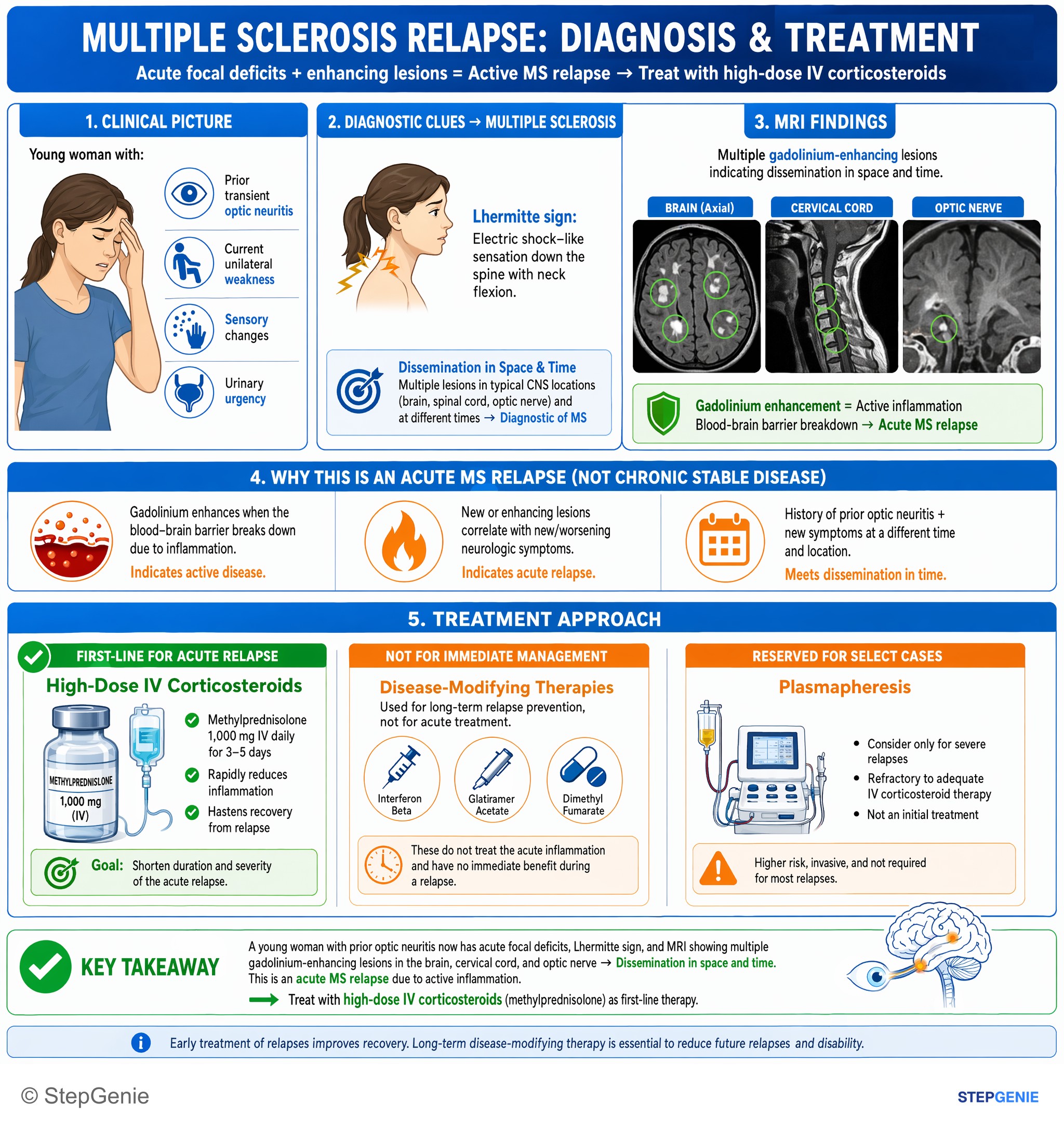
Multiple sclerosis relapse with acute focal deficits and enhancing lesions is treated with high-dose IV corticosteroids…
USMLE Step 2452 publishable neurology infographics in the library — 220 from Step 1 questions and 232 from Step 2 CK, counted on October 29, 2026. This page shows 48 of them, alternating the two steps. An image is listed when its question is active, has a full structured explanation, passed verification and carries no unresolved report.
This page caps out at 48 images. 404 more neurology infographics sit in the in-app image library, where they are searchable and filterable by subject, system and topic.
Open the image libraryPractice the questions behind these images
Each image explains one question. The neurology topic page has the written explanations and the question sets, and the preview lets you answer three questions without an account.
Other image sets
Study neurology with the image attached
In the app, each of these sits at the end of the question it explains, alongside the step-by-step reasoning and a panel for every option you did not pick. Starting is free.
Start practicing free