High-yield nephrology images for the USMLE
StepGenie explanation infographics. Free to view, no account needed.
What do StepGenie's nephrology images cover?
Each nephrology image is a StepGenie infographic drawn for one of its own practice questions. Most of them anchor a number to a place in the nephron or a step in an acid-base compensation, so the lab panel in the vignette stops being a list and becomes a location.
The renal set is built around acute kidney injury and around fluid, electrolyte and acid-base problems, which together carry the largest share of the images. Glomerular disease is next — nephrotic and nephritic syndromes are drawn as a pair rather than as separate topics — followed by nephrolithiasis and urinary tract obstruction, chronic kidney disease, and renal tract neoplasms.
Acid-base is where these images earn their place. A panel that puts the primary disturbance, the expected compensation and the anion gap on one axis makes a mixed disorder visible in a way that working the formulas one at a time does not. The prerenal-versus-intrinsic AKI panels do the same for the urinary indices, showing which number moves first and why.
For glomerular disease, read the light microscopy, immunofluorescence and electron microscopy rows together rather than memorizing them separately. That is how the images are laid out, and it is closer to how the exam frames the question.
Electrolyte panels are the ones to revisit closest to the exam. They are short, they recur across the other organ systems, and they quietly decide questions that are filed under cardiology, endocrinology or gastroenterology rather than here.
Topics in this set
Labels are the question-bank topics these images are filed under. Step 1 and Step 2 file some of the same material under different names, so a few labels here merge both.
Nephrology explanation images
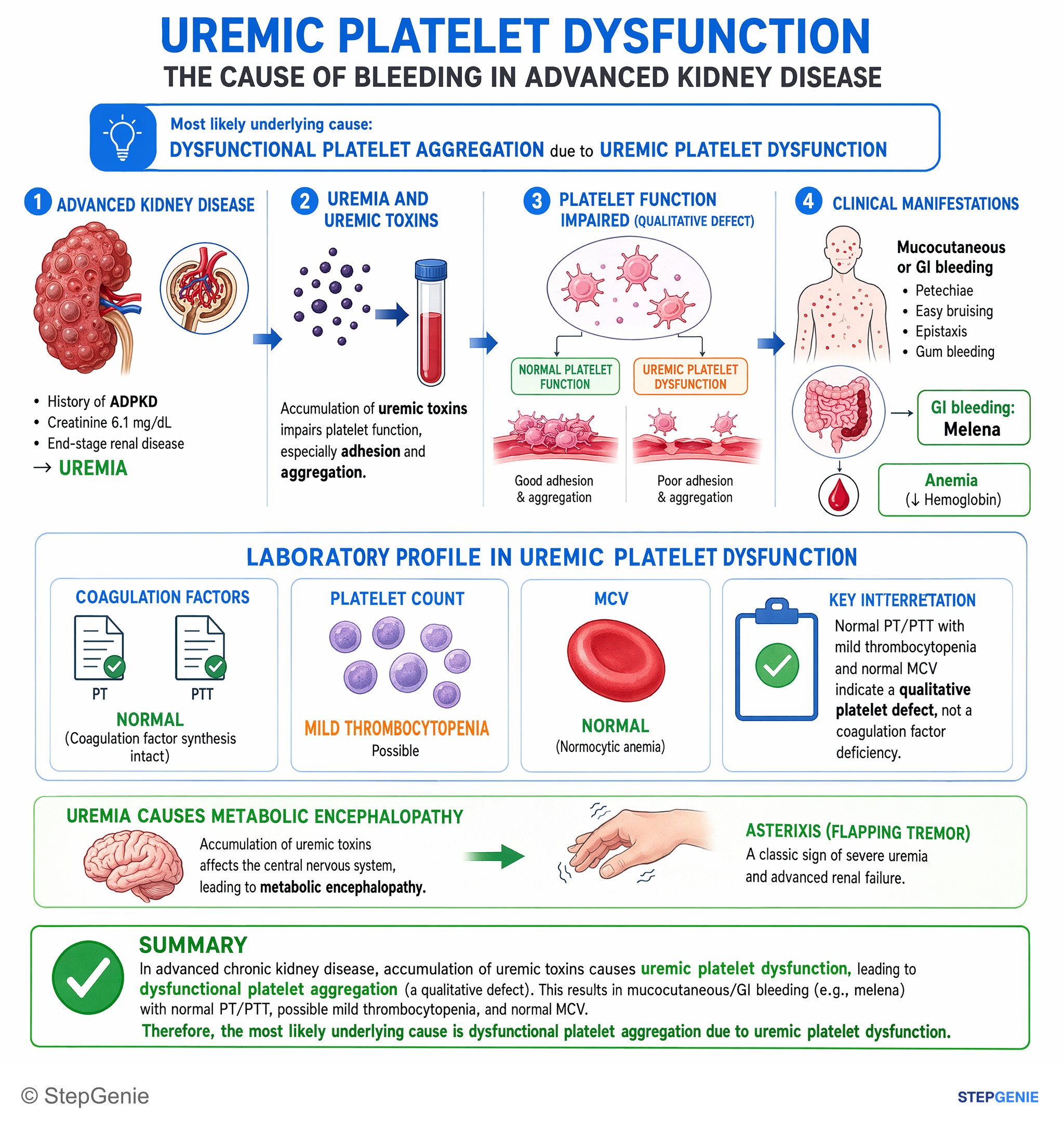
Uremic platelet dysfunction from advanced chronic kidney disease causes qualitative platelet defects → mucocutaneous/GI bleeding with…
USMLE Step 1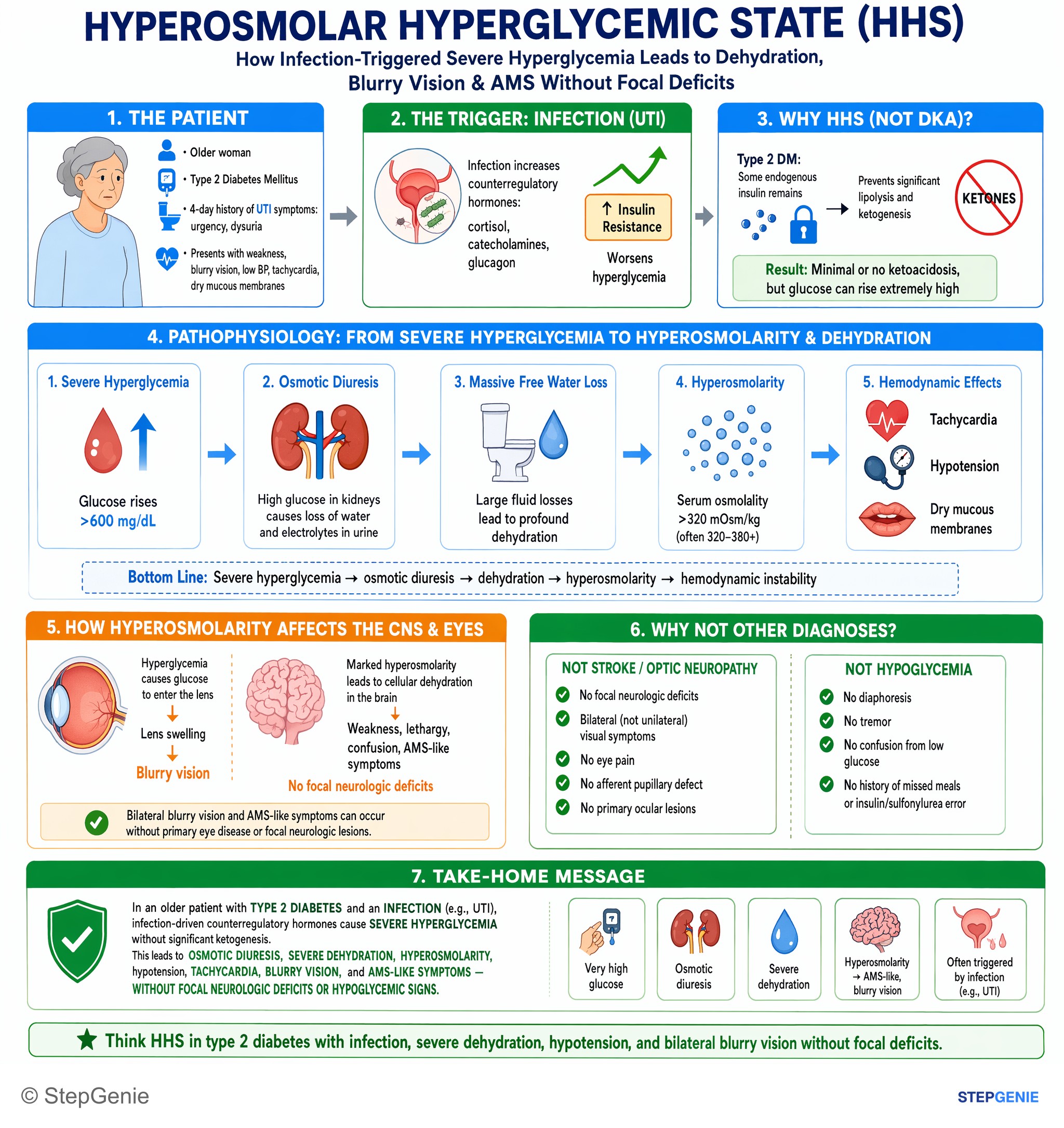
Hyperosmolar hyperglycemic state from infection-induced severe hyperglycemia: dehydration, hypotension, blurry vision, AMS symptoms, but…
USMLE Step 2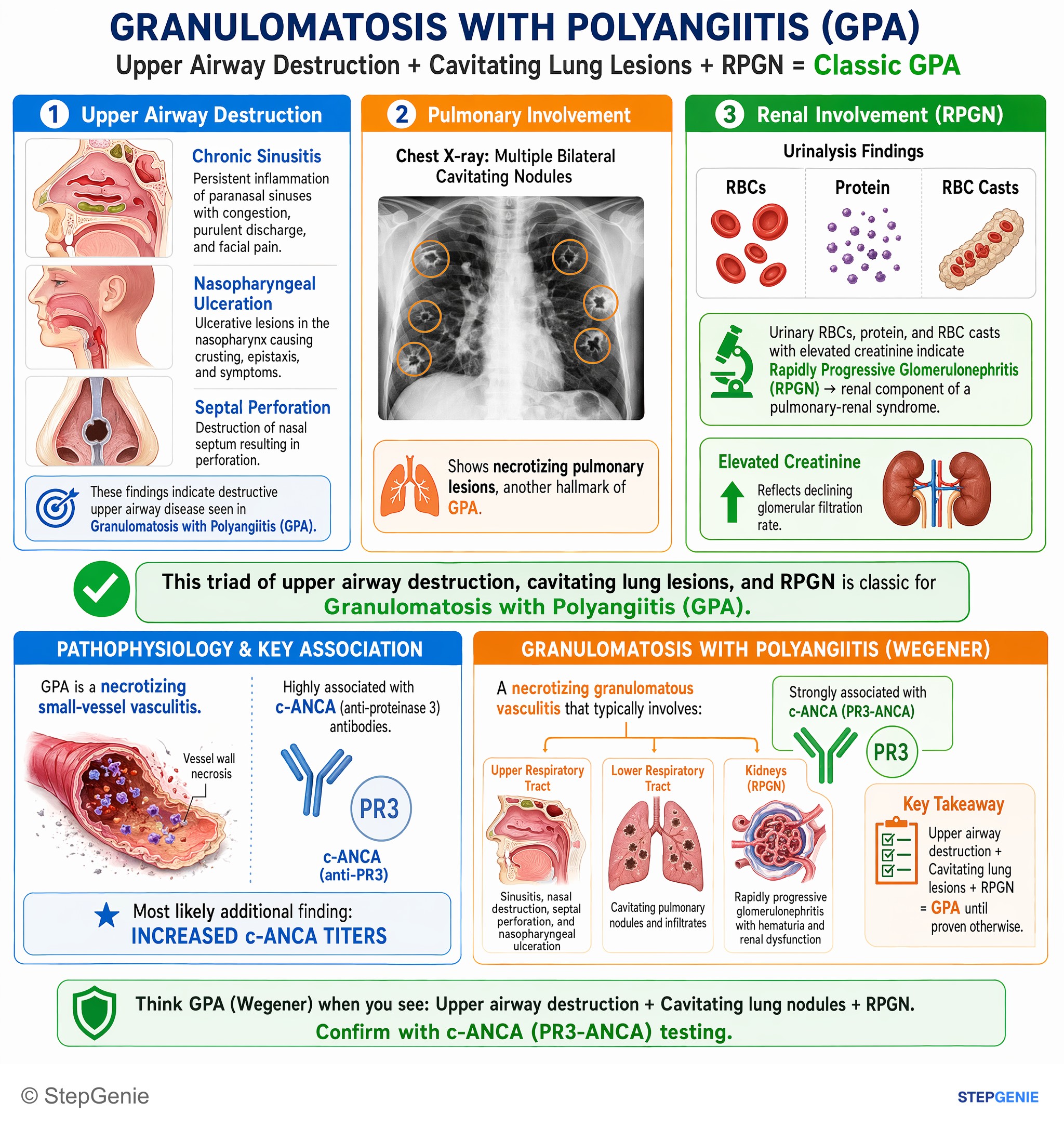
Granulomatosis with polyangiitis (Wegener): necrotizing granulomatous vasculitis of upper/lower respiratory tract plus RPGN; strongly…
USMLE Step 1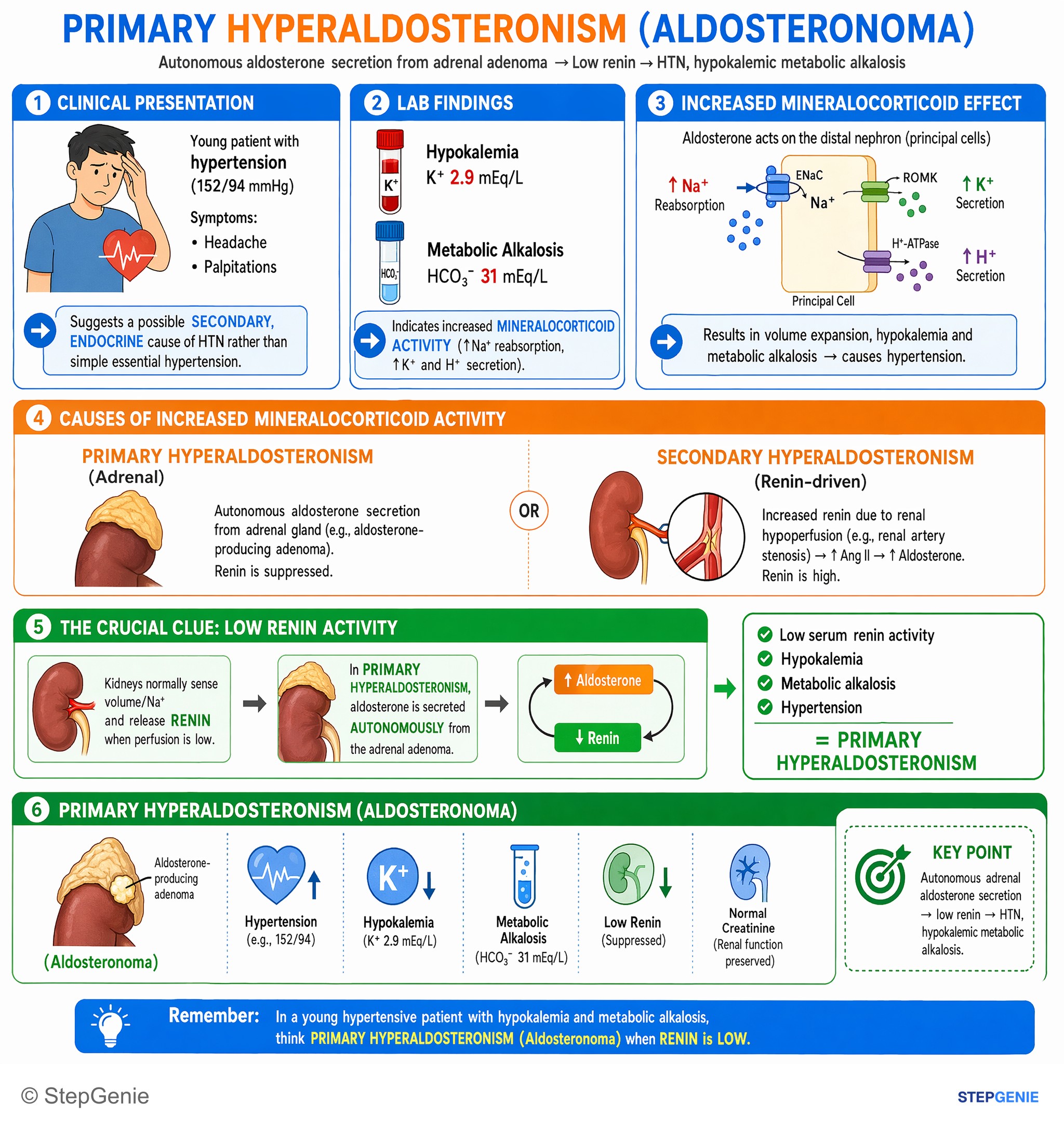
Primary hyperaldosteronism (aldosteronoma): HTN, hypokalemic metabolic alkalosis, low renin, normal creatinine due to autonomous adrenal…
USMLE Step 2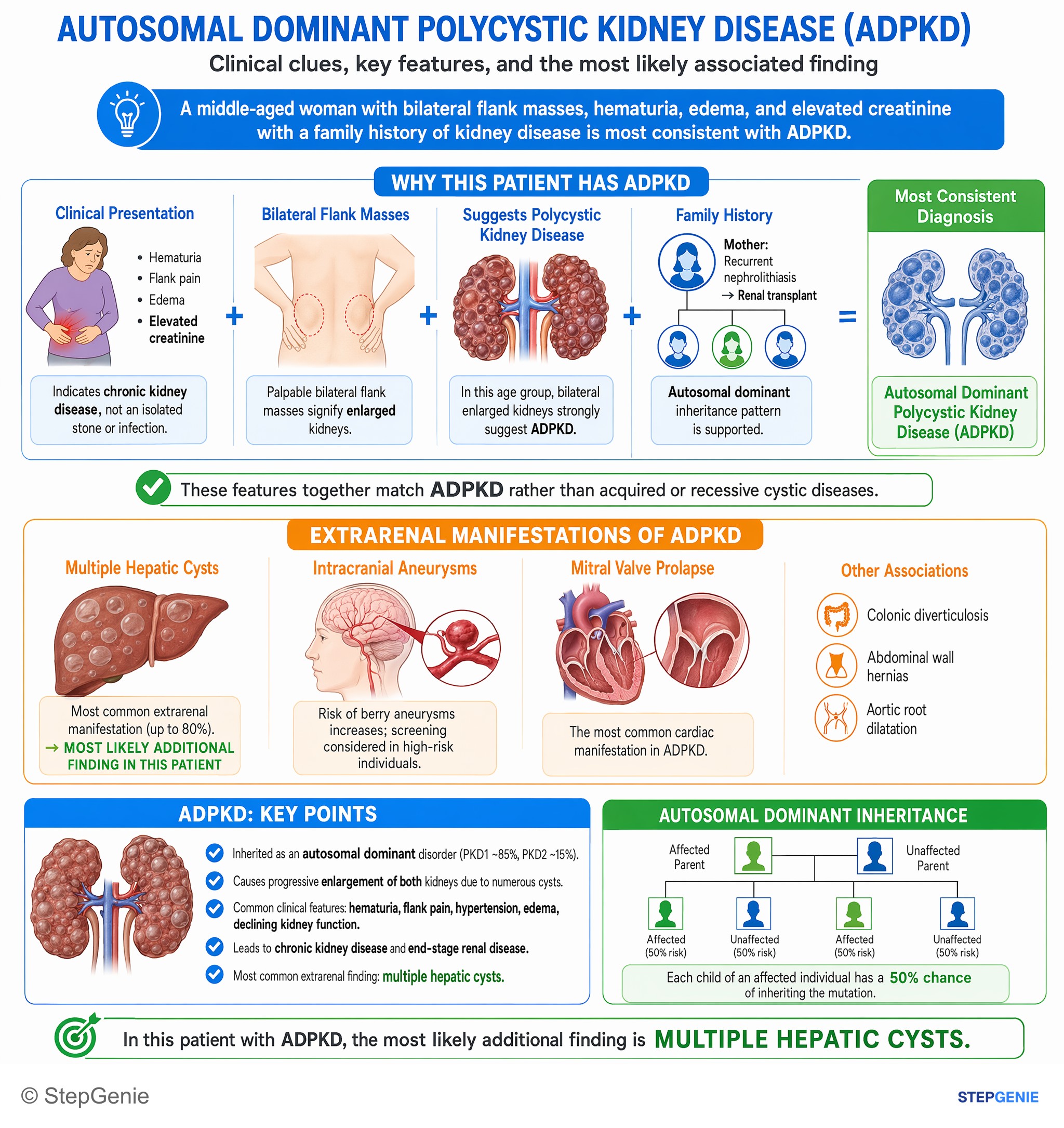
Autosomal dominant polycystic kidney disease causes bilateral renal enlargement, hematuria, renal failure, and is commonly associated with…
USMLE Step 1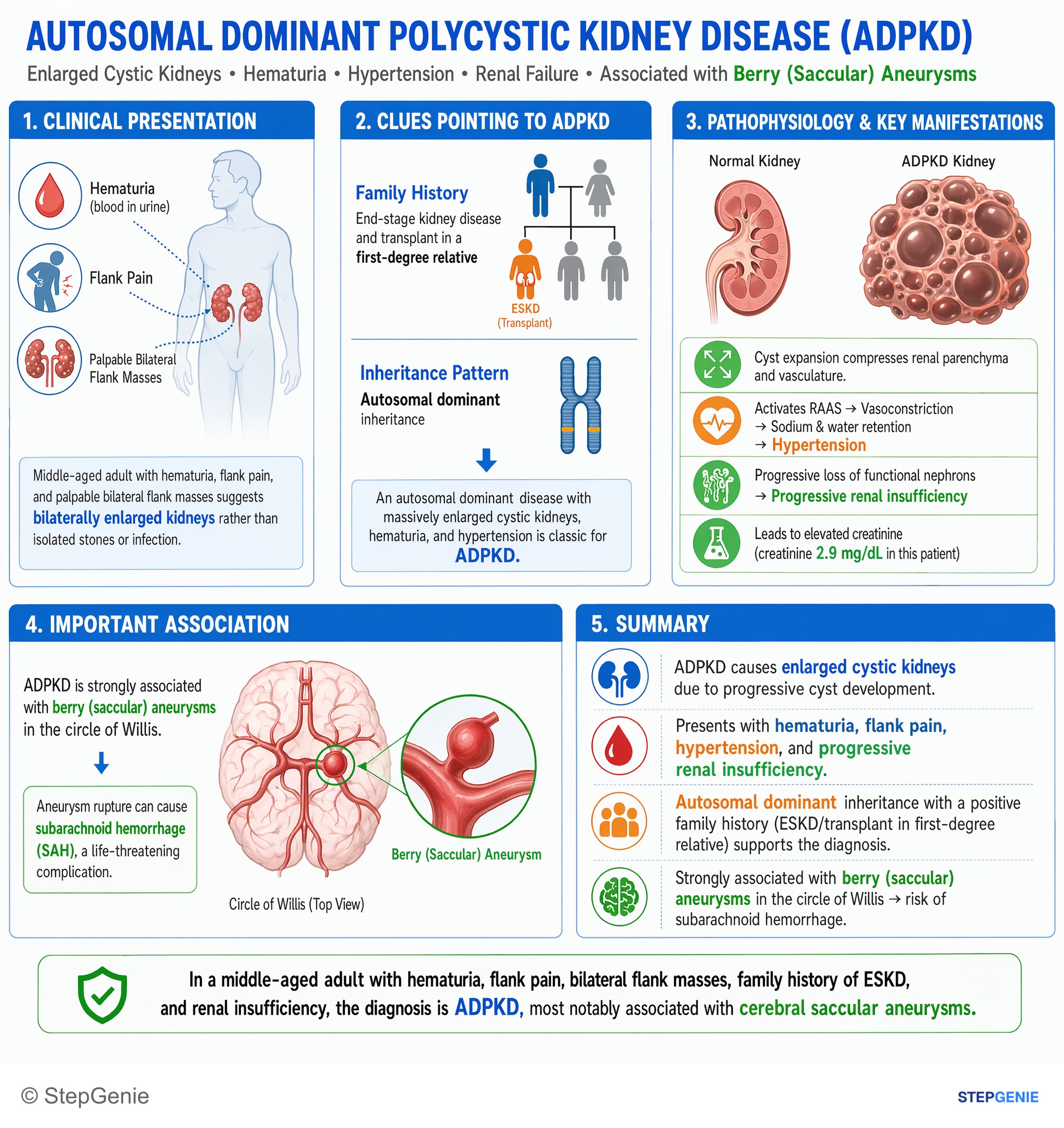
Autosomal dominant polycystic kidney disease (ADPKD) causes enlarged cystic kidneys, hematuria, HTN, renal failure, and is associated with…
USMLE Step 2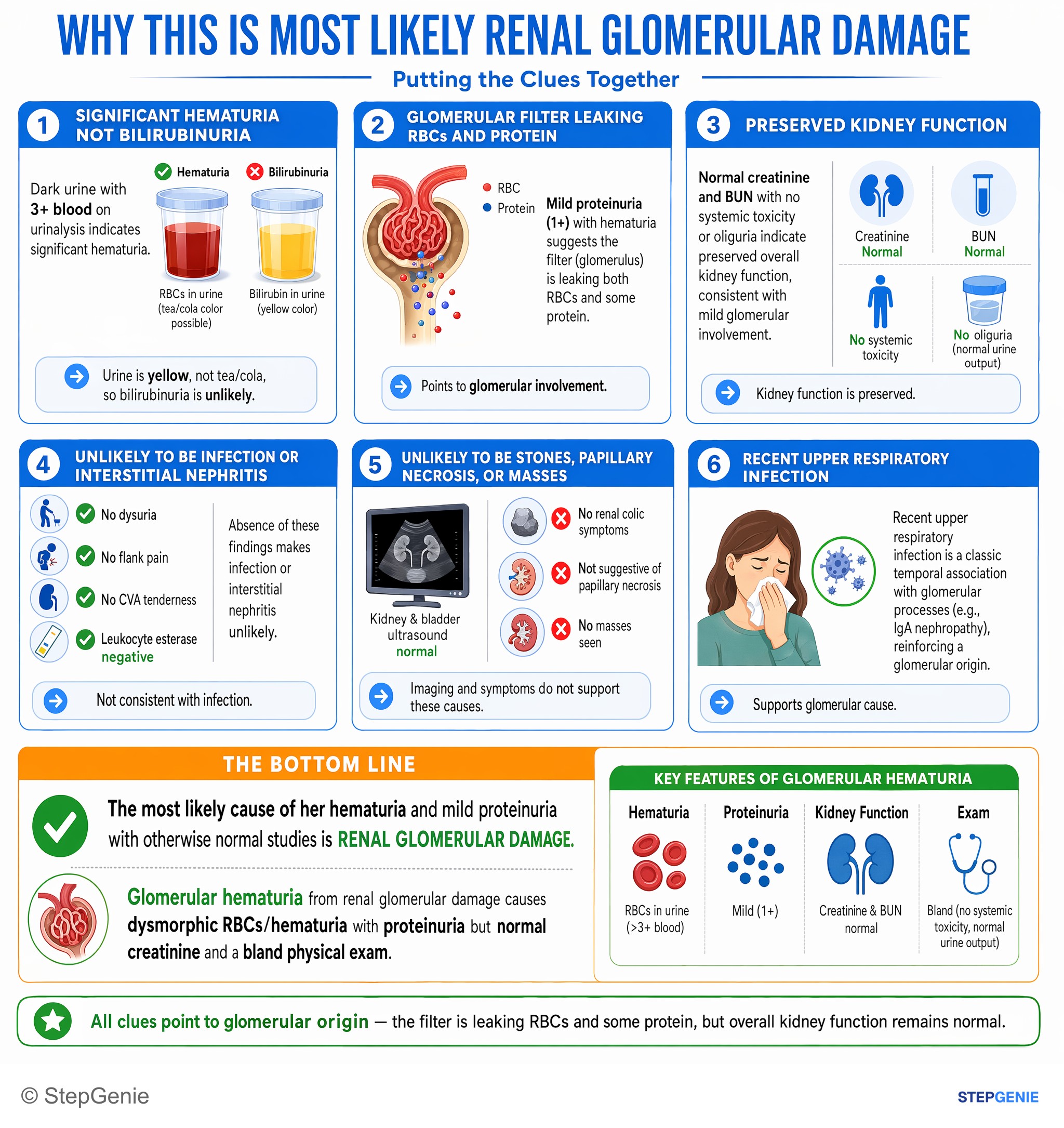
Glomerular hematuria from renal glomerular damage causes dysmorphic RBCs/hematuria with proteinuria but normal creatinine and bland…
USMLE Step 1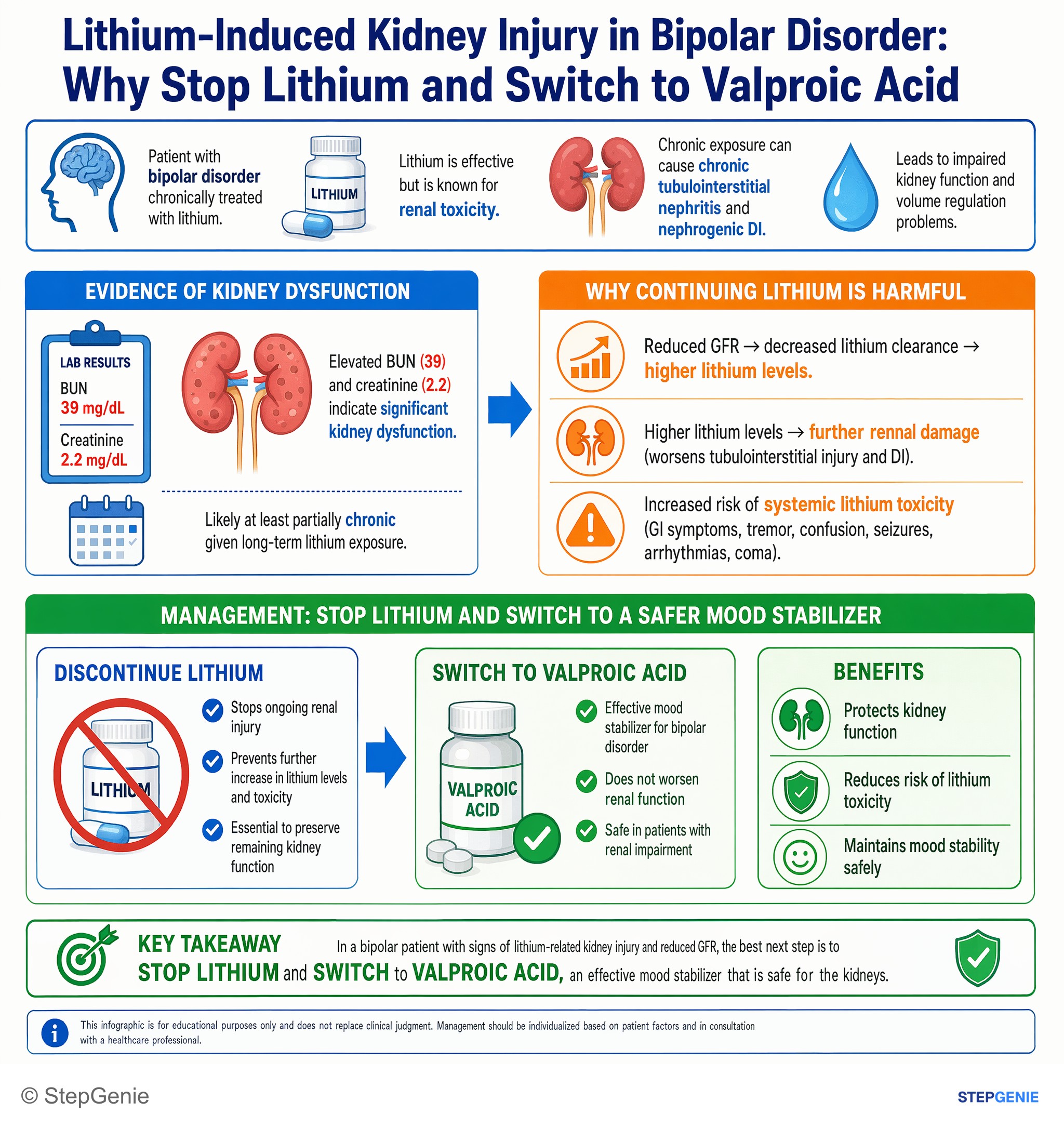
Chronic lithium toxicity causing kidney injury and nephrogenic-like volume issues in a bipolar patient requires stopping lithium and…
USMLE Step 2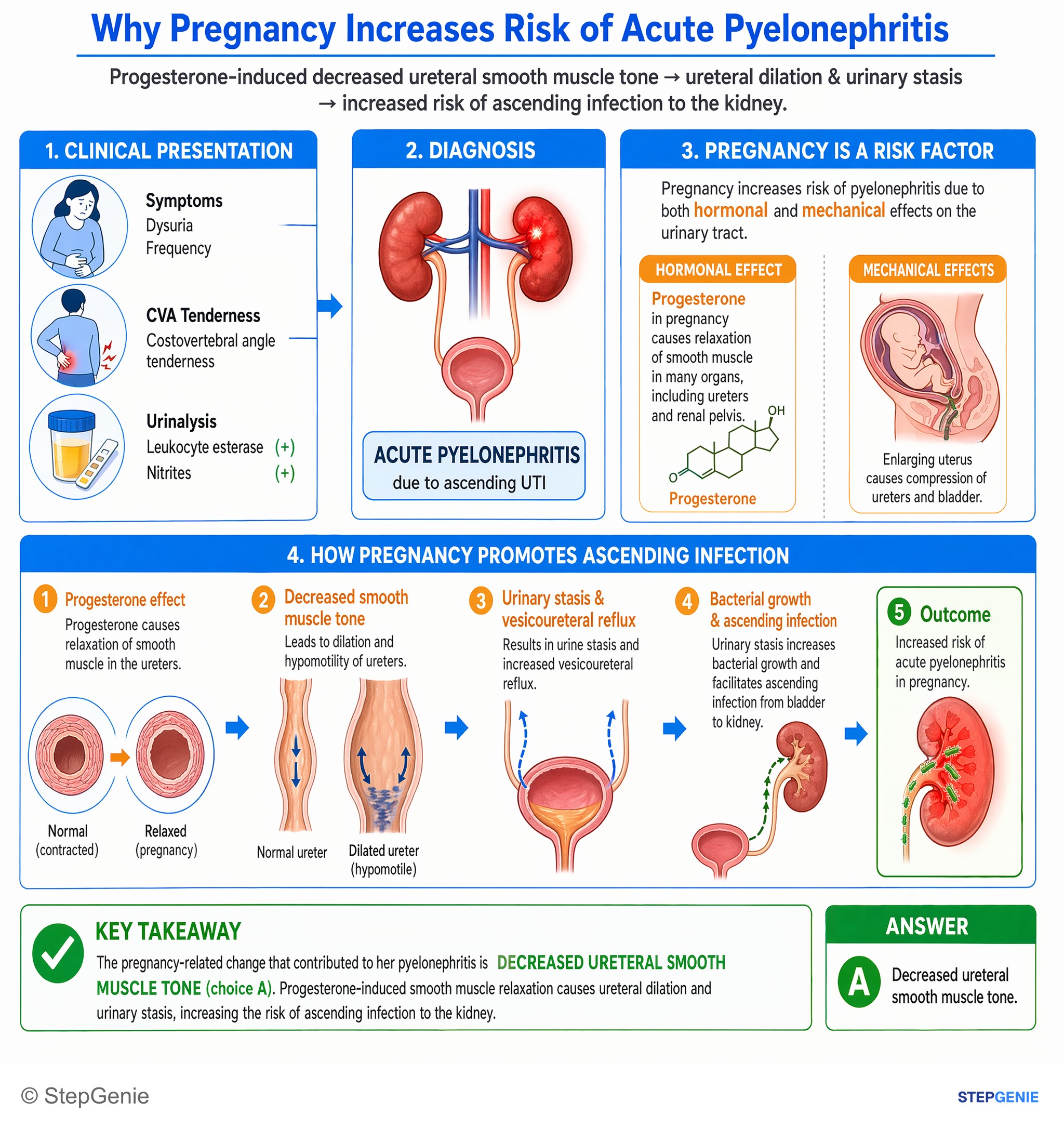
Acute pyelonephritis in pregnancy is promoted by progesterone-induced smooth muscle relaxation, causing ureteral dilation and urinary…
USMLE Step 1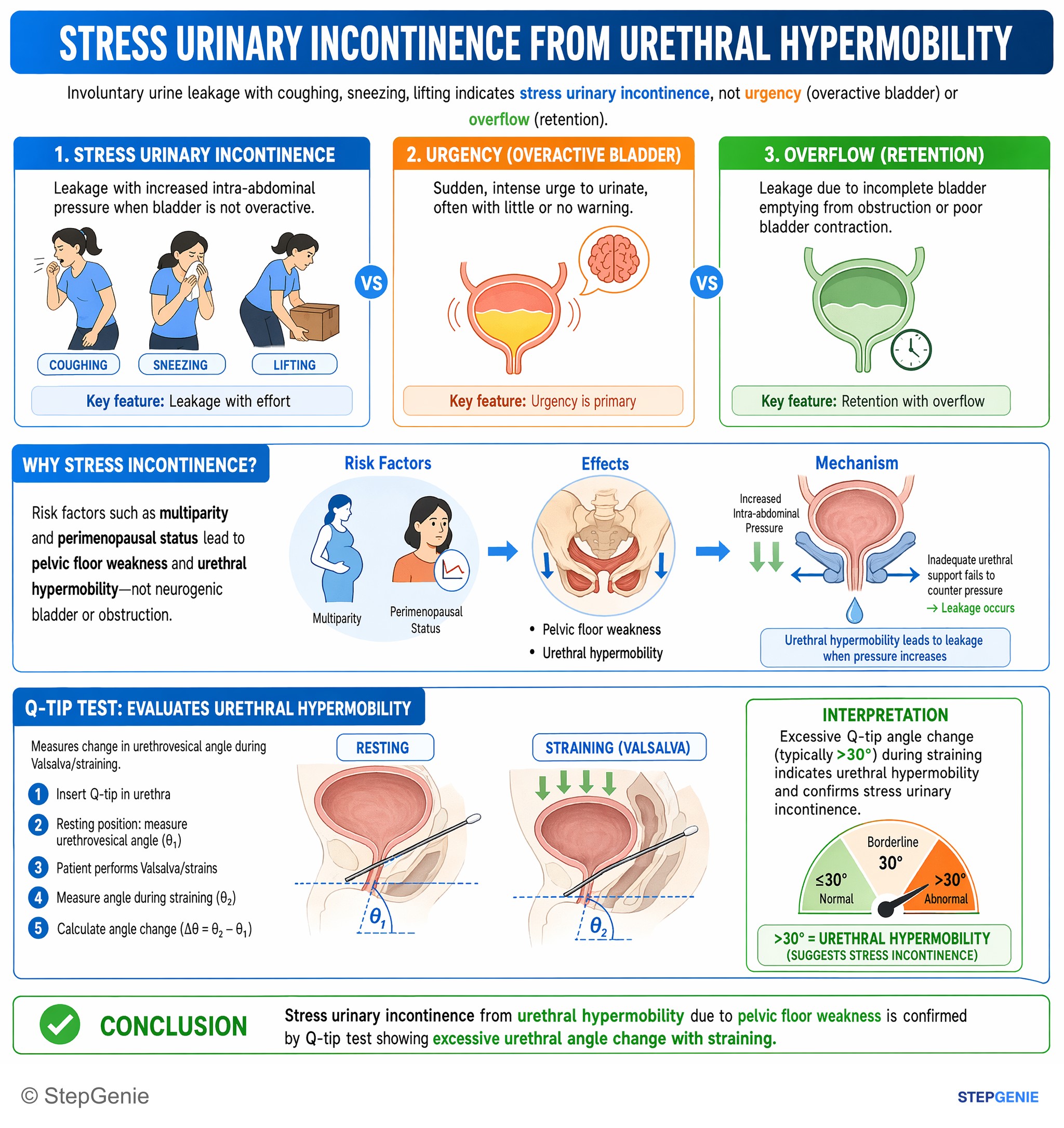
Stress urinary incontinence from urethral hypermobility due to pelvic floor weakness is confirmed by Q-tip test showing excessive urethral…
USMLE Step 2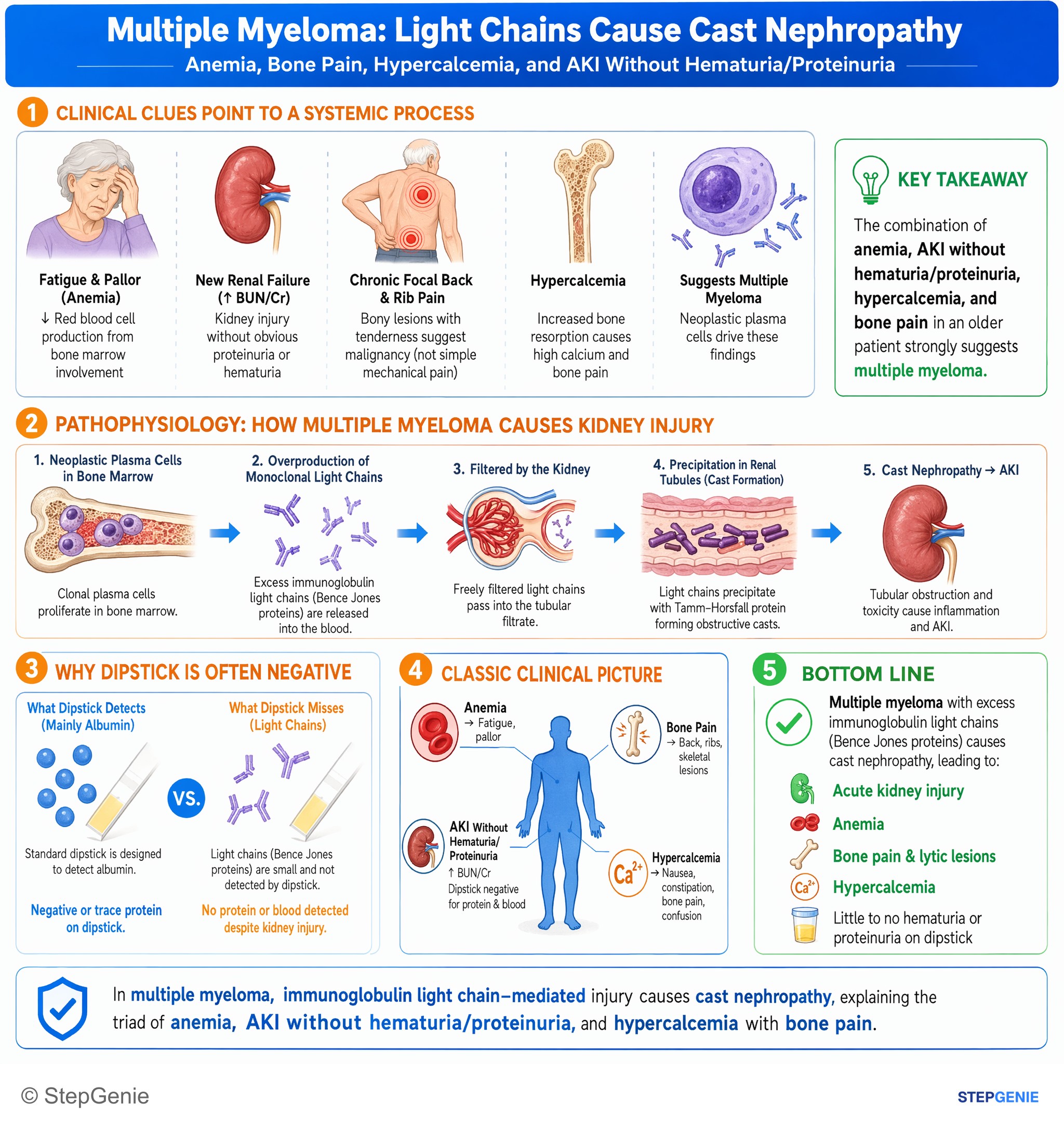
Multiple myeloma with excess immunoglobulin light chains causes cast nephropathy → acute kidney injury, anemia, bone pain, and…
USMLE Step 1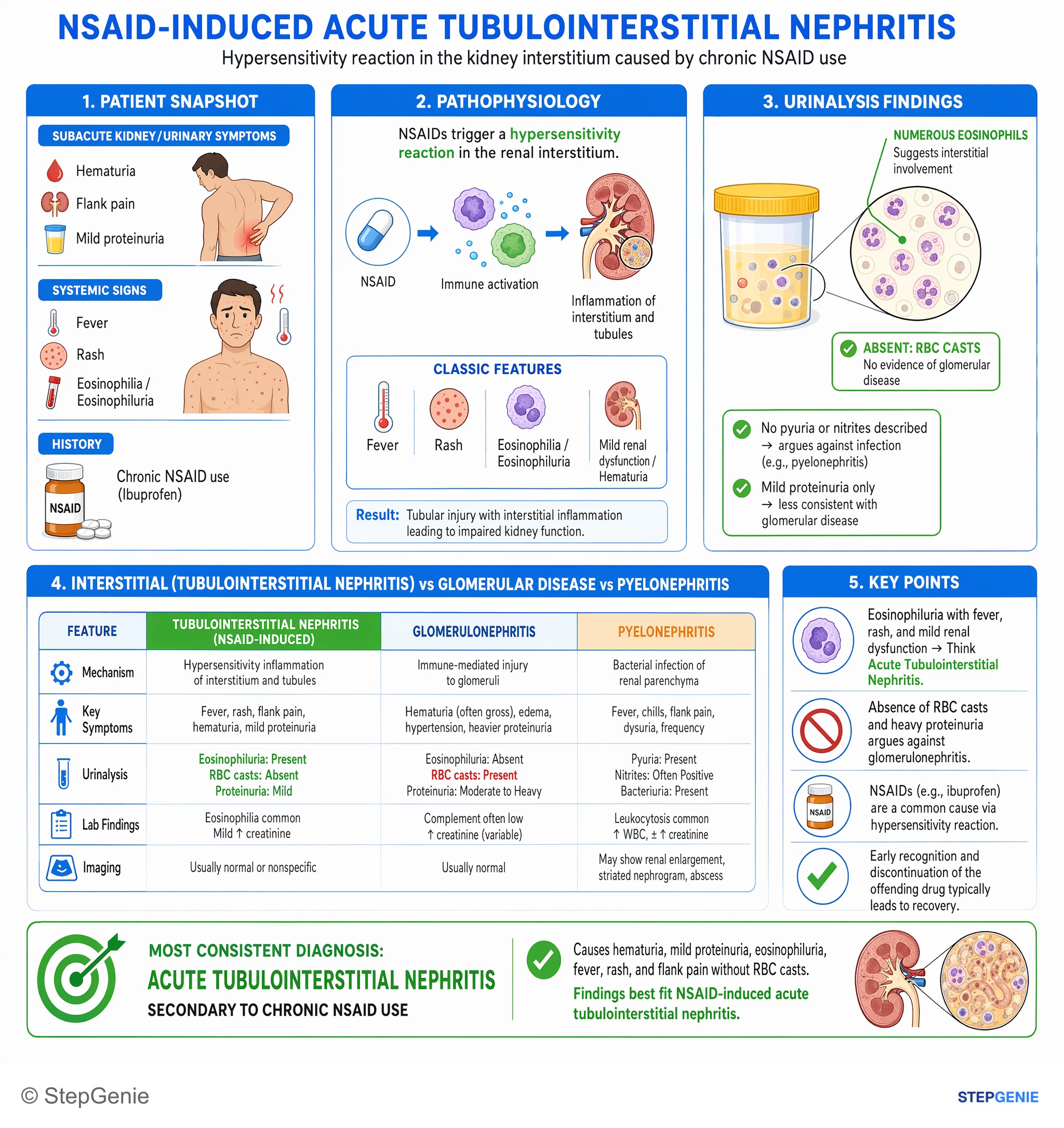
Acute tubulointerstitial nephritis from chronic NSAID use causes hematuria, mild proteinuria, eosinophiluria, fever, rash, and flank pain…
USMLE Step 2292 publishable nephrology infographics in the library — 168 from Step 1 questions and 124 from Step 2 CK, counted on October 29, 2026. This page shows 48 of them, alternating the two steps. An image is listed when its question is active, has a full structured explanation, passed verification and carries no unresolved report.
This page caps out at 48 images. 244 more nephrology infographics sit in the in-app image library, where they are searchable and filterable by subject, system and topic.
Open the image libraryPractice the questions behind these images
Each image explains one question. The nephrology topic page has the written explanations and the question sets, and the preview lets you answer three questions without an account.
Other image sets
Study nephrology with the image attached
In the app, each of these sits at the end of the question it explains, alongside the step-by-step reasoning and a panel for every option you did not pick. Starting is free.
Start practicing free