High-yield hematology & oncology images for the USMLE
StepGenie explanation infographics. Free to view, no account needed.
What do StepGenie's hematology & oncology images cover?
Each hematology and oncology image is a StepGenie infographic drawn for one of its own practice questions. It usually maps a blood film or a coagulation result onto the step in the pathway that broke, and the caption names the disorder that step belongs to.
Red cell and hemoglobin disorders lead this set, followed by white cell disorders, principles of oncology, hemolytic disorders, platelet disorders, and hemostasis and thrombosis. Bone marrow disorders, transfusion medicine and plasma cell disorders carry the rest.
Anaemia is the clearest case for drawing rather than listing. A panel that starts at the mean corpuscular volume and branches on the reticulocyte count reduces a dozen possible answers to two or three before you have looked at the smear, which is the order the exam expects you to work in. The hemostasis panels do the same for PT, aPTT and platelet count, placing each result at the point in the cascade it reports on.
The oncology images are less about a single mechanism and more about staging logic and tumor markers, so they read better as reference than as drills. Come back to those when a question has already exposed the gap.
Transfusion reaction panels are worth a separate look before Step 2 CK. They are sorted by time from the start of the transfusion, which is the detail the vignette always gives you and the one that decides the answer.
Topics in this set
Labels are the question-bank topics these images are filed under. Step 1 and Step 2 file some of the same material under different names, so a few labels here merge both.
Hematology & Oncology explanation images
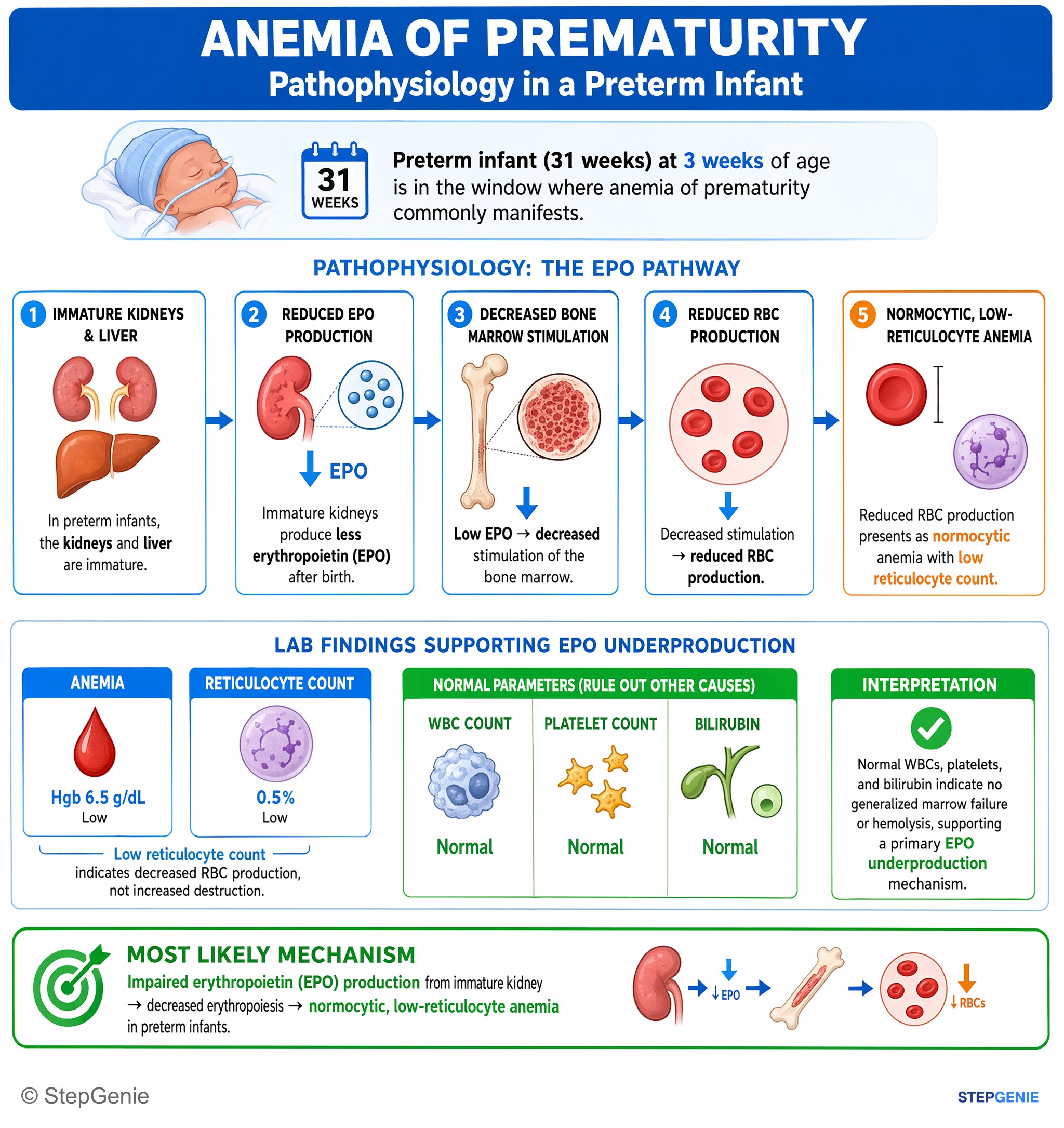
Anemia of prematurity: low EPO from immature kidney → decreased erythropoiesis → normocytic, low-reticulocyte anemia in preterm infants.
USMLE Step 1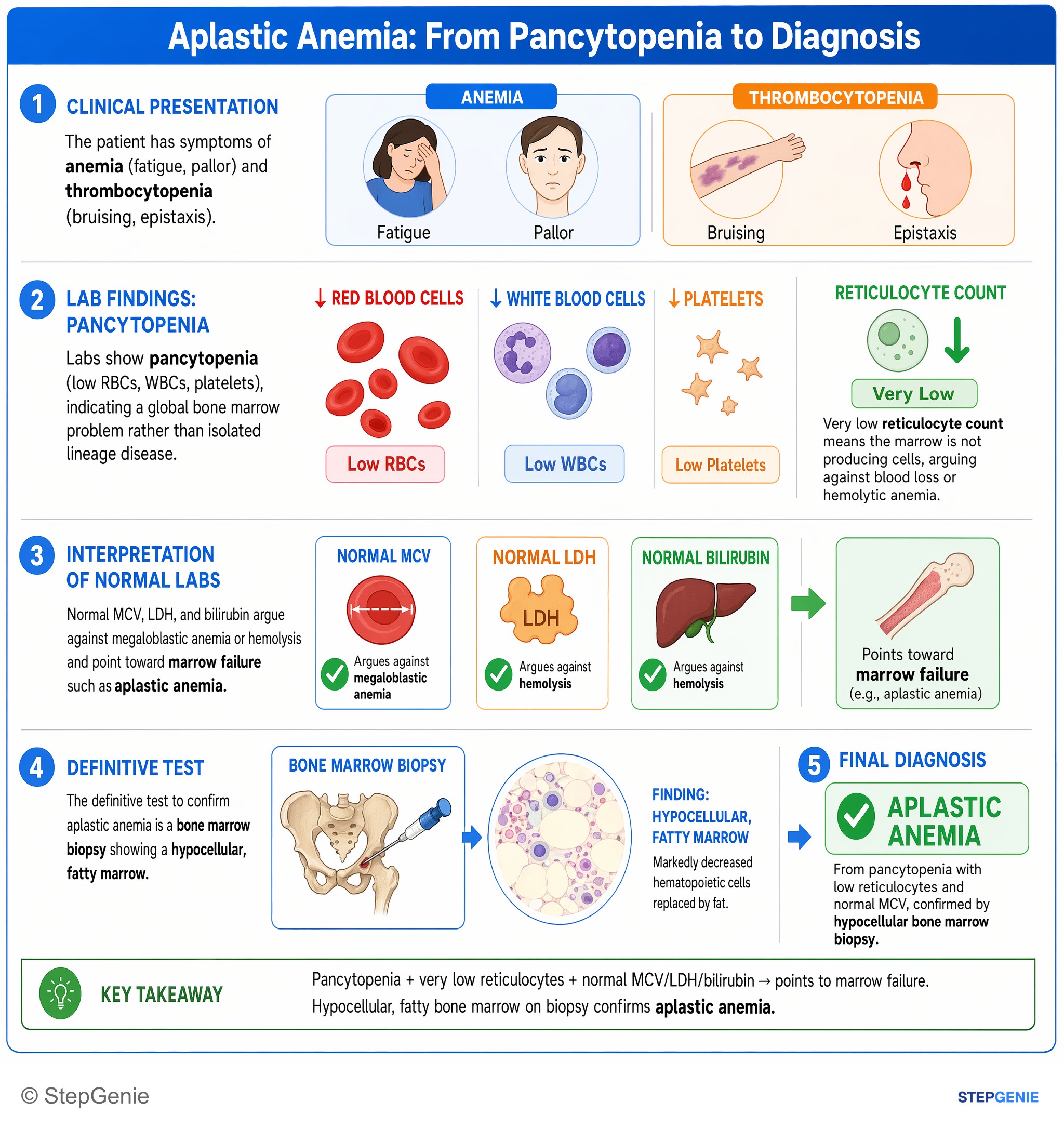
Aplastic anemia from pancytopenia with low reticulocytes and normal MCV is confirmed by hypocellular bone marrow biopsy.
USMLE Step 2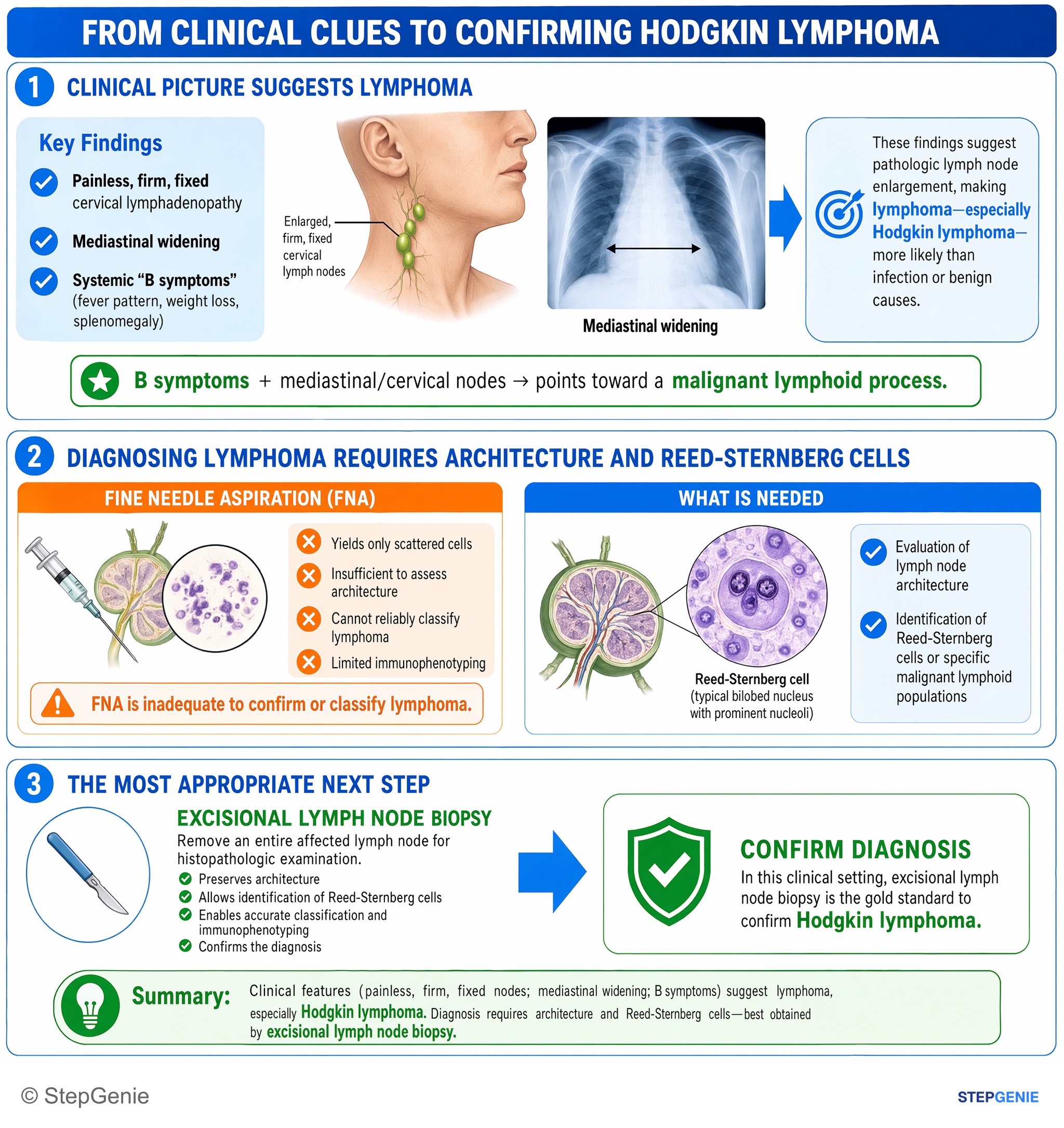
Hodgkin lymphoma suspected from B symptoms and mediastinal/cervical nodes; confirm with excisional lymph node biopsy for architecture and…
USMLE Step 1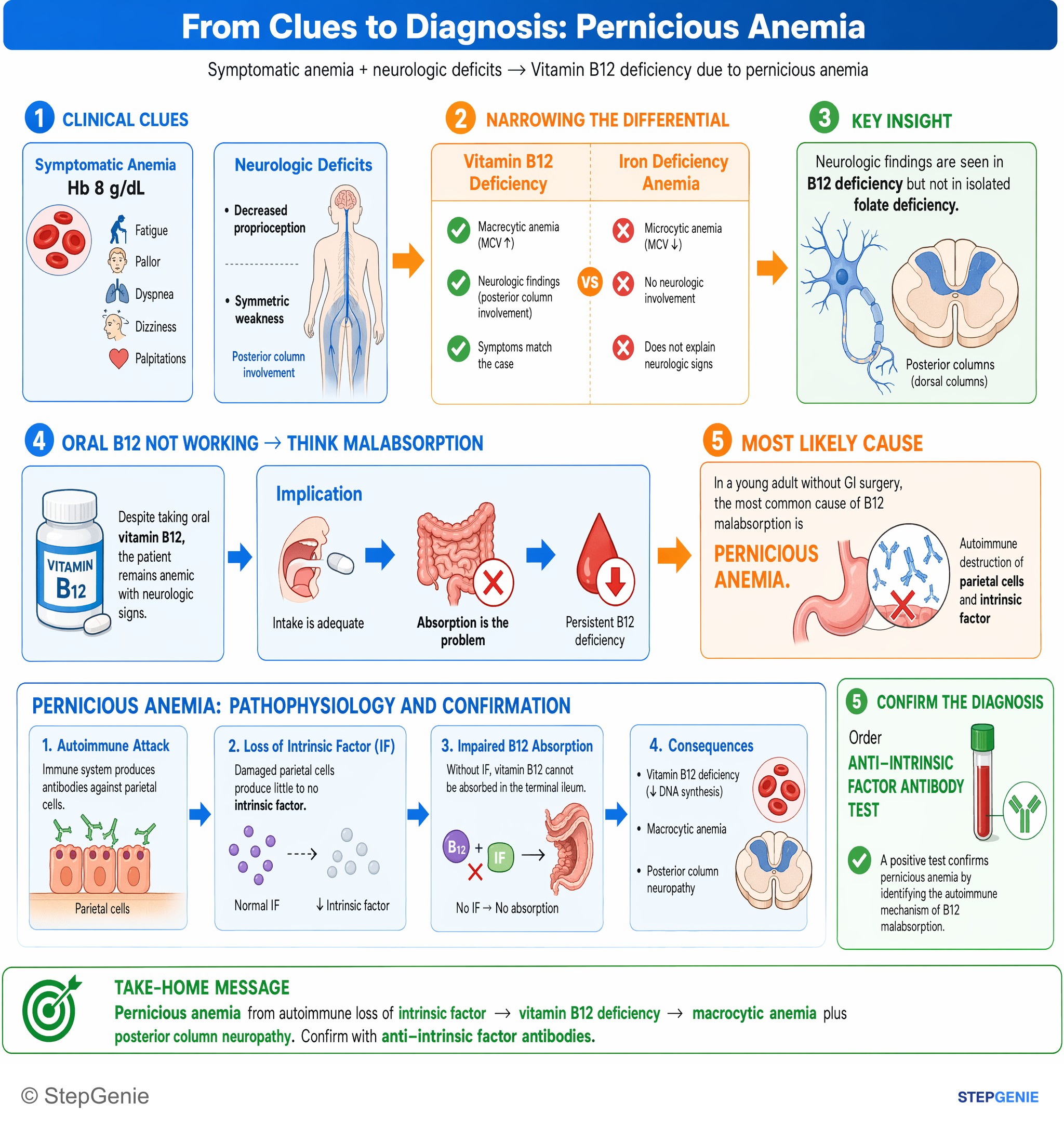
Pernicious anemia from autoimmune loss of intrinsic factor → vitamin B12 deficiency → macrocytic anemia plus posterior column neuropathy…
USMLE Step 2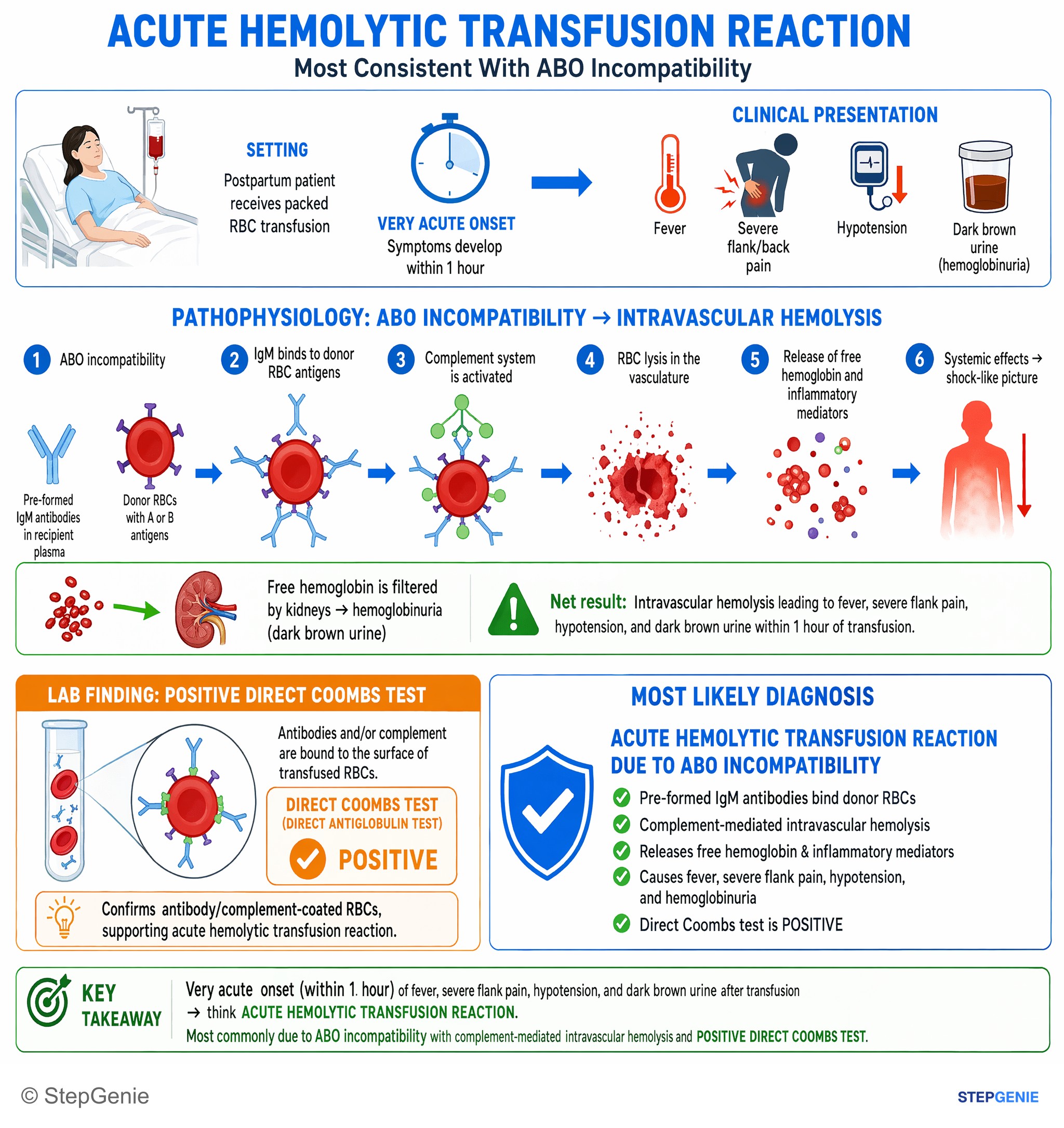
Acute hemolytic transfusion reaction due to ABO incompatibility: complement-mediated intravascular hemolysis → fever, flank pain…
USMLE Step 1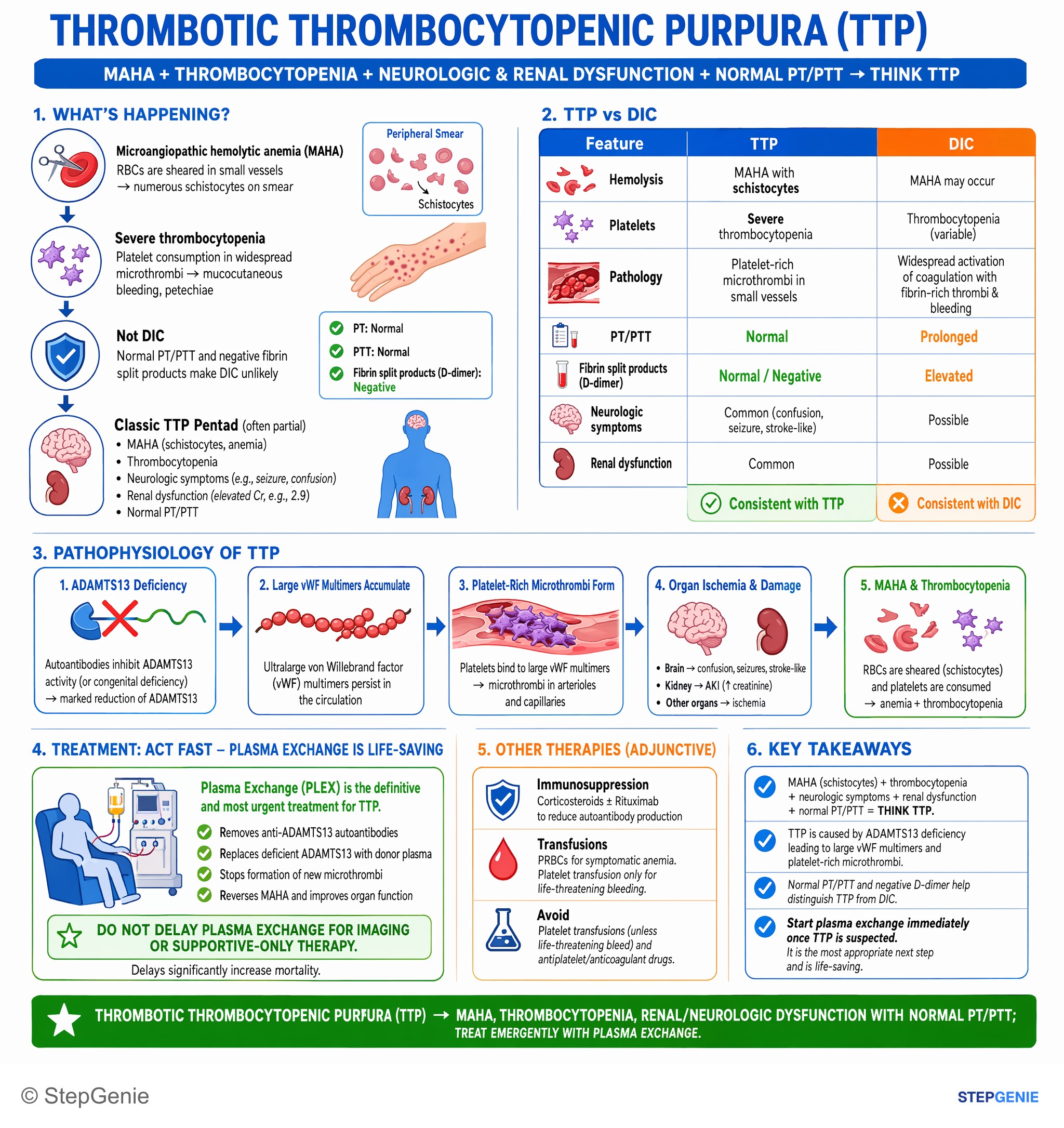
Thrombotic thrombocytopenic purpura (TTP) causes MAHA, thrombocytopenia, renal/neurologic dysfunction with normal PT/PTT; treat emergently…
USMLE Step 2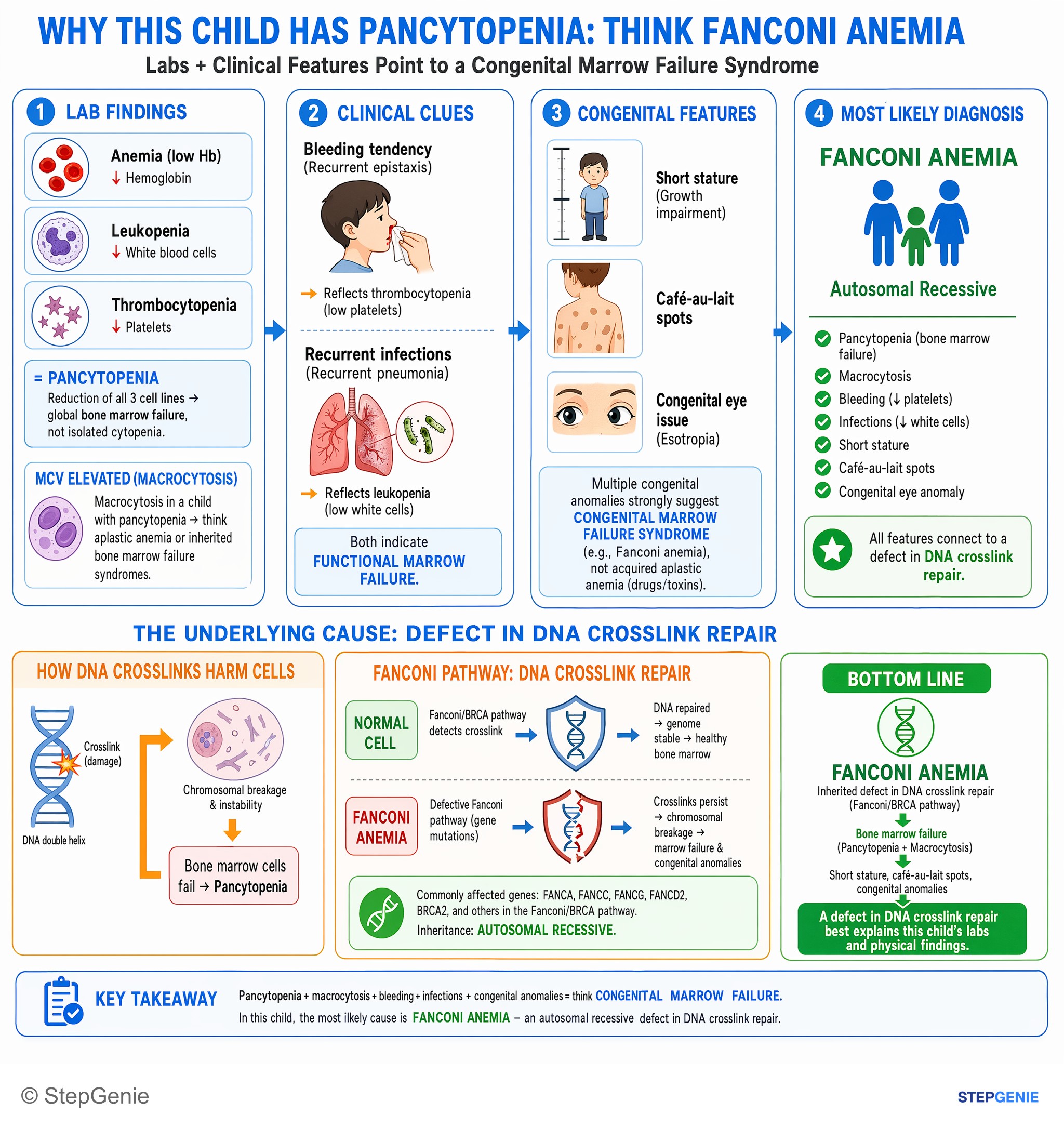
Fanconi anemia: inherited DNA crosslink repair defect → bone marrow failure (pancytopenia), macrocytosis, short stature, café-au-lait…
USMLE Step 1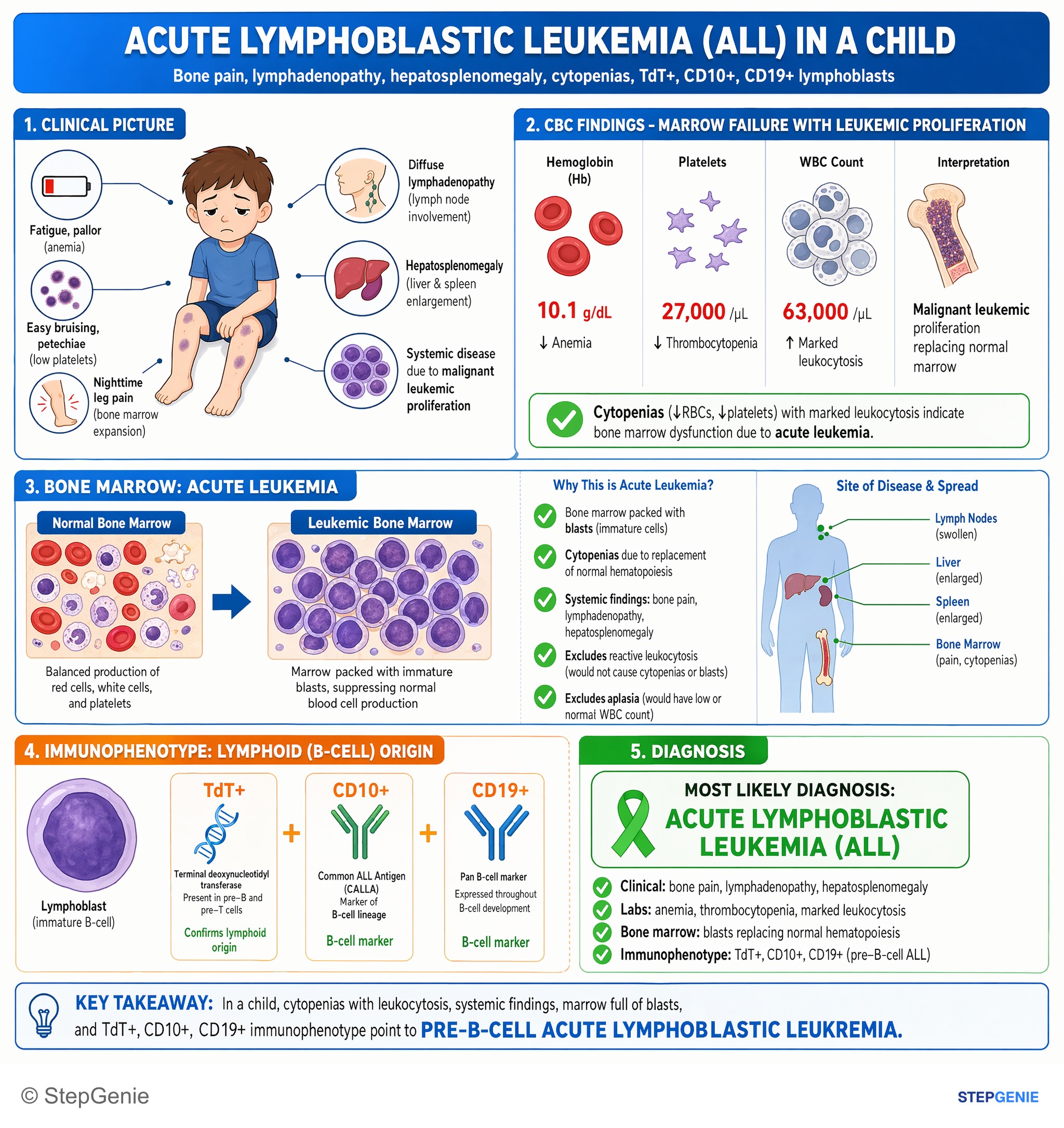
Acute lymphoblastic leukemia (ALL) in a child: bone pain, lymphadenopathy, hepatosplenomegaly, cytopenias, TdT+, CD10+, CD19+ lymphoblasts.
USMLE Step 2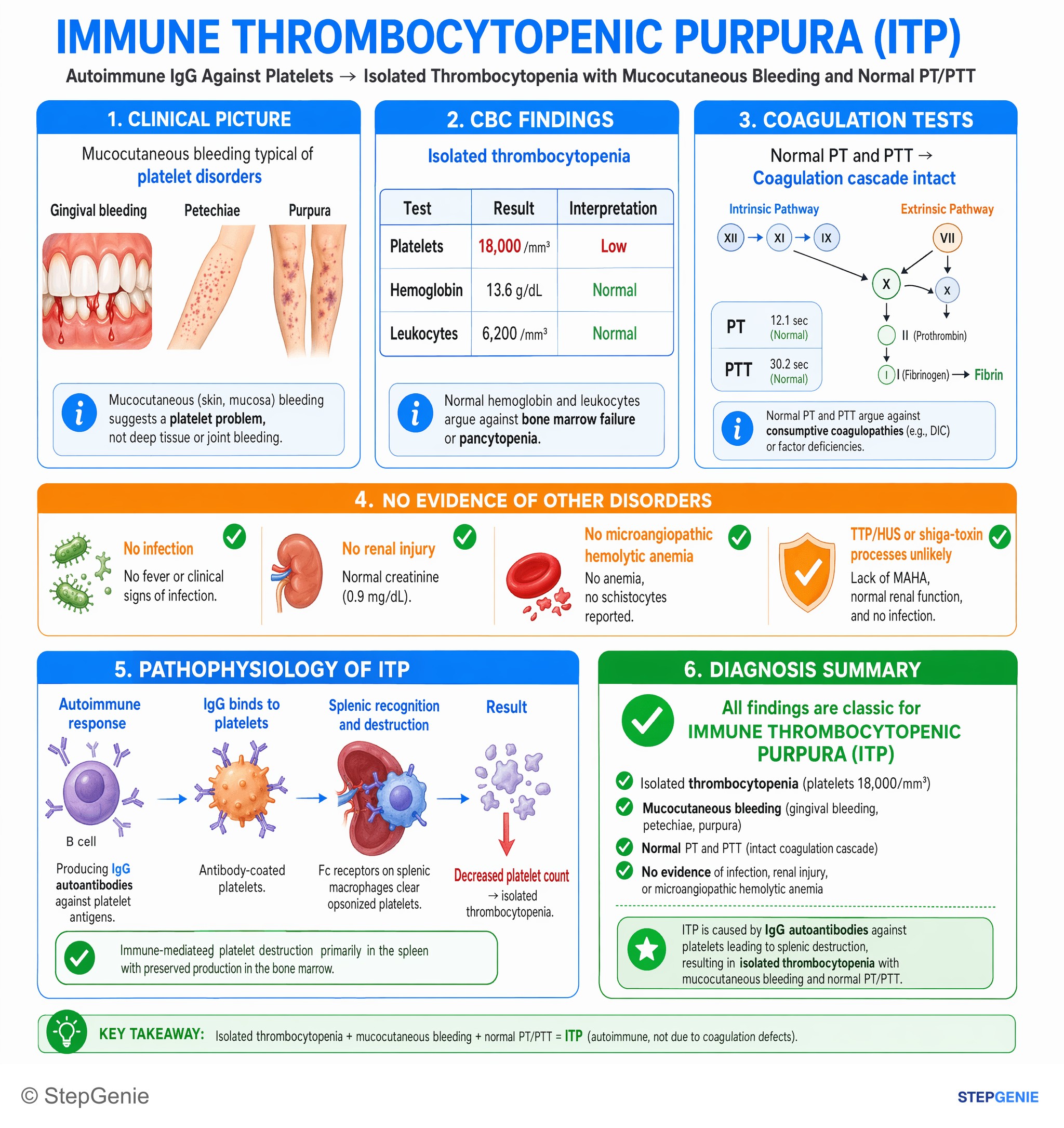
Immune thrombocytopenic purpura (ITP): autoimmune IgG against platelets → isolated thrombocytopenia with mucocutaneous bleeding and normal…
USMLE Step 1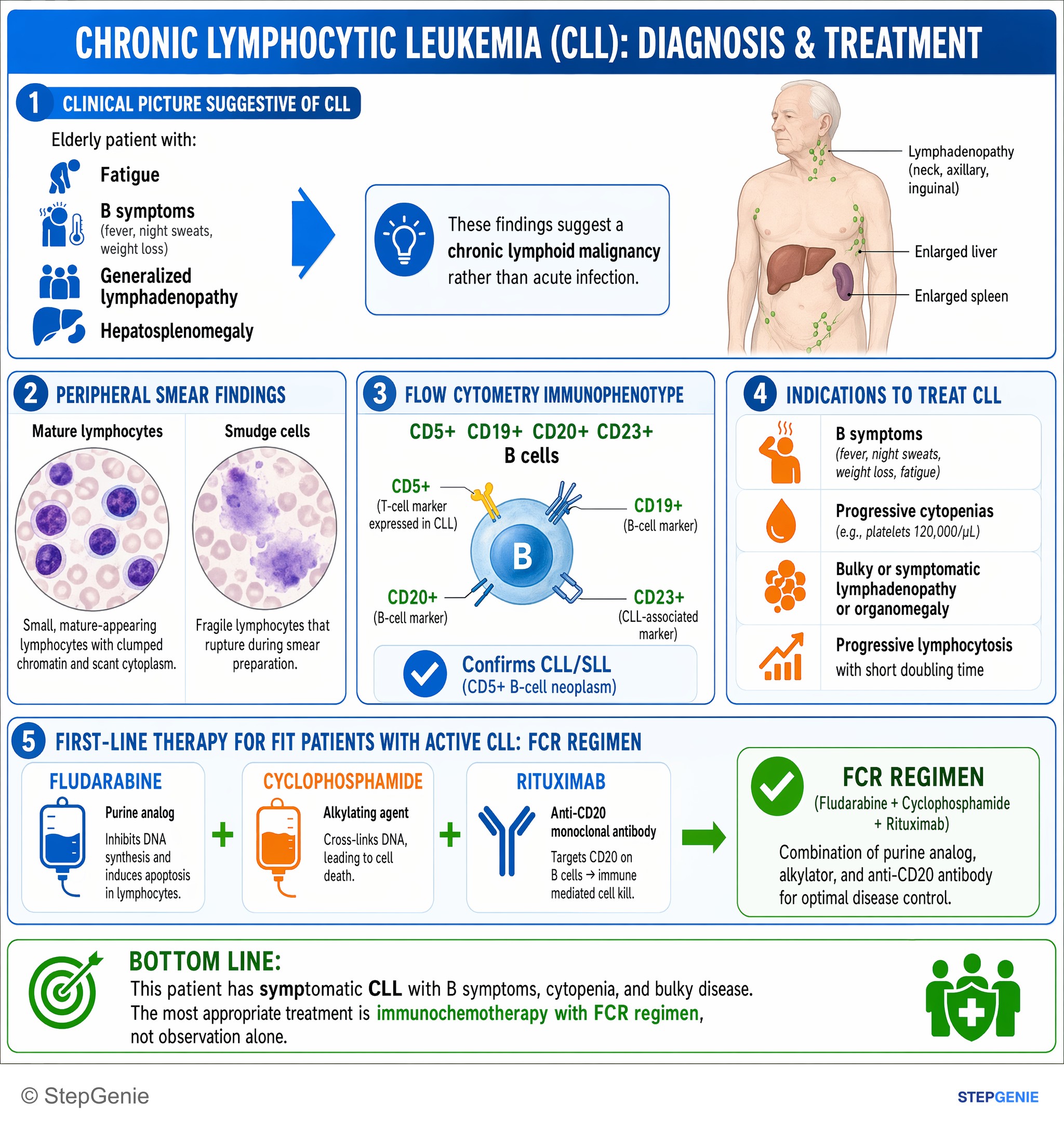
Chronic lymphocytic leukemia (CLL) with symptomatic B symptoms, cytopenias, and bulky disease requires immunochemotherapy (FCR regimen)…
USMLE Step 2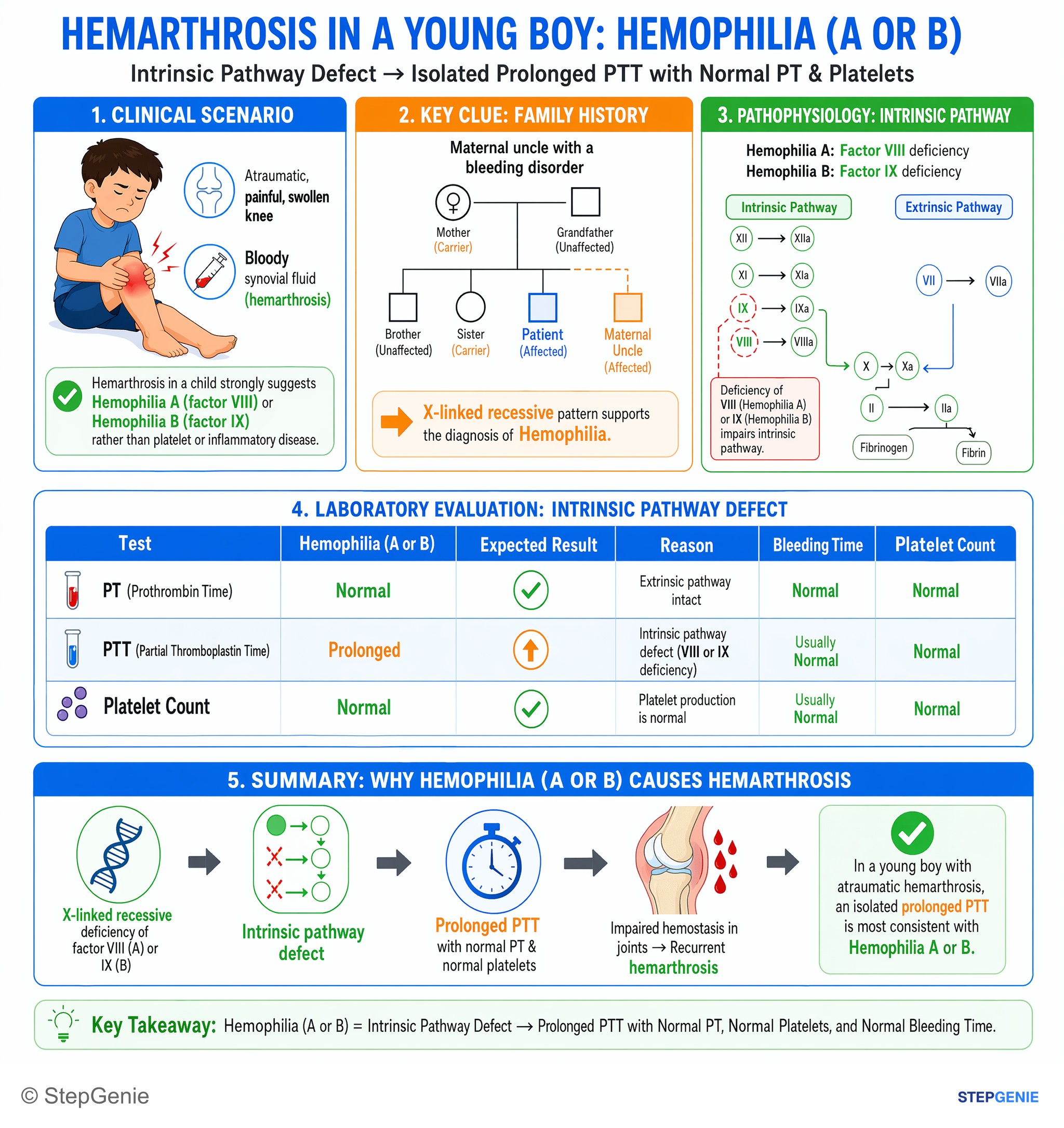
Hemophilia (A or B) causes factor VIII/IX deficiency → intrinsic pathway defect → hemarthrosis in young boy → isolated prolonged PTT with…
USMLE Step 1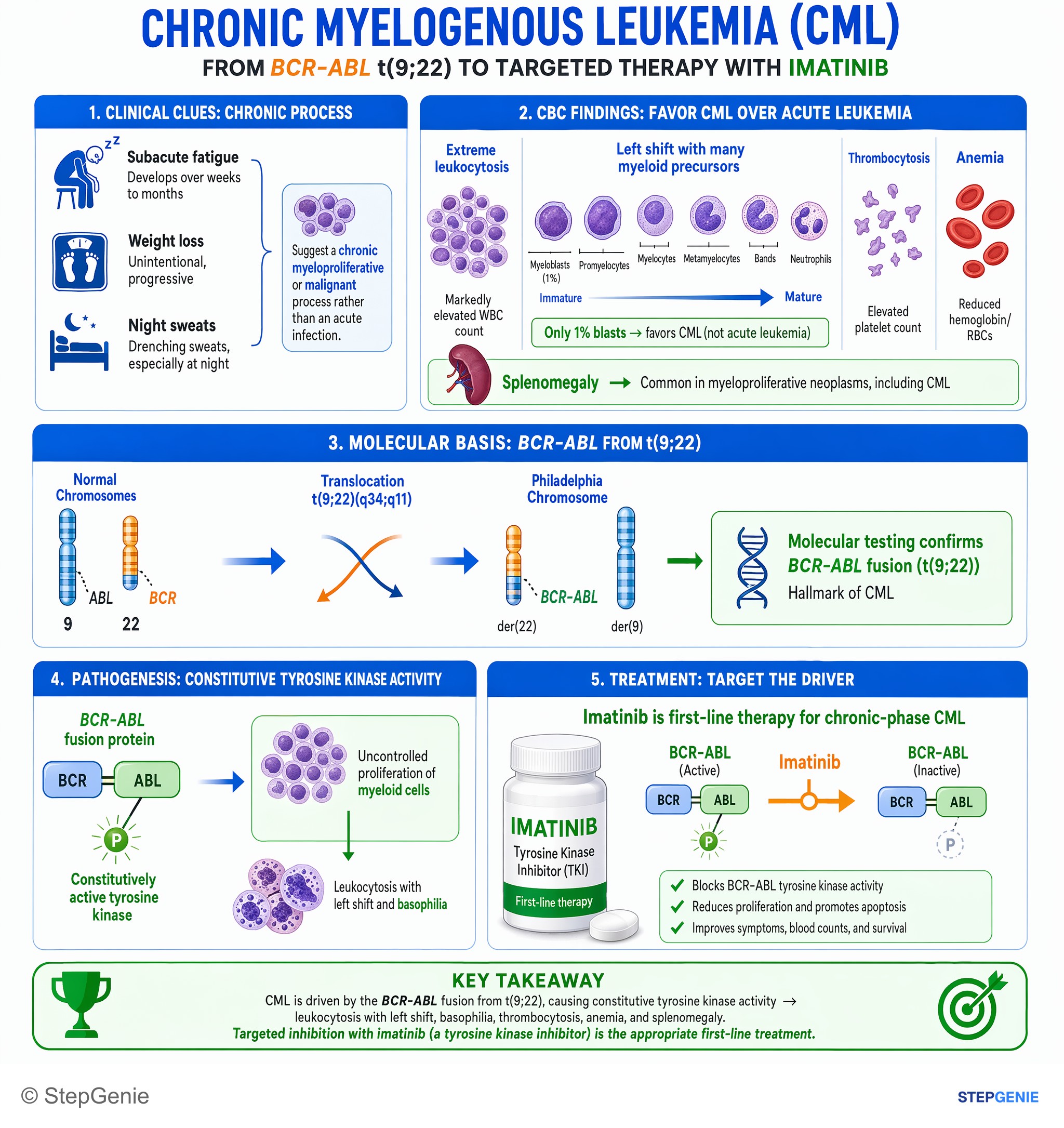
Chronic myelogenous leukemia (CML) from BCR-ABL t(9;22) causes leukocytosis with left shift and basophilia; treat with tyrosine kinase…
USMLE Step 2241 publishable hematology & oncology infographics in the library — 155 from Step 1 questions and 86 from Step 2 CK, counted on October 29, 2026. This page shows 48 of them, alternating the two steps. An image is listed when its question is active, has a full structured explanation, passed verification and carries no unresolved report.
This page caps out at 48 images. 193 more hematology & oncology infographics sit in the in-app image library, where they are searchable and filterable by subject, system and topic.
Open the image libraryPractice the questions behind these images
Each image explains one question. The hematology & oncology topic page has the written explanations and the question sets, and the preview lets you answer three questions without an account.
Other image sets
Study hematology & oncology with the image attached
In the app, each of these sits at the end of the question it explains, alongside the step-by-step reasoning and a panel for every option you did not pick. Starting is free.
Start practicing free