High-yield infectious disease images for the USMLE
StepGenie explanation infographics. Free to view, no account needed.
What do StepGenie's infectious disease images cover?
Each infectious disease image is an infographic StepGenie drew for one of its own practice questions. It ties an organism to the host defect it exploits, the tissue it reaches and the drug that stops it, with the answer the question was testing written underneath.
Bacterial infections dominate this set by a wide margin, then viral infections, HIV and sexually transmitted infections, parasitic and helminthic disease, fungal infections and antimicrobial pharmacology.
Microbiology is a subject where undifferentiated lists cost marks, because two organisms can share a presentation and differ only in one detail. The images are drawn to isolate that detail — the growth requirement, the toxin, the host cell it enters, the exposure in the history. An HIV panel that lines up CD4 count against the infection that appears at that count answers a family of questions with one picture rather than one at a time.
The antimicrobial images are worth separating out. They sit on the mechanism rather than the drug name, so resistance and adverse effects hang off a structure you already know instead of being another list to hold.
Vaccination and prophylaxis panels sit in the immunology gallery rather than here, because those questions turn on the immune response rather than on the organism. Bacterial infections alone account for close to half of this page, so it is one to browse rather than to search.
Topics in this set
Labels are the question-bank topics these images are filed under. Step 1 and Step 2 file some of the same material under different names, so a few labels here merge both.
Infectious Disease explanation images
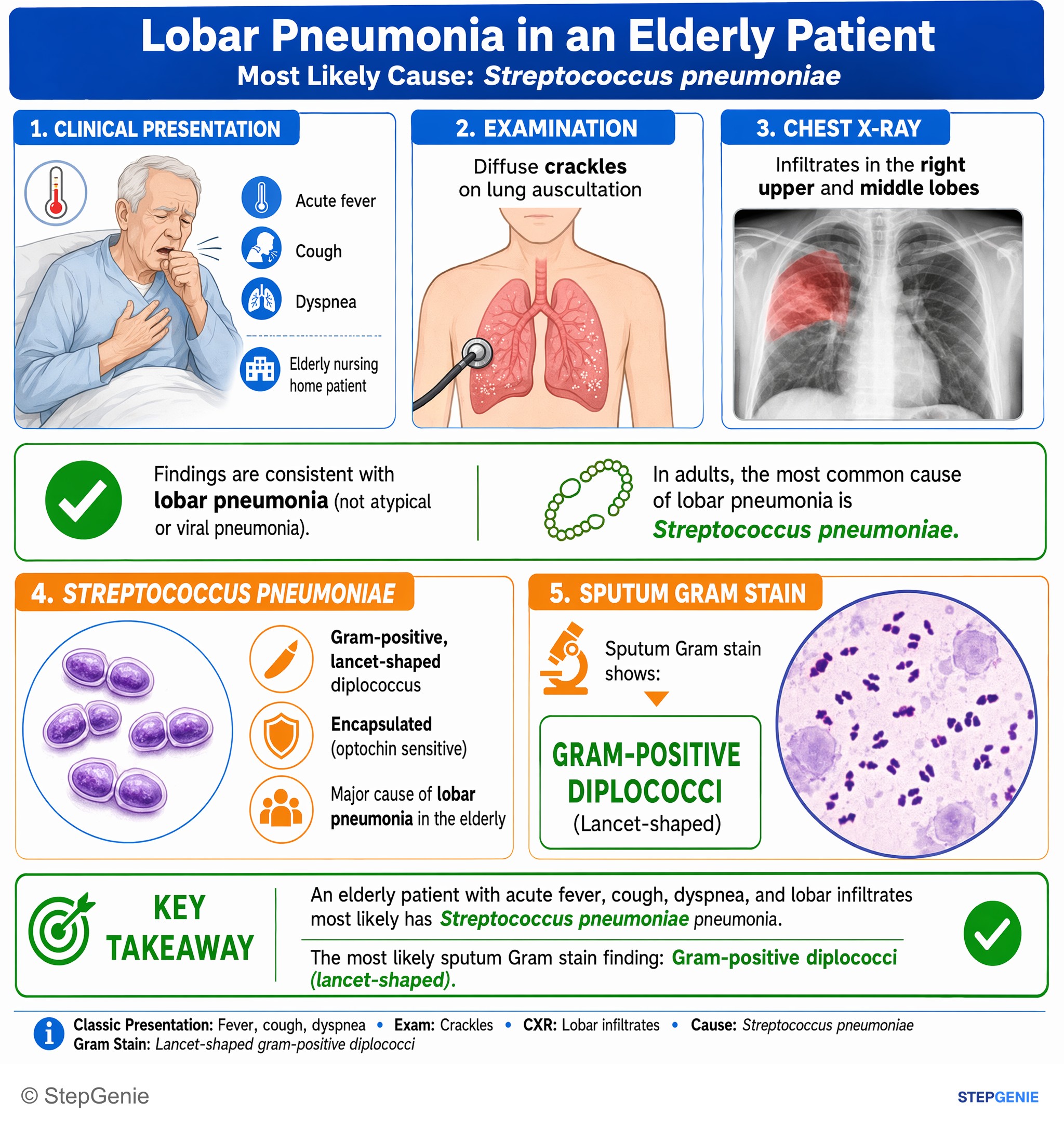
Streptococcus pneumoniae causes classic lobar pneumonia with fever, cough, dyspnea in elderly; sputum Gram stain shows lancet-shaped…
USMLE Step 1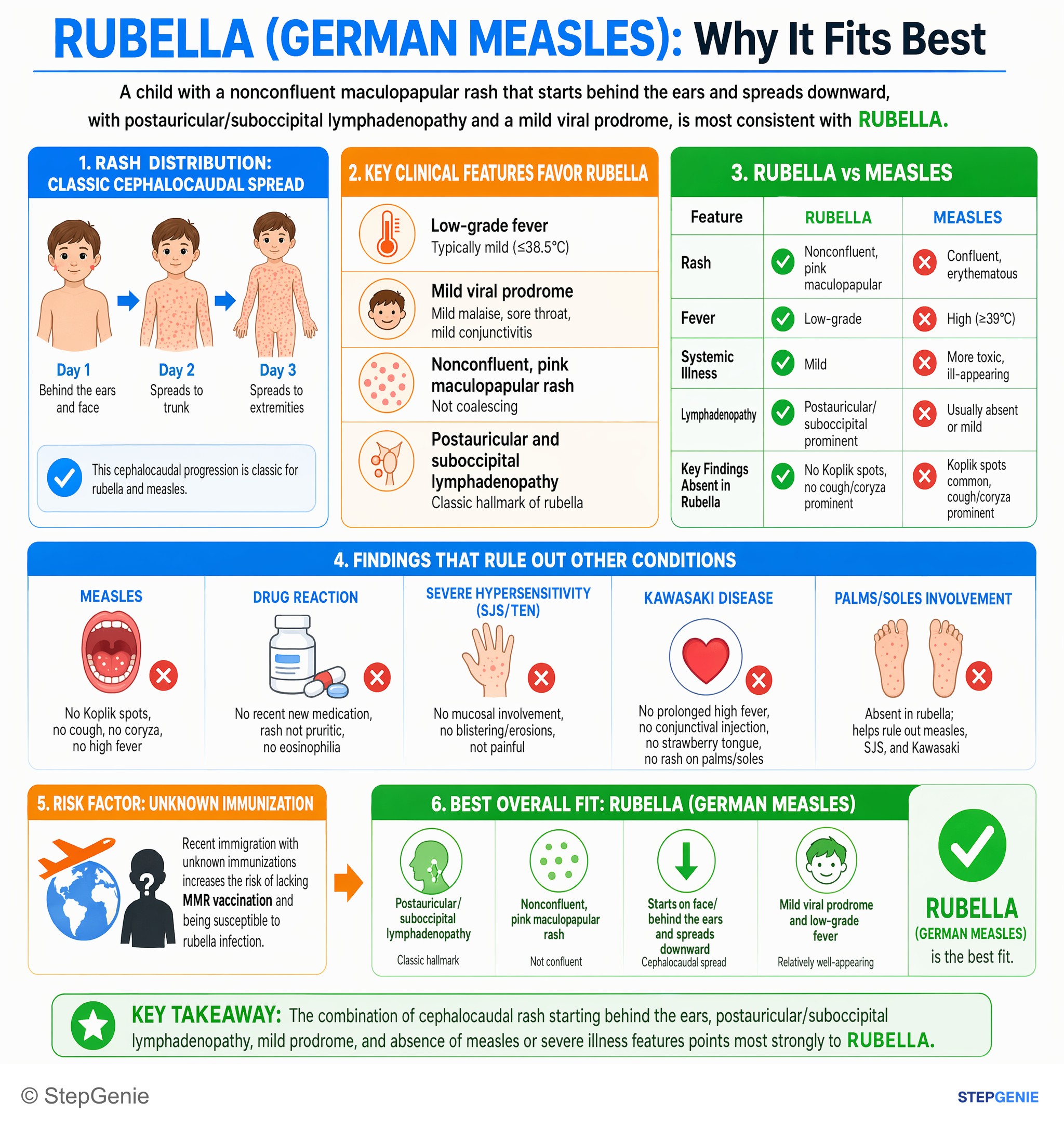
Rubella causes postauricular/suboccipital lymphadenopathy and a nonconfluent pink maculopapular rash starting on face/behind ears then…
USMLE Step 2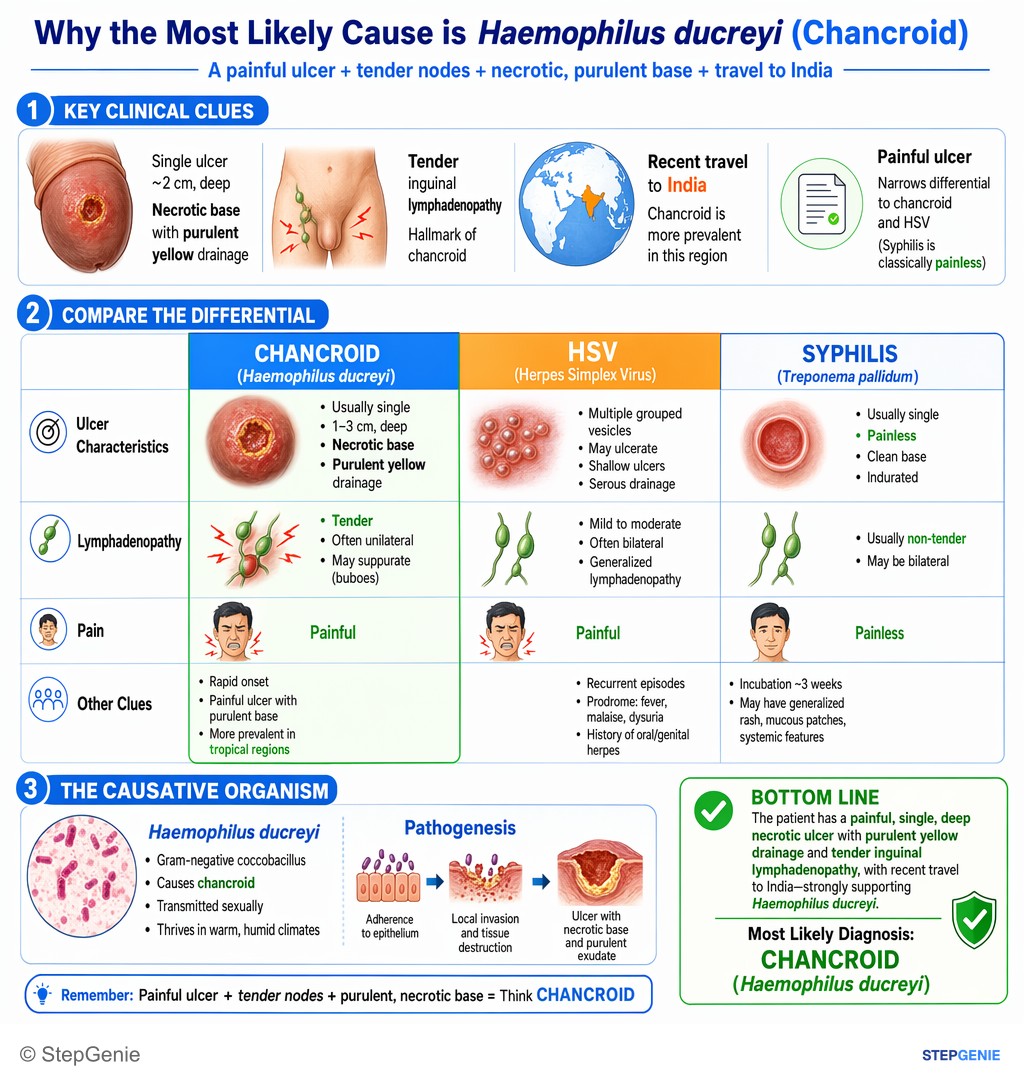
Chancroid (Haemophilus ducreyi) causes painful genital ulcers with tender inguinal lymphadenopathy and a purulent, necrotic base.
USMLE Step 1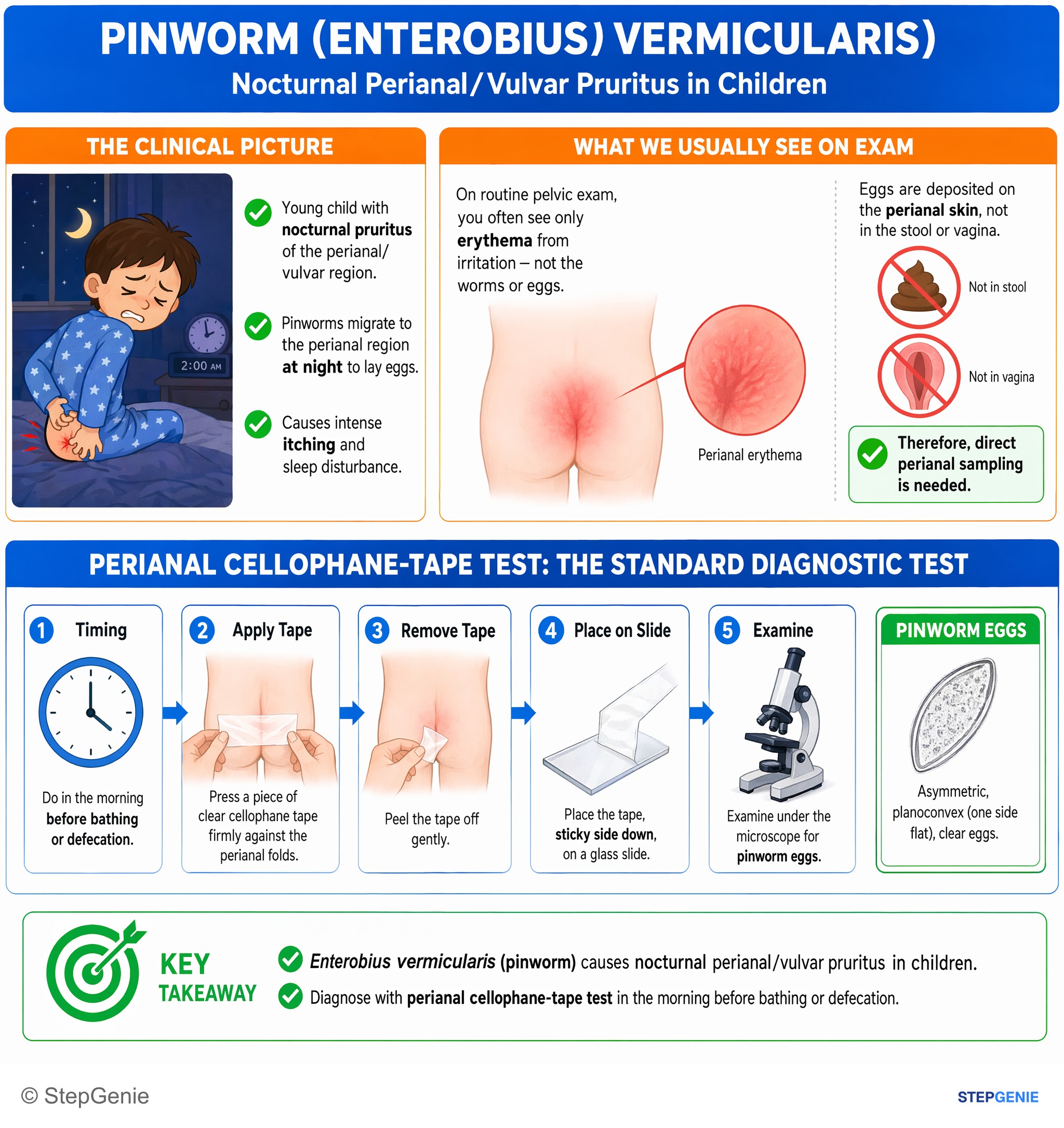
Enterobius vermicularis (pinworm) causes nocturnal perianal/vulvar pruritus in children; diagnose with perianal cellophane-tape test in…
USMLE Step 2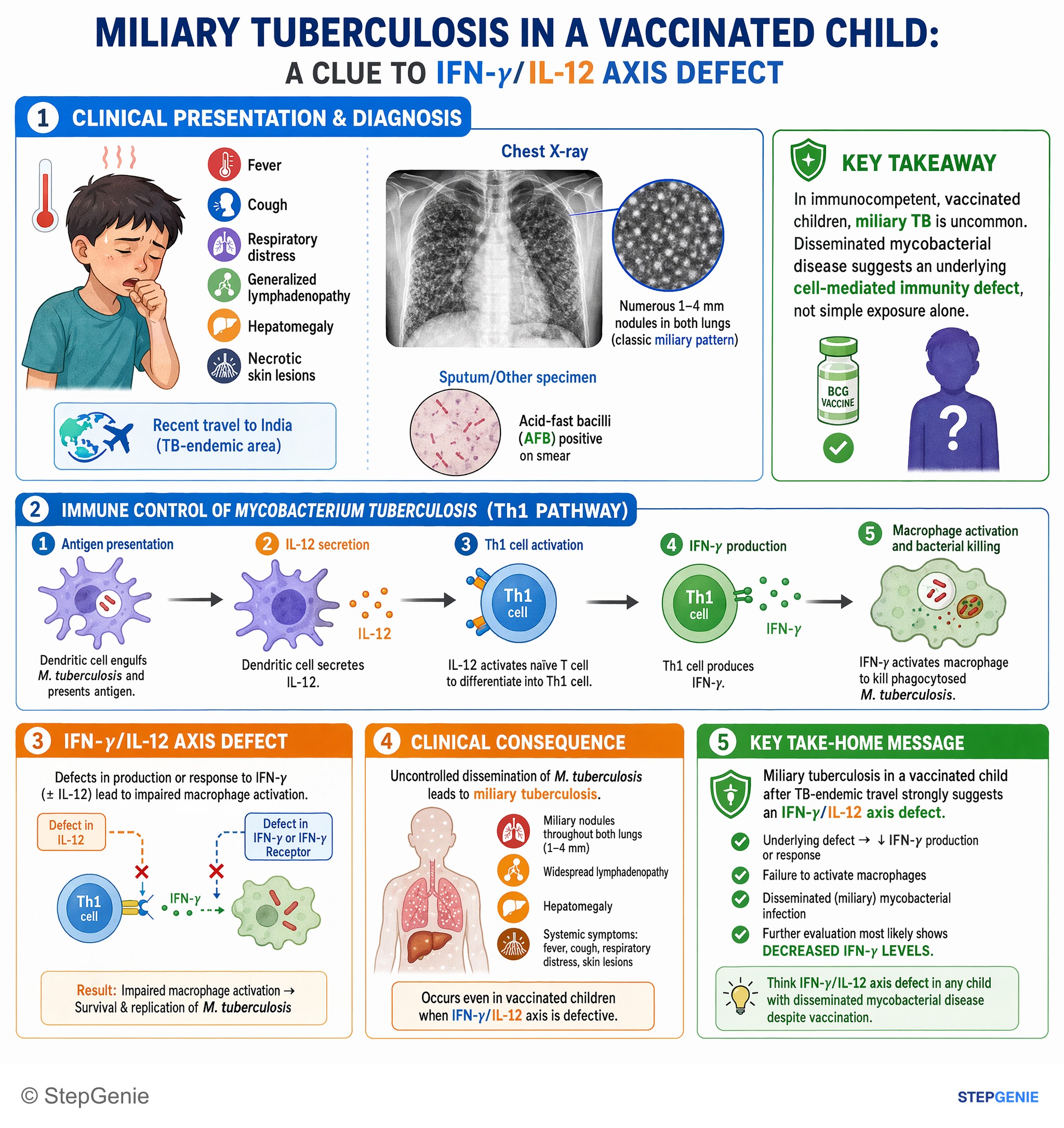
Miliary tuberculosis in a vaccinated child after TB-endemic travel suggests a IFN-γ/IL-12 axis defect, causing impaired macrophage…
USMLE Step 1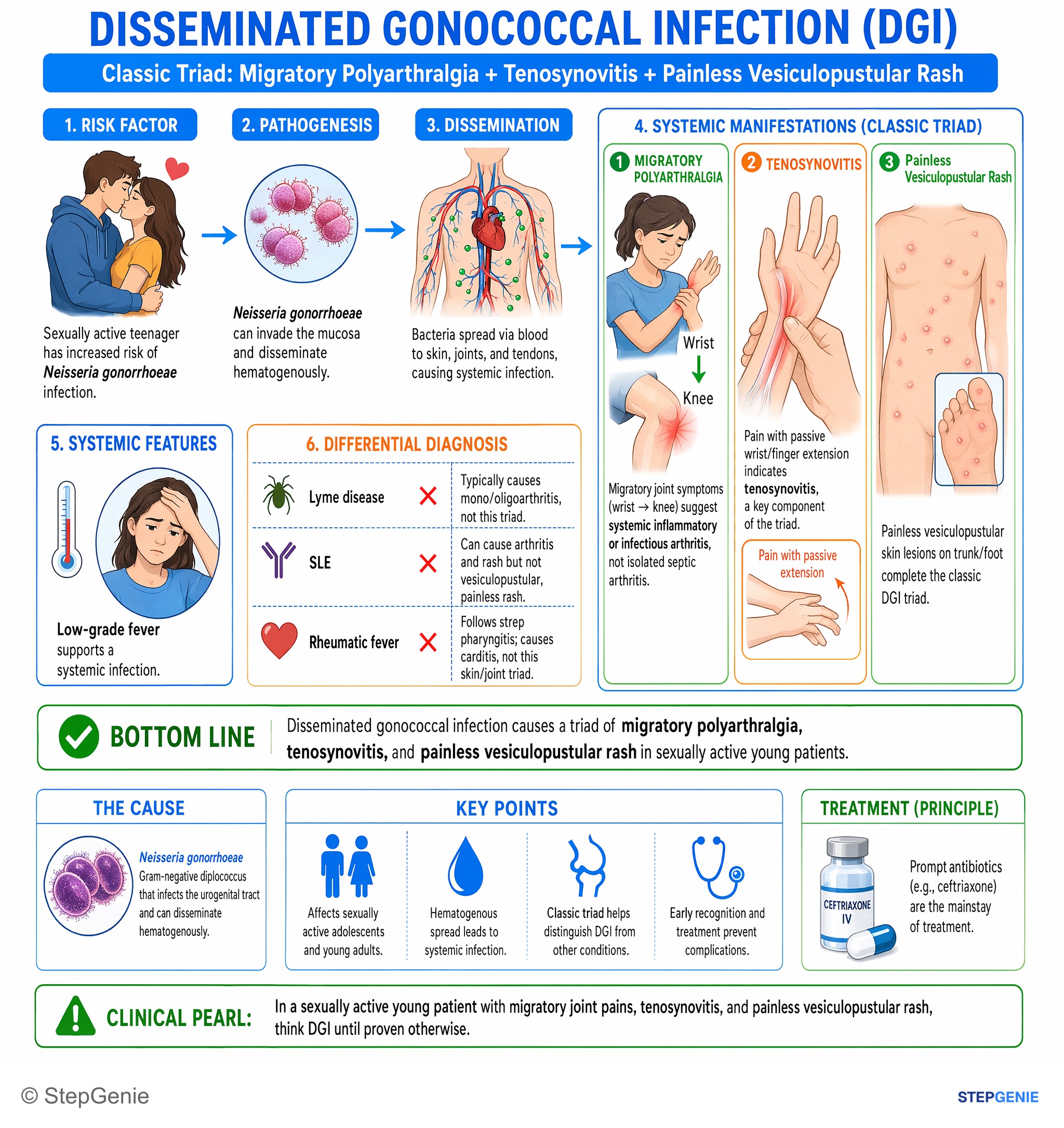
Disseminated gonococcal infection causes triad of migratory polyarthralgia, tenosynovitis, and painless vesiculopustular rash in sexually…
USMLE Step 2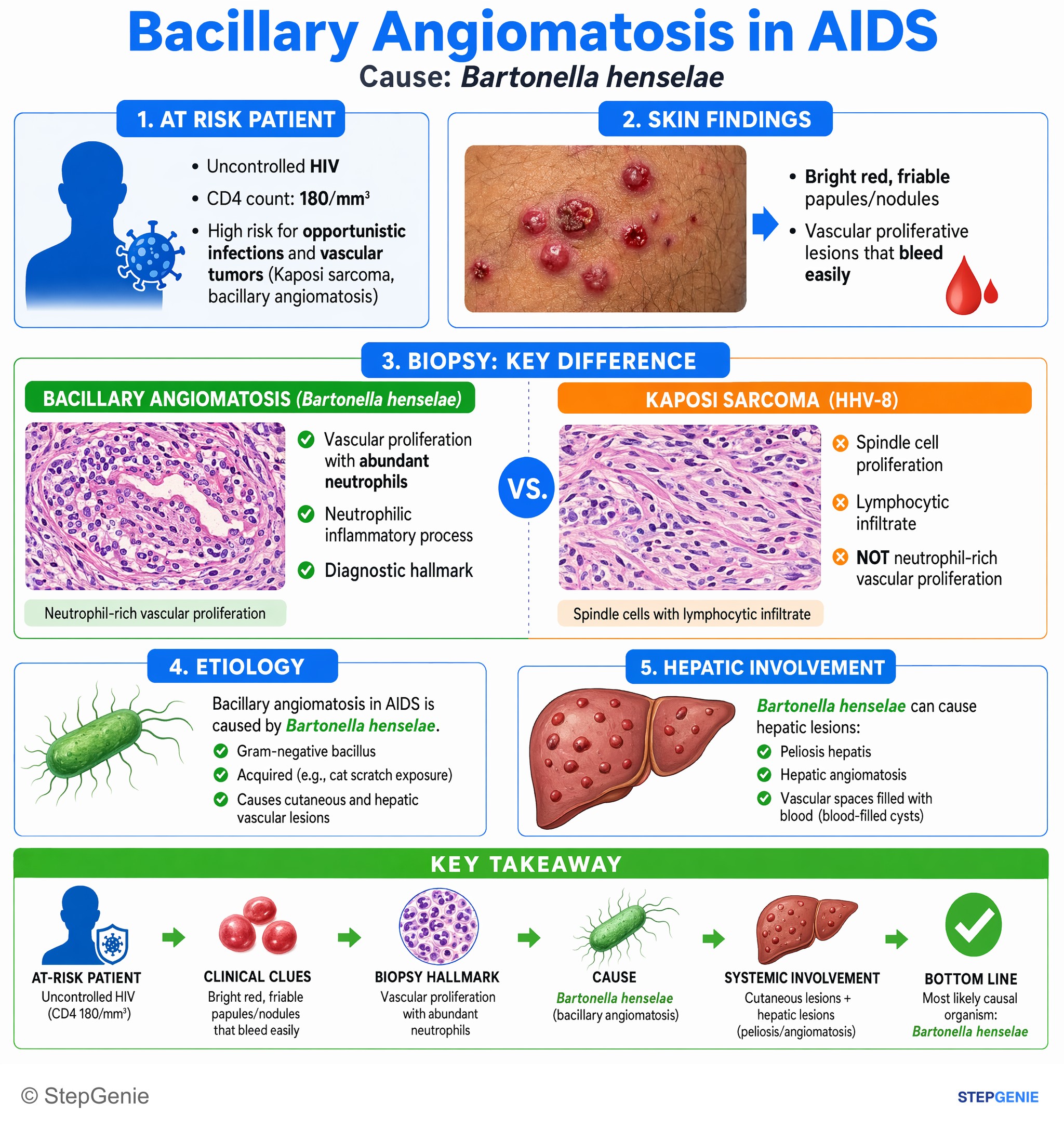
Bacillary angiomatosis from Bartonella henselae in AIDS: bright red friable papules/nodules, hepatic lesions, neutrophilic vascular…
USMLE Step 1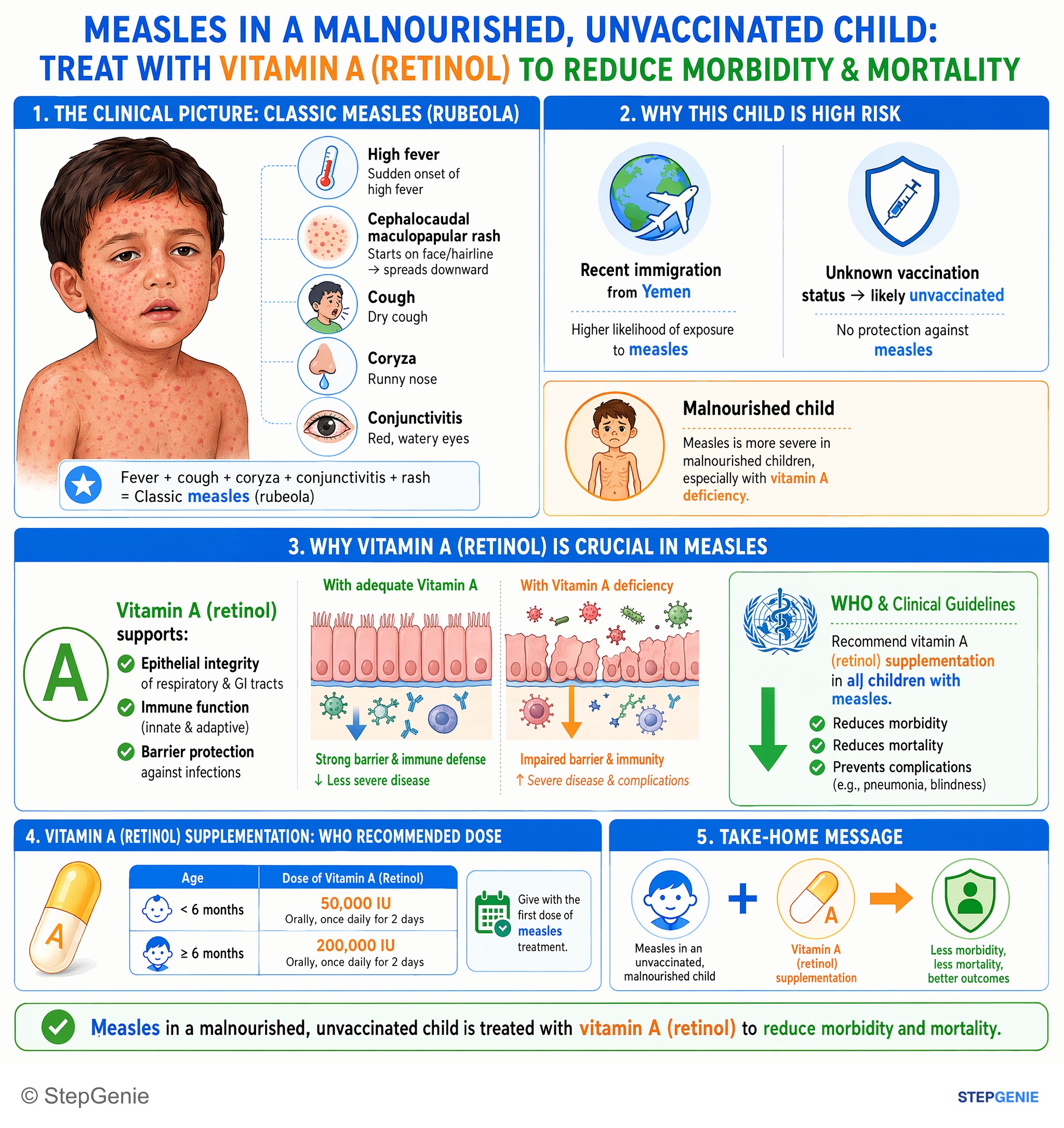
Measles in a malnourished, unvaccinated child is treated with vitamin A (retinol) to reduce morbidity and mortality.
USMLE Step 2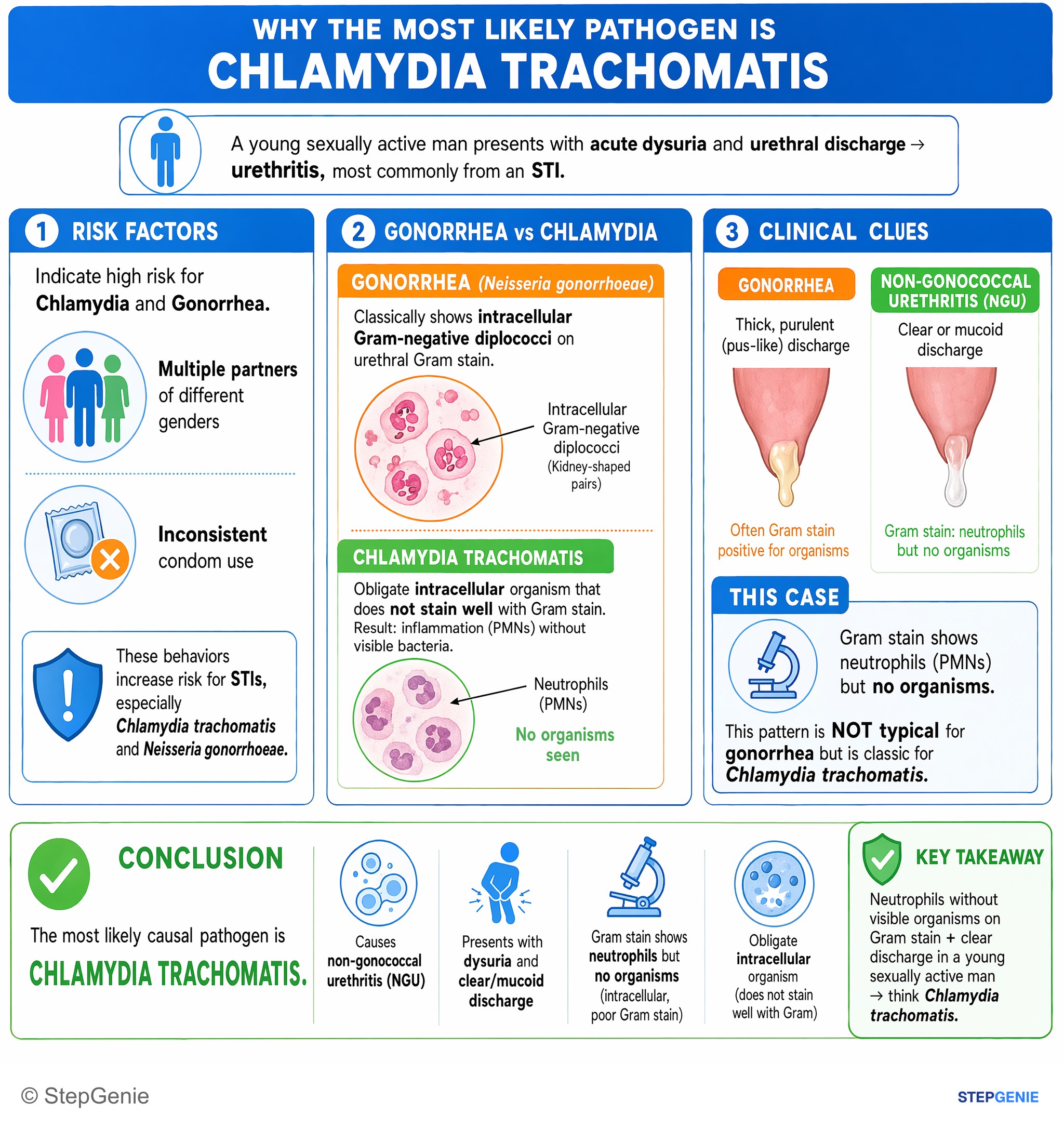
Chlamydia trachomatis causes non-gonococcal urethritis with dysuria and clear discharge; Gram stain shows neutrophils but no organisms…
USMLE Step 1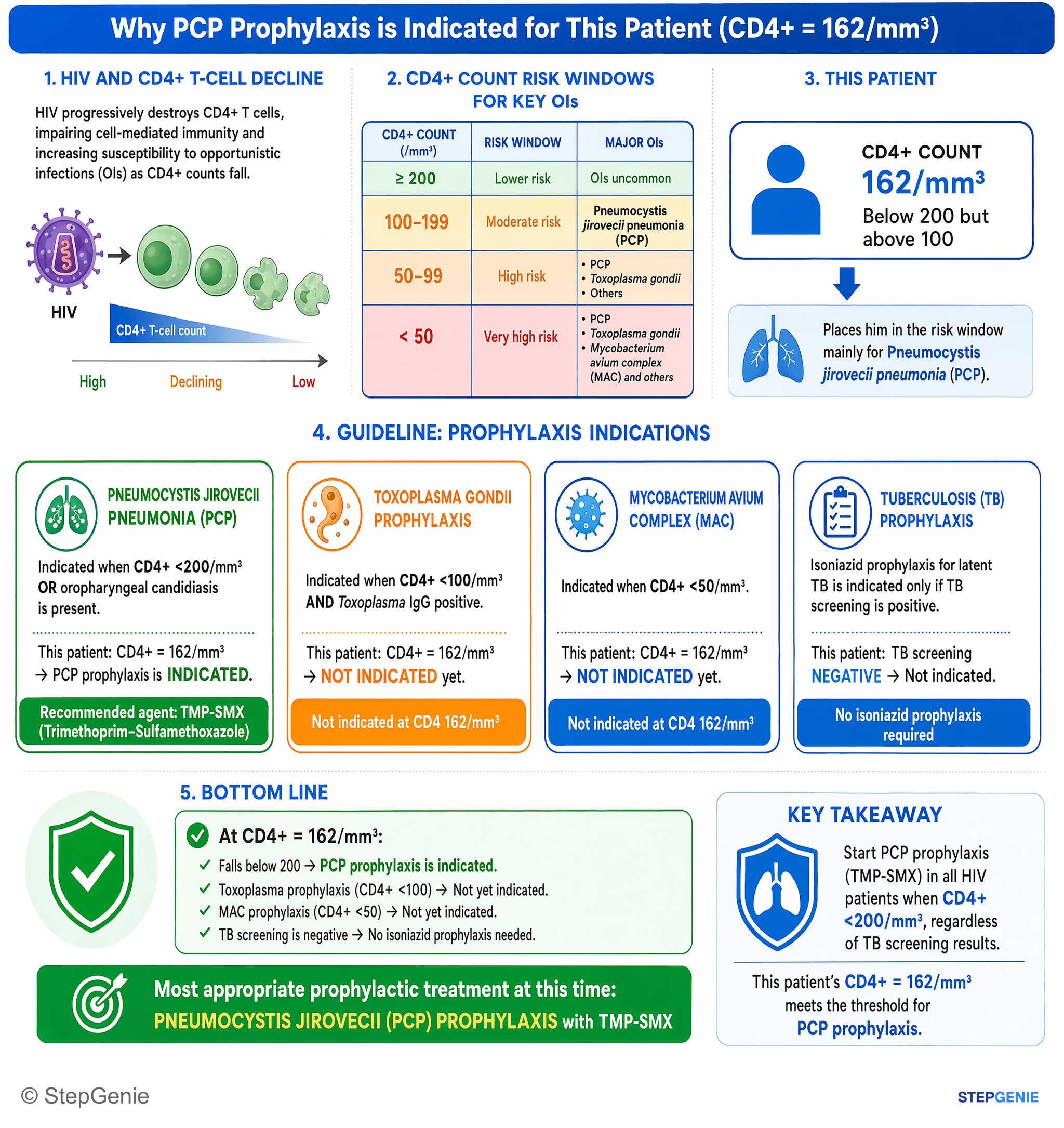
Pneumocystis jirovecii pneumonia prophylaxis (TMP-SMX) is indicated in HIV when CD4+ <200/mm³, regardless of TB screening results.
USMLE Step 2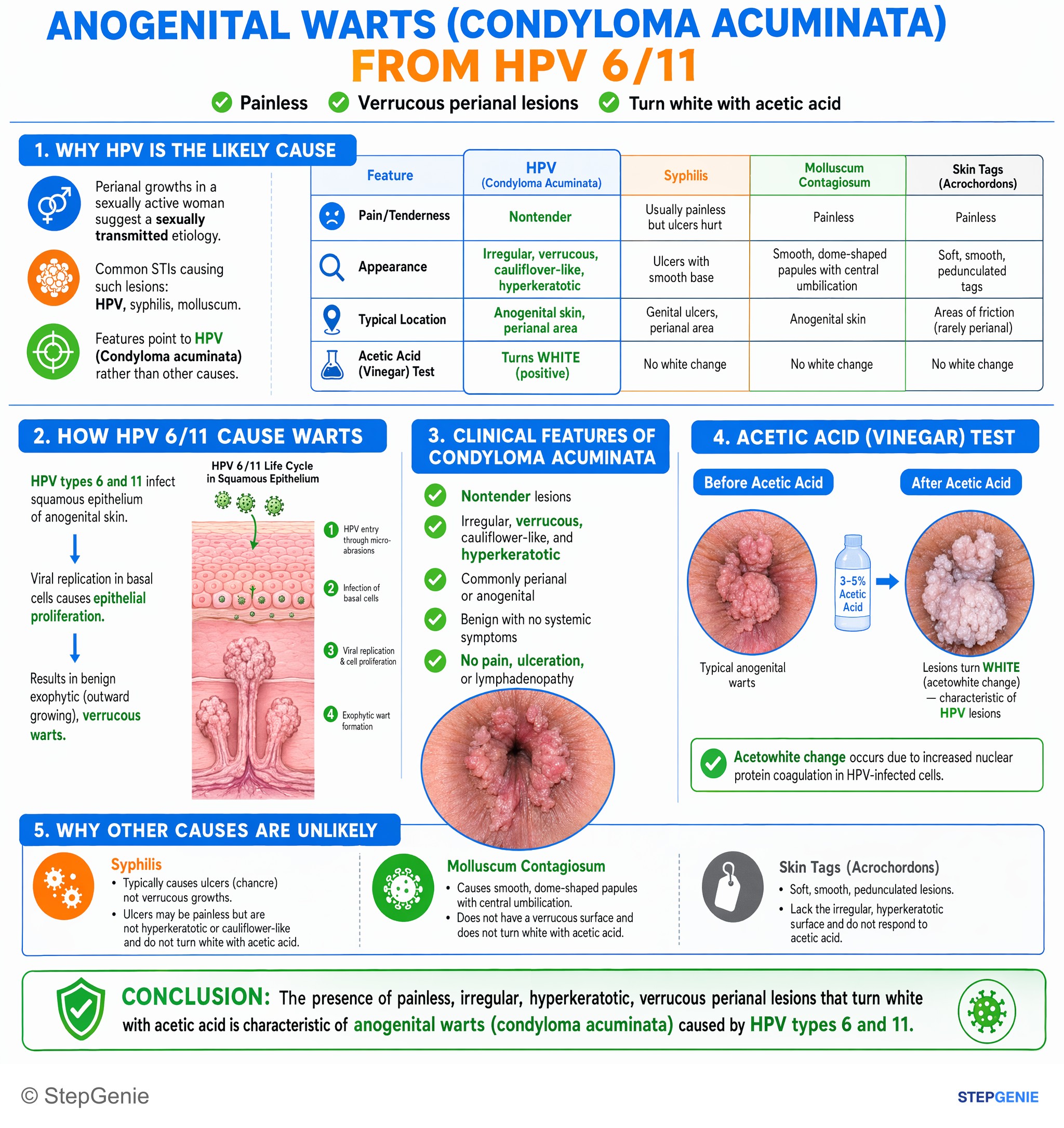
Anogenital warts (condyloma acuminata) from HPV 6/11: painless, verrucous perianal lesions that turn white with acetic acid application.
USMLE Step 1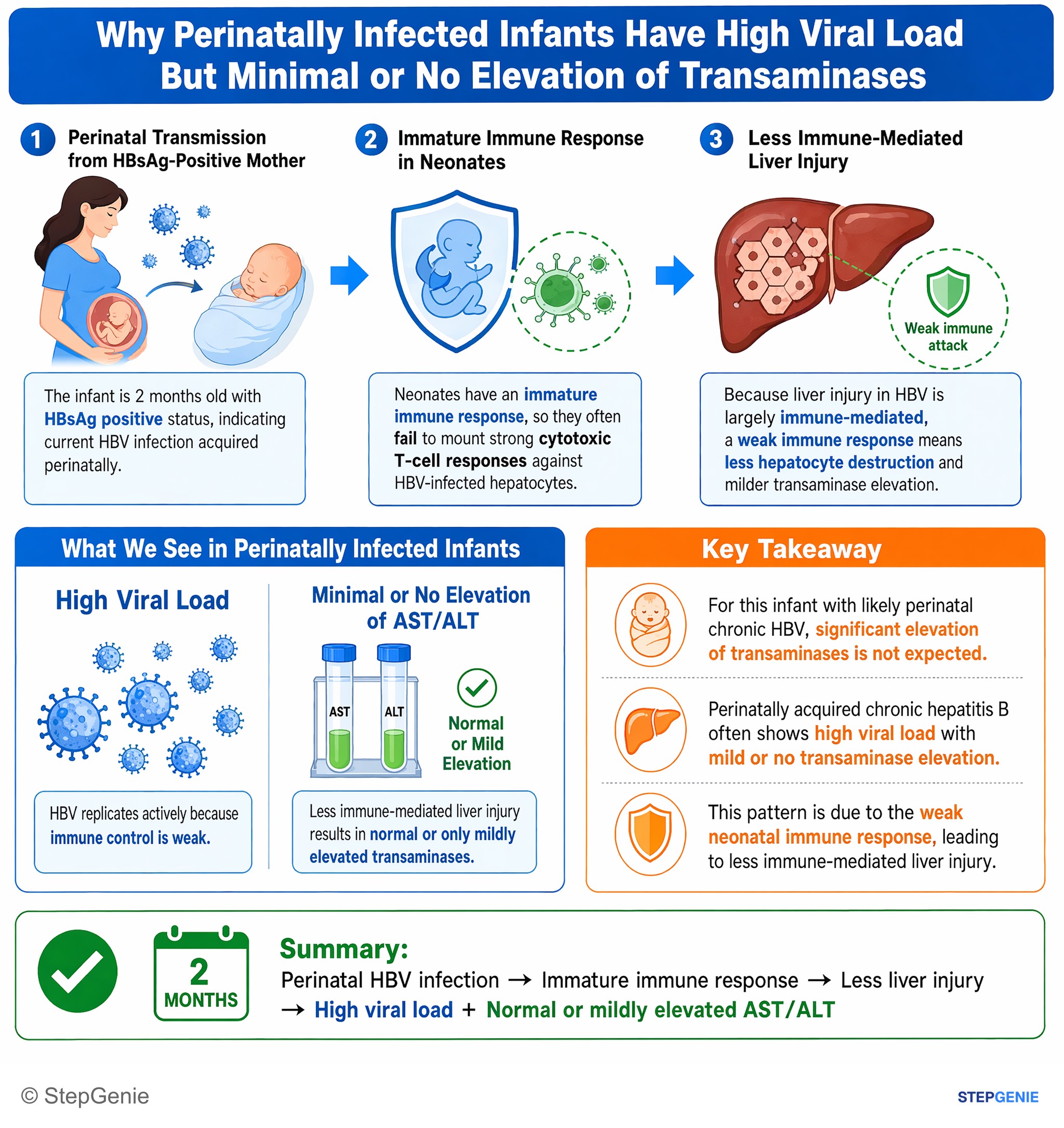
Perinatally acquired chronic hepatitis B often shows high viral load with mild or no transaminase elevation due to weak neonatal immune…
USMLE Step 2385 publishable infectious disease infographics in the library — 178 from Step 1 questions and 207 from Step 2 CK, counted on October 29, 2026. This page shows 48 of them, alternating the two steps. An image is listed when its question is active, has a full structured explanation, passed verification and carries no unresolved report.
This page caps out at 48 images. 337 more infectious disease infographics sit in the in-app image library, where they are searchable and filterable by subject, system and topic.
Open the image libraryPractice the questions behind these images
Each image explains one question. The infectious disease topic page has the written explanations and the question sets, and the preview lets you answer three questions without an account.
Other image sets
Study infectious disease with the image attached
In the app, each of these sits at the end of the question it explains, alongside the step-by-step reasoning and a panel for every option you did not pick. Starting is free.
Start practicing free