High-yield endocrinology images for the USMLE
StepGenie explanation infographics. Free to view, no account needed.
What do StepGenie's endocrinology images cover?
Each endocrinology image is an infographic StepGenie drew for one of its own practice questions. Nearly all of them are axis pictures: which hormone rose, what fed back, and which lab result that combination predicts. The caption states the diagnosis the pattern points to.
Thyroid disorders carry the largest block of endocrine images, then diabetes mellitus, endocrine tumors, adrenal disorders and reproductive endocrinology. Hypothalamic and pituitary disease, calcium and vitamin D physiology, congenital anomalies, and normal endocrine structure and function make up the remainder.
Endocrinology is almost entirely a feedback subject, and feedback is much easier to hold as a diagram than as prose. A primary-versus-secondary panel shows the two hormone levels moving in the same direction or in opposite directions, which is the single test that separates most endocrine answer choices. The calcium images work the same way, putting PTH, calcium, phosphate and vitamin D on one grid so that a four-value lab panel resolves to one diagnosis.
The adrenal and pituitary images pay off most on Step 1. Draw the axis from memory first, mark where the lesion sits, predict the labs, and only then open the image — the disagreements are the parts worth relearning.
Diabetes complications overlap with the nephrology and neurology galleries, because the microvascular questions are usually filed under the organ that fails rather than under endocrinology itself.
Topics in this set
Labels are the question-bank topics these images are filed under. Step 1 and Step 2 file some of the same material under different names, so a few labels here merge both.
Endocrinology explanation images
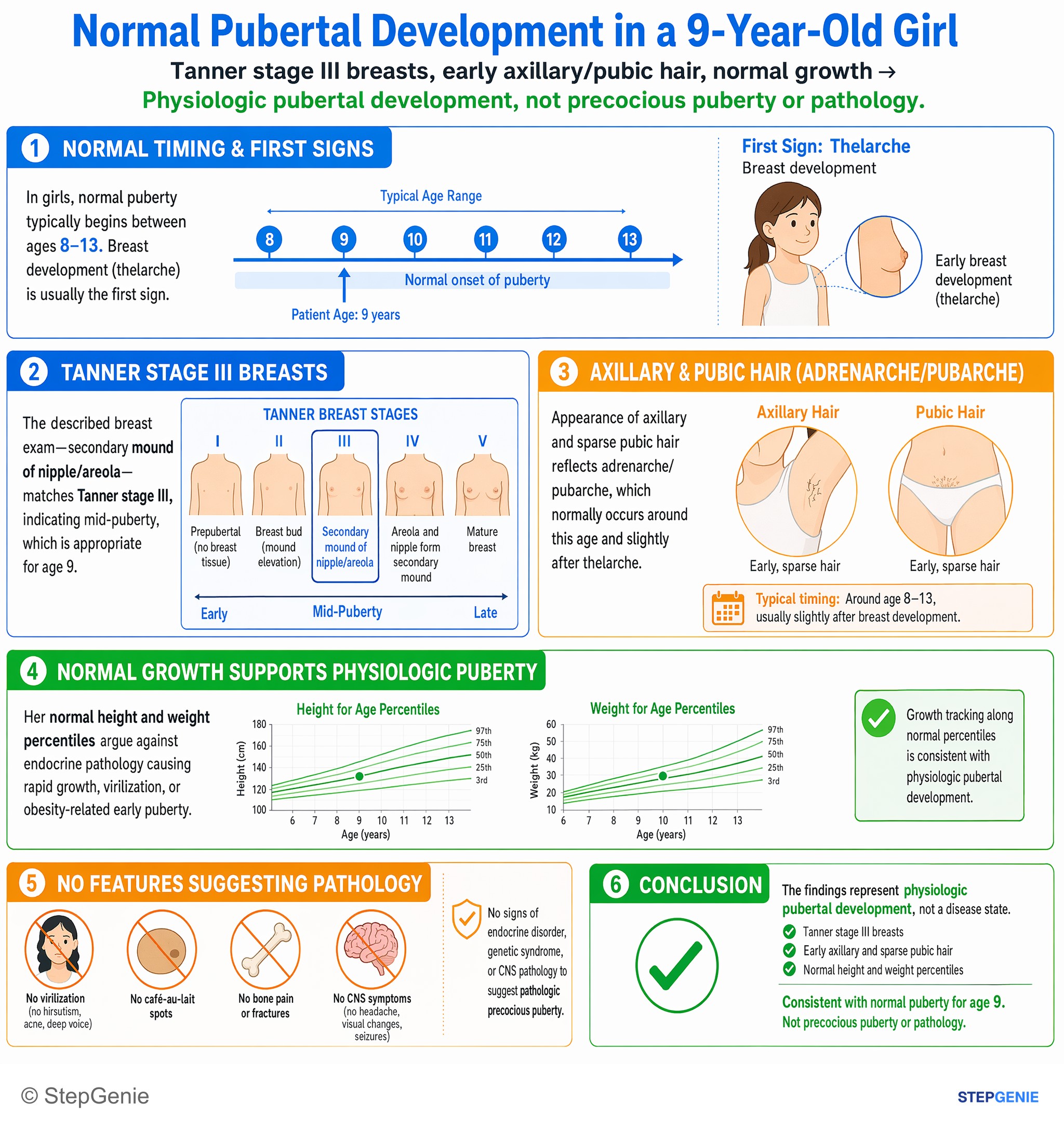
Normal puberty: Tanner stage III breasts, early axillary/pubic hair, normal growth percentiles → physiologic pubertal development, not…
USMLE Step 1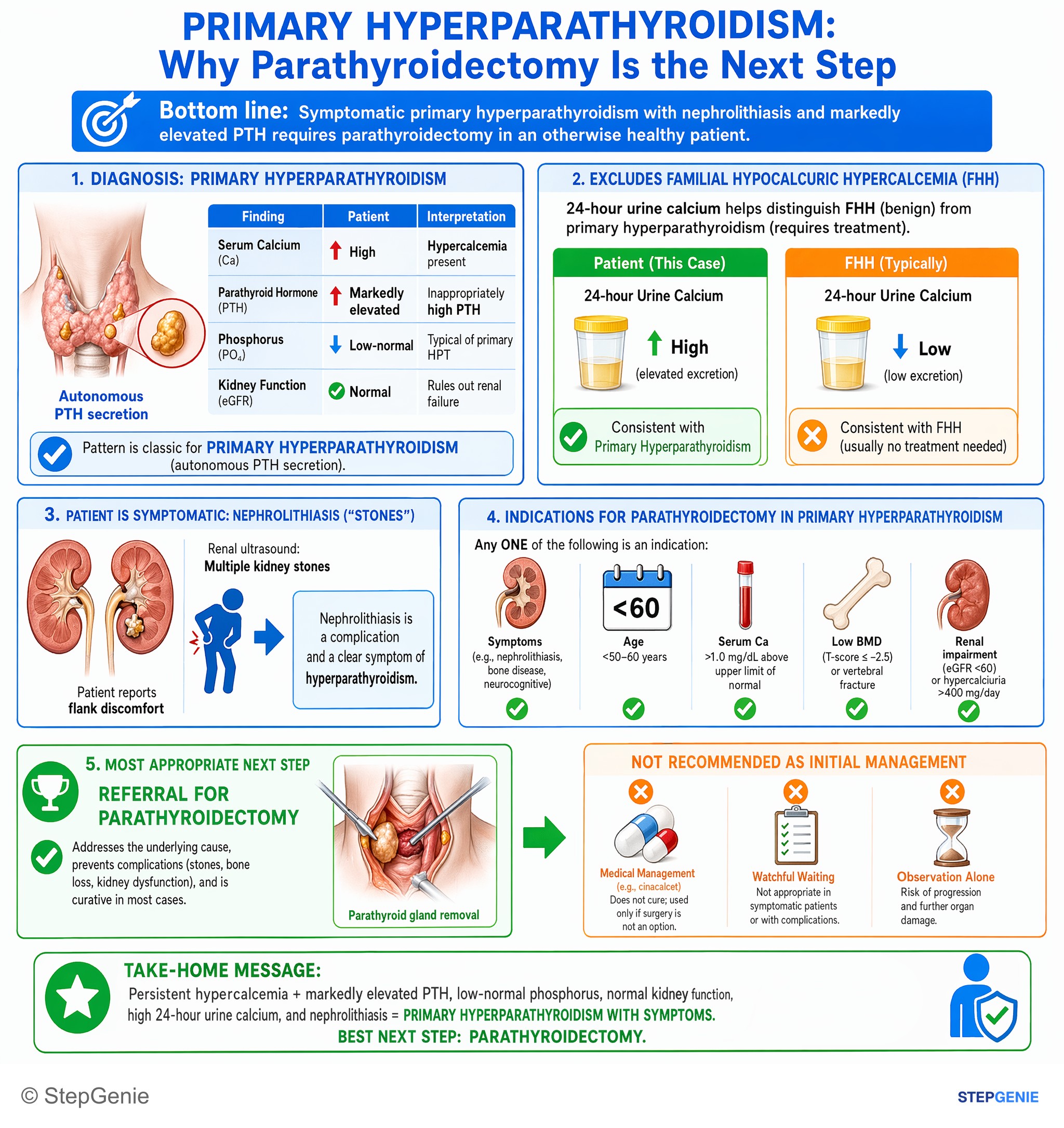
Primary hyperparathyroidism with symptomatic nephrolithiasis and marked PTH elevation requires parathyroidectomy in an otherwise healthy…
USMLE Step 2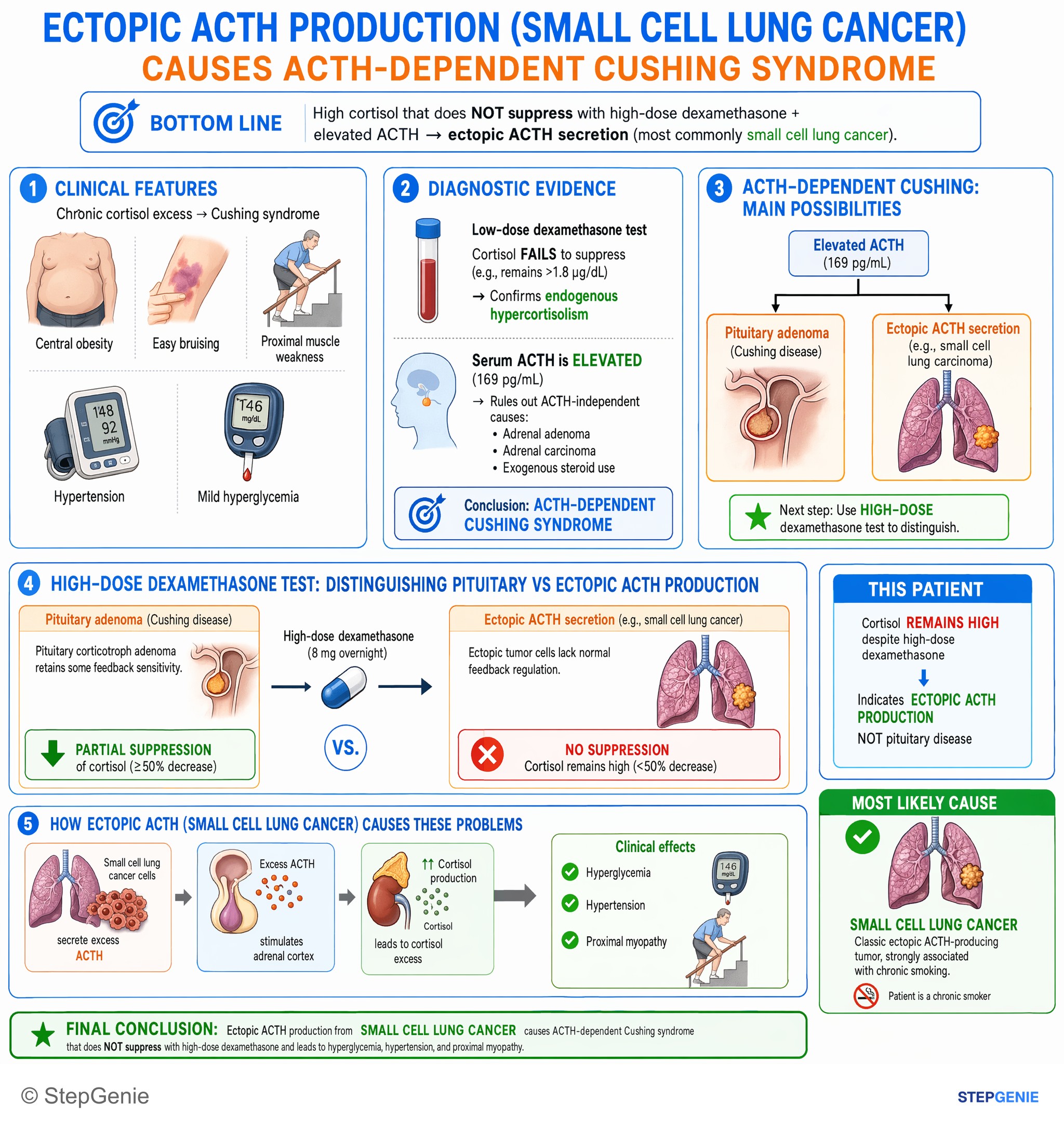
Ectopic ACTH production (small cell lung cancer) → ACTH-dependent Cushing syndrome that does not suppress with high-dose dexamethasone…
USMLE Step 1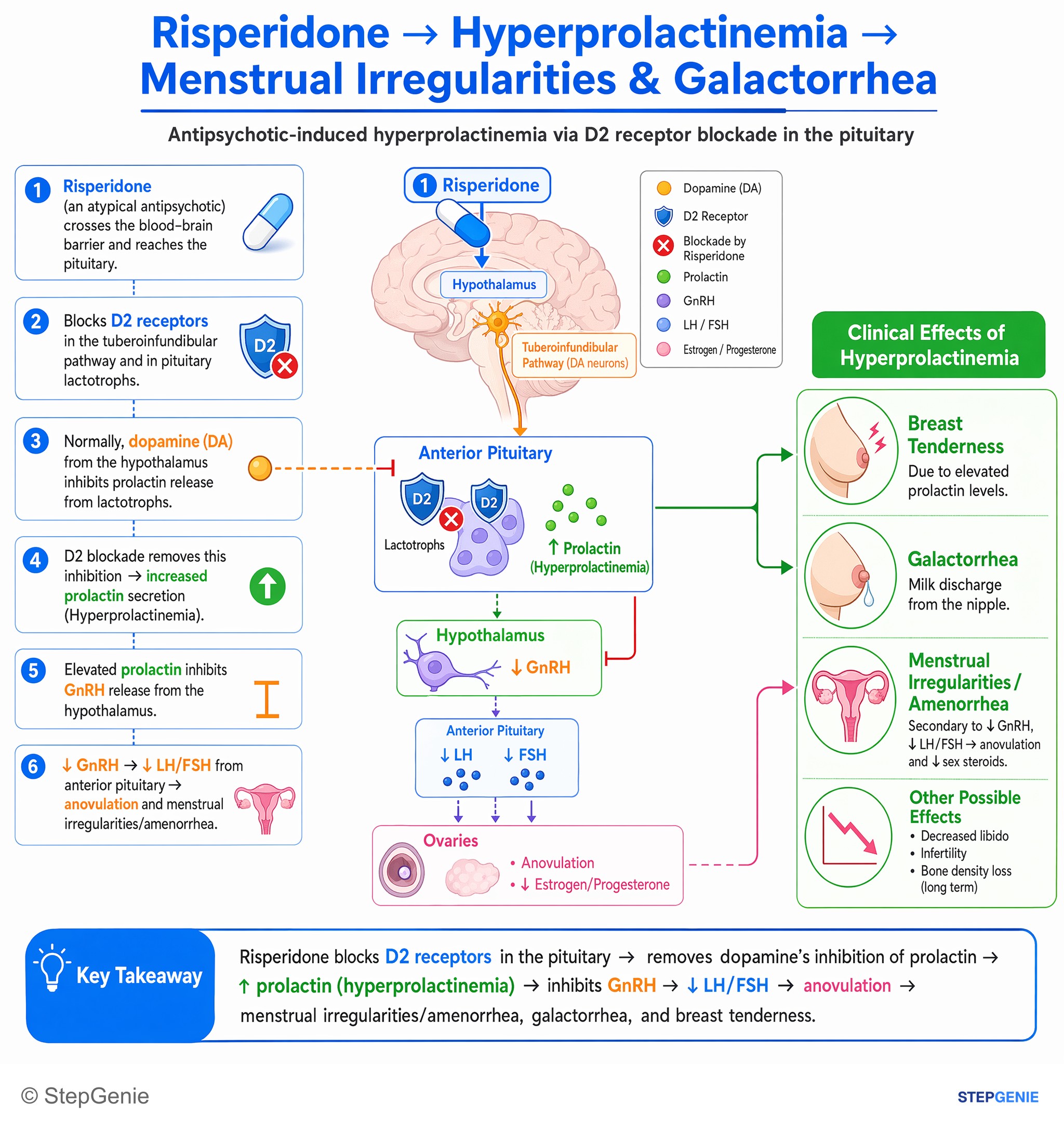
Antipsychotic-induced hyperprolactinemia (via D2 blockade in pituitary) → ↑prolactin → inhibits GnRH → oligomenorrhea/amenorrhea…
USMLE Step 2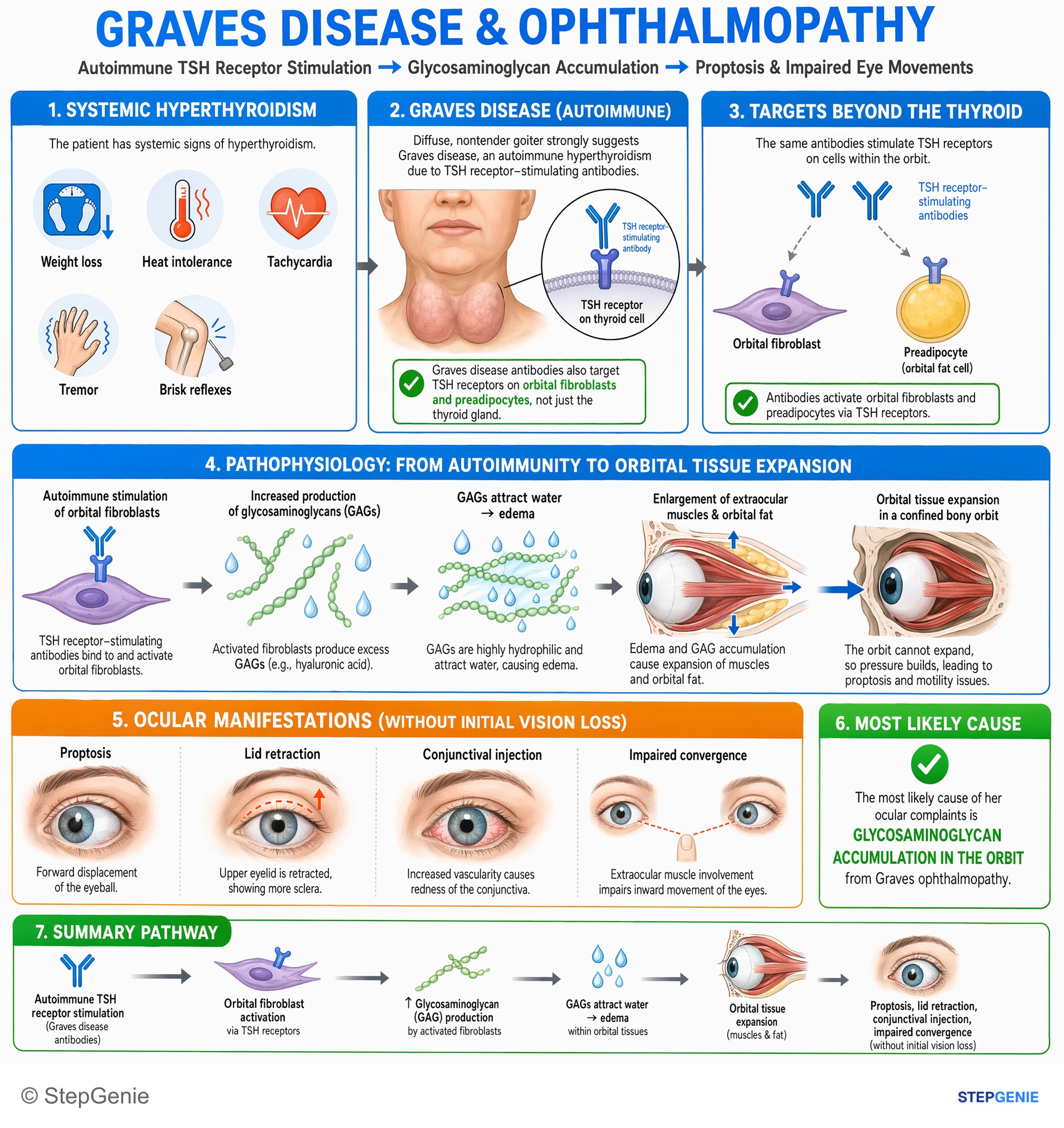
Graves ophthalmopathy: autoimmune TSH receptor stimulation → orbital fibroblast activation → glycosaminoglycan accumulation & edema →…
USMLE Step 1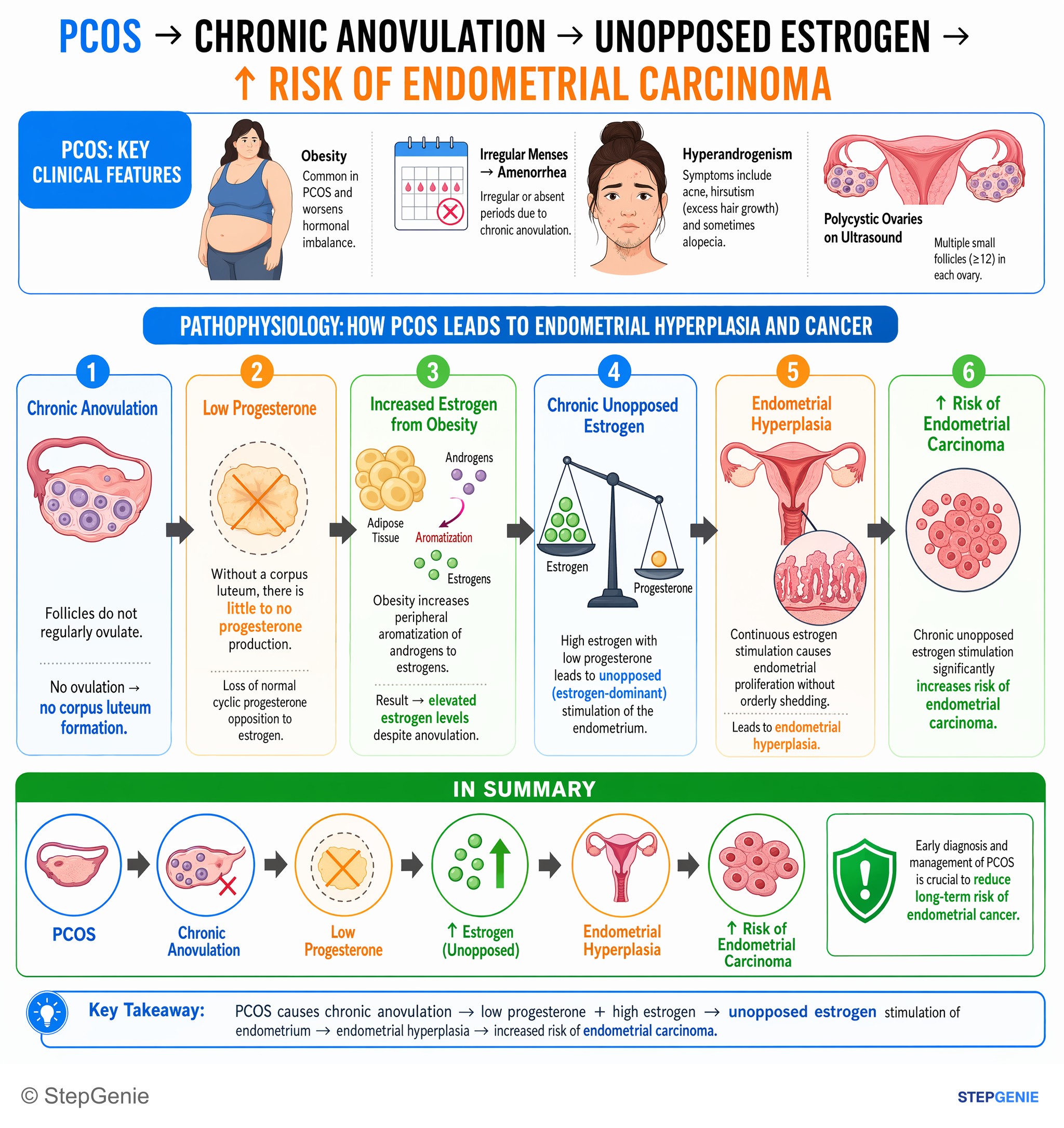
PCOS causes chronic anovulation → unopposed estrogen stimulation of endometrium → ↑ risk of endometrial carcinoma.
USMLE Step 2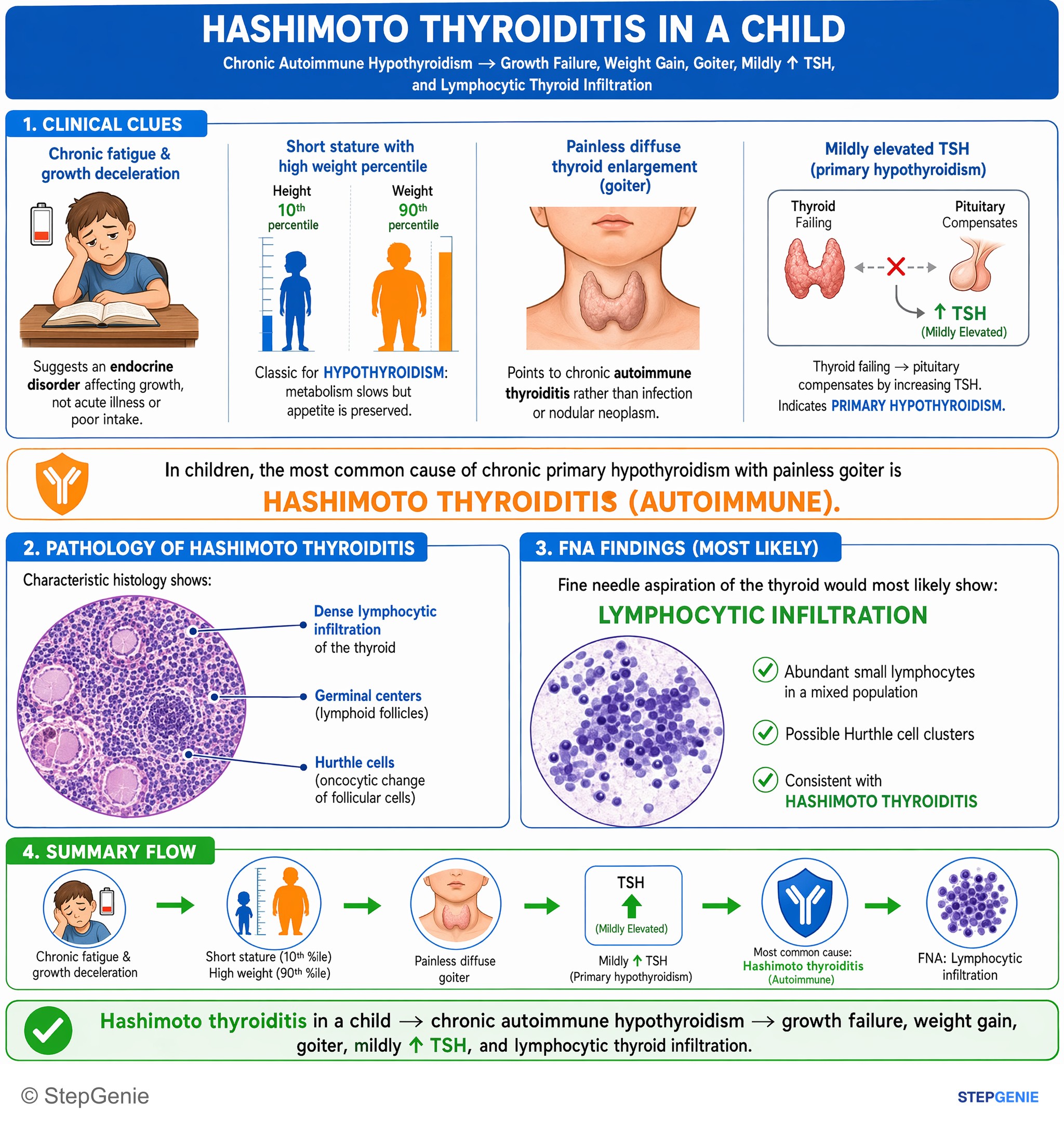
Hashimoto thyroiditis in a child causes chronic autoimmune hypothyroidism → growth failure, weight gain, goiter, mildly ↑TSH, and…
USMLE Step 1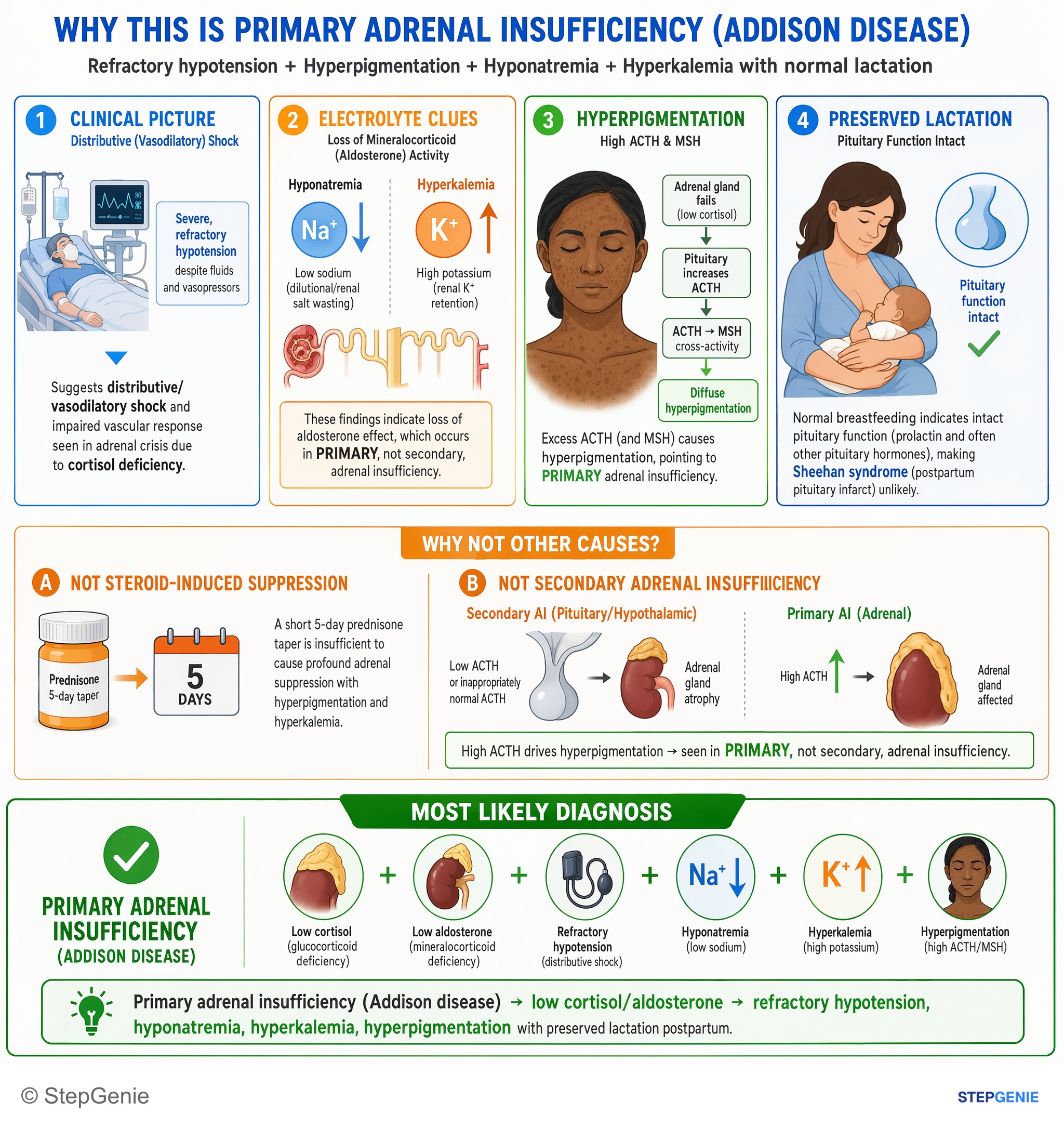
Primary adrenal insufficiency (Addison disease) → low cortisol/aldosterone → refractory hypotension, hyponatremia, hyperkalemia…
USMLE Step 2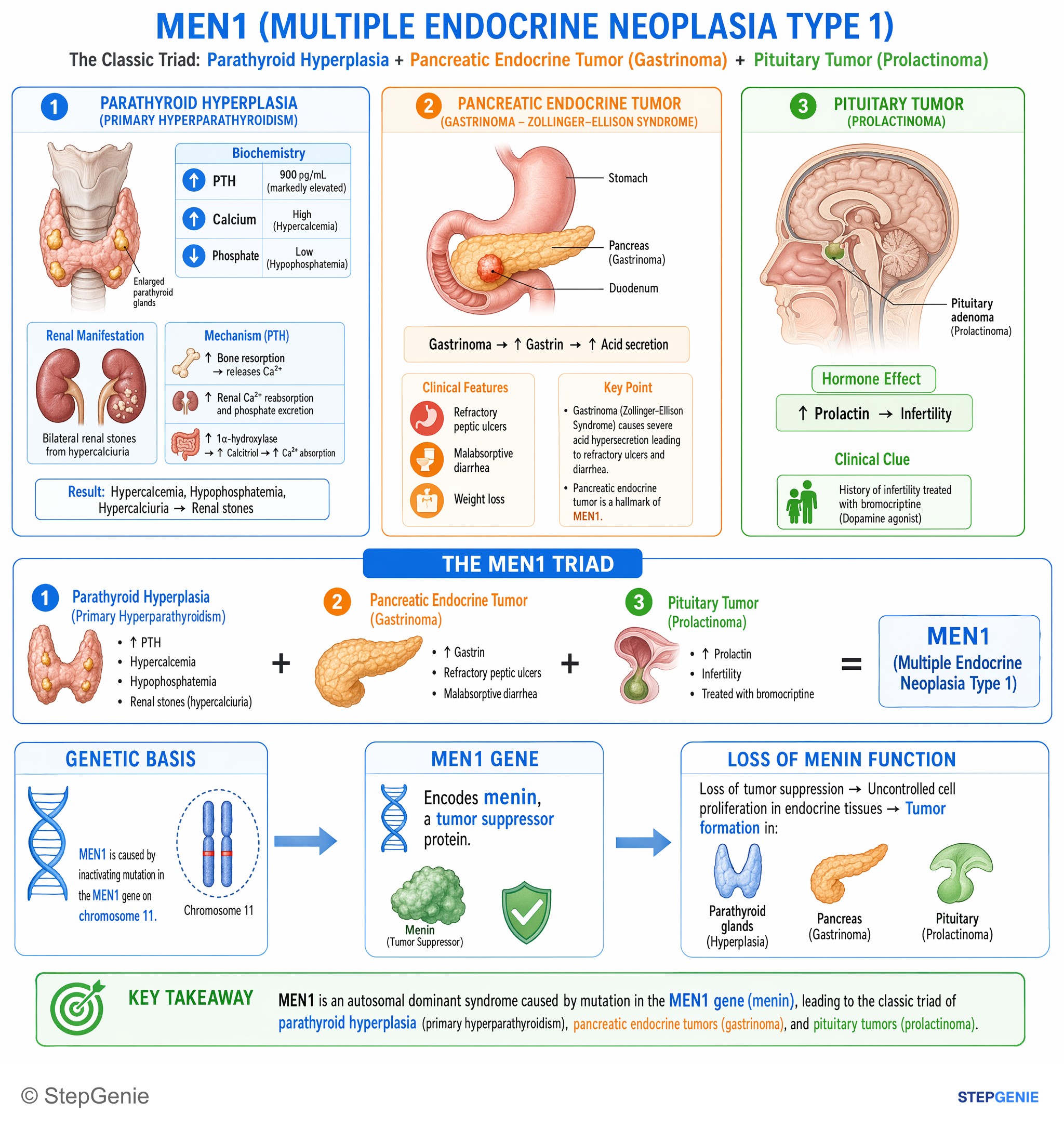
MEN1: mutation in MEN1 (menin) → parathyroid hyperplasia, pancreatic endocrine tumors (gastrinoma causing ulcers/diarrhea), and pituitary…
USMLE Step 1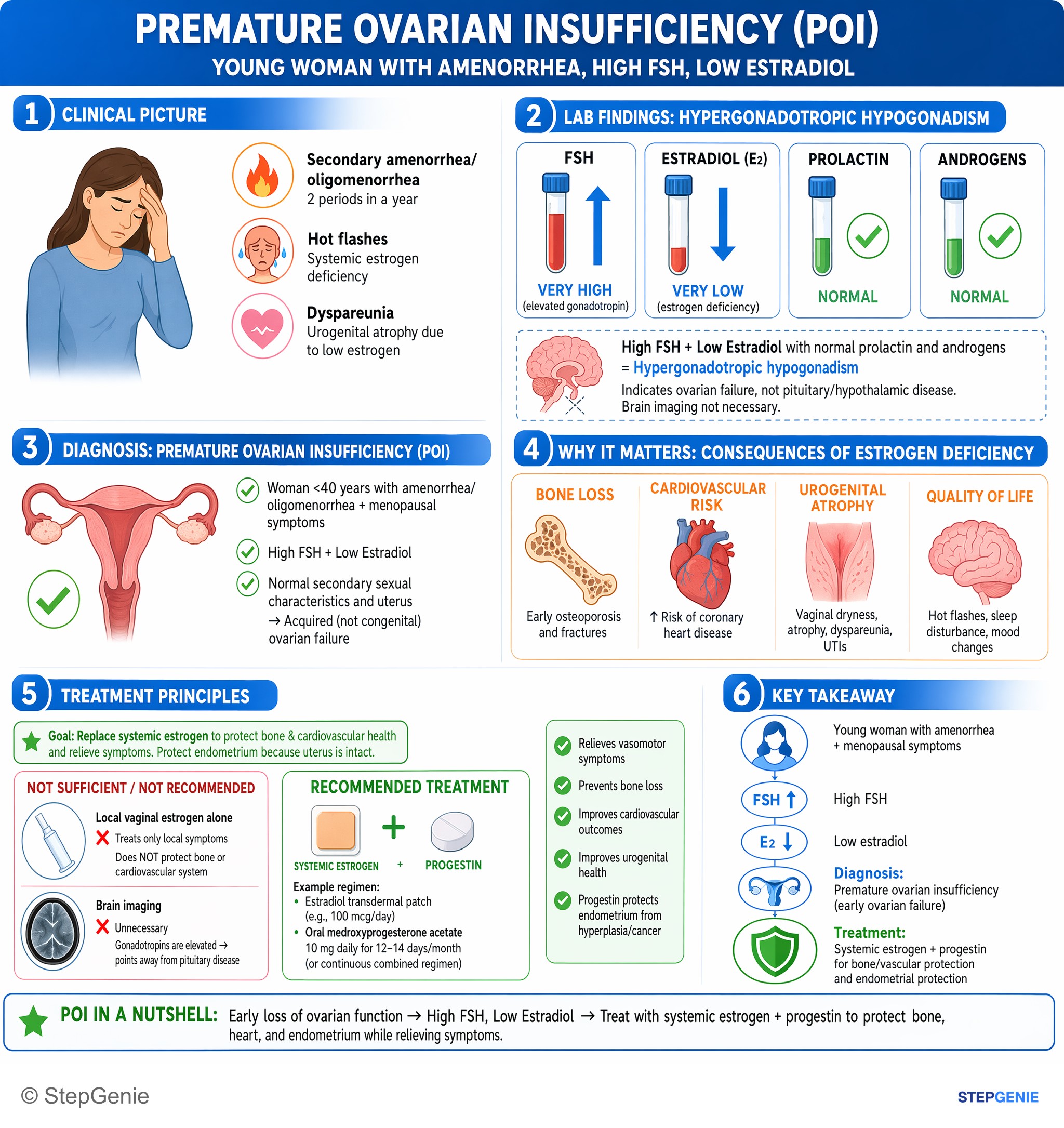
Premature ovarian insufficiency: young woman with amenorrhea, high FSH, low estradiol. Treat with systemic estrogen plus progestin for…
USMLE Step 2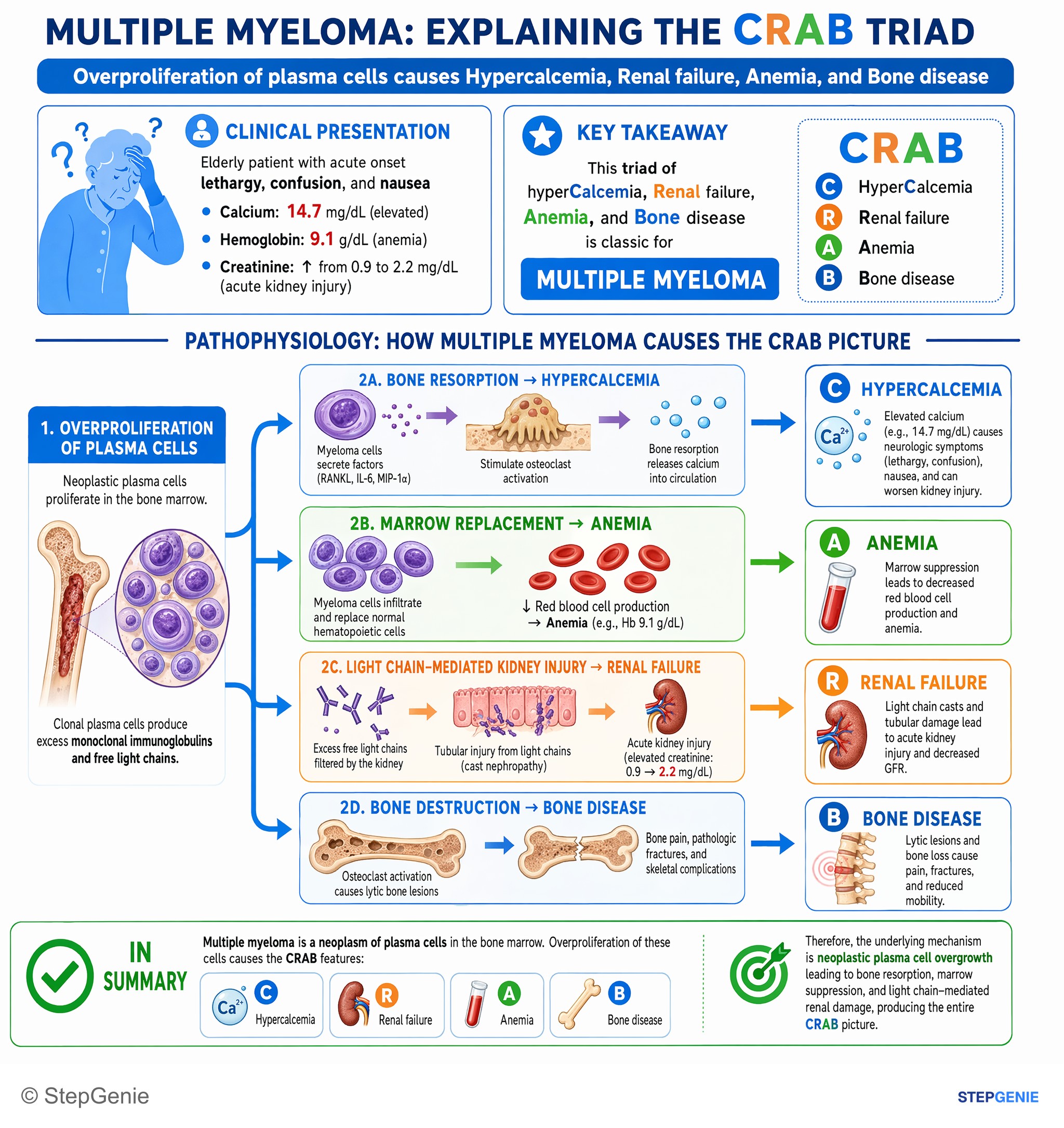
Multiple myeloma causes hypercalcemia, anemia, and acute kidney injury via neoplastic plasma cell overgrowth and light-chain–mediated…
USMLE Step 1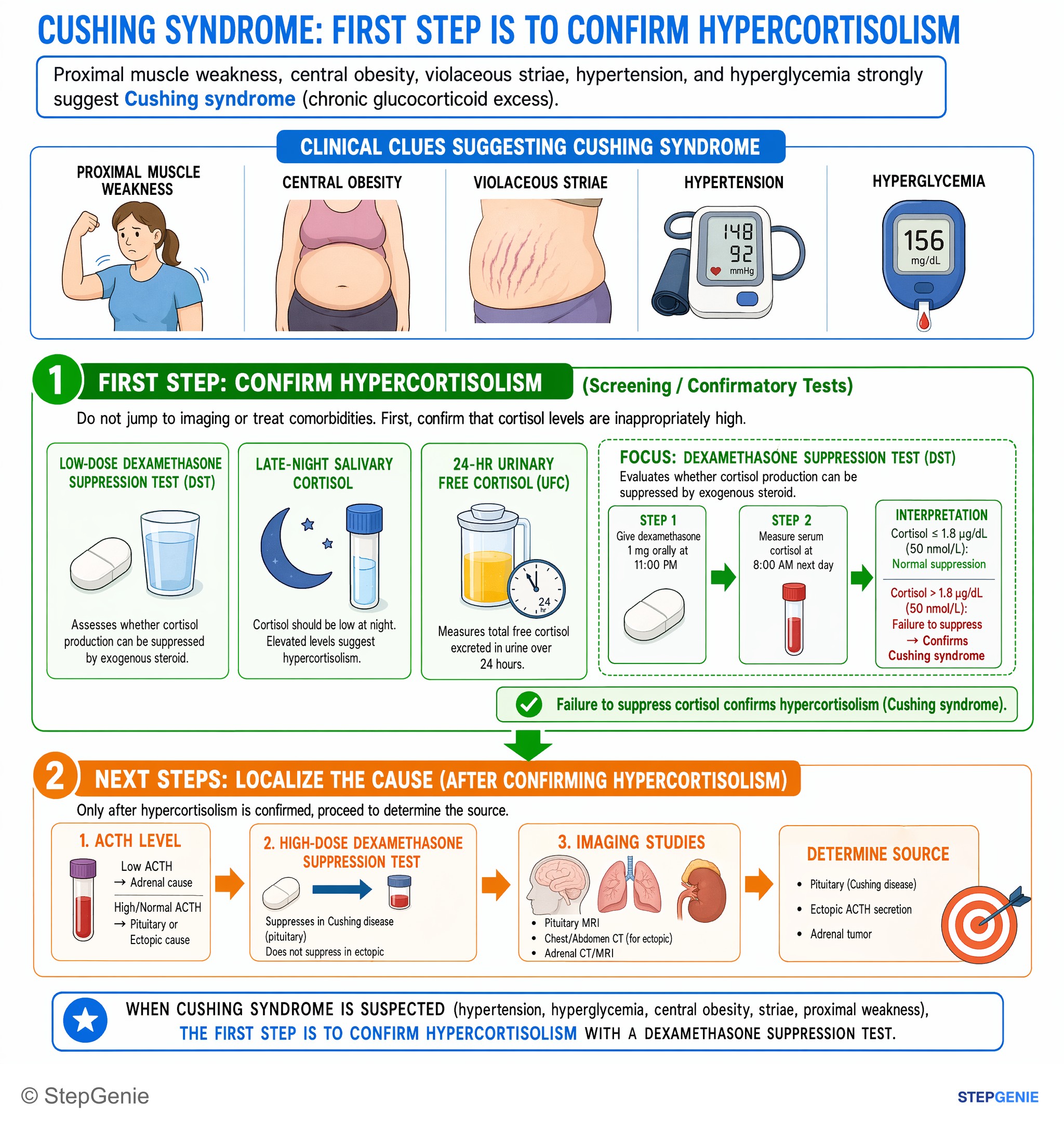
Cushing syndrome suspected from hypertension, hyperglycemia, central obesity, striae, proximal weakness → first confirm hypercortisolism…
USMLE Step 2269 publishable endocrinology infographics in the library — 142 from Step 1 questions and 127 from Step 2 CK, counted on October 29, 2026. This page shows 48 of them, alternating the two steps. An image is listed when its question is active, has a full structured explanation, passed verification and carries no unresolved report.
This page caps out at 48 images. 221 more endocrinology infographics sit in the in-app image library, where they are searchable and filterable by subject, system and topic.
Open the image libraryPractice the questions behind these images
Each image explains one question. The endocrinology topic page has the written explanations and the question sets, and the preview lets you answer three questions without an account.
Other image sets
Study endocrinology with the image attached
In the app, each of these sits at the end of the question it explains, alongside the step-by-step reasoning and a panel for every option you did not pick. Starting is free.
Start practicing free