High-yield surgery images for the USMLE
StepGenie explanation infographics. Free to view, no account needed.
What do StepGenie's surgery images cover?
Each surgery image is an infographic StepGenie drew for one of its own practice questions. Most of them fix an order of actions — what you stabilize, what you image, what you operate on — because surgical questions are usually about sequence rather than about diagnosis.
This is one of the smaller sets. Intestinal and colorectal disorders lead it, followed by bone, joint and soft tissue injuries, acute kidney injury in the surgical patient, critical care and trauma medicine, aortic and peripheral artery disease, and skin and soft tissue infection.
Surgical vignettes tend to give you the diagnosis and then ask what happens next, so the images are drawn as decision sequences rather than as pictures of pathology. A trauma panel puts the primary survey in order and marks the point at which imaging stops being appropriate and the patient goes to the operating room. An acute abdomen panel separates the presentations that need an operation now from the ones that need resuscitation and reassessment first.
Because surgical questions cross into every organ system, several of the images here also sit in the gastroenterology, cardiology and rheumatology galleries. This page is where to start if you are revising perioperative and trauma decision-making specifically.
Postoperative care is thin here: a handful of panels on postoperative fever and wound healing, and nothing that adds up to a general-principles section. What this page is good for is the trauma and acute-abdomen sequencing above it.
Topics in this set
Labels are the question-bank topics these images are filed under. Step 1 and Step 2 file some of the same material under different names, so a few labels here merge both.
Surgery explanation images
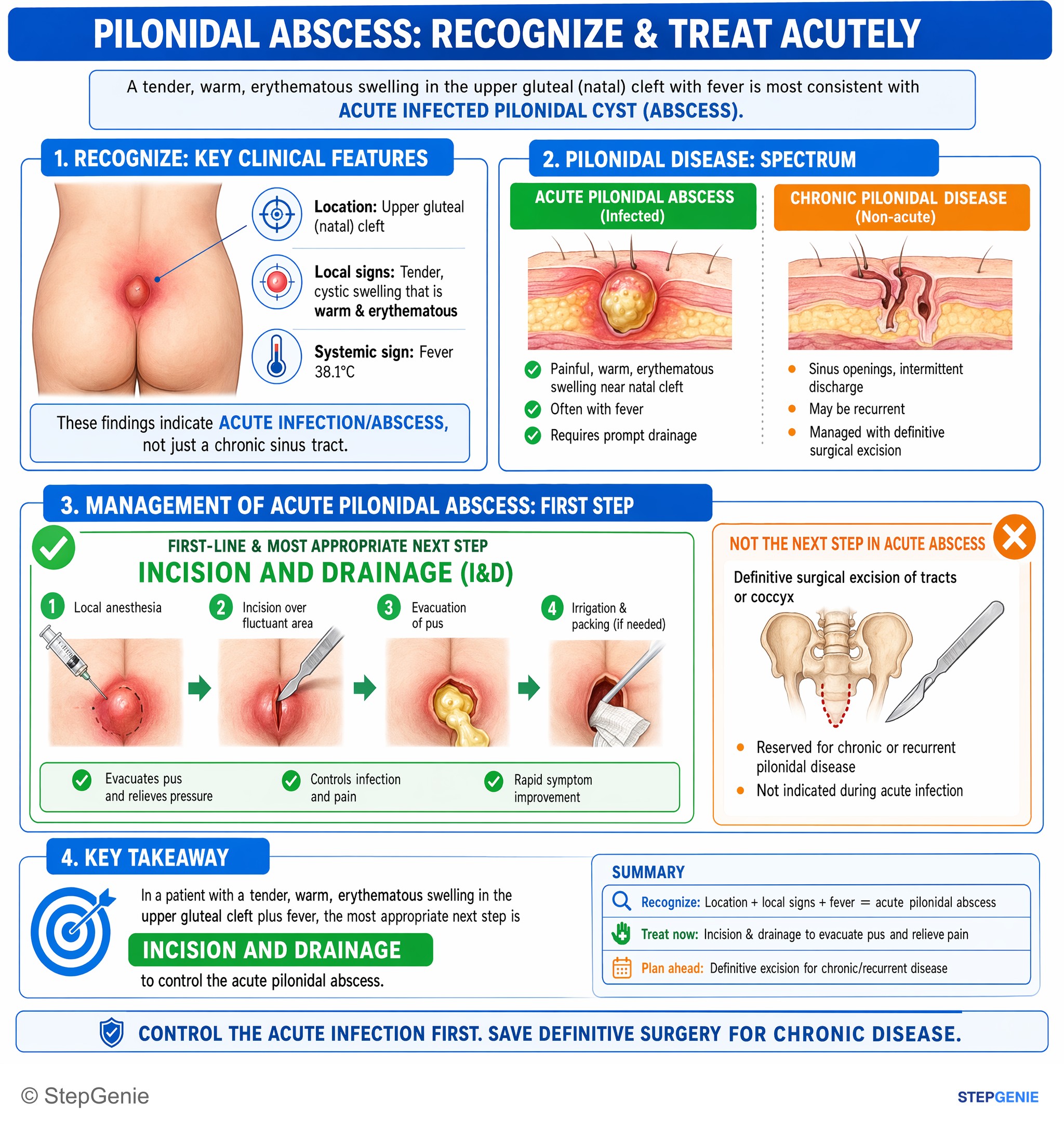
Pilonidal abscess presents as a painful, warm, erythematous cyst near the natal cleft; acute management is incision and drainage with…
USMLE Step 2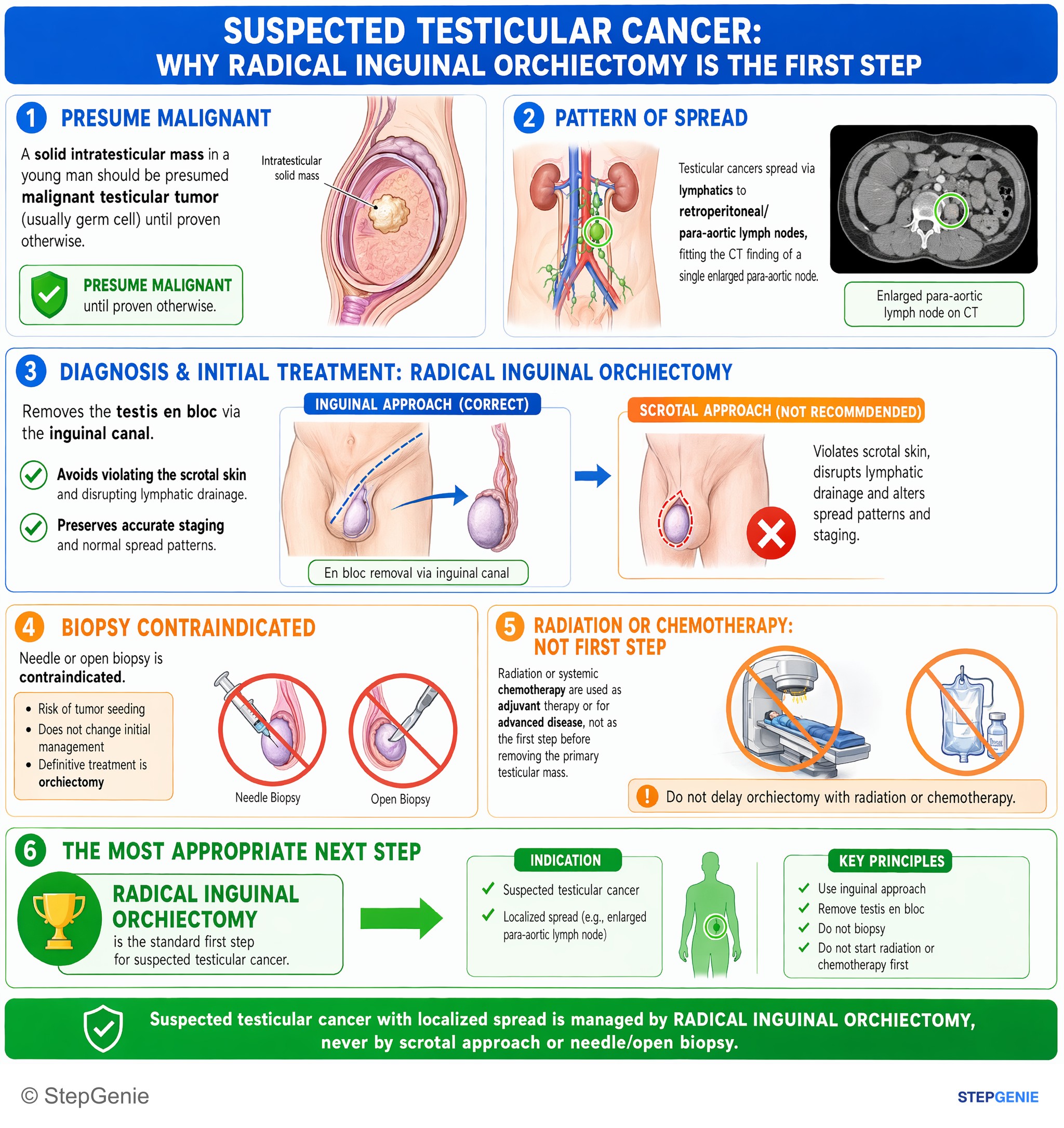
Suspected testicular cancer with localized spread is managed by radical inguinal orchiectomy, never by scrotal approach or needle/ open…
USMLE Step 2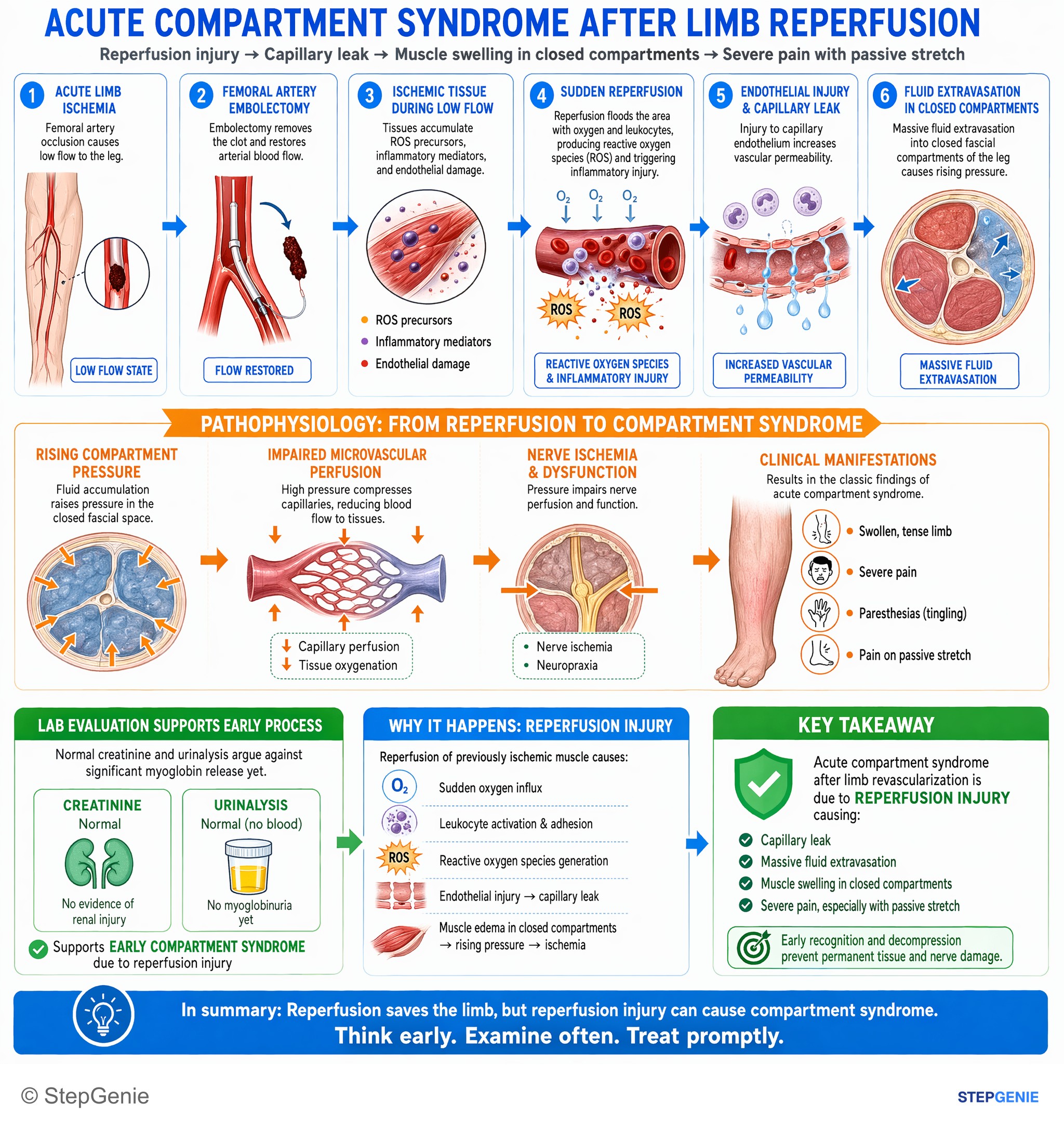
Acute compartment syndrome after limb revascularization is due to reperfusion injury causing capillary leak, muscle swelling, and severe…
USMLE Step 2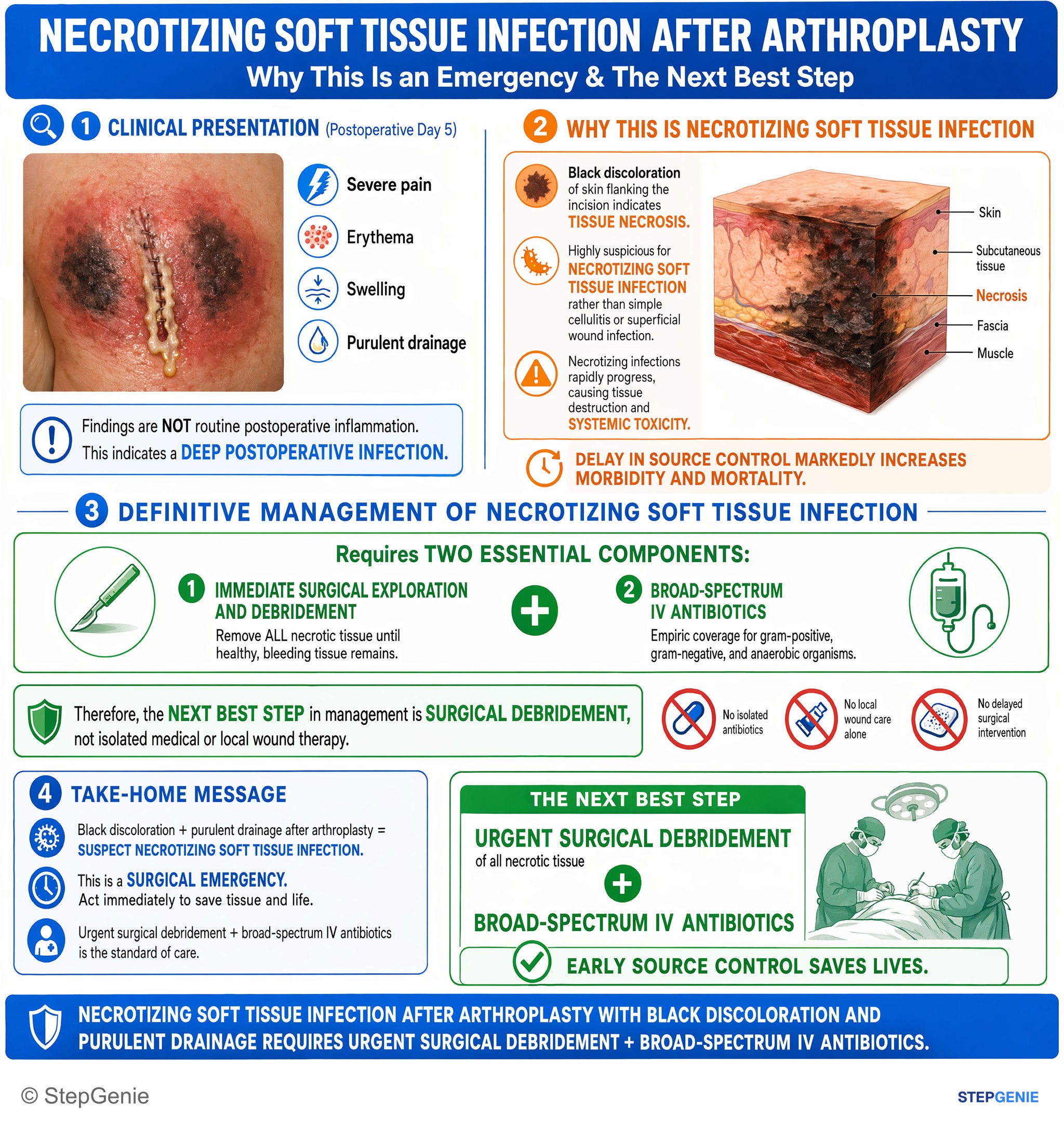
Necrotizing soft tissue infection after arthroplasty with black discoloration and purulent drainage requires urgent surgical debridement…
USMLE Step 2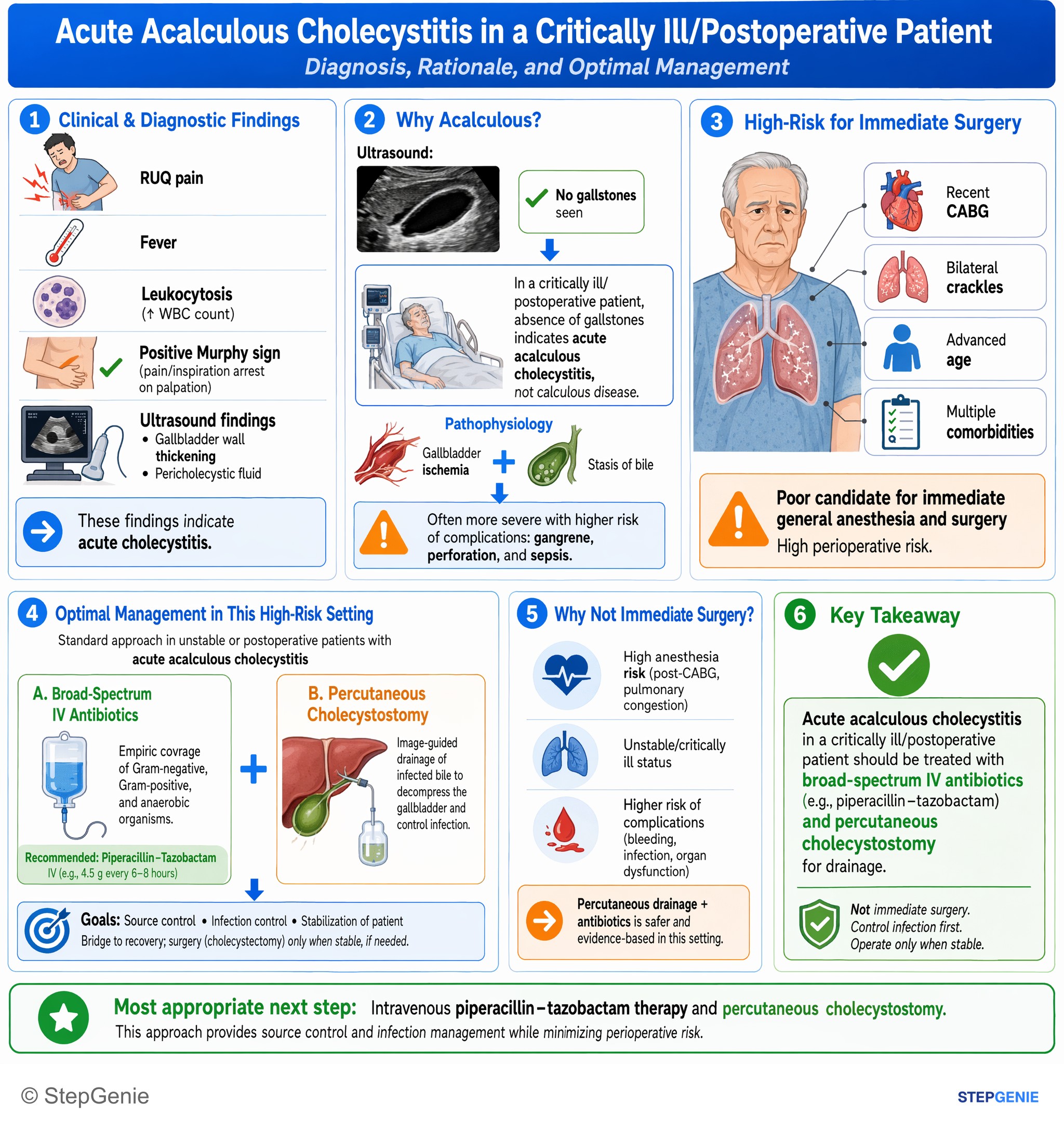
Acute acalculous cholecystitis in a critically ill/postoperative patient → treat with broad-spectrum IV antibiotics and percutaneous…
USMLE Step 2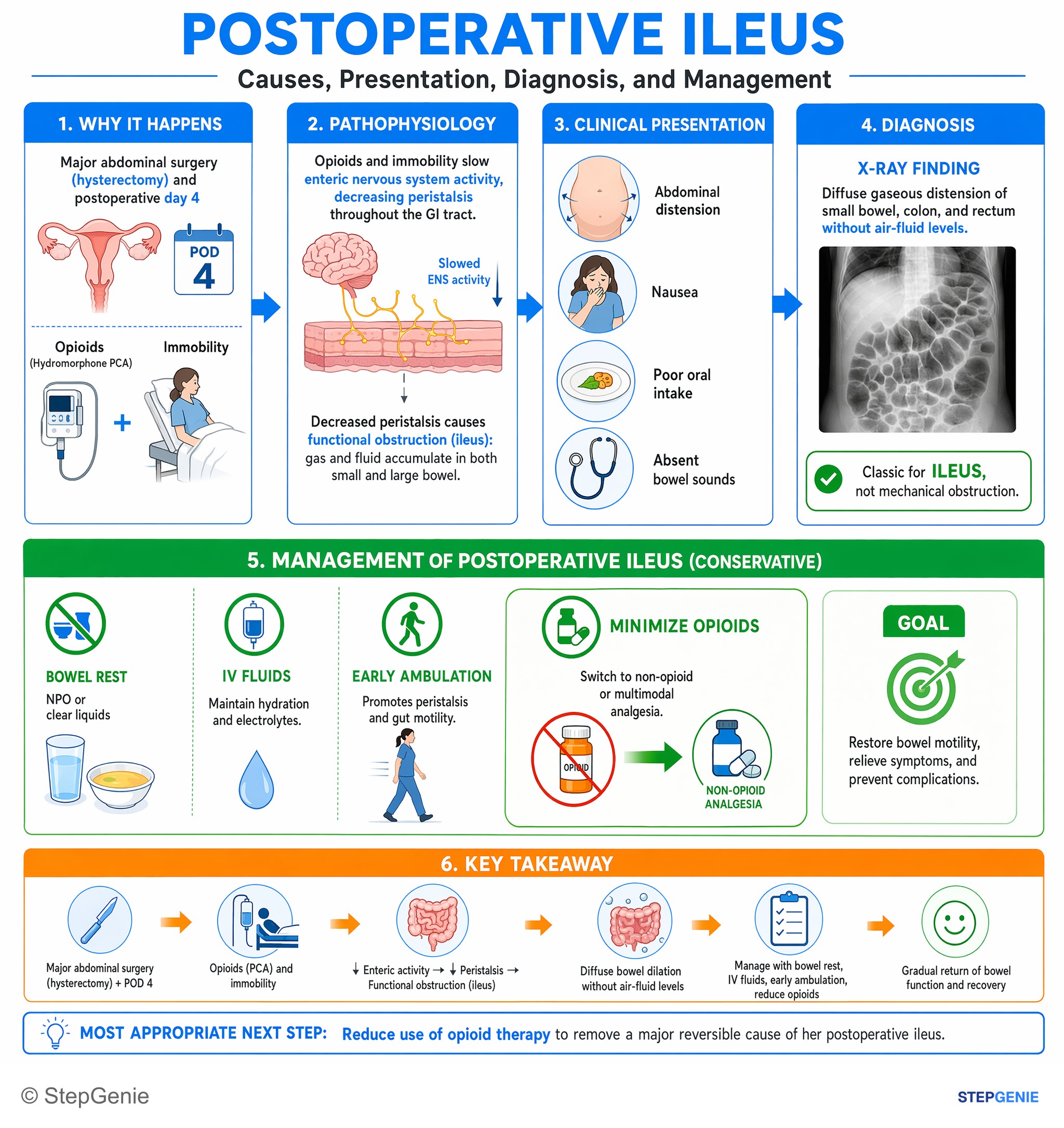
Postoperative ileus due to opioid use and immobility causes diffuse bowel dilation without air-fluid levels; manage with bowel rest, early…
USMLE Step 2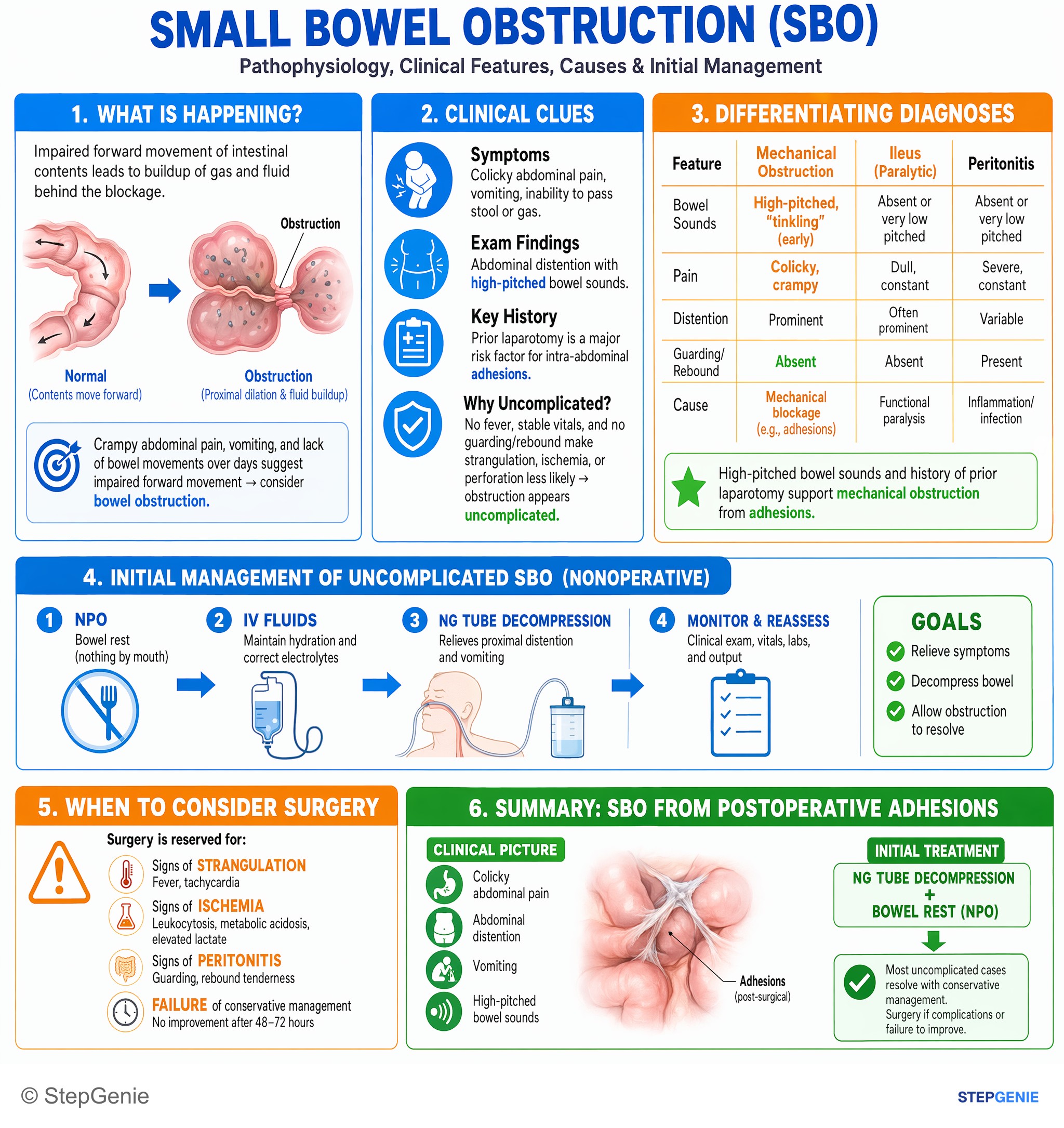
Small bowel obstruction from postoperative adhesions: colicky pain, distention, vomiting, high-pitched sounds → treat initially with NG…
USMLE Step 2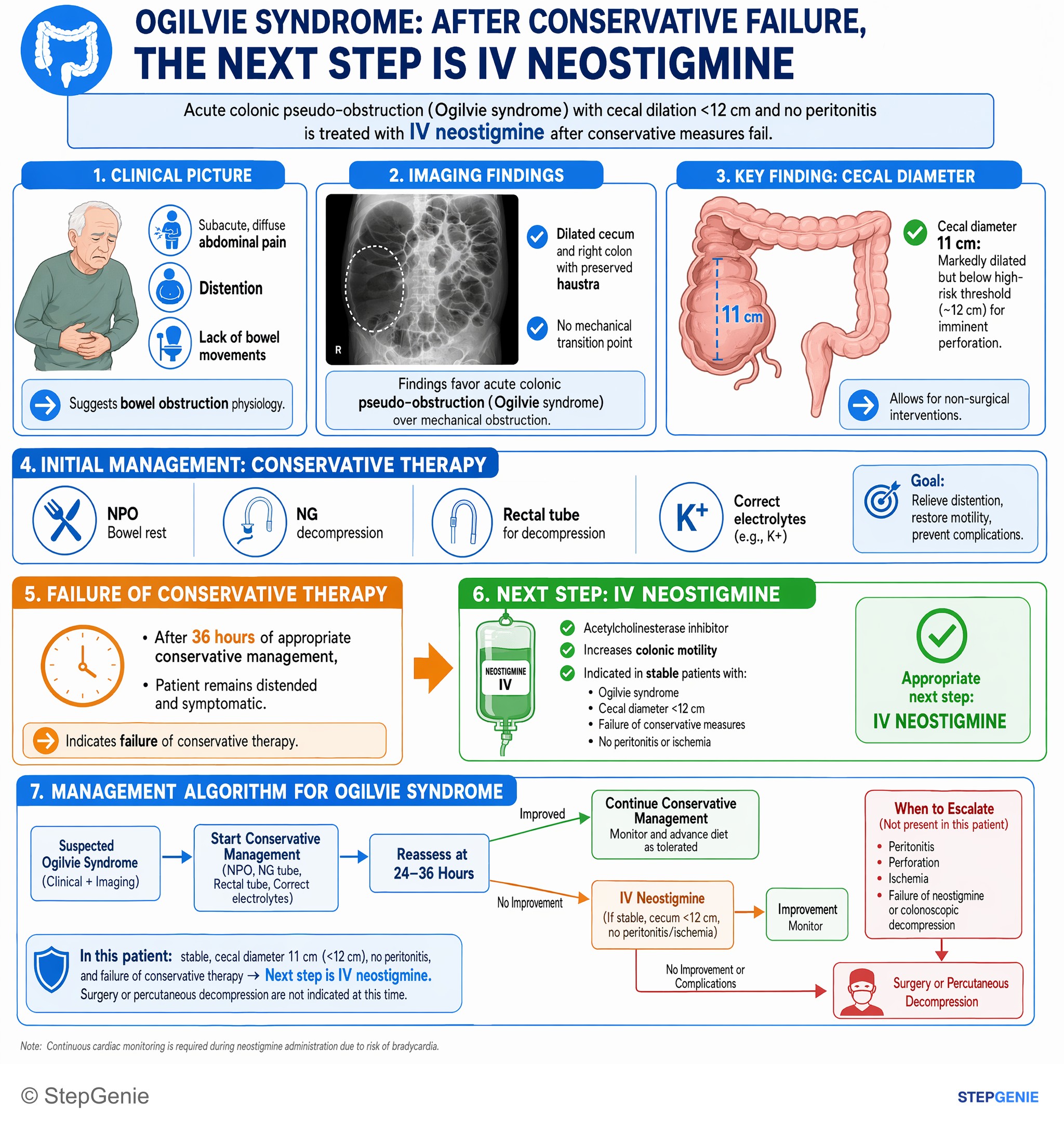
Acute colonic pseudo-obstruction (Ogilvie syndrome) with cecal dilation <12 cm and no peritonitis is treated with IV neostigmine after…
USMLE Step 2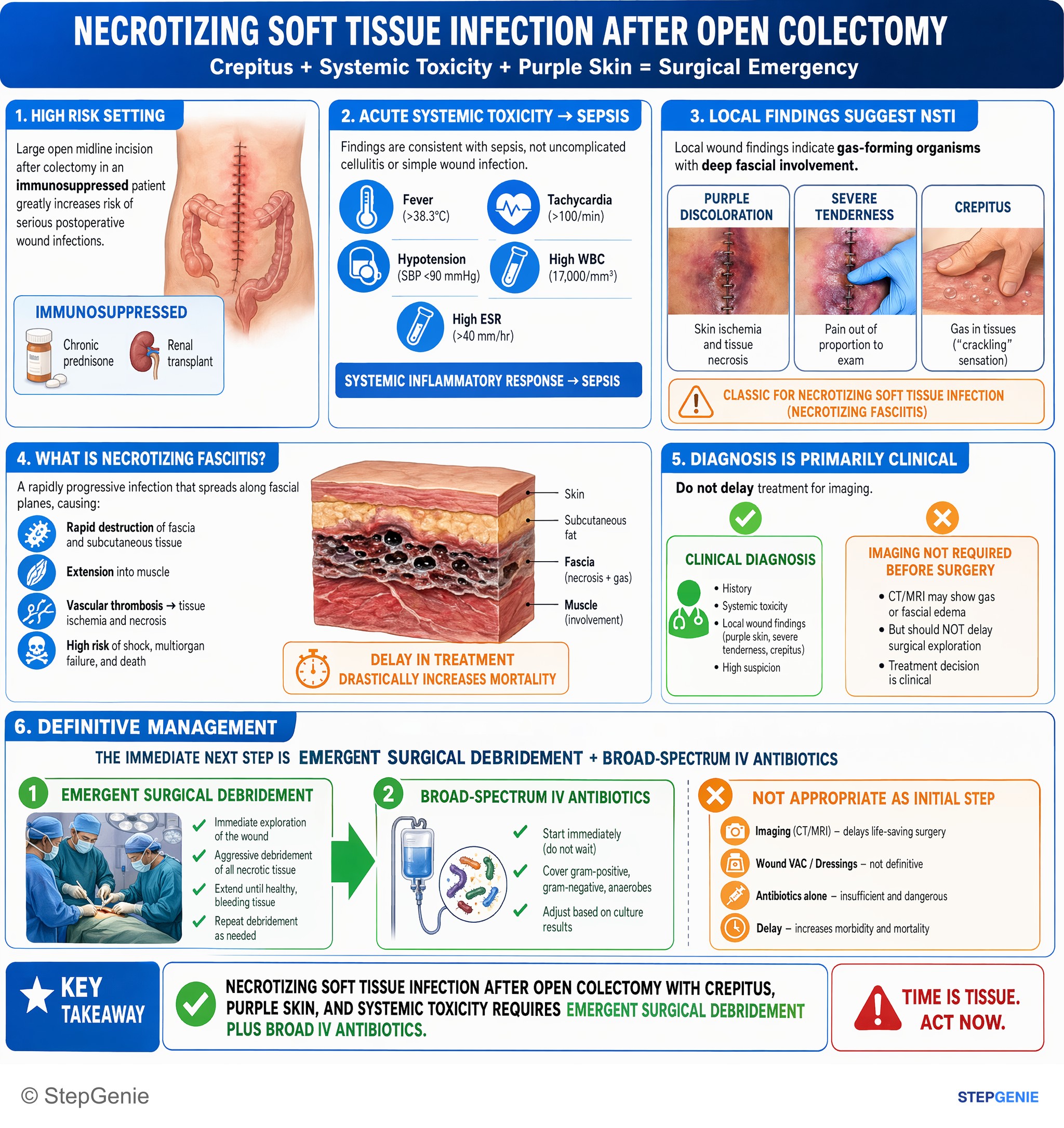
Necrotizing soft tissue infection after open colectomy with crepitus, systemic toxicity, and purple skin → emergent surgical debridement…
USMLE Step 2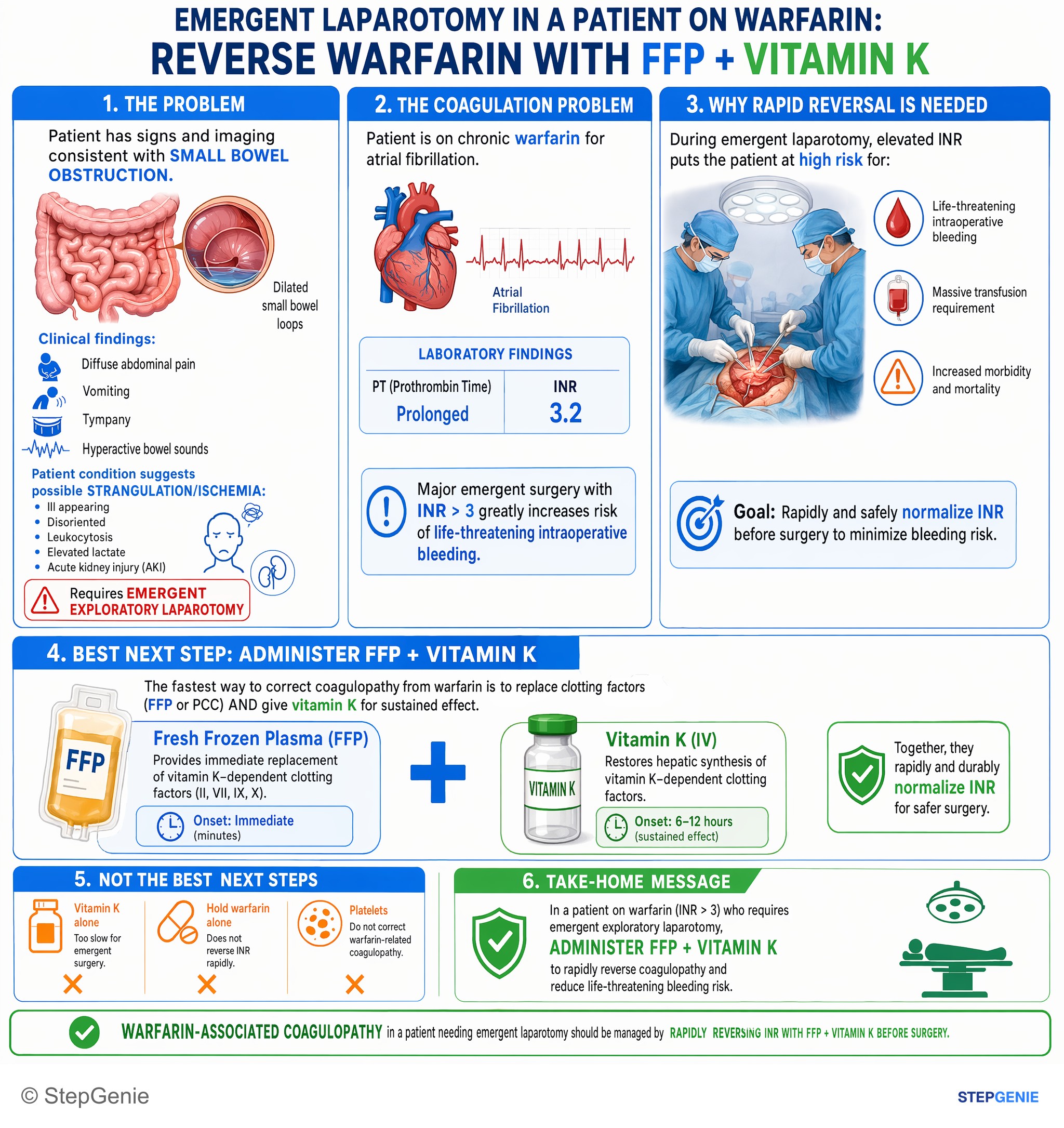
Warfarin-associated coagulopathy in a patient needing emergent laparotomy → rapidly reverse INR with FFP + vitamin K before surgery.
USMLE Step 2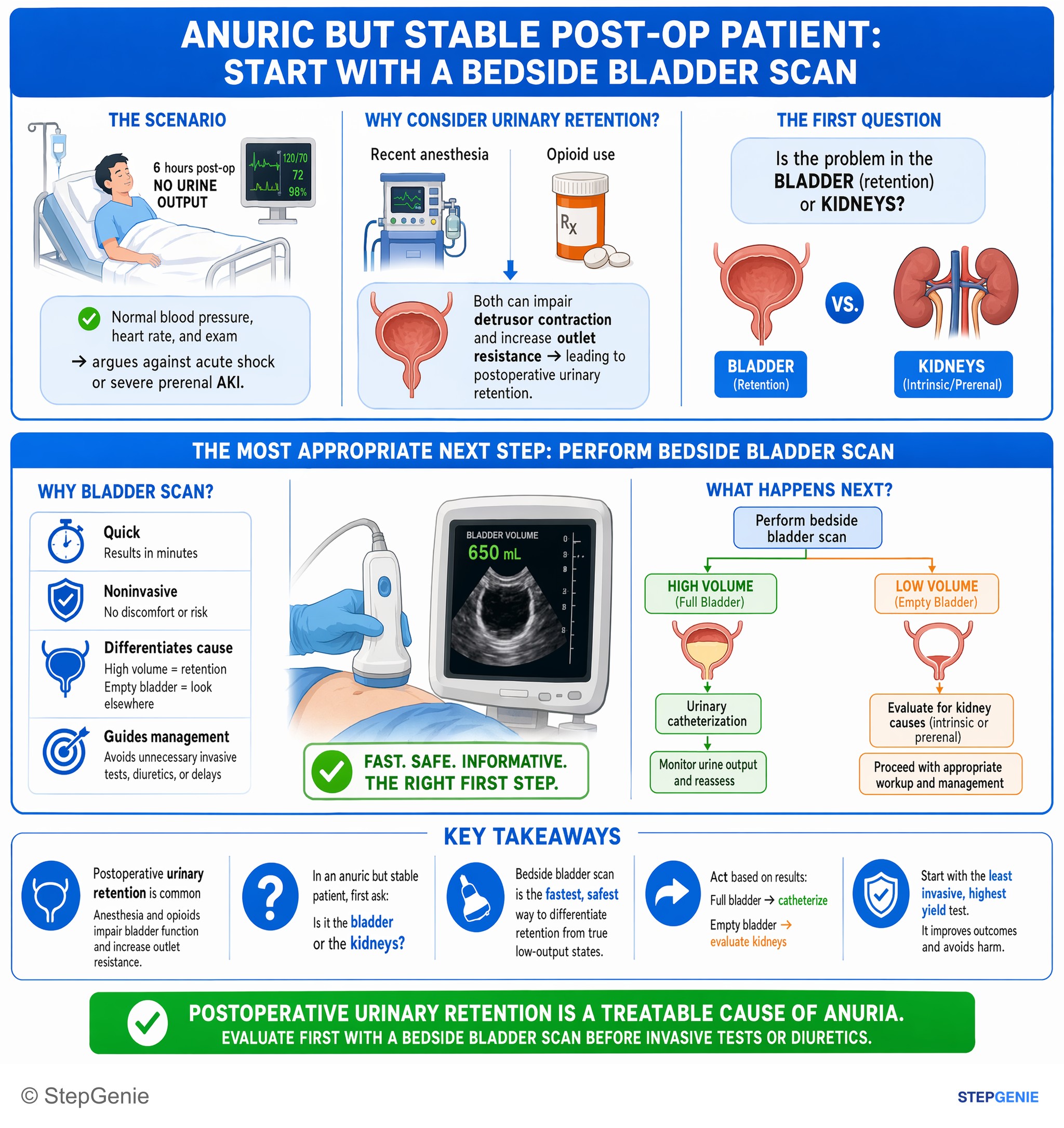
Postoperative urinary retention due to bladder outlet/functional obstruction → evaluate anuric but stable patient first with bedside…
USMLE Step 2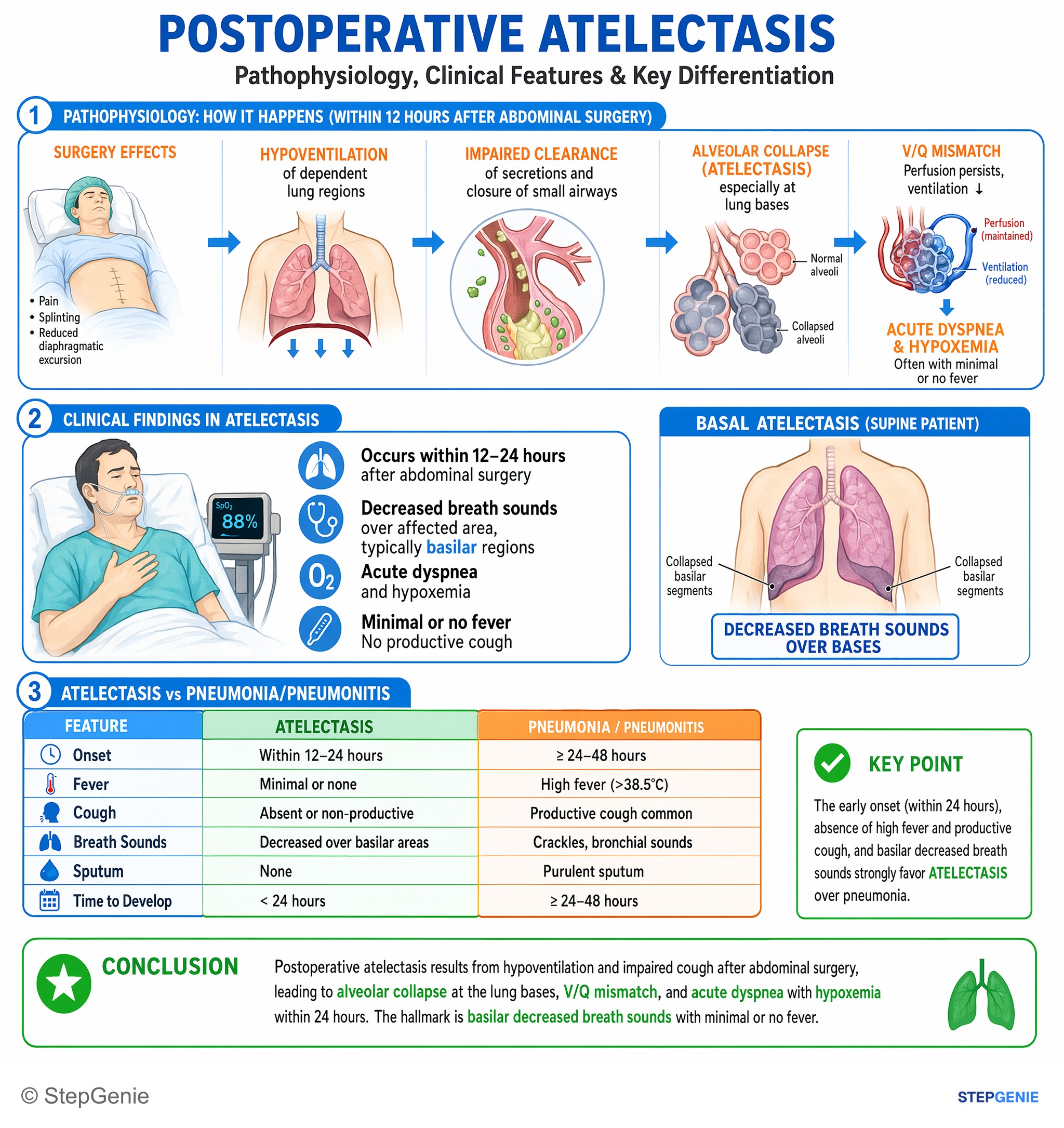
Postoperative atelectasis from hypoventilation and impaired cough causes acute dyspnea and basilar decreased breath sounds within 24 hours…
USMLE Step 265 publishable surgery infographics in the library — all of them from Step 2 CK questions, counted on October 29, 2026. This page shows 48 of them. An image is listed when its question is active, has a full structured explanation, passed verification and carries no unresolved report.
This page caps out at 48 images. 17 more surgery infographics sit in the in-app image library, where they are searchable and filterable by subject, system and topic.
Open the image libraryPractice the questions behind these images
Each image explains one question. The surgery topic page has the written explanations and the question sets, and the preview lets you answer three questions without an account.
Other image sets
Study surgery with the image attached
In the app, each of these sits at the end of the question it explains, alongside the step-by-step reasoning and a panel for every option you did not pick. Starting is free.
Start practicing free