High-yield anatomy images for the USMLE
StepGenie explanation infographics. Free to view, no account needed.
What do StepGenie's anatomy images cover?
Each anatomy image is an infographic StepGenie drew for one of its own practice questions. It shows the structure the question hinges on in relation to what surrounds it, because anatomy answers are almost always about what a lesion hits next, not about the structure alone.
This set covers gross anatomy, embryology and histology together, which is how the questions themselves are written. Congenital and developmental anomalies carry the largest share, then upper limb nerves, normal structure and function of the nervous and musculoskeletal systems, GI anatomy, lower limb nerves and knee injuries.
The peripheral nerve images are the ones worth sitting with. A brachial plexus injury panel that shows the lesion level beside the movement lost and the sensory area affected turns a class of questions into one picture, and the lower limb panels are drawn the same way. The embryology images run forwards from the pharyngeal arch or the gut rotation to the malformation, which is the direction the vignettes move in.
If you are revising anatomy for a specific organ system, check that system's gallery as well — an image about the course of the recurrent laryngeal nerve is filed here, but the thyroid surgery question it came from also appears under endocrinology.
Histology is barely represented here — the images in this set come overwhelmingly from gross anatomy and embryology. If histology slides are what you are revising, the in-app image library is the better place to look for them.
Topics in this set
Labels are the question-bank topics these images are filed under. Step 1 and Step 2 file some of the same material under different names, so a few labels here merge both.
Anatomy explanation images
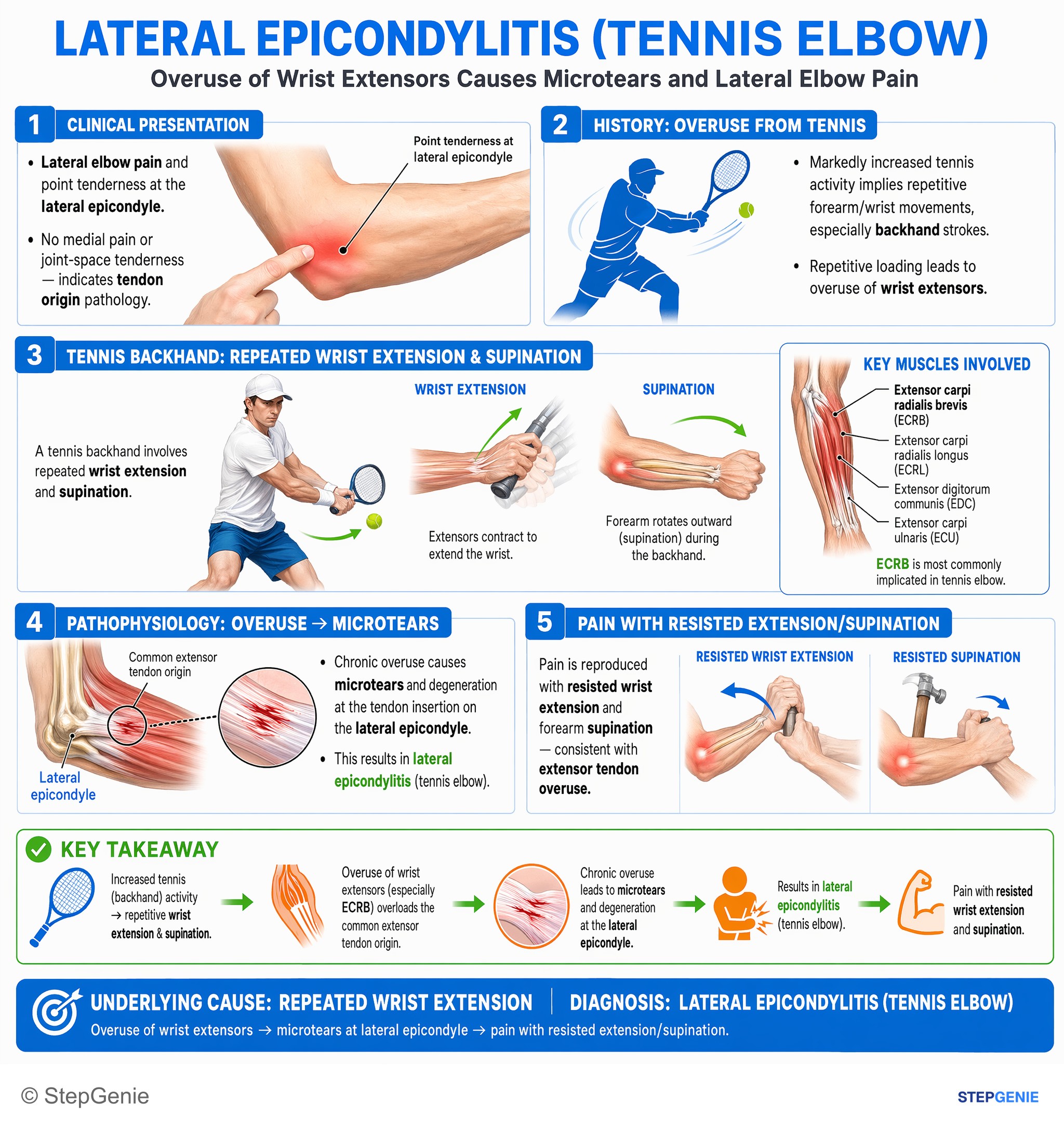
Lateral epicondylitis (tennis elbow) from overuse of wrist extensors → microtears at lateral epicondyle → pain with resisted…
USMLE Step 1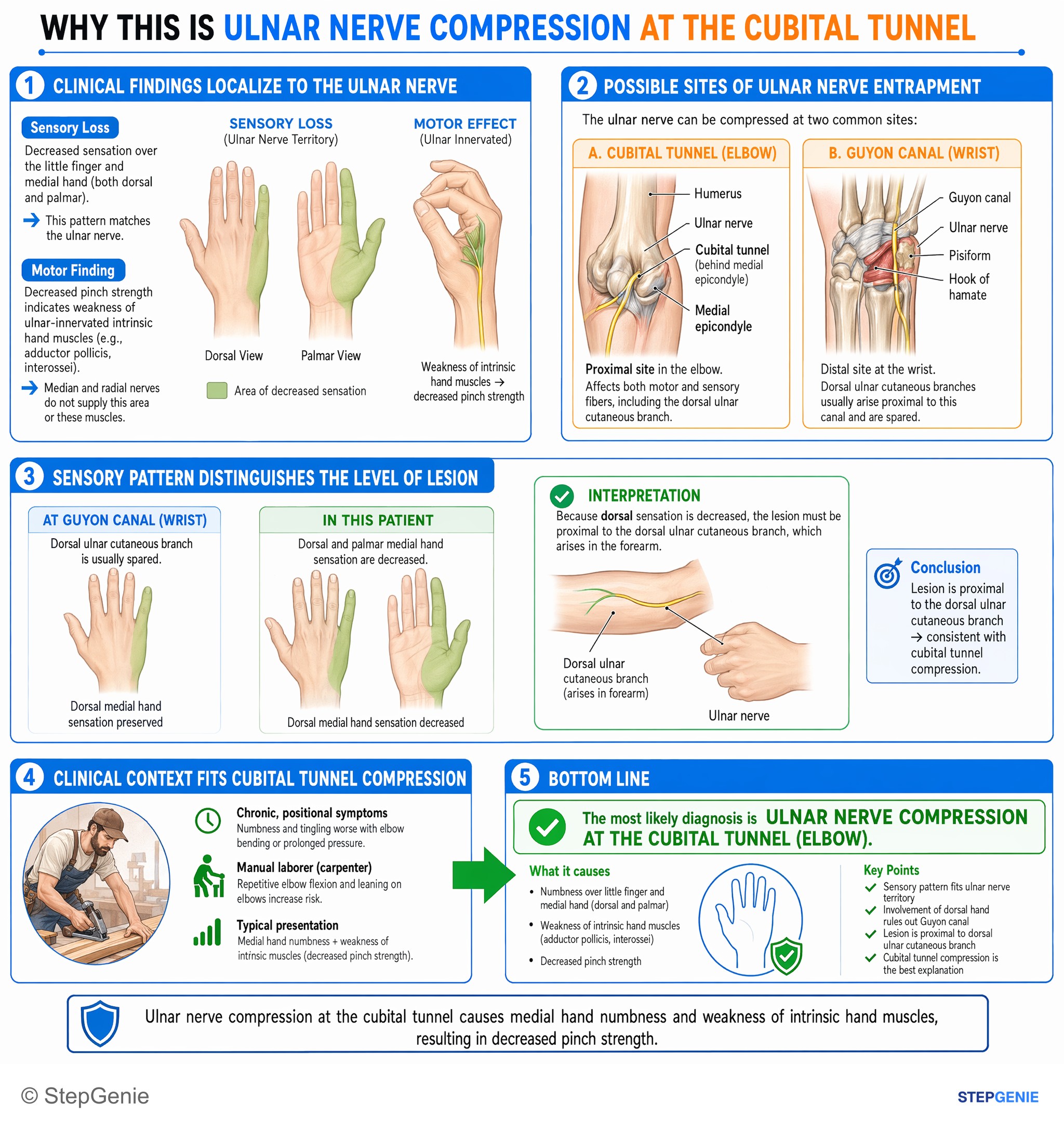
Ulnar nerve compression at the cubital tunnel causes medial hand numbness and weakness of intrinsic hand muscles with decreased pinch…
USMLE Step 1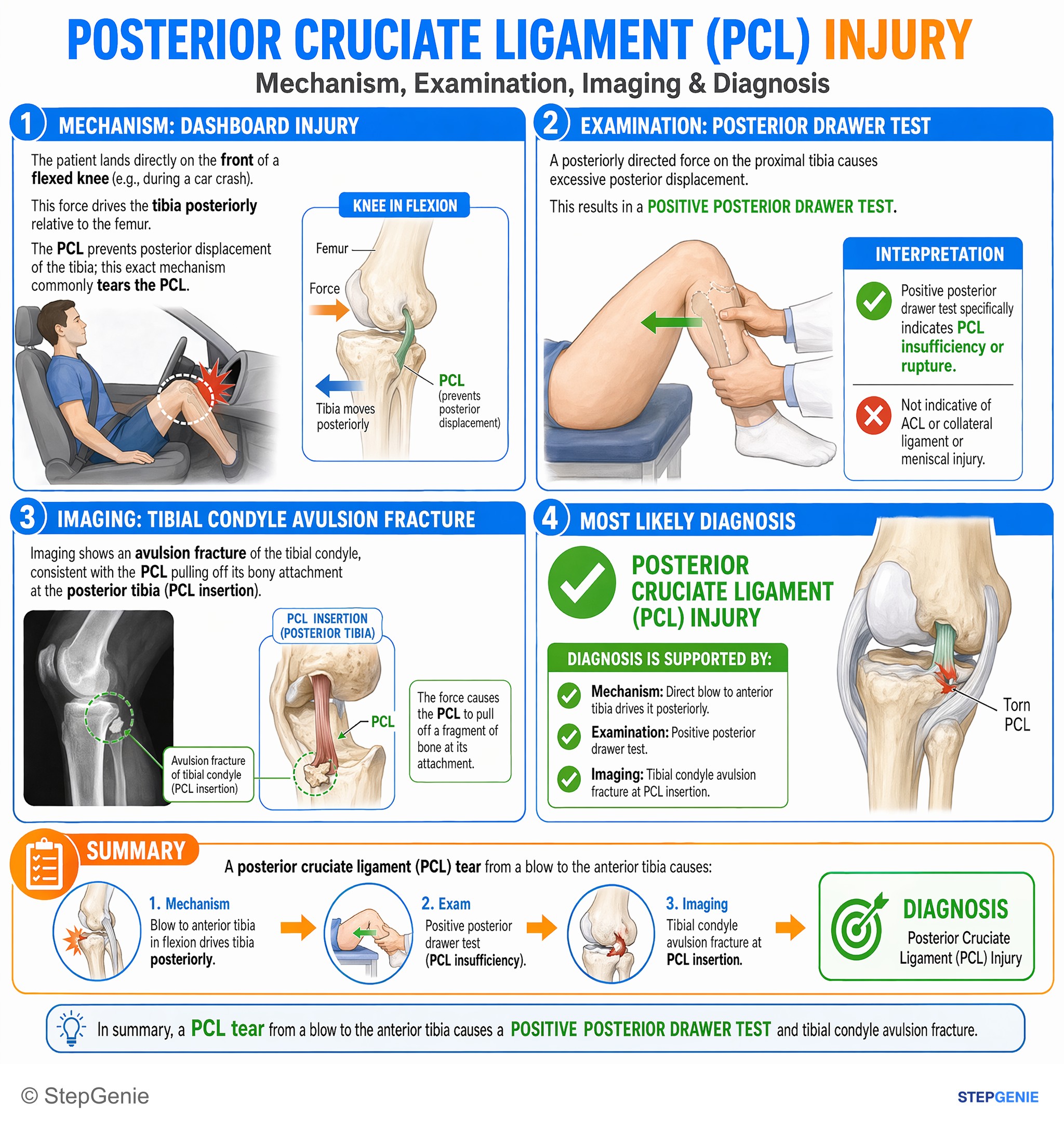
Posterior cruciate ligament (PCL) tear from a blow to the anterior tibia causes a positive posterior drawer test and tibial condyle…
USMLE Step 1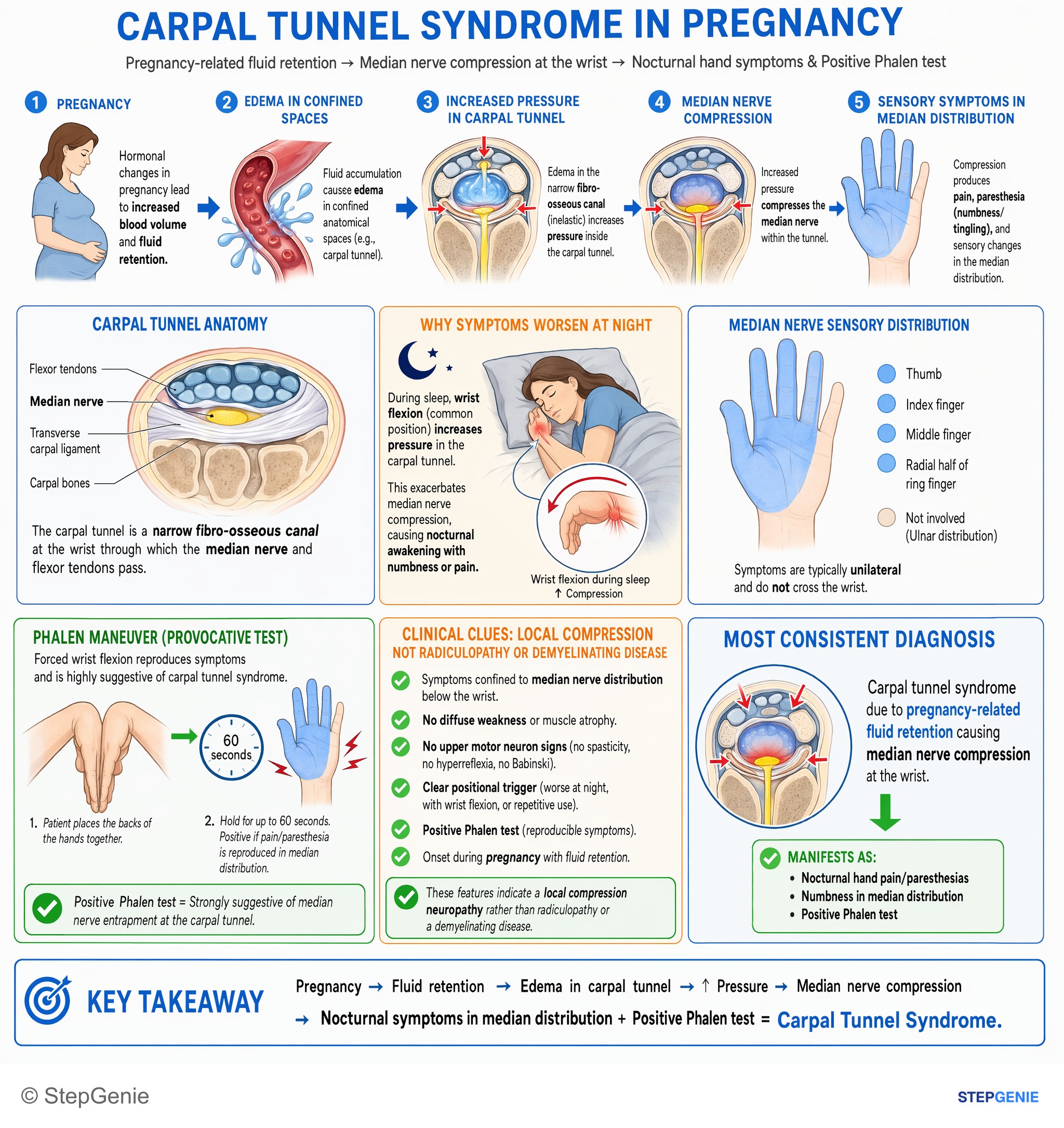
Carpal tunnel syndrome from pregnancy-related fluid retention → median nerve compression at wrist → nocturnal hand pain/paresthesias…
USMLE Step 1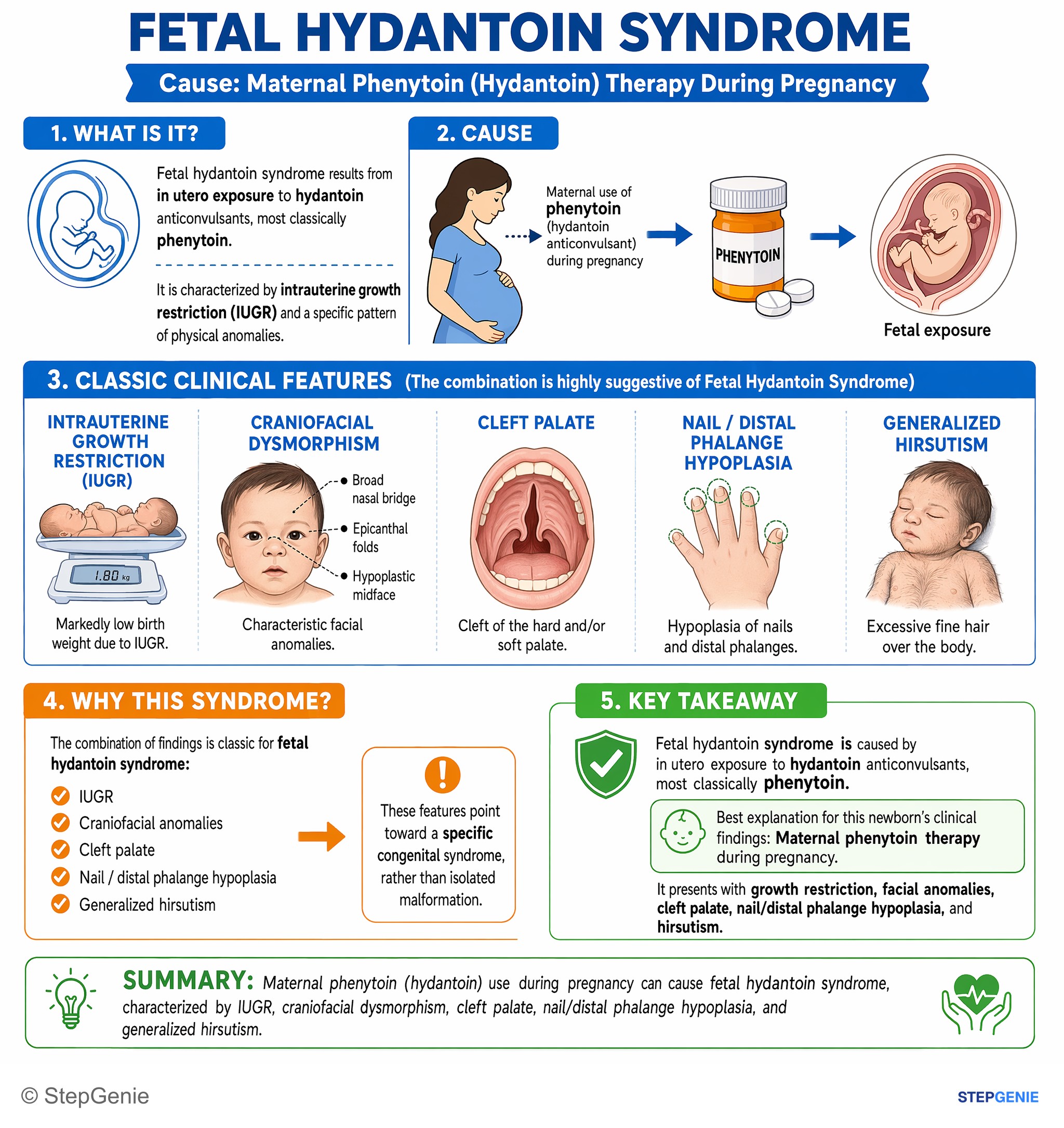
Fetal hydantoin syndrome from maternal phenytoin: growth restriction, facial anomalies, cleft palate, nail/distal phalange hypoplasia…
USMLE Step 1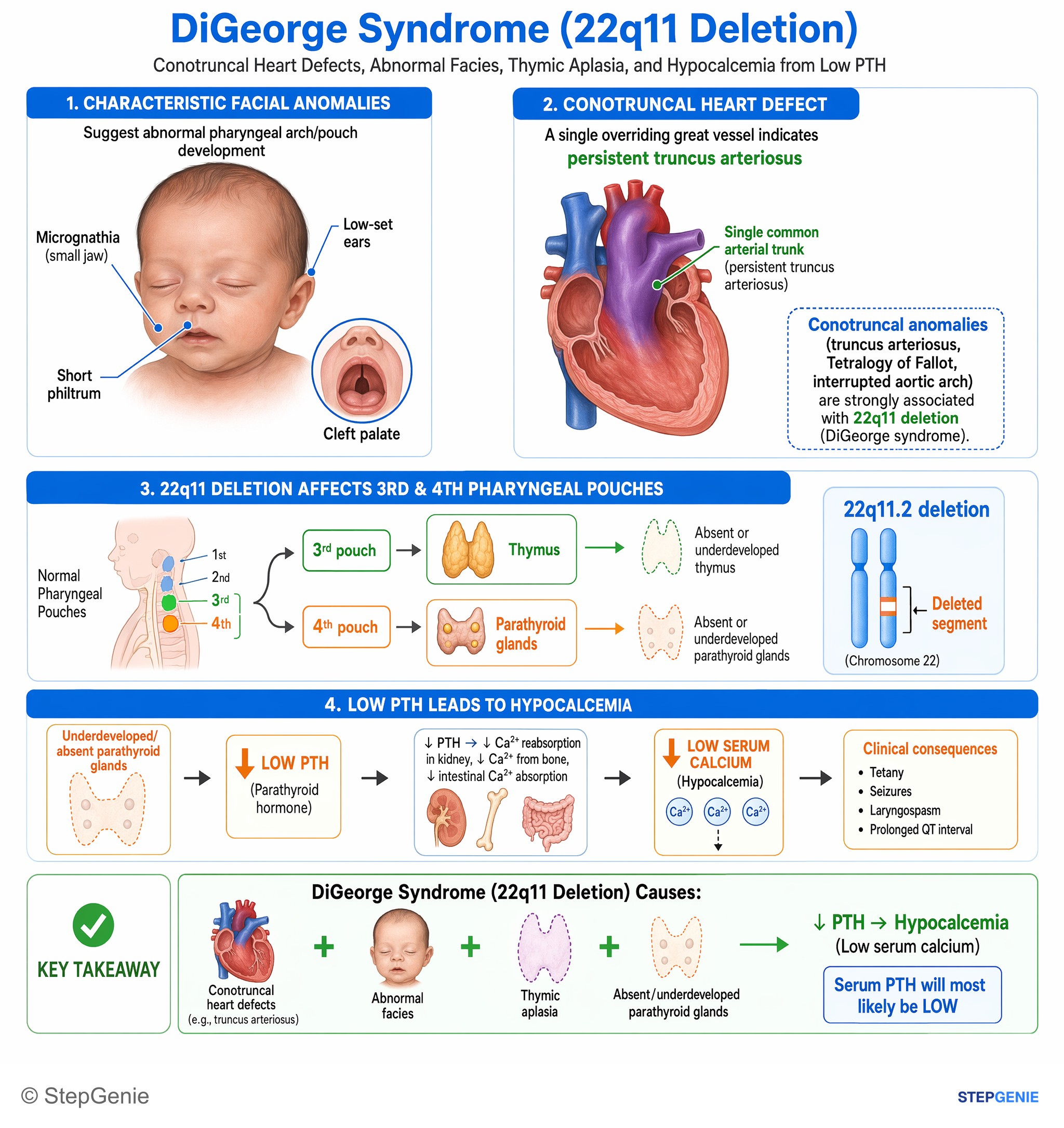
DiGeorge syndrome (22q11 deletion) causes conotruncal heart defects, abnormal facies, thymic aplasia, and hypocalcemia from low PTH.
USMLE Step 1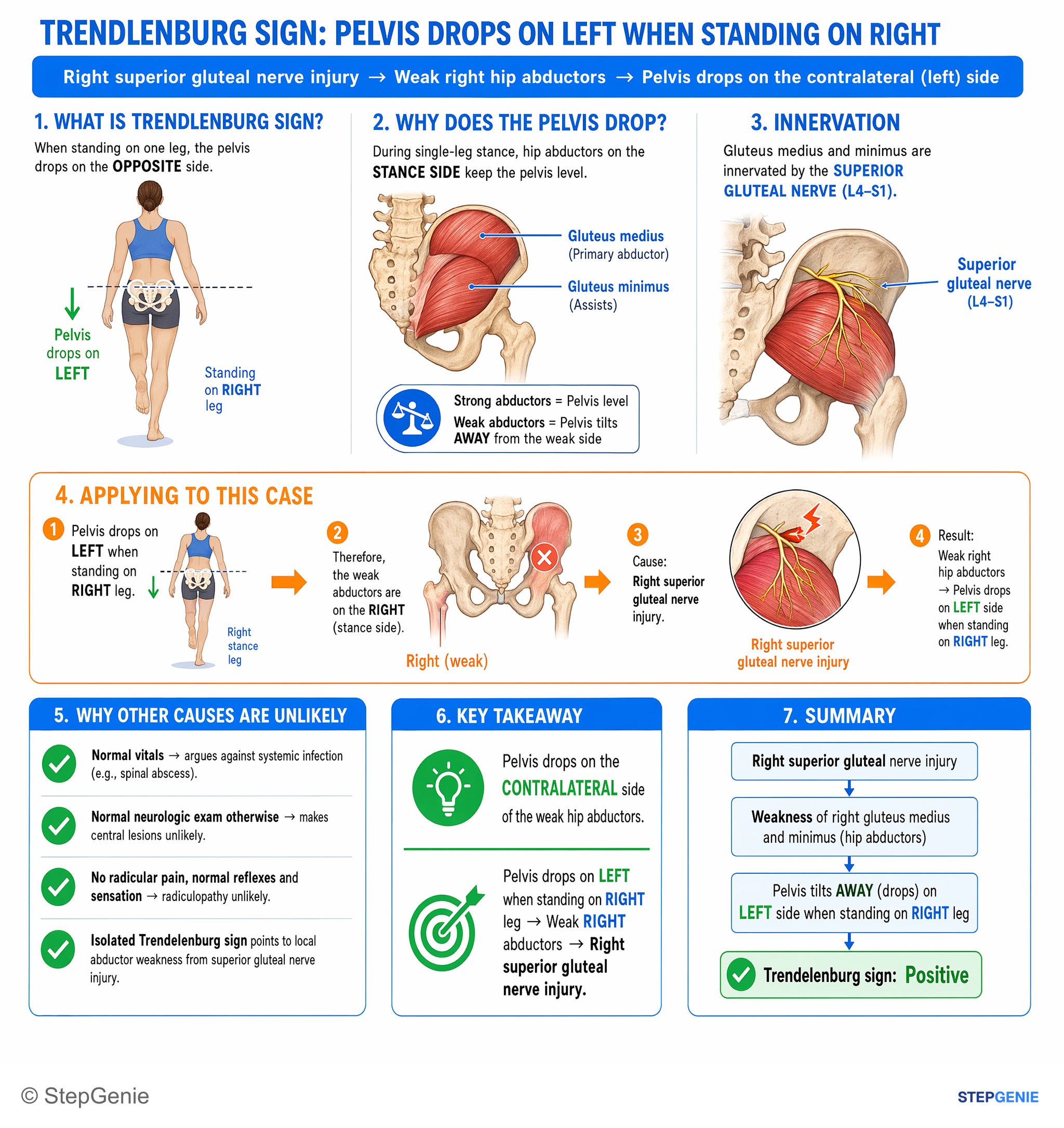
Right superior gluteal nerve injury weakens right hip abductors → Trendelenburg sign: pelvis drops on contralateral (left) side when…
USMLE Step 1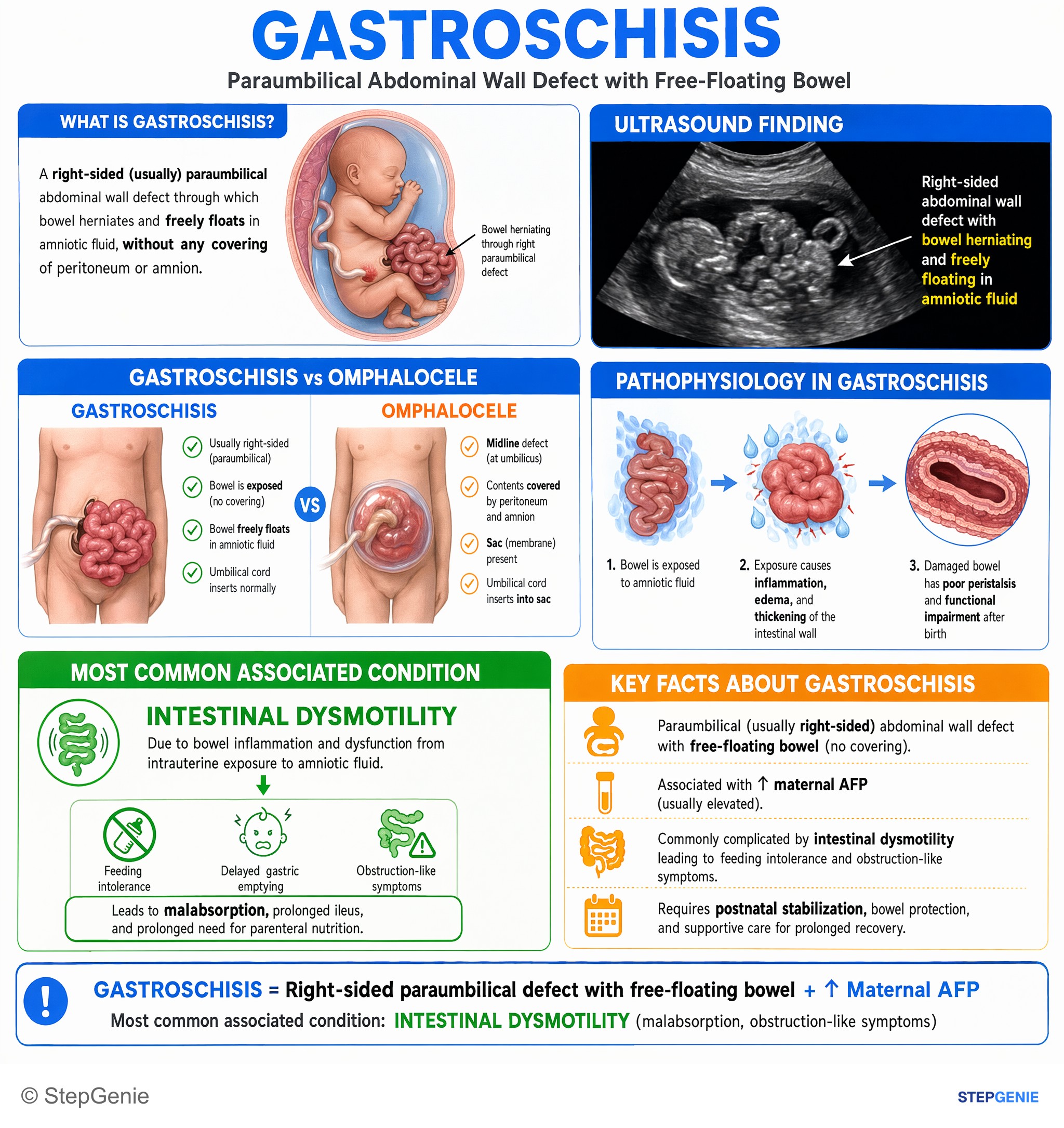
Gastroschisis = paraumbilical abdominal wall defect with free-floating bowel, ↑maternal AFP, often complicated by intestinal dysmotility…
USMLE Step 1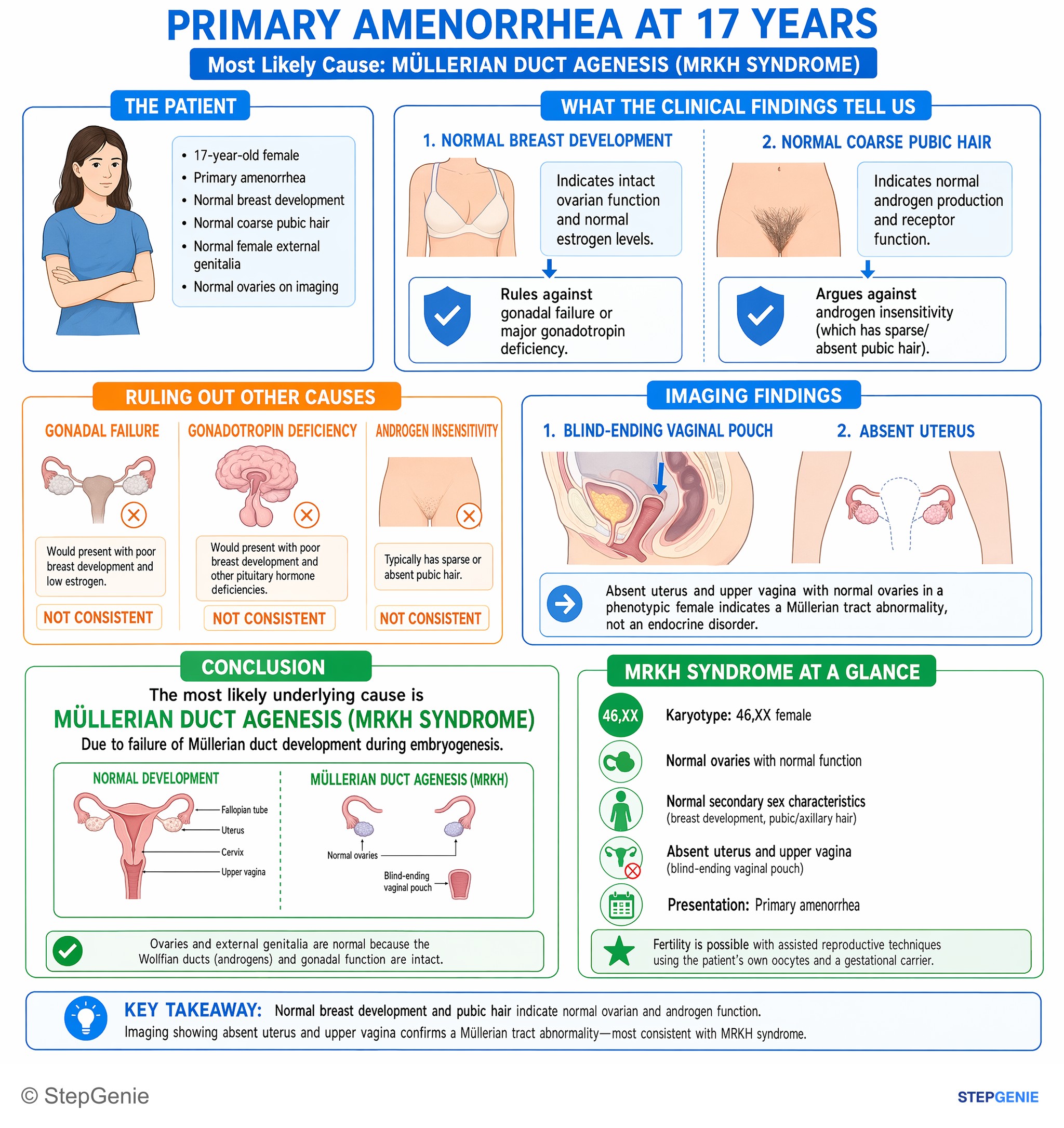
Müllerian agenesis (MRKH): 46,XX female with normal ovaries, normal secondary sex characteristics, but absent uterus and upper vagina…
USMLE Step 1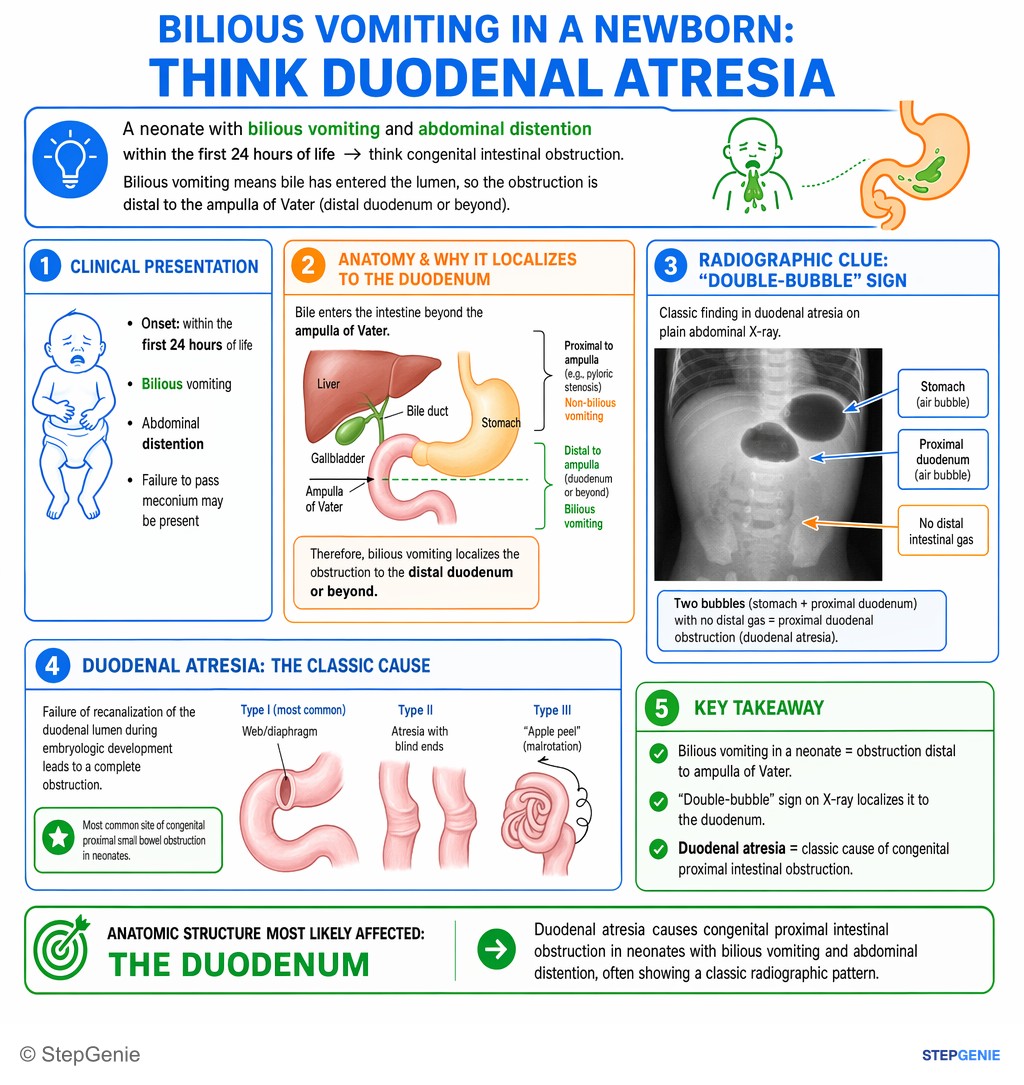
Duodenal atresia causes congenital proximal intestinal obstruction in neonates with bilious vomiting and abdominal distention, often…
USMLE Step 1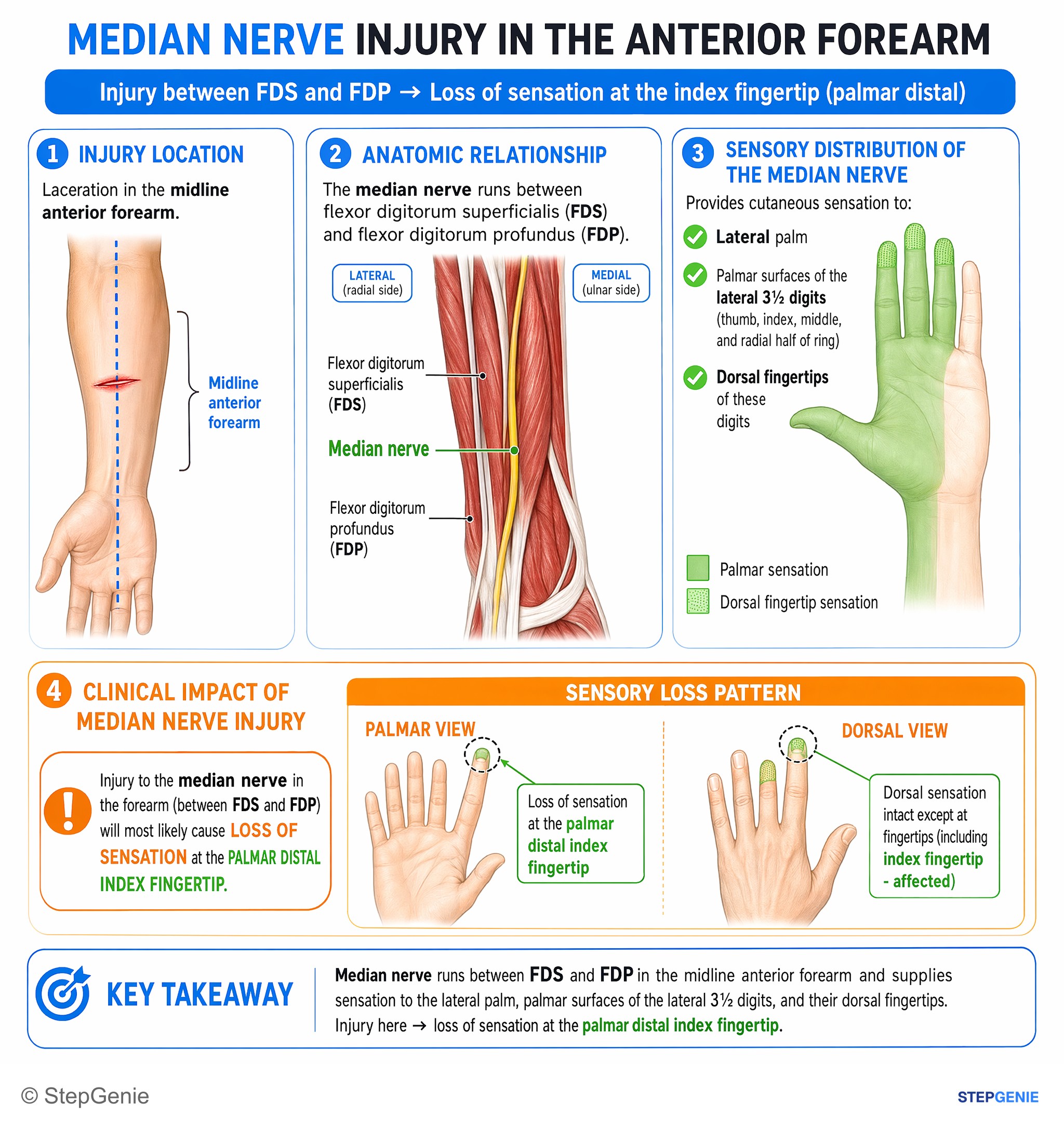
Median nerve injury in the forearm (between FDS and FDP) → loss of sensation on palmar distal index fingertip.
USMLE Step 1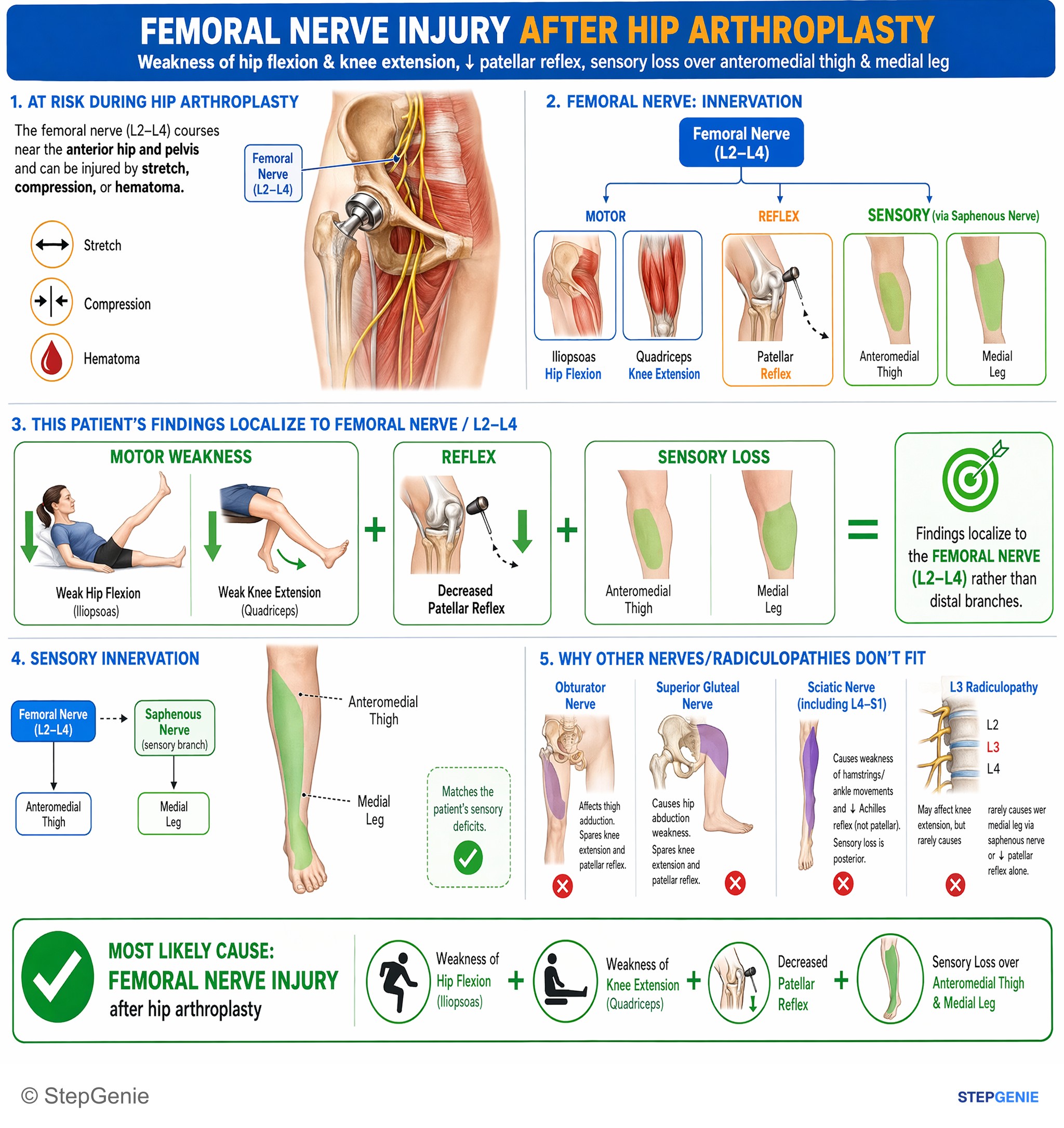
Femoral nerve injury after hip surgery → weakness of hip flexion & knee extension, ↓patellar reflex, sensory loss over anteromedial thigh…
USMLE Step 1138 publishable anatomy infographics in the library — all of them from Step 1 questions, counted on October 29, 2026. This page shows 48 of them. An image is listed when its question is active, has a full structured explanation, passed verification and carries no unresolved report.
This page caps out at 48 images. 90 more anatomy infographics sit in the in-app image library, where they are searchable and filterable by subject, system and topic.
Open the image libraryPractice the questions behind these images
Each image explains one question. The anatomy topic page has the written explanations and the question sets, and the preview lets you answer three questions without an account.
Other image sets
Study anatomy with the image attached
In the app, each of these sits at the end of the question it explains, alongside the step-by-step reasoning and a panel for every option you did not pick. Starting is free.
Start practicing free