Serotonin syndrome and neuroleptic malignant syndrome (NMS) are classic USMLE “look-alike” emergencies: both can cause fever, altered mental status, autonomic instability, and elevated CK. The trick is knowing what’s different—especially timing, neuromuscular findings, and drug triggers—so you can pick the right diagnosis and the right antidote fast.
Why Step Exams Love This Comparison
Both conditions are:
- Life-threatening toxidromes
- Often triggered by medications you prescribe (or patients take)
- Tested through “pattern recognition”:
- Clonus/hyperreflexia = serotonin syndrome
- Lead-pipe rigidity/bradyreflexia = NMS
- Hours vs days onset is another huge clue
Definitions (High-Yield)
Serotonin Syndrome
A toxic state caused by excess serotonergic activity (especially at 5-HT1A and 5-HT2A receptors) leading to neuromuscular hyperactivity, autonomic instability, and mental status changes.
Neuroleptic Malignant Syndrome (NMS)
A dangerous reaction to dopamine D2 blockade (or abrupt withdrawal of dopaminergic meds) characterized by severe rigidity, hyperthermia, autonomic instability, and delirium.
Pathophysiology: What’s Happening Under the Hood?
Serotonin Syndrome Pathophysiology
- Too much serotonin in CNS and peripheral nervous system
- Often due to:
- Drug interactions
- Overdose
- Multiple serotonergic agents
- Results in:
- Increased neuromuscular excitability → hyperreflexia, clonus, tremor
- Increased autonomic output → sweating, diarrhea, hyperthermia
First Aid cross-reference (Psychiatry + Pharm):
- Antidepressants (SSRIs/SNRIs/TCAs/MAOIs)
- Opioids (tramadol, meperidine, fentanyl)
- Linezolid, dextromethorphan, triptans, St. John’s wort
NMS Pathophysiology
- Central dopamine blockade in:
- Nigrostriatal pathway → severe rigidity
- Hypothalamus → impaired thermoregulation (hyperthermia)
- Also seen with withdrawal of dopamine agonists (e.g., Parkinson meds)
First Aid cross-reference (Psychiatry + Pharm):
- Antipsychotics (esp. high-potency typicals like haloperidol, fluphenazine)
- Antiemetics with D2 blockade (e.g., metoclopramide, prochlorperazine)
- Parkinson med withdrawal (e.g., stopping levodopa abruptly)
Clinical Presentation: The Board-Style Pattern
The “Big 4” Symptoms Shared by Both
- Hyperthermia
- Altered mental status (agitation → delirium)
- Autonomic instability (tachycardia, BP swings, diaphoresis)
- Elevated CK (rhabdomyolysis risk)
Key Differences You Must Know
| Feature | Serotonin Syndrome | NMS |
|---|---|---|
| Typical onset | Hours (often <24h) | Days–weeks after starting/increasing antipsychotic |
| Neuromuscular findings | Hyperreflexia, clonus (esp. inducible/ocular), tremor | “Lead-pipe” rigidity, bradyreflexia |
| GI symptoms | Diarrhea, hyperactive bowel sounds | Usually normal or decreased bowel sounds |
| Pupils | Often mydriasis | Typically normal |
| Skin | Diaphoresis common | Diaphoresis common |
| Mental status | Agitation, confusion | Stupor, delirium |
| Trigger | Serotonergic meds / interactions | D2 blockers or DA withdrawal |
| Classic buzzword | Clonus | Lead-pipe rigidity |
Serotonin Syndrome: High-Yield Symptom Cluster
Think “FAST”:
- Fever
- Autonomic instability
- Sweating (and diarrhea)
- Tremor + hyperreflexia/clonus
Clonus is extremely testable:
- Inducible clonus at the ankle
- Ocular clonus (rapid involuntary eye movements)
NMS: High-Yield Symptom Cluster
Think “lead-pipe rigidity + high fever after antipsychotic”:
- Severe generalized rigidity
- “Parkinsonian” features
- Mutism/stupor can appear
Diagnosis: Clinical First, Labs to Support
Serotonin Syndrome Diagnosis
Primarily clinical. Exams love the Hunter Toxicity Criteria concepts (you don’t need to memorize every line, but know the anchors):
- Exposure to serotonergic agent plus:
- Spontaneous clonus, or
- Inducible clonus + agitation/diaphoresis, or
- Ocular clonus + agitation/diaphoresis, or
- Tremor + hyperreflexia, or
- Hypertonia + temp elevation + clonus
Supportive labs:
- CK may be elevated (less dramatic than NMS sometimes)
- Leukocytosis possible
- Metabolic acidosis possible in severe cases
NMS Diagnosis
Also clinical, supported by:
- Elevated CK (often high)
- Leukocytosis
- Low serum iron (classically associated)
- Elevated AST/ALT possible from muscle breakdown
Key history clue: recent start/increase of antipsychotic or dopamine agonist withdrawal.
Treatment: What to Do on Test Day (and Real Life)
Initial Management (Both)
Always start with:
- Stop the offending agent(s)
- Supportive care
- IV fluids (prevent/treat rhabdomyolysis)
- Cooling measures for hyperthermia
- Correct electrolytes
- Benzodiazepines for agitation (especially helpful in serotonin syndrome)
High-yield: Antipyretics (like acetaminophen) don’t fix hyperthermia here because the problem is increased muscle activity and failed thermoregulation, not a hypothalamic “set point” fever.
Targeted Therapy (The “Antidote” Questions)
Serotonin Syndrome: Specific Treatment
- Cyproheptadine (5-HT2 antagonist) is the classic board answer
- Severe cases:
- Sedation, paralysis, intubation if needed (to reduce muscle activity and prevent complications)
Avoid:
- Adding more serotonergic meds
- Missing the diagnosis and giving a dopamine blocker for agitation (can worsen the situation depending on agent)
NMS: Specific Treatment
- Dantrolene (reduces Ca release from sarcoplasmic reticulum in skeletal muscle)
- Bromocriptine (dopamine agonist)
- Amantadine (increases dopamine release; sometimes used)
Pearl: NMS management is often ICU-level due to renal failure risk from rhabdomyolysis.
High-Yield Associations & Classic Step Triggers
Serotonin Syndrome: “Gotcha” Combos
These are repeatedly tested:
- SSRI + MAOI (major risk)
- MAOI + tyramine causes hypertensive crisis—not serotonin syndrome—but stems from the same pharm neighborhood and is commonly confused
- SSRI/SNRI + linezolid (linezolid has MAOI activity)
- Tramadol + SSRI (serotonin + seizure risk)
- Dextromethorphan + SSRI (“robotripping” + antidepressant)
First Aid cross-reference: Antidepressants section (SSRIs, MAOIs, TCAs) and autonomic pharm.
NMS: High-Risk Settings
- Starting or increasing high-potency typical antipsychotics
- Dehydration, agitation, physical restraint (common clinical contexts)
- Stopping levodopa or dopamine agonists abruptly
First Aid cross-reference: Antipsychotics adverse effects (NMS), dopamine pathways.
Quick Differentiation Cheat Sheet (Exam-Ready)
If the vignette gives you:
- Clonus + hyperreflexia + diarrhea + rapid onset (hours) → Serotonin syndrome → stop meds, supportive, cyproheptadine
- Lead-pipe rigidity + bradyreflexia + very high CK + slower onset (days) → NMS → stop antipsychotic, supportive, dantrolene ± bromocriptine
Common USMLE Pitfalls
- Mistaking anticholinergic toxicity for serotonin syndrome
- Anticholinergic: dry skin, urinary retention, decreased bowel sounds, mydriasis, delirium
- Serotonin syndrome: diaphoresis, diarrhea, hyperreflexia/clonus
- Missing the timeline
- Serotonin syndrome: fast
- NMS: slower
- Forgetting that metoclopramide can trigger NMS
- It’s not “just an antiemetic”—it blocks D2 receptors
Mini Table: Serotonin Syndrome vs NMS vs Malignant Hyperthermia (Bonus)
Malignant hyperthermia shows up in the same question universe.
| Syndrome | Trigger | Key signs | Treatment |
|---|---|---|---|
| Serotonin syndrome | SSRIs/SNRIs/MAOIs, linezolid, tramadol, etc. | Clonus, hyperreflexia, diarrhea | Cyproheptadine, supportive |
| NMS | Antipsychotics, D2 blockers, DA withdrawal | Lead-pipe rigidity, bradyreflexia, high CK | Dantrolene, bromocriptine, supportive |
| Malignant hyperthermia | Succinylcholine, volatile anesthetics | Rigidity, hyperthermia during anesthesia | Dantrolene, supportive |
Final Takeaway (What You Should Hear in Your Head)
- Serotonin syndrome = clonus + hyperreflexia + fast onset after serotonergic meds → cyproheptadine
- NMS = lead-pipe rigidity + slow onset after D2 blockade (or DA withdrawal) → dantrolene ± bromocriptine
Visual explanations from the StepGenie QBank
Infographics StepGenie drew to explain questions in its own QBank, matched to this article's topic. Each caption is the takeaway of the question it explains.
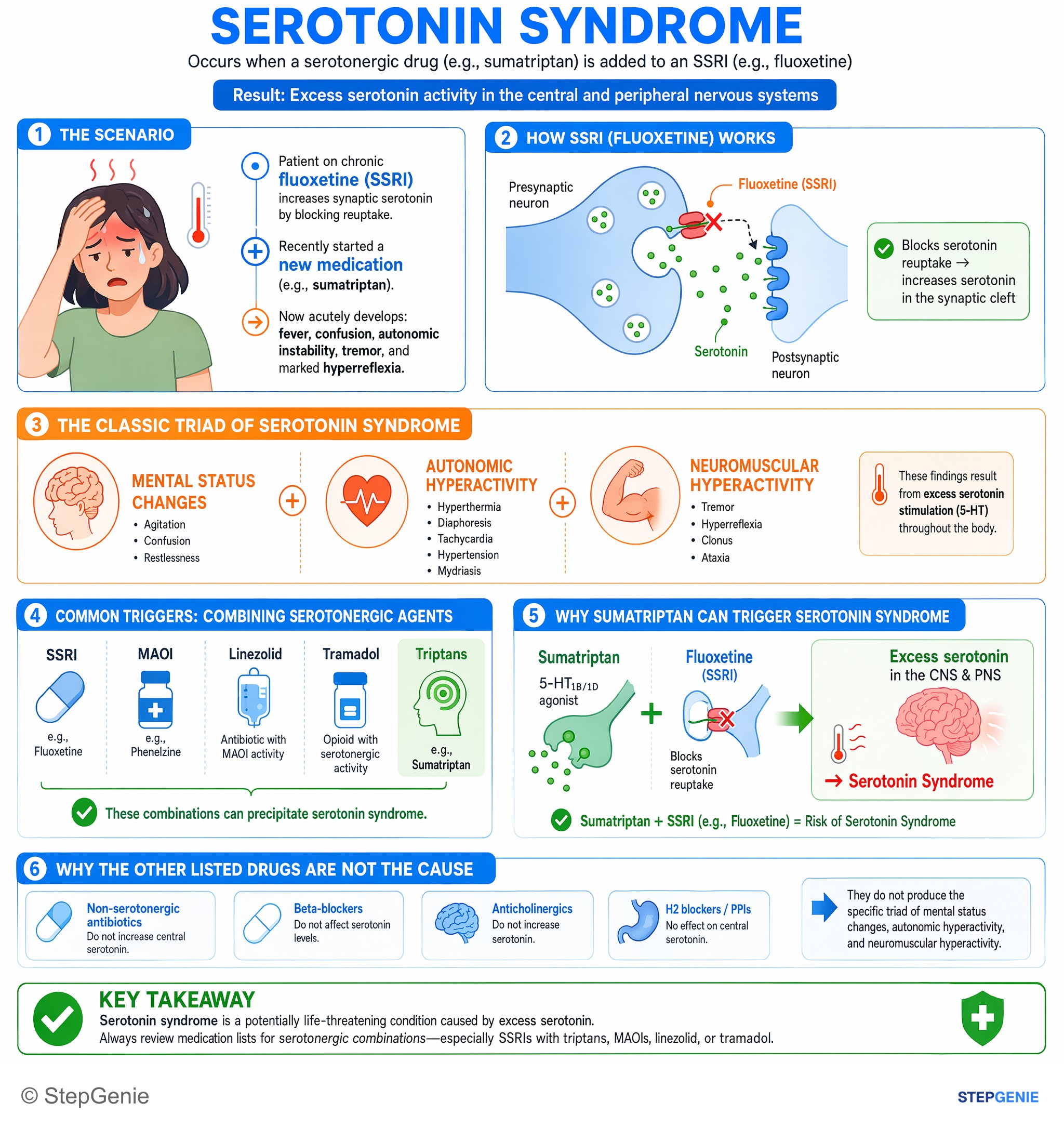
Serotonin syndrome: serotonergic drug (triptan) added to SSRI (fluoxetine) → hyperthermia, agitation, hyperreflexia, clonus, autonomic…
USMLE Step 1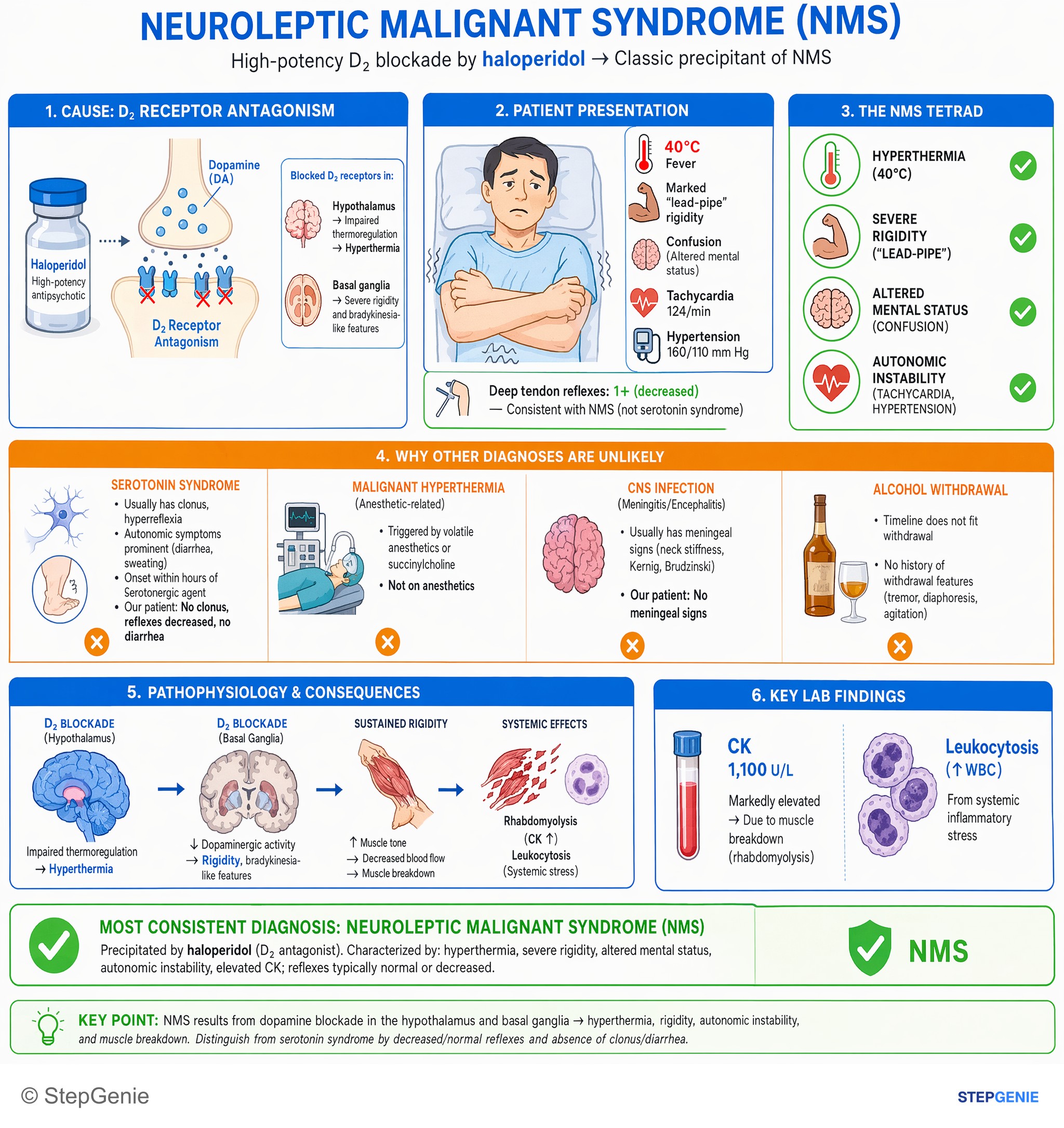
Neuroleptic malignant syndrome from antipsychotics: hyperthermia, severe rigidity, AMS, autonomic instability, elevated CK; reflexes…
USMLE Step 2Frequently Asked Questions
How do you tell serotonin syndrome from neuroleptic malignant syndrome on Step 1?
The fastest way to distinguish them is by onset, neuromuscular findings, and medication trigger. Serotonin syndrome usually begins within hours, often after serotonergic drugs or drug interactions, and causes hyperreflexia, clonus, and tremor. NMS develops over days to weeks after starting or increasing a dopamine D2 blocker, or after dopaminergic withdrawal, and causes lead-pipe rigidity with bradyreflexia.
Why does serotonin syndrome cause clonus and hyperreflexia?
Serotonin syndrome causes clonus and hyperreflexia because excess serotonergic activity increases neuromuscular excitability. The toxic state is driven by too much serotonin, especially at 5-HT1A and 5-HT2A receptors, in the central and peripheral nervous system. That excess signaling produces the classic exam findings of hyperreflexia, inducible or ocular clonus, and tremor, along with autonomic instability and mental status changes.
What drugs trigger serotonin syndrome vs NMS?
Serotonin syndrome is triggered by serotonergic medications, especially combinations, interactions, or overdose, while NMS is triggered by dopamine blockade or withdrawal of dopaminergic drugs. Serotonin syndrome is linked to SSRIs, SNRIs, TCAs, MAOIs, tramadol, meperidine, fentanyl, linezolid, dextromethorphan, triptans, and St. John’s wort. NMS is associated with antipsychotics like haloperidol and fluphenazine, D2-blocking antiemetics, and abrupt levodopa withdrawal.
What is the first-line treatment for serotonin syndrome and NMS?
For both conditions, the first step is to stop the offending drug and give supportive care. That includes IV fluids, cooling measures, electrolyte correction, and benzodiazepines for agitation, especially in serotonin syndrome. The classic targeted treatment for serotonin syndrome is cyproheptadine. For NMS, the board-style antidotes are dantrolene and bromocriptine, with amantadine sometimes used as well.
Why don’t antipyretics help in serotonin syndrome or NMS?
Antipyretics do not fix the hyperthermia in serotonin syndrome or NMS because the temperature elevation is not caused by a hypothalamic set-point fever. Instead, the problem comes from increased muscle activity and failed thermoregulation. That is why treatment focuses on stopping the causative drug, providing supportive care, using cooling measures, and giving condition-specific therapy rather than relying on acetaminophen.