Panic disorder is one of those Step topics that looks “soft” until you realize how often it’s tested—especially the distinction between panic attacks vs panic disorder, the time course, and the medical mimics you’re expected to rule out. If you can recognize the classic presentation, avoid common diagnostic traps, and pick the right acute vs long-term treatment, you’ll pick up easy points on both Step 1 and Step 2.
The 10,000-foot definition (what Step wants you to say)
Panic attack (symptom episode)
A panic attack is a sudden surge of intense fear or discomfort that peaks within minutes, accompanied by physical and cognitive symptoms (e.g., palpitations, shortness of breath, fear of dying).
Key concept: Panic attacks can occur in many disorders (panic disorder, PTSD, social anxiety disorder, specific phobia, MDD, substance-induced anxiety, etc.).
Panic disorder (diagnosis)
Panic disorder is defined by:
- Recurrent, unexpected panic attacks, AND
- At least 1 month of one (or both) of the following:
- Persistent concern/worry about additional attacks or their consequences
- Maladaptive behavior change related to the attacks (e.g., avoidance of exercise, unfamiliar places)
High-yield time anchors
- Panic attack peaks within ~10 minutes (often stated as “peaks within minutes”)
- Panic disorder requires ≥1 month of worry/behavior change after attacks
First Aid cross-reference: Psychiatry → Anxiety Disorders (Panic disorder, Agoraphobia, GAD)
Pathophysiology (Step 1–style mechanisms + classic associations)
Panic disorder is multifactorial. Step tends to test neurotransmitters, brain circuitry, and physiologic sensitivity models rather than a single “cause.”
Neurobiology (high yield)
- Locus coeruleus (norepinephrine): implicated in autonomic arousal and “alarm” signaling
- Amygdala-centered fear circuitry: threat detection and conditioned fear responses
- Neurotransmitters involved:
- ↑ Norepinephrine
- ↓ GABA tone (reduced inhibitory braking)
- Serotonin dysregulation (explains SSRI efficacy)
Physiologic sensitivity model (Step favorite)
Some patients have increased sensitivity to:
- (hypercapnia challenge can provoke panic-like symptoms)
- Somatic sensations (normal tachycardia interpreted catastrophically: “I’m dying”)
Genetics & comorbidity (high yield)
- Increased risk in first-degree relatives
- Strong comorbidity with:
- MDD
- Substance use disorders (esp. sedative-hypnotics and alcohol—often used to self-treat)
- Other anxiety disorders
Clinical presentation: how it shows up on NBME stems
What a panic attack looks like
A panic attack is abrupt, intense, and often includes:
Common physical symptoms
- Palpitations, tachycardia
- Sweating, trembling
- Shortness of breath / smothering sensation
- Chest pain (classic “MI mimic”)
- Nausea / abdominal distress
- Dizziness, lightheadedness
- Chills/heat sensations
- Paresthesias
Common cognitive symptoms
- Fear of dying
- Fear of “going crazy” or losing control
- Derealization/depersonalization
“Unexpected” is a key word
- Panic disorder: attacks are unexpected (not exclusively tied to one trigger)
- If attacks are consistently triggered by a specific situation, think:
- Specific phobia
- Social anxiety disorder
- PTSD (triggered by trauma reminders)
Diagnosis: criteria + must-know differentials
DSM-5 core criteria (testable)
Diagnosis requires:
- Recurrent unexpected panic attacks
- ≥1 month of worry and/or maladaptive behavior change
- Not due to substance/medical condition
- Not better explained by another mental disorder
High-yield differential diagnosis table
| Condition | Key differentiator | Step-friendly clue |
|---|---|---|
| MI/angina | Exertional, risk factors, ECG/troponins | Crushing chest pain radiating to jaw/arm |
| Pulmonary embolism | Pleuritic pain, hypoxemia, risk factors | Recent surgery, OCPs, unilateral leg swelling |
| Asthma | Wheezing, reversible obstruction | History of atopy, response to bronchodilator |
| Hyperthyroidism | Persistent adrenergic symptoms + weight loss | Heat intolerance, tremor, low TSH |
| Pheochromocytoma | Episodic headaches, sweating, palpitations + HTN | Paroxysmal hypertension |
| Arrhythmia | Palpitations ± syncope | Abnormal rhythm on ECG/Holter |
| Substance-induced anxiety | Temporal link to drug use/withdrawal | Caffeine, cocaine, amphetamines; EtOH/benzo withdrawal |
| GAD | Chronic, diffuse worry >6 months | Worry about many domains, not discrete attacks |
| PTSD | Trauma exposure + re-experiencing/avoidance/hyperarousal | Nightmares, flashbacks, hypervigilance |
| Agoraphobia | Fear of being unable to escape/help if symptoms occur | Avoids crowds/public transport; may coexist with panic disorder |
Clinical pearl: Panic attacks are a diagnosis of exclusion in the ED—Step 2 loves “rule out medical causes first,” especially with chest pain and dyspnea.
Panic disorder vs agoraphobia (commonly confused)
Agoraphobia
- Fear/avoidance of situations where escape might be difficult or help unavailable (public transport, open spaces, enclosed spaces, lines/crowds, being outside alone)
- Must be persistent (typically ≥6 months in DSM-5, though questions often emphasize chronic avoidance)
Relationship to panic disorder
- Patients may develop agoraphobia secondary to panic disorder (“I avoid the mall because I might panic and can’t escape”)
- But agoraphobia can occur without panic disorder
First Aid cross-reference: Agoraphobia often appears adjacent to panic disorder in Anxiety Disorders tables.
Treatment: acute control vs long-term prevention (the classic Step split)
Acute management (stop the attack)
- Benzodiazepines (e.g., alprazolam, lorazepam)
- Rapid relief
- Risk: dependence, tolerance, withdrawal; avoid in patients with substance use disorder when possible
Long-term management (prevention)
- SSRIs (first-line maintenance)
- SNRIs (also first-line)
- CBT (especially exposure-based + cognitive restructuring)
High-yield point:
- SSRIs/SNRIs treat the disorder; benzos treat the moment.
- Because SSRIs take time to work, some patients get short-term benzo “bridging.”
Practical Step-style algorithm
- Acute panic attack in clinic/ED: assess for medical causes → consider benzo if panic is likely
- Confirmed panic disorder: start SSRI/SNRI + CBT (± short benzo bridge)
- Refractory cases: optimize psychotherapy, switch SSRI/SNRI, consider other agents per guidelines (Step usually doesn’t require beyond first-line)
First Aid cross-reference: Pharm → SSRIs/SNRIs and Benzodiazepines (mechanisms + side effects).
HY pharm reminders (Step 1 points baked into Step 2 questions)
Benzodiazepines
- Mechanism: increase frequency of GABA-A chloride channel opening
- Toxicity: respiratory depression (esp. with other sedatives), anterograde amnesia
- Antidote: flumazenil (but can precipitate seizures in chronic benzo users)
SSRIs/SNRIs
- Time to effect: weeks
- Common adverse effects (SSRI): sexual dysfunction, GI upset, insomnia/somnolence
- Serotonin syndrome risk with serotonergic combinations (Step classic)
High-yield associations & classic question stems
1) “Chest pain, dyspnea, fear of dying… normal workup”
- After ruling out MI/PE/etc., recurrent episodes + worry about future episodes → panic disorder
- If it’s the first episode, Step 2 may ask you to rule out medical causes first, not jump to psych.
2) Nocturnal panic attacks
- Panic attacks can occur from sleep and wake the patient abruptly
- Differentiate from:
- Nightmares (REM, recall dream content; PTSD)
- Sleep terrors (NREM, autonomic activation, amnesia, typically children)
3) Substance-induced panic symptoms
- Caffeine, stimulants, cocaine/amphetamines → panic-like episodes
- Alcohol/benzodiazepine withdrawal → anxiety, tremor, autonomic hyperactivity (and can include panic)
4) Comorbidity traps
- Panic disorder frequently coexists with MDD and other anxiety disorders—stems may include anhedonia, sleep changes, etc. Don’t miss the panic criteria.
Rapid-fire: Panic disorder vs look-alikes (memorize this)
- Panic disorder: unexpected attacks + ≥1 month worry/behavior change
- GAD: chronic worry most days >6 months
- Specific phobia: panic only when exposed to specific trigger
- Social anxiety disorder: fear of scrutiny/embarrassment in social/performance situations
- PTSD: trauma + re-experiencing + avoidance + negative mood/cognition + hyperarousal
- Illness anxiety disorder: fear of having a disease without prominent somatic symptoms; persists despite reassurance
- Somatic symptom disorder: distressing somatic symptoms + excessive thoughts/behaviors about them
First Aid-style high-yield recap (what you should be able to blurt out)
- Panic attacks peak within minutes and can mimic cardiopulmonary emergencies
- Panic disorder = recurrent unexpected attacks + ≥1 month worry and/or maladaptive avoidance
- Rule out medical causes (thyroid disease, arrhythmia, PE, asthma, stimulants)
- Acute: benzodiazepine
- Long-term: SSRI/SNRI + CBT
- Frequently associated with agoraphobia, MDD, and substance use
Visual explanations from the StepGenie QBank
Infographics StepGenie drew to explain questions in its own QBank, matched to this article's topic. Each caption is the takeaway of the question it explains.
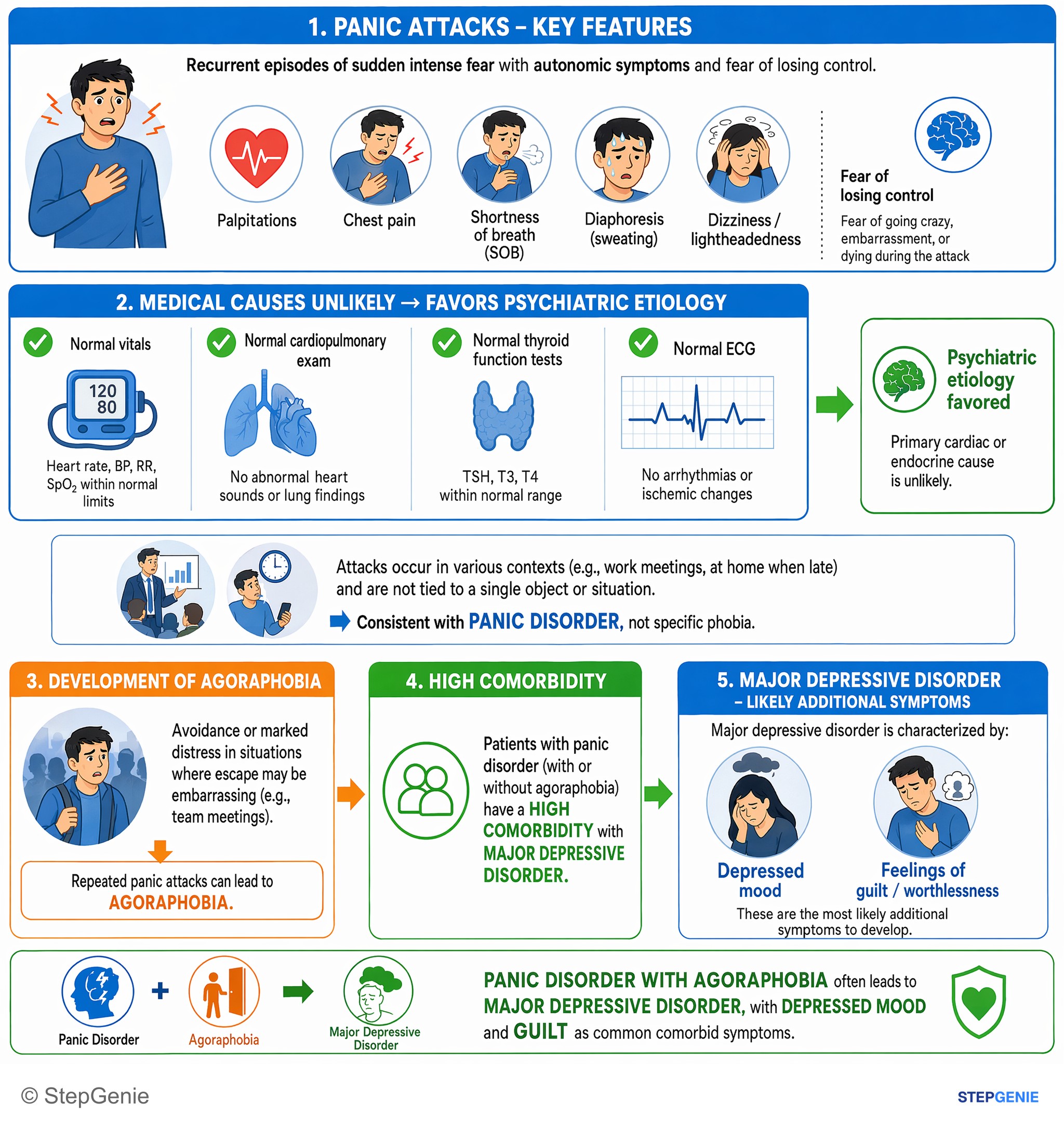
Panic disorder with agoraphobia often leads to major depressive disorder with depressed mood and guilt as a common comorbid condition.
USMLE Step 2Frequently Asked Questions
What is the difference between a panic attack and panic disorder?
A panic attack is a sudden surge of intense fear or discomfort that peaks within minutes, often with symptoms like palpitations, shortness of breath, and fear of dying. Panic disorder is the diagnosis made when a patient has recurrent, unexpected panic attacks plus at least 1 month of persistent worry about more attacks or maladaptive behavior changes related to them.
How long does a panic attack last, and how long do symptoms have to persist for panic disorder?
A panic attack peaks within minutes, commonly around 10 minutes, while panic disorder requires at least 1 month of ongoing worry or behavior change after the attacks. This time course is a high-yield distinction because Step questions often test the brief, abrupt nature of the attack itself versus the longer period needed to diagnose the disorder.
Why does panic disorder cause intense autonomic symptoms like palpitations and shortness of breath?
Panic disorder is linked to dysregulated fear and autonomic circuits, especially the locus coeruleus and amygdala-centered pathways. Increased norepinephrine contributes to autonomic arousal, reduced GABA tone means less inhibitory control, and serotonin dysregulation is also involved. Some patients are also unusually sensitive to CO2 or normal body sensations, so tachycardia or dyspnea may be catastrophically interpreted as danger.
How do you tell panic disorder from PTSD, social anxiety disorder, or a specific phobia?
Panic disorder is suggested by recurrent, unexpected panic attacks that are not tied exclusively to one trigger. If attacks happen consistently with a specific situation, another diagnosis is more likely: specific phobia if tied to a feared object or setting, social anxiety disorder if tied to social scrutiny, and PTSD if triggered by trauma reminders along with re-experiencing and hyperarousal symptoms.
What medical conditions should you rule out before diagnosing panic disorder?
You should rule out medical and substance-related causes first, especially in patients with chest pain or dyspnea. Important mimics include myocardial infarction or angina, pulmonary embolism, asthma, hyperthyroidism, pheochromocytoma, arrhythmia, and substance-induced anxiety from agents like caffeine, cocaine, amphetamines, alcohol withdrawal, or benzodiazepine withdrawal. Panic attacks are treated as a diagnosis of exclusion in the emergency setting.