Preeclampsia/eclampsia is one of those OB topics that shows up everywhere on Step 1 and Step 2: vignettes, pharm questions, ethics “what’s the next step?”, and postpartum complications. If you can connect abnormal placentation → endothelial dysfunction → vasospasm + leaky capillaries + end-organ injury, most questions become predictable.
The Core Definitions (Know These Cold)
Preeclampsia
New-onset hypertension after 20 weeks gestation plus either:
- Proteinuria or
- End-organ dysfunction (even without proteinuria)
Hypertension criteria
- on 2 readings at least 4 hours apart, after 20 weeks, in a previously normotensive patient
- Severe-range:
Proteinuria criteria (any one)
- mg/24 hours
- Protein/creatinine ratio
- Dipstick (less preferred)
Eclampsia
Preeclampsia + seizures (generalized tonic-clonic) not attributable to another cause.
HELLP Syndrome (a severe variant)
- Hemolysis (often microangiopathic hemolytic anemia)
- Elevated Liver enzymes
- Low Platelets
First Aid tie-in: Preeclampsia/eclampsia and HELLP appear in the pregnancy HTN disorders section (OB/GYN + pathology + pharm overlaps). This is a classic “vascular/endothelial injury” concept.
Pathophysiology: The Story You Should Tell Yourself
Step 1-level mechanism: abnormal placentation
In normal pregnancy, trophoblasts remodel maternal spiral arteries into high-capacitance, low-resistance vessels.
In preeclampsia, trophoblastic invasion is shallow/incomplete → spiral arteries stay narrow, high-resistance → placental ischemia.
What does the ischemic placenta do?
It releases anti-angiogenic and inflammatory factors (classically tested concept):
- ↑ sFlt-1 (soluble Fms-like tyrosine kinase-1) binds and reduces free VEGF and PlGF
- ↓ angiogenesis → endothelial dysfunction
The consequences of endothelial dysfunction
Think: vasospasm + increased vascular permeability + activation of coagulation
- Hypertension (vasoconstriction)
- Proteinuria (glomerular endothelial injury)
- Edema (capillary leak; can be pulmonary)
- End-organ ischemia (brain, liver, kidney, placenta)
Kidney pathology you should recognize
Glomerular endotheliosis = swelling of glomerular endothelial cells with narrowed capillary lumens → ↓ GFR and proteinuria.
Risk Factors (High-Yield Associations)
Preeclampsia is more likely when there’s more placental tissue or less maternal immune tolerance to placental antigens:
Classic risk factors
- Nulliparity (first pregnancy)
- History of preeclampsia (strong risk for recurrence)
- Multifetal gestation (more placenta)
- Molar pregnancy (abnormal trophoblast, lots of placental tissue)
- Chronic hypertension
- Diabetes mellitus
- CKD
- Autoimmune disease (esp. antiphospholipid syndrome, SLE)
- Obesity, advanced maternal age
Step-friendly memory hook: “First placenta exposure, more placenta, or maternal vascular disease”.
Clinical Presentation: How It Shows Up in Vignettes
Common findings
- HTN after 20 weeks
- Proteinuria
- Edema (not required for diagnosis, but commonly present)
Severe features (these convert “preeclampsia” → “preeclampsia with severe features”)
Any of the following can qualify, even without massive proteinuria:
- Severe BP:
- Thrombocytopenia: platelets < 100,000
- Renal insufficiency: creatinine > 1.1 mg/dL or doubling baseline
- Impaired liver function: elevated AST/ALT, RUQ/epigastric pain
- Pulmonary edema
- New-onset cerebral/visual symptoms: headache, scotomata, hyperreflexia, altered mental status
Eclampsia clues
- Severe headache, visual changes, hyperreflexia/clonus → then seizure
- Can occur antepartum, intrapartum, or postpartum (postpartum eclampsia is a classic trap)
Diagnosis: What the Question Actually Wants
Step-style diagnostic checklist
- Confirm timing: after 20 weeks
- Confirm BP
- Look for proteinuria OR end-organ dysfunction
- Decide if severe features are present
Key labs to order/interpret
| Concern | What you’ll see | Why it matters |
|---|---|---|
| Hemolysis | ↑ LDH, ↑ indirect bilirubin, schistocytes | HELLP / microangiopathic hemolysis |
| Platelets | ↓ platelets | Severity; DIC risk |
| Liver | ↑ AST/ALT, RUQ pain | HELLP; hepatic ischemia, subcapsular hematoma |
| Kidney | ↑ creatinine, proteinuria | Renal endotheliosis |
| Coag | May show DIC in severe disease/abruption | Bleeding risk |
| Fetus | Growth restriction, oligohydramnios | Placental insufficiency |
High-yield vignette: “Pregnant at 32 weeks with HTN, RUQ pain, elevated AST/ALT, low platelets” → HELLP.
Management: The Boards-First Approach
The only definitive treatment
Delivery of the placenta (i.e., delivery of the fetus and placenta).
But the timing depends on gestational age and severity.
Treatment Algorithms (What to Do and When)
Preeclampsia without severe features
- If ≥ 37 weeks → deliver
- If < 37 weeks → expectant management + close monitoring (maternal labs, BP, fetal status)
Preeclampsia with severe features
- If ≥ 34 weeks → deliver
- If < 34 weeks → stabilize mom, consider corticosteroids for fetal lung maturity if time allows, then proceed based on maternal/fetal status (many will still require delivery)
Eclampsia (seizure = emergency)
- Magnesium sulfate for seizure treatment and prophylaxis (first-line)
- Stabilize (ABCs)
- Control severe BP
- Delivery once stabilized (do not delay for prolonged “expectant management”)
Medications You Must Know (Step 1 Pharm + Step 2 OB)
Magnesium sulfate
Use: seizure prophylaxis/treatment in severe preeclampsia and eclampsia
Toxicity signs (classic Step question)
- Loss of deep tendon reflexes
- Respiratory depression
- Cardiac arrhythmias
Antidote: Calcium gluconate
Antihypertensives used in pregnancy (acute severe HTN)
Common board answers:
- IV labetalol
- IV hydralazine
- Oral nifedipine
Drugs to avoid in pregnancy HTN
- ACE inhibitors/ARBs (fetal renal dysgenesis, oligohydramnios, skull hypoplasia)
- Aliskiren (similar pathway concerns)
First Aid cross-reference idea: This topic integrates with FA’s antihypertensive pharm section (pregnancy contraindications) and reproductive pathology.
Complications (Maternal + Fetal)
Maternal complications
- Eclampsia (seizures)
- Stroke/intracranial hemorrhage (from severe HTN)
- Pulmonary edema
- Acute kidney injury
- HELLP
- DIC
- Placental abruption (painful bleeding + uterine tenderness)
Fetal complications
- IUGR (uteroplacental insufficiency)
- Oligohydramnios
- Preterm delivery
- Fetal hypoxia/distress
- Stillbirth (severe cases)
HELLP Syndrome: Extra High-Yield Mini-Section
How it presents
- RUQ/epigastric pain, nausea/vomiting, malaise
- HTN/proteinuria may be present but not always dramatic
- Labs: hemolysis + elevated LFTs + low platelets
Management (boards)
- Stabilize + deliver (especially if maternal instability)
- Magnesium sulfate (seizure prophylaxis)
- Blood products as needed (platelets if significant thrombocytopenia with bleeding/procedures)
Differentials You’ll Be Asked to Separate
Preeclampsia vs gestational hypertension
- Gestational HTN: HTN after 20 weeks without proteinuria or end-organ findings
- Preeclampsia: HTN after 20 weeks with proteinuria or end-organ dysfunction
Preeclampsia vs chronic HTN
- Chronic HTN: HTN before pregnancy or before 20 weeks
- Superimposed preeclampsia: chronic HTN + new proteinuria or end-organ dysfunction after 20 weeks
Eclampsia vs epilepsy
- Eclampsia often preceded by headache/visual symptoms/hyperreflexia, occurs around pregnancy/postpartum in a preeclampsia context.
- If vignette includes severe HTN + proteinuria + seizure → assume eclampsia unless proven otherwise.
High-Yield “Exam Triggers” (Quick Hits)
- After 20 weeks + HTN + proteinuria → preeclampsia until proven otherwise.
- Seizure in a pregnant/postpartum patient → treat as eclampsia and give MgSO₄.
- Mg toxicity → loss of reflexes is an early warning; antidote calcium gluconate.
- RUQ pain + low platelets + high AST/ALT → HELLP, think urgent management.
- Molar pregnancy/multifetal gestation → increased risk (more trophoblastic tissue).
- Definitive treatment is delivery—everything else is stabilization/bridging.
Rapid Review Table (Great for Last-Minute Passes)
| Disorder | Key criteria | Hallmark danger | Treatment cornerstone |
|---|---|---|---|
| Gestational HTN | HTN after 20 wks, no proteinuria/end-organ signs | Can progress | Monitor; deliver at term |
| Preeclampsia | HTN after 20 wks + proteinuria or end-organ dysfunction | End-organ damage, abruption | Deliver (timing by severity/GA) |
| Preeclampsia w/ severe features | Severe BP or severe symptoms/labs | Stroke, HELLP, pulmonary edema | MgSO₄ + BP control + deliver |
| Eclampsia | Preeclampsia + seizures | Maternal/fetal mortality | MgSO₄ + stabilize + deliver |
| HELLP | Hemolysis, ↑ LFTs, ↓ platelets | DIC, liver hematoma/rupture | Stabilize + deliver |
Visual explanations from the StepGenie QBank
Infographics StepGenie drew to explain questions in its own QBank, matched to this article's topic. Each caption is the takeaway of the question it explains.
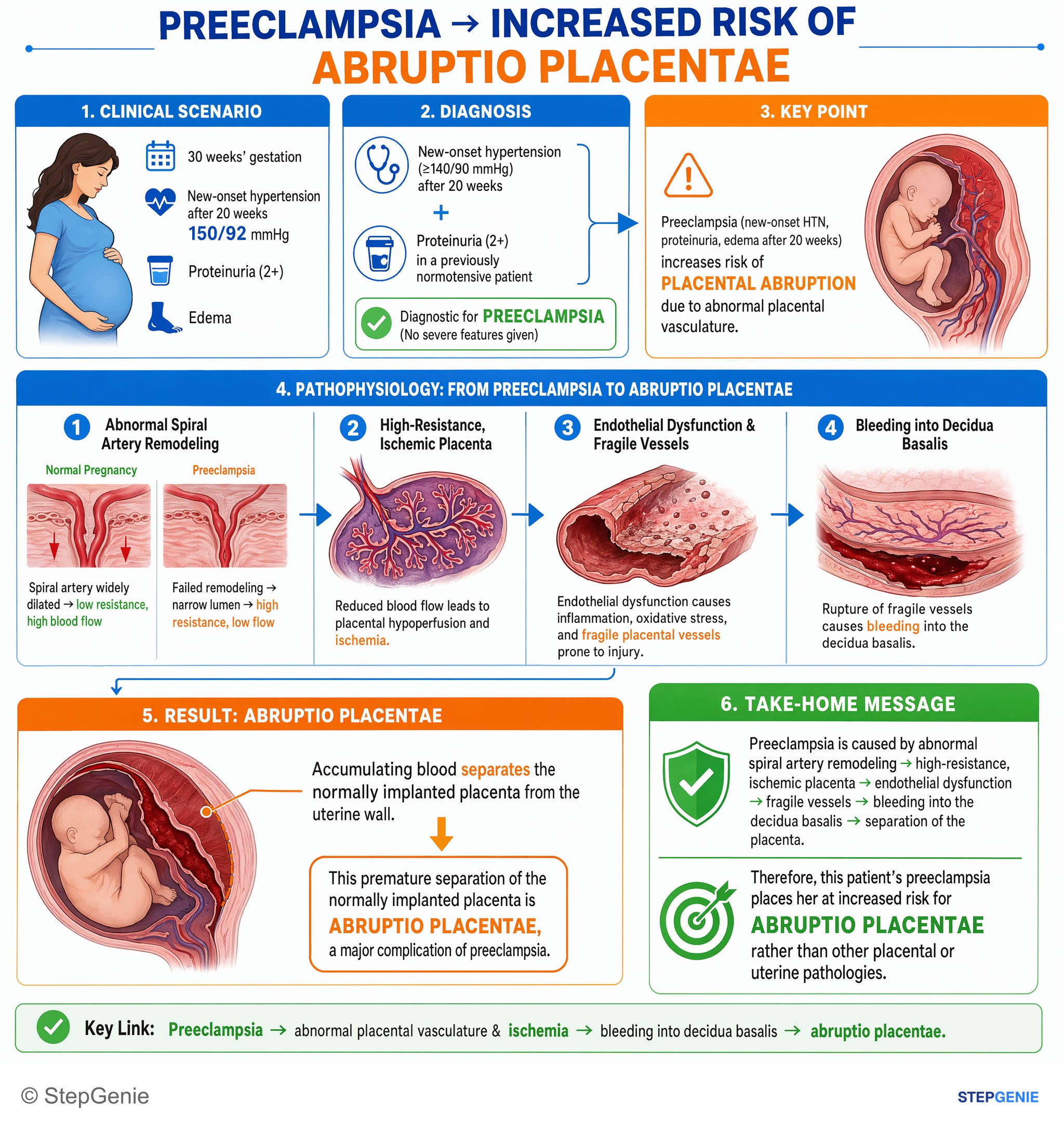
Preeclampsia (new-onset HTN, proteinuria, edema after 20 weeks) increases risk of placental abruption due to abnormal placental vasculature.
USMLE Step 2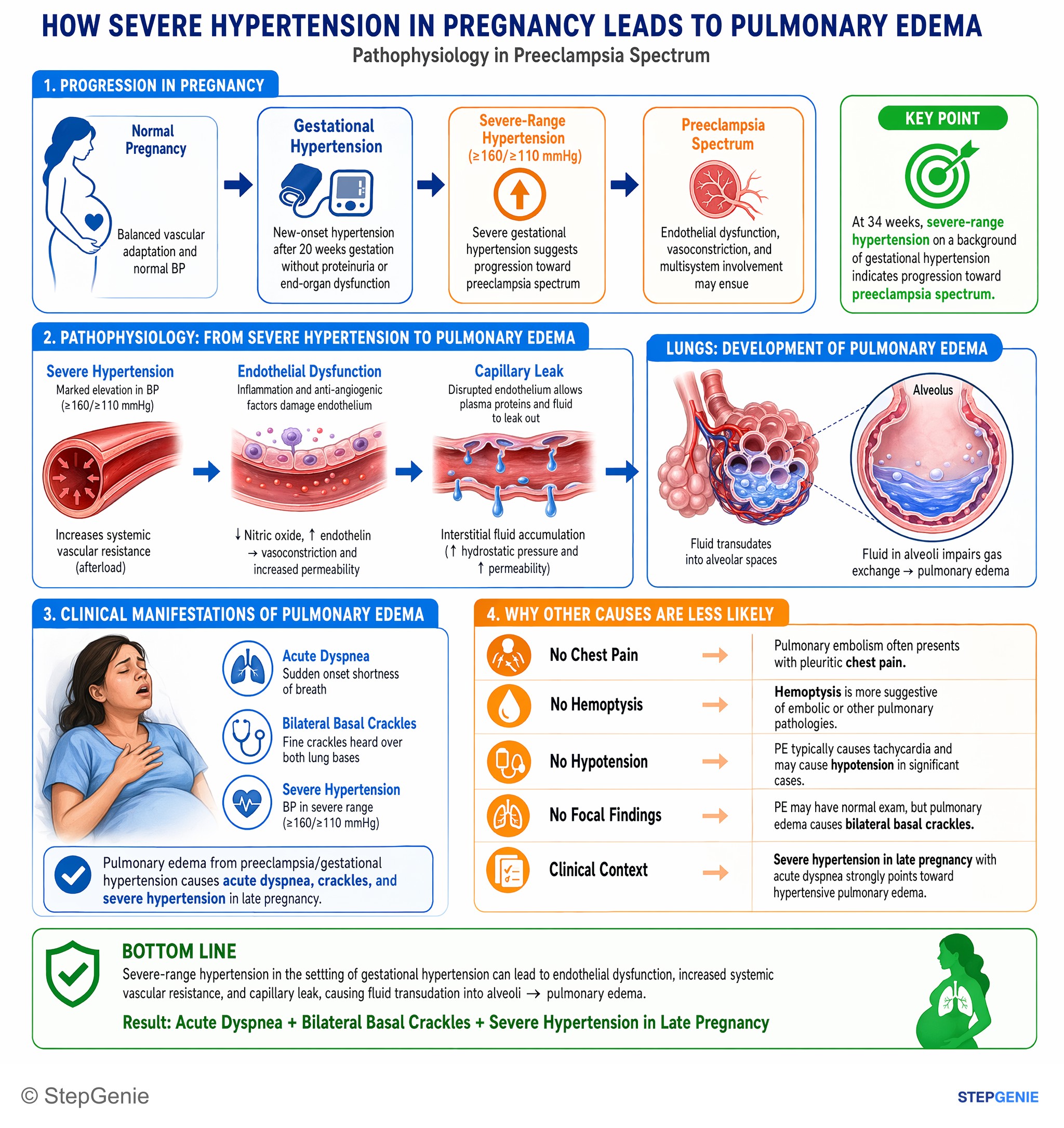
Pulmonary edema from preeclampsia/gestational hypertension causes acute dyspnea, crackles, and severe hypertension in late pregnancy.
USMLE Step 2Frequently Asked Questions
What actually causes preeclampsia on Step 1?
Preeclampsia is caused by abnormal placentation that leads to endothelial dysfunction. In normal pregnancy, trophoblasts remodel spiral arteries into high-capacitance, low-resistance vessels. In preeclampsia, trophoblastic invasion is shallow, so the arteries stay narrow and high-resistance, causing placental ischemia. The ischemic placenta releases anti-angiogenic and inflammatory factors such as increased sFlt-1, which lowers free VEGF and PlGF and drives vasospasm, capillary leak, and end-organ injury.
How do you diagnose preeclampsia if there is no proteinuria?
You can still diagnose preeclampsia without proteinuria if there is new-onset hypertension after 20 weeks plus end-organ dysfunction. The diagnosis requires blood pressure of at least 140/90 on two readings at least four hours apart in a previously normotensive patient, and then either proteinuria or findings like renal insufficiency, thrombocytopenia, impaired liver function, pulmonary edema, or new cerebral or visual symptoms.
How do you tell preeclampsia from eclampsia and HELLP syndrome?
Preeclampsia is new-onset hypertension after 20 weeks with proteinuria or end-organ dysfunction, while eclampsia is preeclampsia plus generalized tonic-clonic seizures not explained by another cause. HELLP is a severe variant marked by hemolysis, elevated liver enzymes, and low platelets. A vignette with hypertension, right upper quadrant pain, elevated AST or ALT, and thrombocytopenia strongly points to HELLP.
What are the severe features of preeclampsia that change management?
Severe features are findings that upgrade the diagnosis to preeclampsia with severe features and make management more urgent. These include blood pressure at least 160/110, platelets below 100,000, creatinine above 1.1 mg/dL or doubled from baseline, elevated AST or ALT with right upper quadrant or epigastric pain, pulmonary edema, and new-onset neurologic or visual symptoms such as headache, scotomata, hyperreflexia, or altered mental status.
What is the first-line treatment for eclampsia, and what is the definitive treatment for preeclampsia?
Magnesium sulfate is the first-line treatment for eclampsia, and delivery is the definitive treatment for preeclampsia. In eclampsia, the immediate steps are magnesium sulfate for seizure treatment and prophylaxis, stabilization of ABCs, control of severe blood pressure, and then delivery once the patient is stabilized. More broadly, the only definitive treatment for preeclampsia is delivery of the fetus and placenta.