Stimulant intoxication is one of those Step topics that shows up everywhere—psych, emergency medicine, cardiology, neuro—because cocaine and amphetamines can “rev” almost any organ system into failure. If you can quickly recognize the sympathomimetic toxidrome, know the dangerous complications (hyperthermia, arrhythmias, MI, stroke, seizures), and treat it correctly (benzos first), you’ll pick up easy points on both Step 1 and Step 2.
What counts as stimulant intoxication (Step definition)
Stimulant intoxication refers to acute, clinically significant maladaptive behavioral and physiologic changes after recent use of cocaine or amphetamines (including methamphetamine, MDMA).
Key idea: these drugs cause excess catecholamine activity → a classic sympathomimetic picture.
First Aid cross-reference (Psychiatry – Substance-related disorders):
- Cocaine intoxication: euphoria, agitation, mydriasis, diaphoresis, HTN, tachycardia, arrhythmias, chest pain; can cause MI.
- Amphetamine intoxication: similar to cocaine; can cause psychosis, stereotyped movements, hyperthermia.
Pathophysiology: how cocaine vs amphetamines drive the toxidrome
Cocaine
Primary mechanisms:
- Blocks reuptake of NE, DA, 5-HT (DAT/NET/SERT inhibition) → ↑ synaptic catecholamines.
- Voltage-gated Na⁺ channel blockade (local anesthetic effect) → can contribute to arrhythmias and wide-complex rhythms.
Clinical consequences to remember:
- Coronary vasoconstriction + ↑ HR/BP → myocardial oxygen supply-demand mismatch → MI (even in young people).
- Vasoconstriction elsewhere → ischemic stroke, bowel ischemia, placental abruption.
Amphetamines (incl. meth, MDMA)
Primary mechanisms:
- Increase release of NE and DA from presynaptic terminals and can reverse transporters → big catecholamine surge.
- Often longer-lasting than cocaine.
Clinical consequences:
- More prominent agitation, psychosis, and hyperthermia risk.
- MDMA adds serotonergic effects → risk of serotonin syndrome features and hyponatremia (via ↑ ADH + excessive water intake at raves).
High-yield clinical presentation (sympathomimetic toxidrome)
Core findings
Think: “FAST” plus psych:
- Fever (hyperthermia)
- Agitation/anxiety
- Sweating (diaphoresis)
- Tachycardia (and hypertension)
Common signs/symptoms:
- Mydriasis
- Tremor, hyperreflexia
- Chest pain, palpitations
- Headache
- Seizures
- Paranoia, panic, irritability, aggression
- Delusions / hallucinations (esp. amphetamines; cocaine can too)
Cocaine-specific classic associations (very testable)
- Formication (“cocaine bugs”): tactile hallucinations.
- Nasal septum perforation with chronic intranasal use.
- Crack cocaine: pulmonary complaints (cough, hemoptysis, “crack lung”).
Amphetamine-specific classic associations
- Stereotypies (repetitive movements), bruxism, skin picking.
- Meth mouth (poor dentition) (more Step 2-ish but recognizable).
Diagnosis: mostly clinical, but know what to order
Diagnosis is clinical (toxidrome recognition)
If you see:
- HTN + tachycardia + mydriasis + diaphoresis + agitation …you should immediately think sympathomimetic intoxication.
Helpful tests (especially for complications)
Order based on risk:
- EKG: ischemia, QT/QRS changes, arrhythmias.
- Troponin: cocaine-associated chest pain can be true MI.
- BMP: electrolytes (look for hyponatremia in MDMA), renal function.
- CK: rhabdomyolysis risk from agitation/hyperthermia.
- UA/toxicology screen: supports diagnosis, but don’t delay treatment.
- Temperature: hyperthermia is a killer complication; document and treat.
DDx you should separate on Step
| Toxidrome | Pupils | Skin | Bowel sounds | Mental status | Key differentiator |
|---|---|---|---|---|---|
| Sympathomimetic (cocaine/amphetamines) | Dilated | Diaphoretic | Normal/↑ | Agitated | “Hot + sweaty + fast” |
| Anticholinergic | Dilated | Dry | ↓ | Delirium | “Hot + dry” + urinary retention |
| Serotonin syndrome | Dilated | Diaphoretic | Hyperactive | Agitated | Clonus, hyperreflexia |
| NMS | Normal | Diaphoretic | Normal | Altered | Lead-pipe rigidity, antipsychotic use |
High-yield pearl: Diaphoresis points toward sympathomimetic/serotonin syndrome, not anticholinergic toxicity.
Treatment: the Step algorithm (what to do first, what NOT to do)
1) First-line: benzodiazepines
Benzodiazepines are first-line to reduce sympathetic outflow and prevent complications.
- Examples: lorazepam, diazepam
- Targets: agitation, tachycardia, hypertension, seizures
This is one of the most tested management points.
2) Cooling for hyperthermia
Hyperthermia can cause rhabdomyolysis, DIC, multiorgan failure.
- External cooling (ice packs, evaporative cooling)
- IV fluids; monitor CK, renal function
3) Treat severe hypertension/chest pain appropriately
Supportive + targeted therapy:
- Nitroglycerin for chest pain/vasospasm
- Consider calcium channel blockers for vasospasm (institution-dependent, but a common board-relevant option)
The beta-blocker warning (high yield)
Avoid pure beta-blockers in acute cocaine intoxication because of concern for unopposed alpha-adrenergic vasoconstriction → worsened HTN/coronary spasm.
If a beta-blocker is ever considered clinically, many prefer combined alpha/beta blockade (e.g., labetalol), but for USMLE purposes:
- Benzos + nitrates are the safe, test-friendly answers.
4) Seizures
- Benzodiazepines first
- Escalate per status epilepticus protocols if needed
5) If psychosis is severe
- Add an antipsychotic (e.g., haloperidol) cautiously, but still prioritize benzos and cooling.
- Watch QT prolongation and hyperthermia risk.
Complications you must be able to name (and connect to mechanism)
Cardiovascular
- MI (vasospasm + ↑ demand)
- Arrhythmias (catecholamines ± Na⁺ channel blockade with cocaine)
- Aortic dissection (severe hypertension)
- Sudden cardiac death
Neurologic
- Ischemic or hemorrhagic stroke
- Seizures
- Intracranial hemorrhage (severe hypertension)
Hyperthermia-related
- Rhabdomyolysis → AKI
- DIC
- Metabolic acidosis
Pregnancy
- Placental abruption (vasoconstriction + HTN)
Stimulant intoxication vs withdrawal (don’t mix these up)
| Feature | Intoxication (cocaine/amphetamines) | Withdrawal |
|---|---|---|
| Mood | Euphoria → anxiety/irritability/paranoia | Depression, anhedonia |
| Sleep | Insomnia | Hypersomnia |
| Appetite | Decreased | Increased appetite |
| Psychomotor | Agitation | Psychomotor retardation, fatigue |
| Step buzzwords | Mydriasis, diaphoresis, HTN, tachycardia | “Crash,” vivid dreams, suicidality concern |
High-yield: stimulant withdrawal is uncomfortable and can be dangerous due to suicidality, but it’s typically not the same autonomic instability picture as alcohol/benzo withdrawal.
HY associations & classic question stems
“Young patient with chest pain after partying”
- Think cocaine-induced coronary vasospasm/MI
- Workup: EKG, troponins
- Treatment: benzos + nitrates; avoid pure beta-blockers
“Agitated, sweaty, dilated pupils, hypertensive, hyperthermic”
- Think sympathomimetic intoxication
- Treatment: benzodiazepines + cooling + fluids
“Tactile hallucinations of bugs crawling”
- Cocaine (formication)
“Rave attendee with confusion + seizure + low sodium”
- MDMA → SIADH + polydipsia → hyponatremia
- Treat hyponatremia per severity (seizure = emergent management)
“Perforated nasal septum”
- Chronic intranasal cocaine use (vasoconstriction → ischemic necrosis)
Rapid Step 1 memory hooks (that actually help)
- Sympathomimetic = “hot and sweaty” (vs anticholinergic = hot and dry)
- Cocaine: reuptake blockade + Na⁺ channel blocker
- Amphetamines: increased release
- First-line treatment = benzodiazepines
- Cocaine + chest pain = benzos + nitro (not pure beta-blocker)
Mini self-check (3 quick questions)
-
A patient with agitation, mydriasis, diaphoresis, HTN, and tachycardia: what’s first-line?
→ Benzodiazepines -
Cocaine causes MI primarily via what mechanism?
→ Coronary vasospasm (plus ↑ O₂ demand) -
MDMA user with seizure and hyponatremia: what complication explains this?
→ SIADH + excess water intake (acute hyponatremia)
Visual explanations from the StepGenie QBank
Infographics StepGenie drew to explain questions in its own QBank, matched to this article's topic. Each caption is the takeaway of the question it explains.
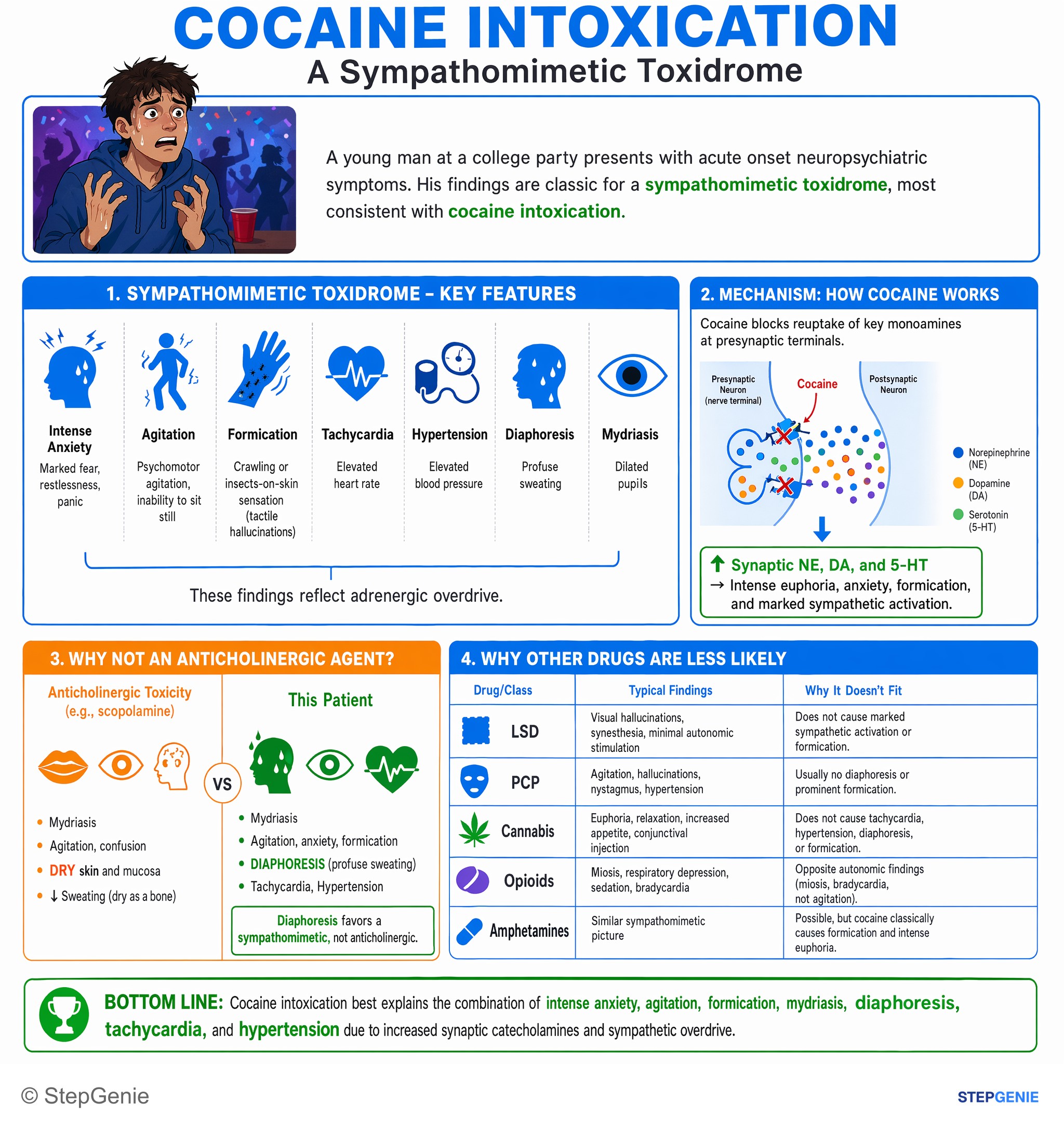
Cocaine intoxication causes intense anxiety, formication (crawling sensation), mydriasis, diaphoresis, tachycardia, hypertension from…
USMLE Step 1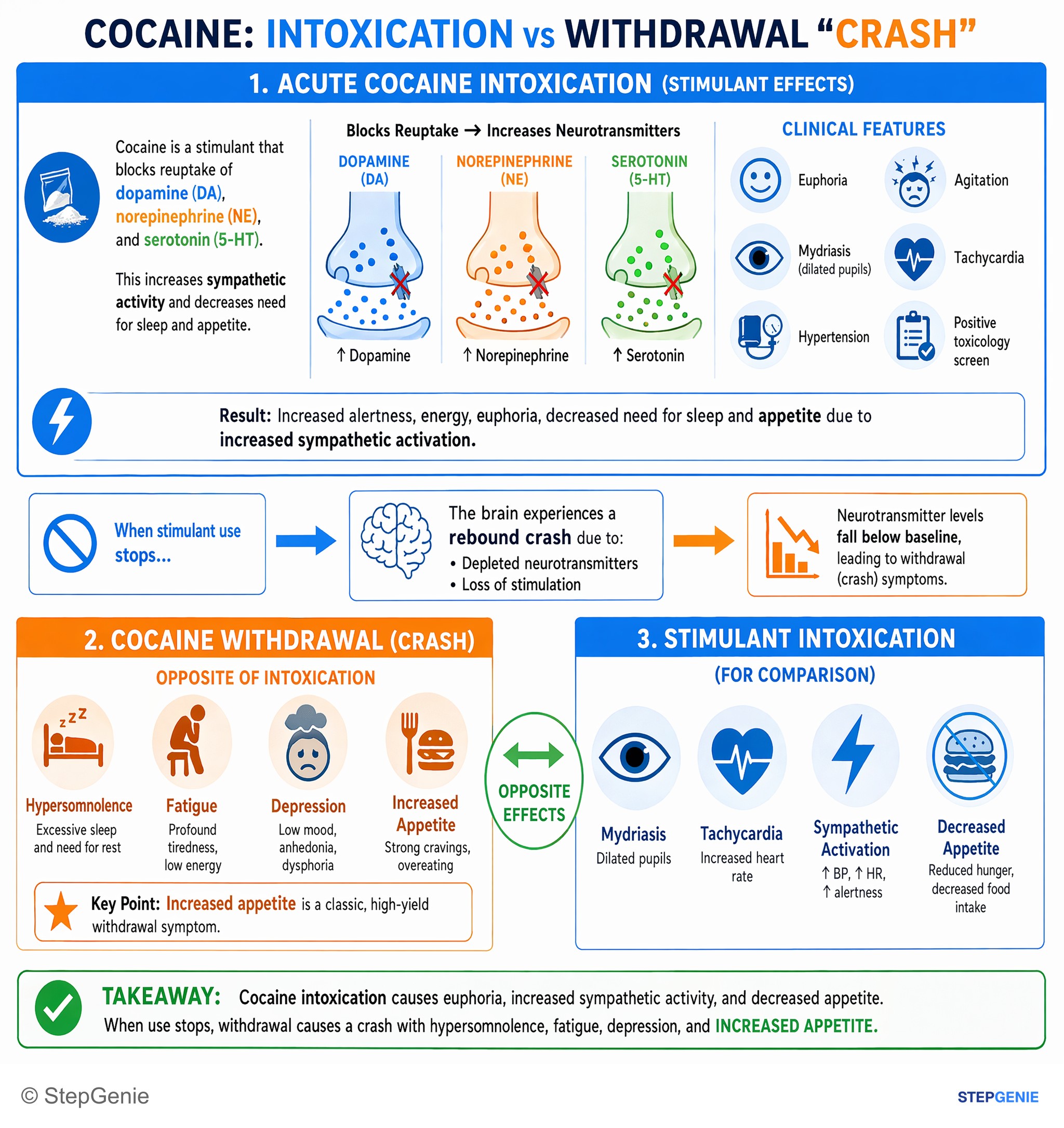
Cocaine withdrawal causes crash: hypersomnolence, fatigue, depression, increased appetite, opposite of stimulant intoxication’s decreased…
USMLE Step 1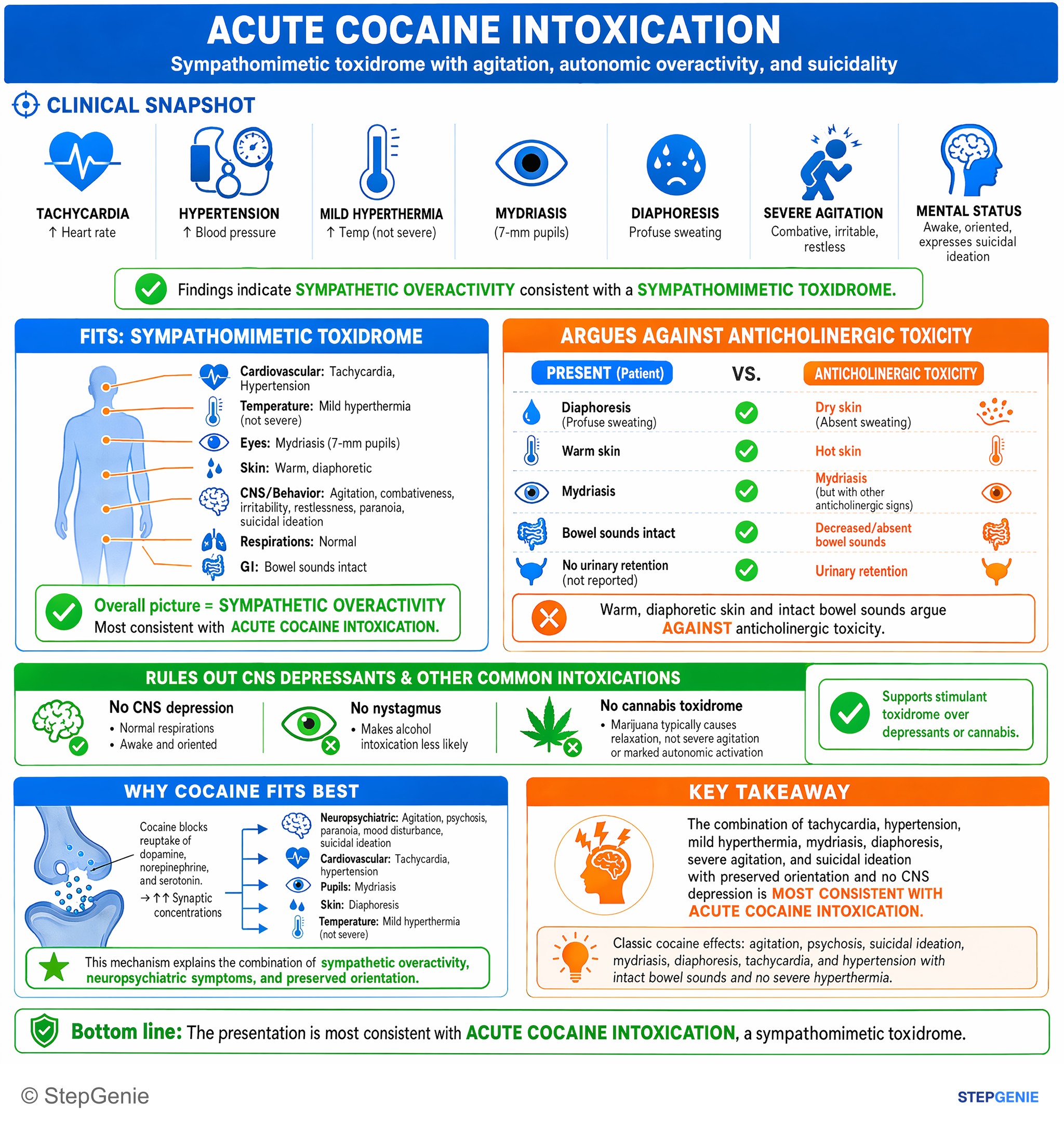
Acute cocaine intoxication causes agitation, psychosis, suicidal ideation, mydriasis, diaphoresis, tachycardia, and hypertension with…
USMLE Step 2Frequently Asked Questions
What is the first-line treatment for stimulant intoxication from cocaine or amphetamines?
Benzodiazepines are the first-line treatment for stimulant intoxication. They reduce sympathetic outflow and help control the most dangerous acute features, including agitation, tachycardia, hypertension, and seizures. Common examples are lorazepam and diazepam. This is a high-yield management point because early sedation helps prevent progression to serious complications such as hyperthermia, arrhythmias, and further cardiovascular stress.
How do you recognize the sympathomimetic toxidrome on exam?
The classic sympathomimetic toxidrome is hypertension, tachycardia, mydriasis, diaphoresis, and agitation. Many patients also have fever or hyperthermia, anxiety, tremor, hyperreflexia, chest pain, palpitations, headache, seizures, or paranoia. A useful memory aid is “hot, sweaty, and fast.” In the right clinical setting, this pattern should immediately suggest acute stimulant intoxication from cocaine or amphetamines.
How do you tell sympathomimetic intoxication from anticholinergic toxicity or serotonin syndrome?
Sympathomimetic intoxication is distinguished by dilated pupils, diaphoresis, agitation, and normal or increased bowel sounds. Anticholinergic toxicity can also cause mydriasis and hyperthermia, but the skin is dry, bowel sounds are decreased, and urinary retention is a clue. Serotonin syndrome is also sweaty and agitated, but hyperactive bowel sounds, clonus, and hyperreflexia point more strongly toward serotonin excess than a pure stimulant toxidrome.
Why can cocaine cause myocardial infarction even in a young patient?
Cocaine can cause myocardial infarction because it produces coronary vasoconstriction while also increasing heart rate and blood pressure. That combination creates a myocardial oxygen supply-demand mismatch, which can trigger ischemia and infarction even in younger patients. Cocaine also blocks sodium channels, which can contribute to arrhythmias and wide-complex rhythms, adding to its cardiovascular danger during acute intoxication.
Why should you avoid pure beta-blockers in acute cocaine intoxication?
Pure beta-blockers are avoided in acute cocaine intoxication because of concern for unopposed alpha-adrenergic vasoconstriction. That can worsen hypertension and coronary vasospasm rather than relieve them. For board-style management, the safer test-friendly approach is benzodiazepines first, with nitrates for chest pain or vasospasm. If beta-blockade is ever considered clinically, combined alpha/beta blockade is generally preferred over a pure beta-blocker.