Opioid questions on Step 1 are “free points” if you can (1) recognize intoxication vs withdrawal, (2) know naloxone cold, and (3) understand maintenance therapy (methadone vs buprenorphine vs naltrexone). This post is your high-yield, exam-ready deep dive—with the classic associations and the traps that love to show up on test day.
What counts as an opioid?
Opioids include:
- Heroin
- Morphine
- Codeine
- Oxycodone, hydrocodone
- Fentanyl
- Methadone
- Loperamide (yes—peripheral opioid agonist; abuse can still cause issues)
- Buprenorphine (partial agonist; used for OUD)
First Aid cross-reference (Psychiatry—Substance Use Disorders): Opioid intoxication/withdrawal, methadone/buprenorphine/naltrexone, naloxone.
Definition: Opioid Use Disorder (OUD)
OUD is a problematic pattern of opioid use leading to clinically significant impairment or distress.
DSM-5 pattern recognition (Step-style)
You’ll often see:
- Craving
- Tolerance
- Withdrawal
- Time spent obtaining/using/recovering
- Failure to fulfill obligations
- Continued use despite harm (medical, legal, social)
High-yield nuance: DSM-5 criteria are not typically tested verbatim on Step 1, but tolerance/withdrawal + functional impairment often appear in vignettes.
Pathophysiology (why opioids cause what they cause)
Opioids primarily act at -opioid receptors (Gi-coupled):
- ↓ Adenylyl cyclase → ↓ cAMP
- ↓ Ca influx presynaptically → ↓ neurotransmitter release (e.g., substance P, glutamate)
- ↑ K efflux postsynaptically → hyperpolarization
Key physiologic effects (tie these to symptoms)
- Analgesia (spinal cord + brain)
- Euphoria/sedation (reward pathways; disinhibition of dopamine)
- Respiratory depression (brainstem—medullary respiratory centers)
- Constipation (↓ GI motility)
- Miosis (parasympathetic outflow)
HY mechanism: Opioids can increase dopamine in the nucleus accumbens by inhibiting GABAergic neurons that normally suppress dopamine release (disinhibition).
Clinical presentation: Intoxication vs Withdrawal
Opioid intoxication (think: “down and pinpoint”)
Classic triad:
- CNS depression
- Respiratory depression
- Miosis (pinpoint pupils)
Other common findings:
- Bradycardia, hypotension
- Decreased bowel sounds/constipation
- Track marks (IV use), abscesses, endocarditis risk
- Pulmonary edema (can occur in overdose)
Step trap: “Pinpoint pupils” isn’t always present
- Severe hypoxia can cause mydriasis later.
- Co-ingestions can muddy pupil findings.
Opioid withdrawal (think: “up and miserable”)
Withdrawal is usually not life-threatening (unlike alcohol/benzos), but it is intensely uncomfortable.
Symptoms:
- Rhinorrhea, lacrimation
- Yawning
- Piloerection (“cold turkey”), chills
- Myalgias
- Diarrhea, abdominal cramping
- Nausea/vomiting
- Mydriasis
- Tachycardia, hypertension
- Anxiety, irritability
Mnemonic vibe: “Dilated pupils + diarrhea + dysphoria.”
Timing (high-yield)
- Short-acting opioids (heroin): withdrawal begins ~6–12 hours
- Long-acting (methadone): withdrawal begins ~24–48 hours, lasts longer
Diagnosis: How it shows up in vignettes
Overdose diagnosis is clinical
If the stem screams opioid overdose (somnolence + slow breathing ± pinpoint pupils), treat immediately—don’t wait.
Likely clues:
- RR is low (e.g., 6/min), patient difficult to arouse
- Needle nearby / pill bottles / fentanyl patches
- Cyanosis
Labs you might see (Step 1 logic)
- ABG: respiratory acidosis (hypoventilation)
- Urine drug screen: may miss synthetic opioids (e.g., fentanyl) depending on assay
Treatment: The Step 1 must-knows
1) Acute opioid overdose: Naloxone
Naloxone = opioid receptor antagonist (competitive; highest yield at receptors)
When to give it
- Suspected opioid toxicity with respiratory depression or significant CNS depression
What happens after naloxone?
- Rapid reversal of respiratory/CNS depression
- Can precipitate acute withdrawal in dependent patients (agitation, vomiting, tachycardia)
HY pitfall: Duration mismatch
Naloxone has a short half-life, so recurrent respiratory depression can occur—especially with long-acting opioids (methadone, extended-release oxycodone) or potent fentanyl analogs.
Practical implication tested on boards:
- Monitor and redose or infusion if needed.
2) Long-term management of OUD (maintenance + harm reduction)
Medication for opioid use disorder (MOUD) saves lives
Expect Step questions asking which med decreases mortality/relapse.
Core options
- Methadone (full agonist)
- Buprenorphine (partial agonist; antagonist)
- Naltrexone (opioid antagonist; for relapse prevention after detox)
Methadone (high-yield deep dive)
What it is: Full -opioid receptor agonist used for maintenance therapy and chronic pain.
Why it works for OUD:
- Long-acting → prevents withdrawal
- Reduces cravings
- Blunts euphoric effects of other opioids via receptor occupancy
Where it’s given (classic board point):
- Often through specialized opioid treatment programs (more regulated than buprenorphine)
Major adverse effects (memorize)
- Respiratory depression (especially when starting or mixing sedatives)
- QT prolongation → torsades de pointes
- Constipation, sedation
HY association: Methadone + QT prolongation is a recurring Step fact. If you see syncope + prolonged QT on ECG in a patient on methadone, think torsades risk.
Buprenorphine (quick contrast)
Partial agonist at receptor → has a ceiling effect on respiratory depression.
Why Step loves it:
- Safer in overdose than full agonists
- Can be prescribed in office-based settings (less restrictive than methadone in many contexts)
Pearl: If started too soon after full agonist use, buprenorphine can precipitate withdrawal (it displaces full agonists but provides less agonism).
Naltrexone (where it fits)
Opioid receptor antagonist used for relapse prevention.
High-yield rule:
- Must be opioid-free before starting (otherwise precipitated withdrawal)
Also used for alcohol use disorder (boards like cross-linking).
Quick comparison table (Step-friendly)
| Medication | Receptor action | Best use | Key adverse effects / pearls |
|---|---|---|---|
| Naloxone | Competitive antagonist ( > , ) | Acute overdose | Short half-life → re-dose; precipitates withdrawal |
| Methadone | Full agonist | Maintenance, chronic pain | QT prolongation, respiratory depression |
| Buprenorphine | Partial agonist; antagonist | Maintenance (often first-line) | Ceiling effect; can precipitate withdrawal if started early |
| Naltrexone | Antagonist | Relapse prevention (after detox) | Must be opioid-free first; also AUD |
High-yield associations & classic Step stems
1) Overdose vignette
Stem: Somnolent, RR 6/min, pinpoint pupils, needle nearby
Answer: Naloxone (and airway/ventilation support)
2) “He wants to quit heroin and avoid withdrawal”
Best long-term: MOUD (methadone or buprenorphine)
Not just “detox and counseling” as sole therapy (relapse risk high)
3) Methadone adverse effect
Stem: On methadone maintenance, episodes of syncope; ECG shows prolonged QT
Answer: Torsades risk (QT prolongation)
4) Withdrawal vs intoxication pupil clue
- Intoxication: miosis
- Withdrawal: mydriasis
5) Opioids and constipation
Stem: Chronic opioid use + abdominal distention, no bowel movement
Concept: Opioids decrease gut motility (often treated clinically with stimulant laxatives/peripherally acting antagonists—Step more often tests the association than the specific drug)
First Aid-style rapid review (what to memorize)
- Opioid intoxication: CNS depression + respiratory depression + miosis
- Opioid withdrawal: mydriasis, lacrimation/rhinorrhea, yawning, piloerection, diarrhea, cramps, aches
- Naloxone: acute reversal; short duration
- Methadone: maintenance; QT prolongation
- Buprenorphine: partial agonist; ceiling effect; can precipitate withdrawal
- Naltrexone: antagonist for relapse prevention; must detox first
Mini self-check (1-minute)
-
Patient overdosed on heroin, improved after naloxone, then worsens again 45 minutes later. Why?
Naloxone wears off before the opioid—needs repeat dosing/infusion and monitoring. -
Which maintenance med is associated with QT prolongation?
Methadone. -
Withdrawal pupil size?
Dilated (mydriasis).
Visual explanations from the StepGenie QBank
Infographics StepGenie drew to explain questions in its own QBank, matched to this article's topic. Each caption is the takeaway of the question it explains.
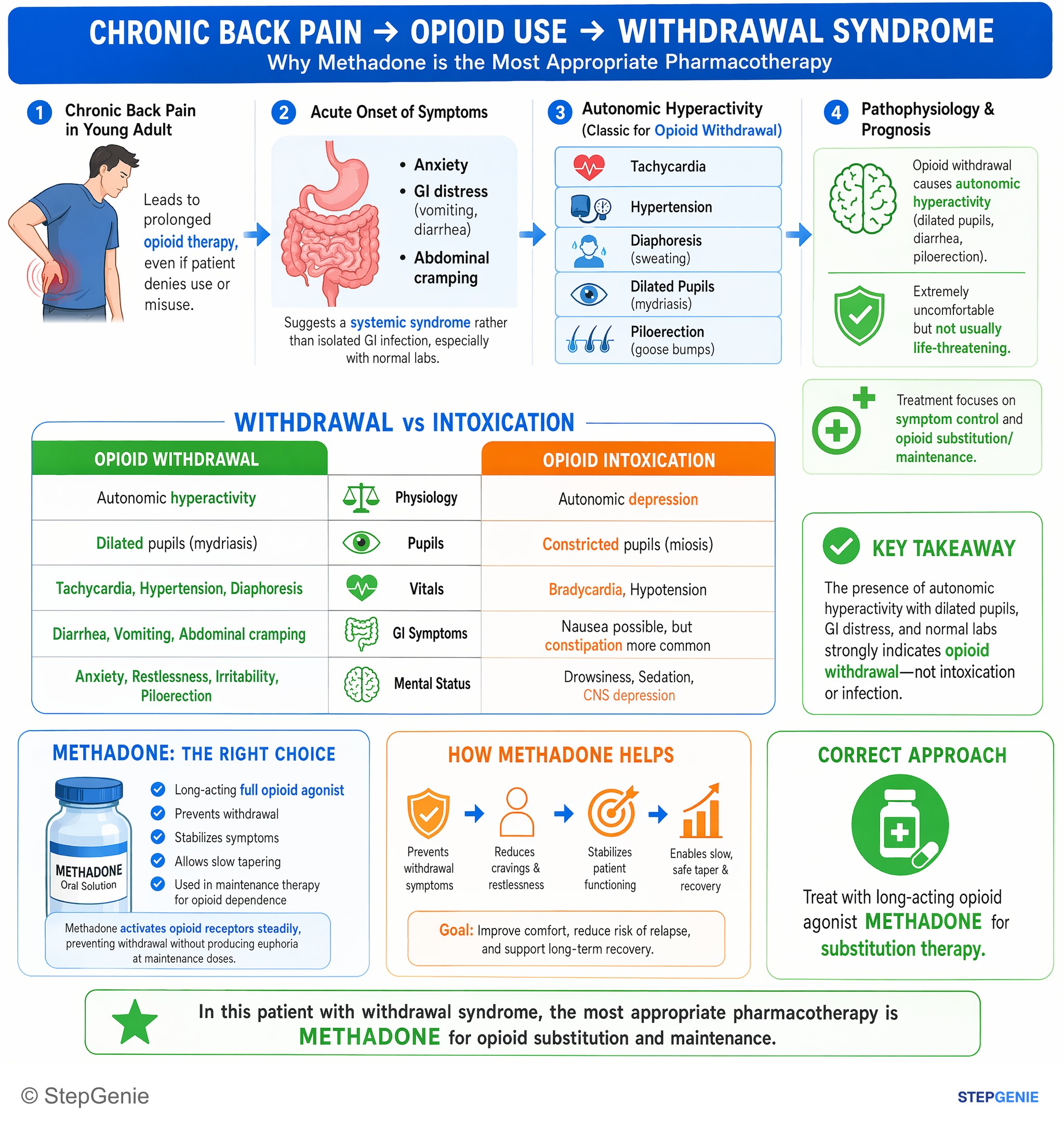
Opioid withdrawal causes autonomic hyperactivity (dilated pupils, diarrhea, piloerection); treat with long-acting opioid agonist methadone…
USMLE Step 2Frequently Asked Questions
How do you tell opioid intoxication from opioid withdrawal on Step 1?
Opioid intoxication causes a down-and-pinpoint picture, while withdrawal causes an up-and-miserable picture. Intoxication classically presents with CNS depression, respiratory depression, and miosis, often with bradycardia, hypotension, and constipation. Withdrawal is usually not life-threatening but causes rhinorrhea, lacrimation, yawning, piloerection, myalgias, diarrhea, abdominal cramping, mydriasis, tachycardia, hypertension, anxiety, and irritability.
Why do opioids cause respiratory depression, constipation, and pinpoint pupils?
Opioids cause these effects by acting mainly at mu-opioid receptors, which are Gi-coupled. This decreases adenylyl cyclase and cAMP, reduces presynaptic calcium influx to lower neurotransmitter release, and increases postsynaptic potassium efflux to hyperpolarize neurons. Clinically, that produces respiratory depression in medullary respiratory centers, decreased GI motility causing constipation, and miosis through parasympathetic outflow.
When should naloxone be given for suspected opioid overdose?
Naloxone should be given immediately when opioid toxicity is suspected and the patient has respiratory depression or significant CNS depression. A classic vignette is a somnolent patient with very slow breathing, sometimes with pinpoint pupils, cyanosis, or nearby needles or pill bottles. Overdose is treated clinically, so if the presentation strongly suggests opioids, you do not wait before reversing it.
Why can opioid overdose come back after naloxone wears off?
Recurrent opioid toxicity can happen because naloxone has a short half-life. It rapidly reverses respiratory and CNS depression, but longer-acting opioids like methadone or extended-release oxycodone, as well as potent fentanyl analogs, can outlast it. That is why patients need monitoring after reversal and may require repeat dosing or a naloxone infusion if respiratory depression returns.
What is the difference between methadone, buprenorphine, and naltrexone for opioid use disorder?
Methadone is a full mu-opioid agonist, buprenorphine is a partial mu agonist with kappa antagonism, and naltrexone is an opioid antagonist used for relapse prevention after detox. Methadone helps by preventing withdrawal, reducing cravings, and blunting euphoria from other opioids. Buprenorphine has a ceiling effect on respiratory depression, making overdose safer than with full agonists.