Carpal tunnel syndrome (CTS) is one of those USMLE classics that shows up in every format: a tired intern with nocturnal hand tingling, an EMG finding, a positive provocative test, or a “which muscle is weak?” anatomy stem. The good news: it’s extremely pattern-based—if you memorize the pattern, you’ll crush the question in seconds.
The 10-second mental picture (visual hack)
“CAR-PAL TUNNEL” = a car tunnel squishing the MEDIAN “M” nerve
Imagine a car driving through a tunnel. Inside the tunnel is a big letter M (for Median nerve) getting compressed under a tight roof (the flexor retinaculum).
One-liner:
Carpal tunnel syndrome = compression of the median nerve under the flexor retinaculum → pain/paresthesia in lateral 3½ digits + thenar weakness.
What’s actually in the tunnel? (high-yield anatomy)
Contents of the carpal tunnel
| Structure | In carpal tunnel? | High-yield note |
|---|---|---|
| Median nerve | Yes | The nerve that gets compressed in CTS |
| Flexor digitorum superficialis tendons | Yes | Finger flexion |
| Flexor digitorum profundus tendons | Yes | DIP flexion |
| Flexor pollicis longus tendon | Yes | Thumb IP flexion |
| Flexor carpi radialis tendon | No (separate compartment) | Common trap answer |
| Ulnar nerve | No (Guyon canal) | Ulnar neuropathy ≠ CTS |
Roof: Flexor retinaculum (transverse carpal ligament)
The symptom “map” you should see instantly
Sensory: lateral 3½ digits
- Thumb, index, middle, lateral half of ring finger
- Often worse at night (patients wake up and “shake out” the hand)
- Palmar cutaneous branch is spared (important nuance):
- Palmar cutaneous branch of the median nerve branches before the tunnel
- So thenar eminence sensation may be preserved in CTS
Motor: thenar muscles
- Weakness of:
- Thumb opposition (most testable)
- Thumb abduction (abductor pollicis brevis)
- Severe/late finding:
- Thenar atrophy (“ape hand” posture can be described)
Fast muscle mnemonic:
LOAF = median nerve in the hand
- Lumbricals (1st/2nd)
- Opponens pollicis
- Abductor pollicis brevis
- Flexor pollicis brevis (superficial head)
Provocative tests (Step-friendly)
| Test | How it’s done | Positive result |
|---|---|---|
| Phalen | Wrist flexion held ~60 sec | Reproduces median-distribution paresthesias |
| Tinel | Tapping over carpal tunnel | Tingling in median distribution |
Clinical vignette shorthand: “Night tingling in thumb/index/middle + positive Phalen” → CTS.
Risk factors you should memorize (common USMLE stems)
- Repetitive wrist use (assembly line, typing, vibrating tools)
- Pregnancy (fluid retention)
- Hypothyroidism (myxedematous tissue)
- Diabetes mellitus
- Rheumatoid arthritis (synovial swelling)
- Amyloidosis (classically in dialysis patients)
- Obesity
Differentials you must not mix up
CTS vs ulnar neuropathy (Guyon canal)
- CTS: lateral 3½ digits + thenar weakness
- Ulnar neuropathy: medial 1½ digits + interossei weakness (finger ab/adduction), possible “clawing”
CTS vs cervical radiculopathy (C6/C7)
- Radiculopathy often includes:
- Neck pain
- Dermatomal symptoms extending proximally
- Reflex changes (e.g., biceps/triceps depending on level)
CTS vs pronator teres syndrome (median nerve compression in forearm)
- More proximal forearm pain
- Often worse with repetitive pronation
- Palmar cutaneous involvement can occur (unlike classic CTS)
Diagnosis & management (what Step expects)
Diagnosis
- Clinical is often enough (classic symptoms + exam)
- Nerve conduction studies/EMG:
- Confirm diagnosis
- Useful for atypical cases or pre-op planning
First-line treatment
- Neutral-position wrist splinting (especially at night)
- Activity modification / ergonomics
- NSAIDs (symptomatic relief)
- Corticosteroid injection (can be both diagnostic and therapeutic)
Definitive treatment
- Surgical decompression (cutting flexor retinaculum) for:
- Thenar weakness/atrophy
- Persistent symptoms despite conservative therapy
- Severe findings on studies
Rapid-fire USMLE “gotchas”
- Thenar eminence sensation spared in CTS (palmar cutaneous branch bypasses tunnel).
- Opposition weakness = thenar involvement = median nerve.
- Flexor retinaculum is the compressing structure.
- Ulnar nerve is not in the carpal tunnel (it’s in Guyon canal).
Shareable memory anchor (the whole thing in one snapshot)
CAR in a TUNNEL crushes the big “M”:
Median nerve under flexor retinaculum → nocturnal tingling of lateral 3½ digits + thenar weakness (loss of opposition).
Visual explanations from the StepGenie QBank
Infographics StepGenie drew to explain questions in its own QBank, matched to this article's topic. Each caption is the takeaway of the question it explains.
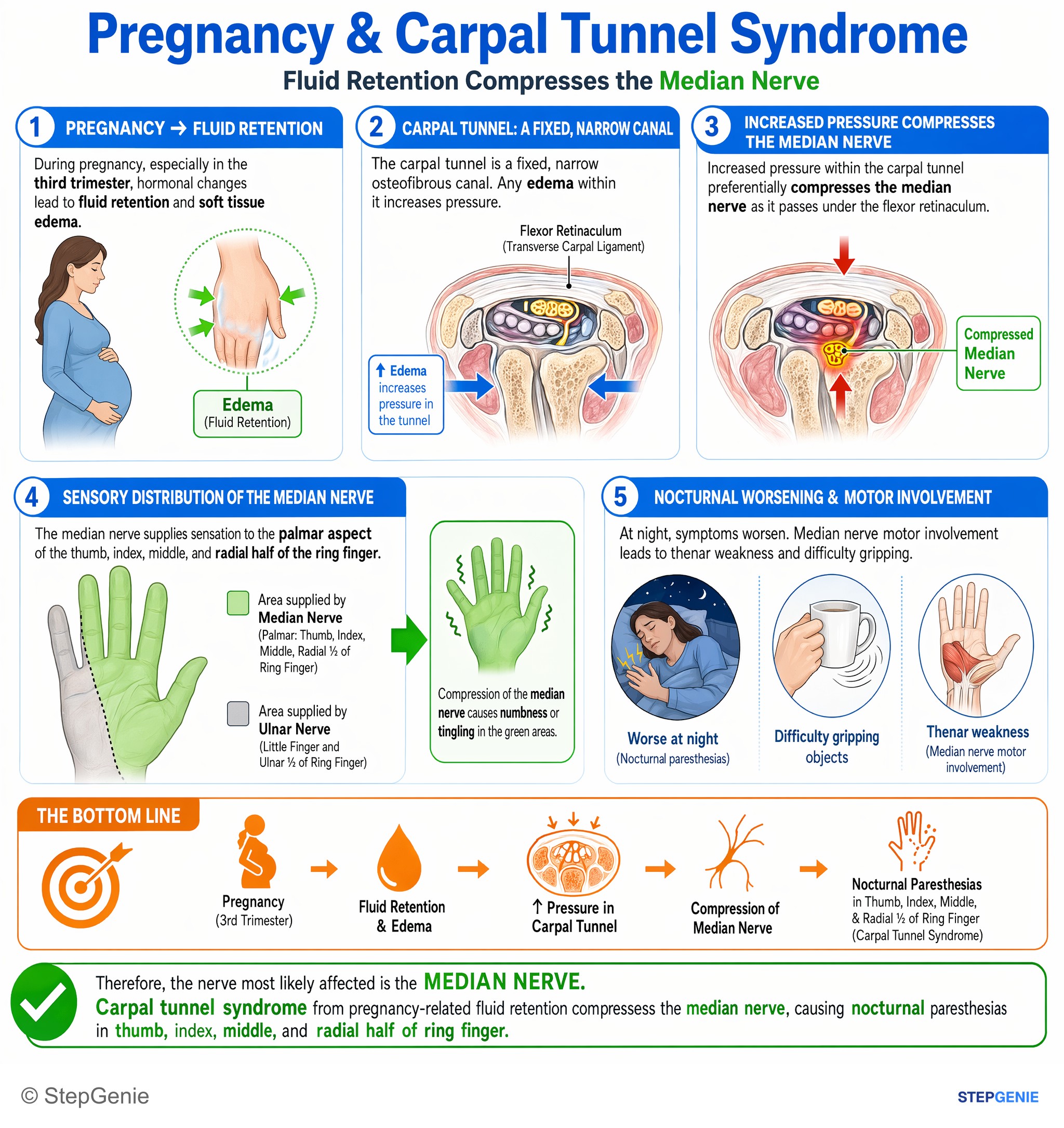
Carpal tunnel syndrome from pregnancy-related fluid retention compresses the median nerve, causing nocturnal paresthesias in thumb, index…
USMLE Step 1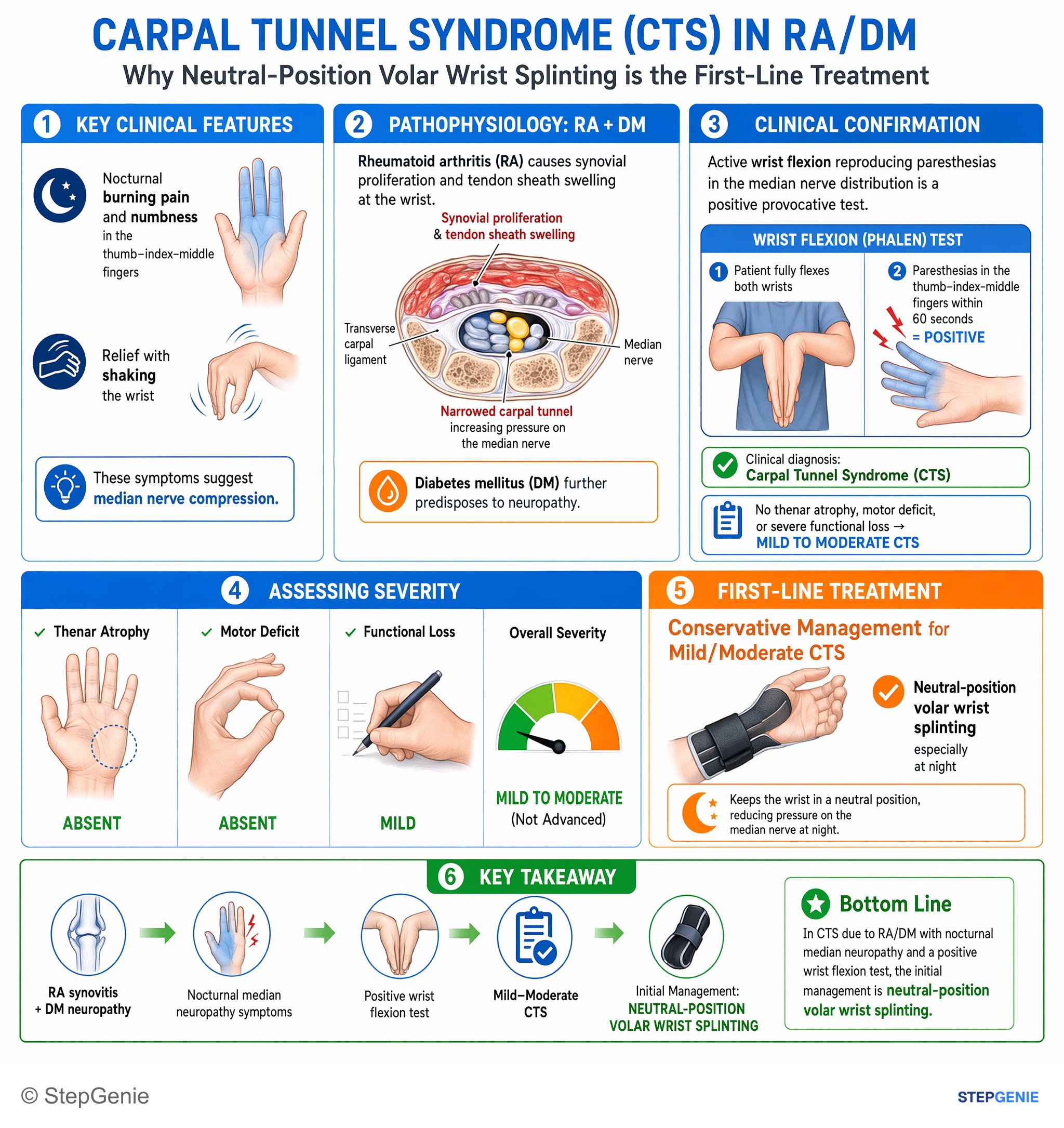
Carpal tunnel syndrome from RA/DM: nocturnal median neuropathy, positive wrist flexion test; initial management is neutral-position volar…
USMLE Step 2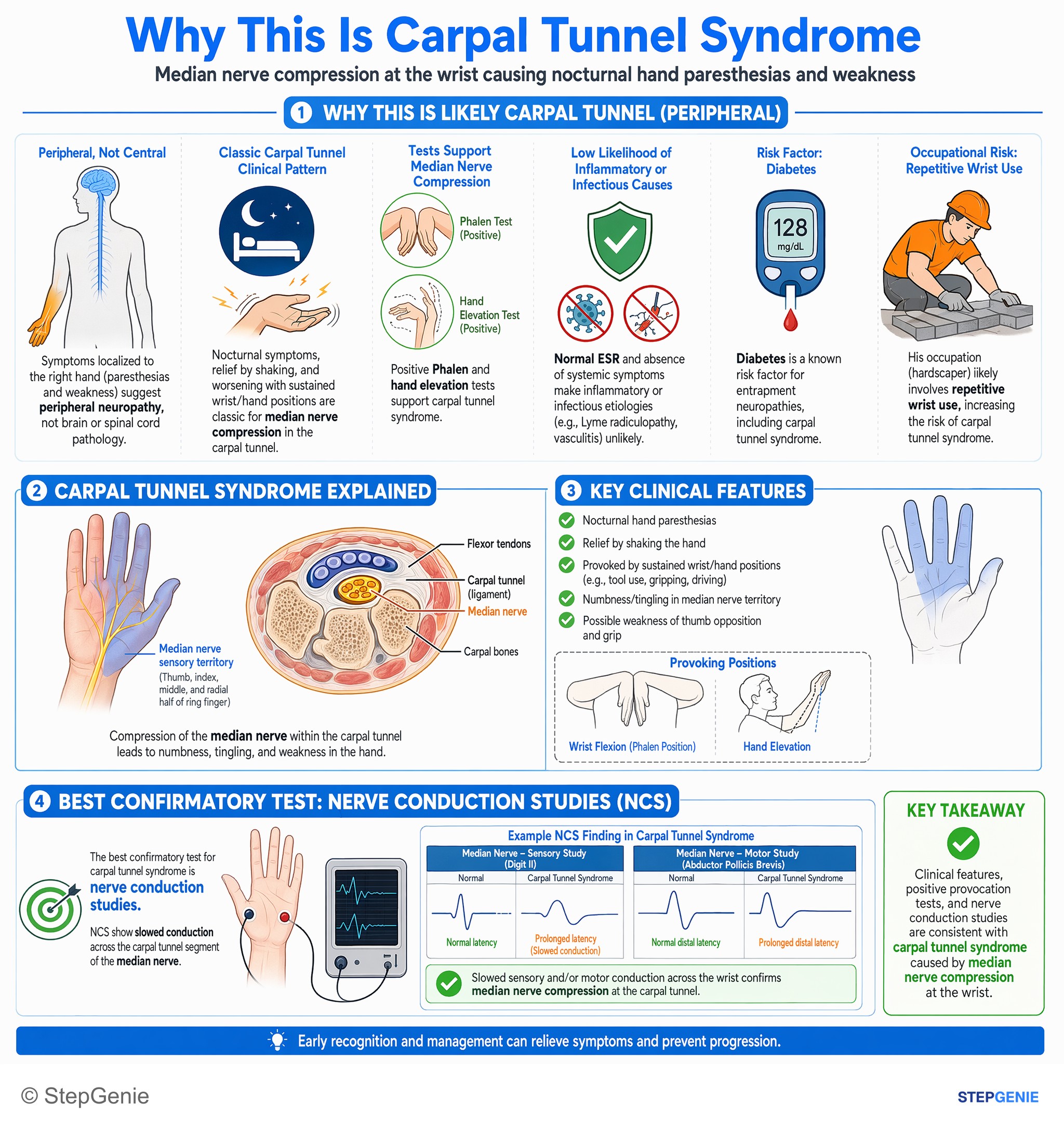
Carpal tunnel syndrome from median nerve compression presents with nocturnal hand paresthesias and positive Phalen/hand elevation tests…
USMLE Step 2Frequently Asked Questions
What nerve is compressed in carpal tunnel syndrome, and where does the compression happen?
Carpal tunnel syndrome is compression of the median nerve under the flexor retinaculum. The median nerve passes through the carpal tunnel along with flexor digitorum superficialis, flexor digitorum profundus, and flexor pollicis longus tendons. The flexor retinaculum forms the roof of the tunnel, and tightening in this space produces the classic sensory and motor findings of CTS.
What sensory and motor findings point to carpal tunnel syndrome?
The classic pattern is pain or paresthesia in the lateral 3½ digits with thenar weakness. That means symptoms affect the thumb, index, middle, and lateral half of the ring finger, often worse at night. Motor involvement typically shows weak thumb opposition and thumb abduction, and severe or late cases can develop thenar atrophy or an ape-hand posture.
Why is thenar eminence sensation often spared in carpal tunnel syndrome?
Thenar eminence sensation is often spared because the palmar cutaneous branch of the median nerve branches off before the carpal tunnel. Since that sensory branch bypasses the tunnel, compression within the tunnel may still cause numbness or tingling in the lateral 3½ digits while leaving sensation over the thenar eminence preserved. This is a useful clue when distinguishing classic CTS from other median neuropathies.
How do you tell carpal tunnel syndrome from ulnar neuropathy or pronator teres syndrome?
Carpal tunnel syndrome causes symptoms in the lateral 3½ digits with thenar weakness, while ulnar neuropathy affects the medial 1½ digits and causes interossei weakness with impaired finger abduction and adduction. Pronator teres syndrome is more proximal, with forearm pain, often worse with repetitive pronation, and it can involve the palmar cutaneous branch, unlike classic CTS.
What is the first-line treatment for carpal tunnel syndrome, and when do you do surgery?
First-line treatment is neutral-position wrist splinting, especially at night, along with activity modification and ergonomics. NSAIDs can provide symptomatic relief, and corticosteroid injection can be both diagnostic and therapeutic. Surgical decompression by cutting the flexor retinaculum is used for thenar weakness or atrophy, persistent symptoms despite conservative treatment, or severe findings on nerve studies.