Bacterial meningitis questions are the ultimate “don’t just pattern-match” trap. The stem gives you fever + headache + neck stiffness, but the answer choices force you to prove you understand CSF patterns, likely organisms by age/risk factor, and which therapies/timelines actually change outcomes. Let’s walk through a classic vignette, nail the correct answer, and then dismantle every distractor like you would in a real q-bank review.
Tag: Neurology > CNS Tumors & Infections
The Clinical Vignette (Q-bank style)
A 19-year-old college freshman is brought to the ED for severe headache, fever, and confusion for 12 hours. He has photophobia and neck stiffness. His roommate says he was “fine yesterday” but became progressively lethargic today. Vitals: T 39.4°C (103°F), HR 120, BP 100/60. Exam: positive Kernig sign, petechial rash on the trunk.
A lumbar puncture is performed. CSF shows:
- Opening pressure: elevated
- WBC: 2,000/µL (predominantly neutrophils)
- Protein: high
- Glucose: low (CSF glucose 25 mg/dL; serum glucose 100 mg/dL)
Which of the following is the most appropriate next step in management?
A. IV acyclovir
B. IV ceftriaxone + vancomycin + dexamethasone (give immediately)
C. Amphotericin B
D. Oral rifampin only for the patient
E. Start prednisone after cultures return
The Correct Answer: B. IV ceftriaxone + vancomycin + dexamethasone — immediately
This is acute bacterial meningitis, with a classic neutrophilic CSF, low glucose, high protein, and elevated opening pressure. The petechial rash and college dorm setting point strongly to Neisseria meningitidis, but you still treat empirically because delays are dangerous and resistance patterns matter.
What you do right now (Step 1/2 high-yield algorithm)
Do not wait for culture results. If bacterial meningitis is suspected:
- Blood cultures (if feasible, but don’t delay antibiotics)
- Empiric antibiotics immediately
- Dexamethasone (ideally before or with the first antibiotic dose)
Why ceftriaxone + vancomycin?
Empiric therapy in adolescents/young adults must cover:
- N. meningitidis
- S. pneumoniae (including penicillin/cephalosporin-resistant strains → vancomycin helps)
Common empiric regimen (age 2–50):
- Ceftriaxone (or cefotaxime) + vancomycin
Why dexamethasone matters
Dexamethasone decreases inflammatory cytokine response after bacterial lysis and reduces complications—classically:
- Pneumococcal meningitis: decreased neurologic sequelae, including hearing loss (also tested in Hib historically)
Timing is key: best if given before or with first dose of antibiotics.
CSF Pattern Recognition Table (Know this cold)
| Condition | Opening Pressure | WBC Predominance | Protein | Glucose |
|---|---|---|---|---|
| Bacterial meningitis | ↑ | Neutrophils | ↑↑ | ↓ |
| Viral meningitis | Normal/↑ | Lymphocytes | ↑ | Normal |
| TB meningitis | ↑ | Lymphocytes | ↑ | ↓ |
| Fungal meningitis (e.g., cryptococcus) | ↑ | Lymphocytes | ↑ | ↓ |
| Subarachnoid hemorrhage | ↑ | RBCs (xanthochromia later) | ↑ | Normal |
High-yield glucose rule: CSF glucose is normally about of serum glucose.
Why the Patient’s Details Matter (Stem-to-diagnosis mapping)
- Rapid onset (hours) + toxic appearance → bacterial > viral
- Neutrophils + low CSF glucose → bacterial until proven otherwise
- Petechial rash → meningococcemia (endotoxin-mediated vascular injury, DIC risk)
- Dorm/close contact → meningococcal transmission via respiratory droplets
Now, Destroy the Distractors (Why Every Answer Choice Is Wrong)
A. IV acyclovir
Acyclovir is for HSV encephalitis (and sometimes VZV CNS infection), not classic meningococcal meningitis.
How HSV encephalitis would look instead:
- Prominent altered mental status, personality changes
- Focal neurologic deficits (aphasia, seizures)
- MRI: temporal lobe involvement
- CSF: lymphocytic pleocytosis, RBCs (hemorrhagic necrosis)
This vignette is meningitis with a bacterial CSF profile and petechiae—acyclovir alone is not appropriate.
C. Amphotericin B
Amphotericin is used for severe systemic fungi and some CNS fungal disease, but this case screams acute bacterial.
When you’d think fungal meningitis (e.g., Cryptococcus):
- Subacute course (days–weeks)
- Immunocompromised (HIV/AIDS, transplant, steroids)
- CSF: elevated opening pressure, lymphocytes, low glucose, positive cryptococcal antigen/India ink
A previously healthy college freshman with a fulminant presentation and neutrophils is not the amphotericin patient.
D. Oral rifampin only for the patient
Rifampin alone is chemoprophylaxis for close contacts of meningococcal disease—not definitive treatment for the infected patient.
High-yield prophylaxis point (tested often): For close contacts of N. meningitidis (roommates, daycare exposure, direct oral secretions):
- Rifampin, ciprofloxacin, or ceftriaxone (single IM dose)
But the sick patient needs IV empiric therapy now (and droplet precautions).
E. Start prednisone after cultures return
Two separate problems here:
- Steroids should not be delayed if you’re going to use them—benefit is greatest before/with first antibiotic dose.
- Prednisone is not the steroid of choice in this setting; dexamethasone is standard in suspected bacterial meningitis (especially pneumococcal).
Waiting for cultures is also a classic Step error: time-to-antibiotics matters in bacterial meningitis.
Extra High-Yield Add-Ons USMLE Loves
When do you need a head CT before LP?
You do not want to precipitate herniation in someone with increased intracranial pressure from a mass lesion. Get CT head before LP if any of the following are present:
- Focal neurologic deficits
- New-onset seizure
- Papilledema
- Altered mental status (especially severe)
- Immunocompromised state
- Known CNS lesion
But don’t delay antibiotics: if CT is needed, draw blood cultures and start empiric therapy first.
Age/risk factor → bug → empiric treatment (high-yield mini-table)
| Patient group | Common pathogens | Empiric therapy |
|---|---|---|
| Neonate (<1 mo) | GBS, E. coli, Listeria | Ampicillin + cefotaxime (or amp + gent) |
| Age 2–50 | S. pneumoniae, N. meningitidis | Ceftriaxone + vancomycin |
| >50 or immunocompromised | S. pneumo, N. men, Listeria, gram-neg rods | Ceftriaxone/cefepime + vancomycin + ampicillin |
| Basilar skull fracture | S. pneumoniae, H. influenzae, group A strep | Ceftriaxone + vancomycin |
| VP shunt / neurosurgery | S. epidermidis, S. aureus, Pseudomonas | Vancomycin + cefepime/meropenem |
Don’t forget ampicillin when you need Listeria coverage (older adults, pregnancy, immunocompromised).
Meningococcemia clue: petechiae/purpura + shock
This is endotoxin-driven and can progress to:
- DIC
- Waterhouse-Friderichsen syndrome (adrenal hemorrhage → acute adrenal insufficiency)
Management still starts with rapid empiric antibiotics + supportive care.
Takeaway: How to “Win” These Questions
When you see suspected bacterial meningitis, lock into this sequence:
- Recognize CSF: neutrophils + low glucose + high protein
- Treat immediately: ceftriaxone + vancomycin (± ampicillin depending on age/risk)
- Add dexamethasone early
- Do prophylaxis for close contacts if meningococcal disease is suspected/confirmed
On test day, the correct answer is usually the one that does the lifesaving thing first, not the one that shows you can name the organism.
Visual explanations from the StepGenie QBank
Infographics StepGenie drew to explain questions in its own QBank, matched to this article's topic. Each caption is the takeaway of the question it explains.
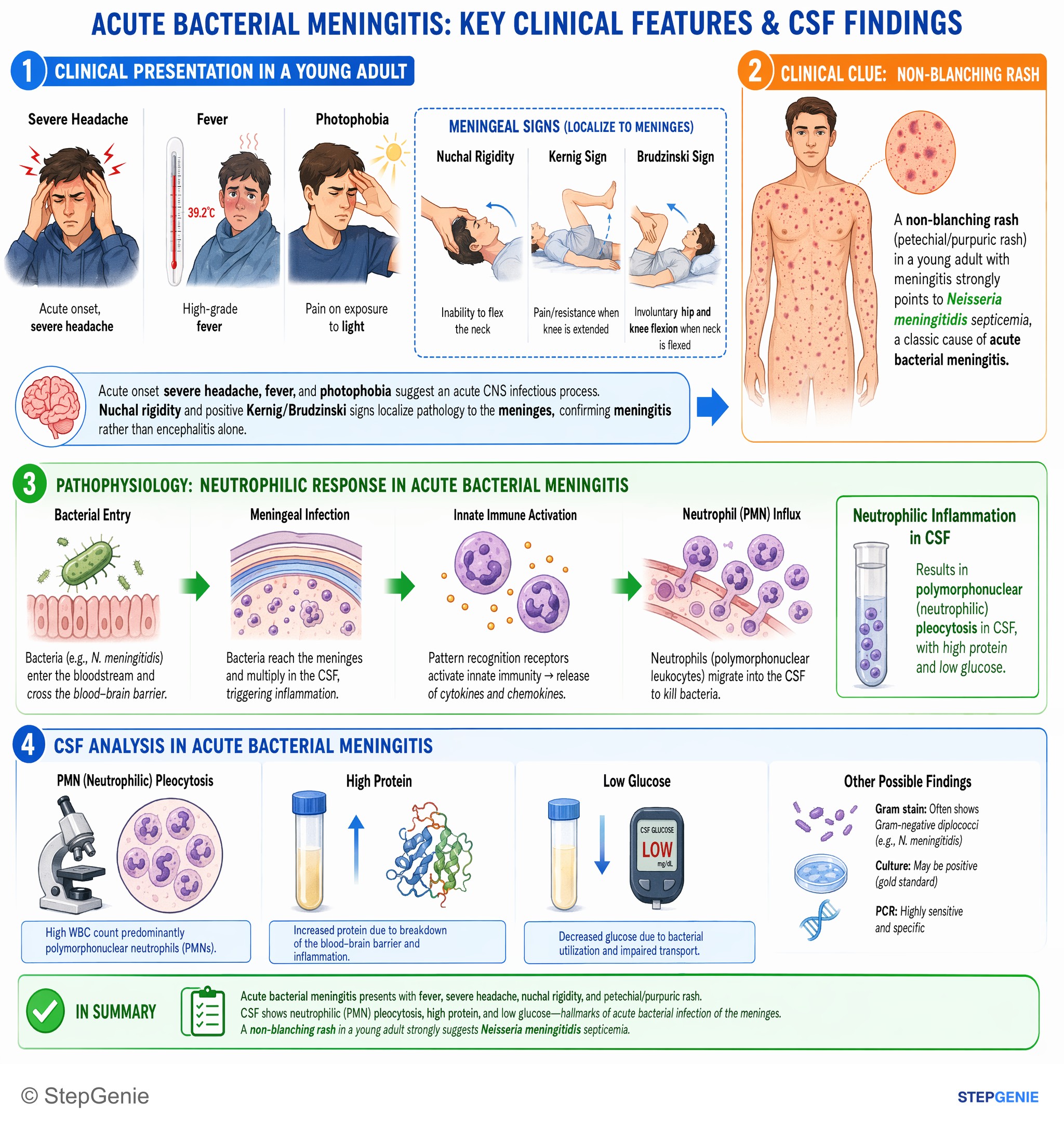
Acute bacterial meningitis presents with fever, nuchal rigidity, petechial/purpuric rash; CSF shows neutrophilic (PMN) pleocytosis, high…
USMLE Step 1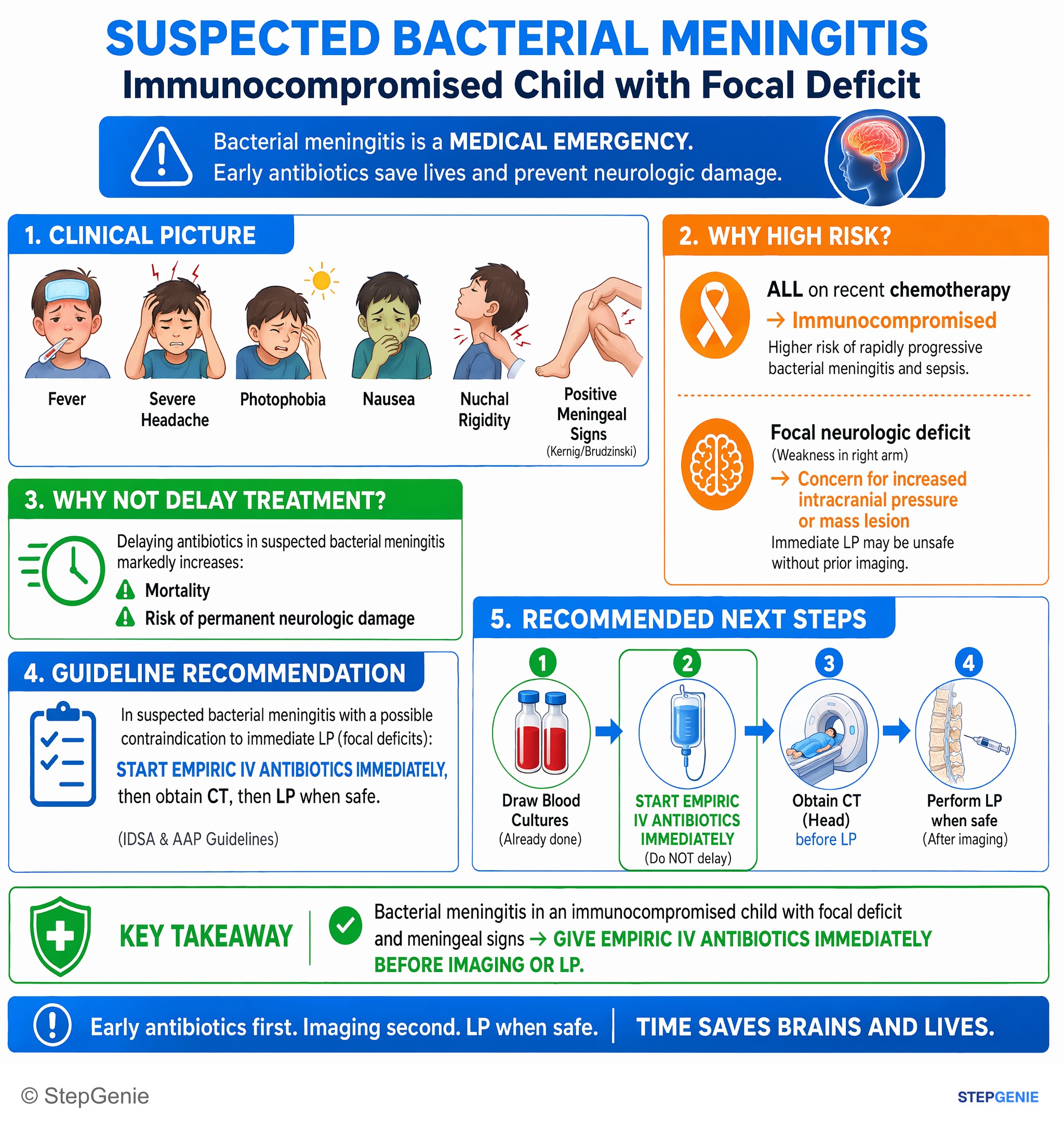
Bacterial meningitis in an immunocompromised child with focal deficit and meningeal signs → give empiric IV antibiotics immediately before…
USMLE Step 2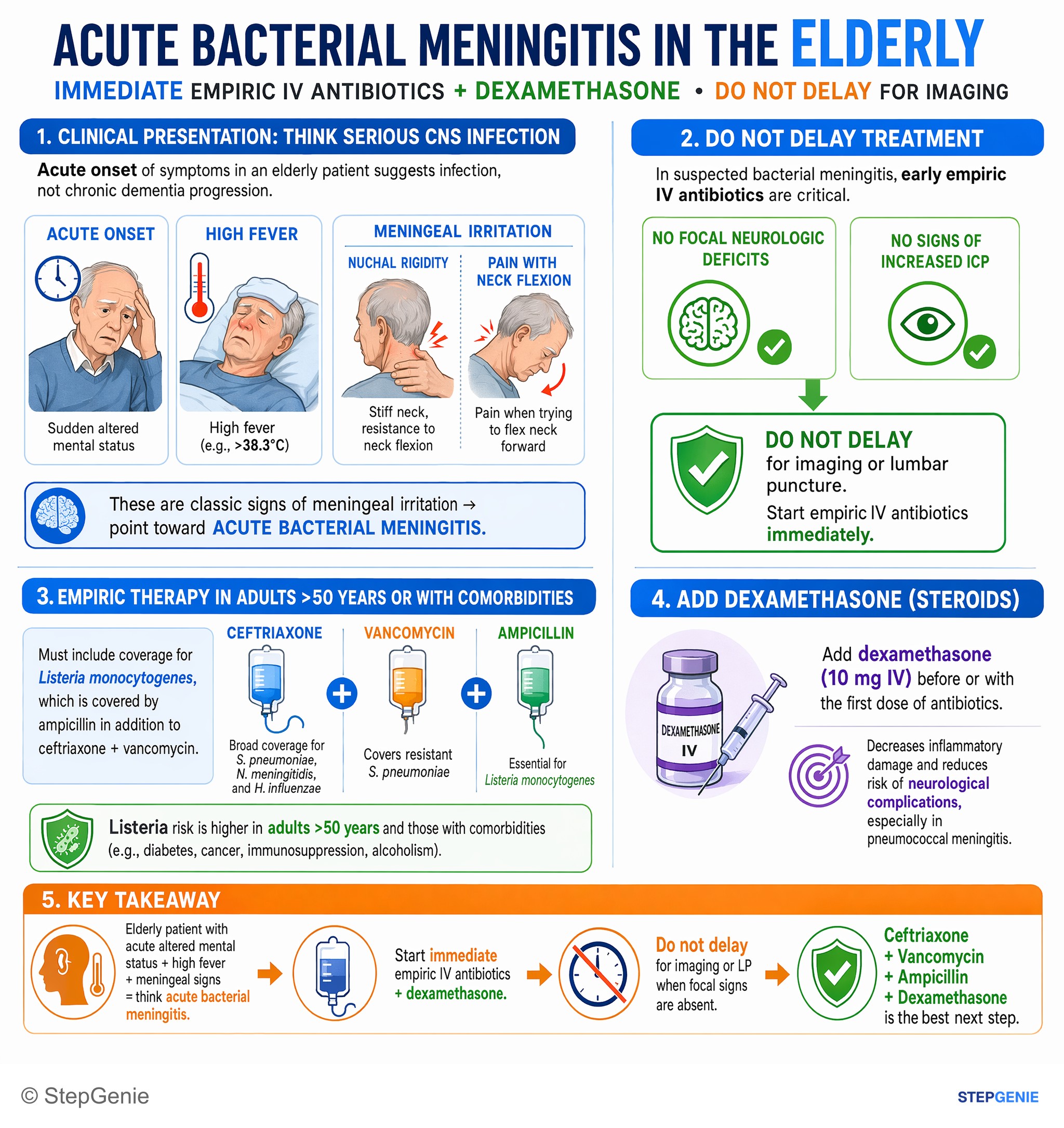
Acute bacterial meningitis in an elderly patient → give immediate empiric IV antibiotics plus dexamethasone; do not delay for imaging when…
USMLE Step 2Frequently Asked Questions
What is the immediate treatment for suspected bacterial meningitis in a college freshman with petechial rash?
The immediate treatment is IV ceftriaxone plus vancomycin plus dexamethasone, given right away. This presentation fits acute bacterial meningitis because the CSF shows elevated opening pressure, neutrophilic pleocytosis, high protein, and low glucose. In an adolescent or young adult, empiric therapy must cover Neisseria meningitidis and Streptococcus pneumoniae, and dexamethasone works best when started before or with the first antibiotic dose.
Why does a petechial rash in a dorm-dwelling patient point to Neisseria meningitidis?
A petechial rash in this setting strongly suggests meningococcemia from Neisseria meningitidis. Dorm or other close-contact living increases meningococcal transmission through respiratory droplets, and the rash reflects endotoxin-mediated vascular injury with risk of DIC. In a toxic-appearing college freshman with rapid-onset fever, headache, neck stiffness, and confusion, that clue helps identify the likely organism while still requiring immediate empiric treatment.
How do you tell bacterial meningitis from viral, TB, or fungal meningitis on CSF studies?
Bacterial meningitis shows elevated opening pressure, predominantly neutrophils, high protein, and low glucose in the CSF. Viral meningitis usually has normal or increased opening pressure, lymphocytic predominance, increased protein, and normal glucose. TB and fungal meningitis also tend to have increased opening pressure, lymphocytes, increased protein, and low glucose. A useful clue is that normal CSF glucose is about two-thirds of the serum glucose.
Why is dexamethasone given before or with antibiotics in bacterial meningitis?
Dexamethasone is given before or with the first antibiotic dose because its benefit depends on early timing. It decreases the inflammatory cytokine response that follows bacterial lysis and helps reduce complications, classically neurologic sequelae such as hearing loss in pneumococcal meningitis. Waiting until cultures return is a mistake because suspected bacterial meningitis should be treated immediately and steroid benefit is greatest early.
Why is rifampin alone not the right treatment for the patient with meningococcal meningitis?
Rifampin alone is not the correct treatment because it is used as chemoprophylaxis for close contacts of meningococcal disease, not as definitive therapy for the infected patient. Close contacts such as roommates, daycare exposures, and people with direct oral secretion exposure may receive rifampin, ciprofloxacin, or ceftriaxone for prophylaxis. The ill patient still needs immediate IV empiric antibiotics and droplet precautions.