You just missed a UWorld question and thought, “Okay, zinc deficiency… but why were those other answers even there?” That’s the right instinct. On Step 1/2, vitamins/cofactors questions are often less about recognizing one buzzword and more about excluding close cousins. Let’s walk through a classic zinc-deficiency vignette, nail the correct answer, and then dissect every distractor like you’d do on review day.
Tag: Biochemistry > Vitamins & Cofactors
The Vignette (Classic Q-bank Style)
A 4-year-old child is brought to clinic for a rash and diarrhea. The family recently immigrated, and the child’s diet is limited. Exam shows erythematous, scaly plaques around the mouth and anus and on the hands/feet. There is alopecia and poor growth. Labs are otherwise unremarkable.
Question: Which nutrient deficiency is most likely responsible?
Correct Answer: Zinc Deficiency
Why this is zinc (the “three D’s” + classic rash distribution)
High-yield zinc deficiency features:
- Dermatitis: classically periorificial (around mouth/anus) and acral (hands/feet)
- Diarrhea
- Alopecia
- Poor wound healing, impaired taste/smell can also appear (hypogeusia/anosmia)
This is essentially the board-style triad many students remember as:
Zinc deficiency → Dermatitis + Diarrhea + Alopecia
Common settings you’re expected to recognize
- Malabsorption (IBD, celiac, chronic diarrhea)
- Chronic alcoholism
- Prolonged parenteral nutrition without supplementation
- Diet low in animal products
- Inherited: Acrodermatitis enteropathica (AR defect in intestinal zinc absorption; typically presents in infants after weaning)
The biochemistry hook: what zinc actually does
Zinc is a cofactor for tons of enzymes, but the most testable associations include:
- DNA/RNA polymerases (growth, development, wound healing)
- Zinc finger transcription factors (gene expression)
- Alkaline phosphatase (a lab association sometimes mentioned)
- Immune function (T-cell function), epithelial barrier integrity
Mechanism link to symptoms: impaired epithelial repair + immune dysfunction → dermatitis, diarrhea, infections; impaired keratinization → alopecia.
How to Crush the Distractors (Why Each Answer Choice Matters)
Below are the most common “near-miss” options that show up alongside zinc in Q-banks, and exactly how to separate them quickly.
Distractor 1: Niacin (Vitamin B3) Deficiency
Why they tempt you: rash + diarrhea overlap.
How to differentiate (Pellagra):
- Pellagra = 3 D’s: Dermatitis, Diarrhea, Dementia (± death)
- Dermatitis is photosensitive, classically on sun-exposed areas (e.g., Casal necklace around the neck)
- Neuro findings (irritability, confusion) are a big clue
Classic settings:
- Hartnup disease (↓ tryptophan absorption)
- Carcinoid syndrome (tryptophan shunted to serotonin)
- Isoniazid can indirectly contribute via B6 issues affecting tryptophan metabolism (test-dependent)
Bottom line: If the vignette emphasizes photosensitivity + neuro symptoms → think niacin, not zinc.
Distractor 2: Biotin (Vitamin B7) Deficiency
Why they tempt you: dermatitis + alopecia overlap.
How to differentiate:
- Biotin deficiency causes:
- Dermatitis
- Alopecia
- Enteritis (sometimes diarrhea)
- Big historical clue: raw egg whites (avidin binds biotin) or long-term antibiotics (gut flora make biotin)
Biochem association you must know: Biotin is a cofactor for carboxylases:
- Pyruvate carboxylase
- Acetyl-CoA carboxylase
- Propionyl-CoA carboxylase
- Methylcrotonyl-CoA carboxylase
Bottom line: If the question pivots to carboxylation reactions or raw egg whites → pick biotin.
Distractor 3: Essential Fatty Acid (EFA) Deficiency
Why they tempt you: dermatitis and poor growth can overlap.
How to differentiate:
- EFA deficiency causes:
- Dry, scaly dermatitis
- Alopecia
- Thrombocytopenia
- Poor wound healing
- ± growth retardation
- Seen in fat malabsorption or long-term TPN without lipid emulsions
Board buzz phrase: “Fish-like” scaling and generalized dry skin rather than the periorificial/acral pattern of zinc.
Bottom line: If TPN is mentioned, ask: did they omit lipids (EFA) or trace elements (zinc)?
Distractor 4: Vitamin A Deficiency
Why they tempt you: epithelial issues, rash-ish descriptions, malnutrition.
How to differentiate:
- Key findings:
- Night blindness
- Xerophthalmia
- Bitot spots
- Keratomalacia
- Epithelial dysfunction is real, but the eye findings are what Step loves.
Bottom line: If the stem lingers on vision or eye exam → vitamin A.
Distractor 5: Vitamin C Deficiency (Scurvy)
Why they tempt you: poor wound healing and dermatitis-like skin findings.
How to differentiate:
- Scurvy causes impaired collagen hydroxylation →
- Bleeding gums
- Perifollicular hemorrhages
- Petechiae/ecchymoses
- Corkscrew hairs
- Poor wound healing
Bottom line: If it’s “rash” + bleeding + gum findings → vitamin C.
Distractor 6: Vitamin B6 (Pyridoxine) Deficiency
Why they tempt you: dermatitis is on the list, and malnutrition/alcoholism overlaps.
How to differentiate:
- B6 deficiency causes:
- Peripheral neuropathy
- Seizures (↓ GABA)
- Sideroblastic anemia (↓ ALA synthase)
- Cheilosis/glossitis ± dermatitis
- Classic cause: isoniazid (also hydralazine, penicillamine, OCPs)
Bottom line: If the vignette includes neuropathy, seizures, or microcytic anemia with ring sideroblasts → B6.
One Table to Lock It In (Zinc vs Look-Alikes)
| Deficiency | Key Clues | Rash Pattern | Other Hallmarks | High-Yield Association |
|---|---|---|---|---|
| Zinc | Diarrhea + alopecia + poor growth | Periorificial + acral | impaired wound healing, hypogeusia | Acrodermatitis enteropathica, malabsorption, TPN |
| Niacin (B3) | Diarrhea + neuro | Photosensitive | Dementia | Hartnup, carcinoid |
| Biotin (B7) | Raw eggs, antibiotics | Variable | alopecia, enteritis | Carboxylase cofactor |
| EFA | Fat malabsorption/TPN without lipids | Dry, scaly | thrombocytopenia | Linoleic/linolenic deficiency |
| Vit A | Eye symptoms | Dryness | night blindness | Bitot spots |
| Vit C | Bleeding | Perifollicular | corkscrew hair | Collagen hydroxylation |
| Vit B6 | INH, neuropathy | Variable | seizures, sideroblastic anemia | ALA synthase, transamination |
Test-Day Pattern Recognition (Rapid-Fire Rules)
- Perioral/perianal + acral dermatitis + diarrhea + alopecia → Zinc
- Photosensitive dermatitis + diarrhea + dementia → Niacin (B3)
- Dermatitis + alopecia + raw eggs/antibiotics → Biotin (B7)
- Bleeding gums + perifollicular hemorrhage → Vitamin C
- Night blindness → Vitamin A
Quick Bonus: Acrodermatitis Enteropathica (Worth 1–2 Extra Points)
If the question specifies an infant with similar findings after weaning (stops getting zinc from breast milk), think:
- AR mutation affecting intestinal zinc absorption (often referenced as ZIP4 transporter)
- Treatment is lifelong zinc supplementation
- Presentation: periorificial/acral dermatitis, diarrhea, alopecia, irritability, failure to thrive
Takeaway
Zinc deficiency is a favorite because it’s clinically vivid and biochemically grounded—but the real score boost comes from being able to say: “This is zinc, and here’s why it’s not niacin/biotin/EFA.” If you can verbalize the pattern (periorificial/acral + diarrhea + alopecia), you’ll win these questions even when the stem is trying to distract you with malnutrition and nonspecific dermatitis.
Visual explanations from the StepGenie QBank
Infographics StepGenie drew to explain questions in its own QBank, matched to this article's topic. Each caption is the takeaway of the question it explains.
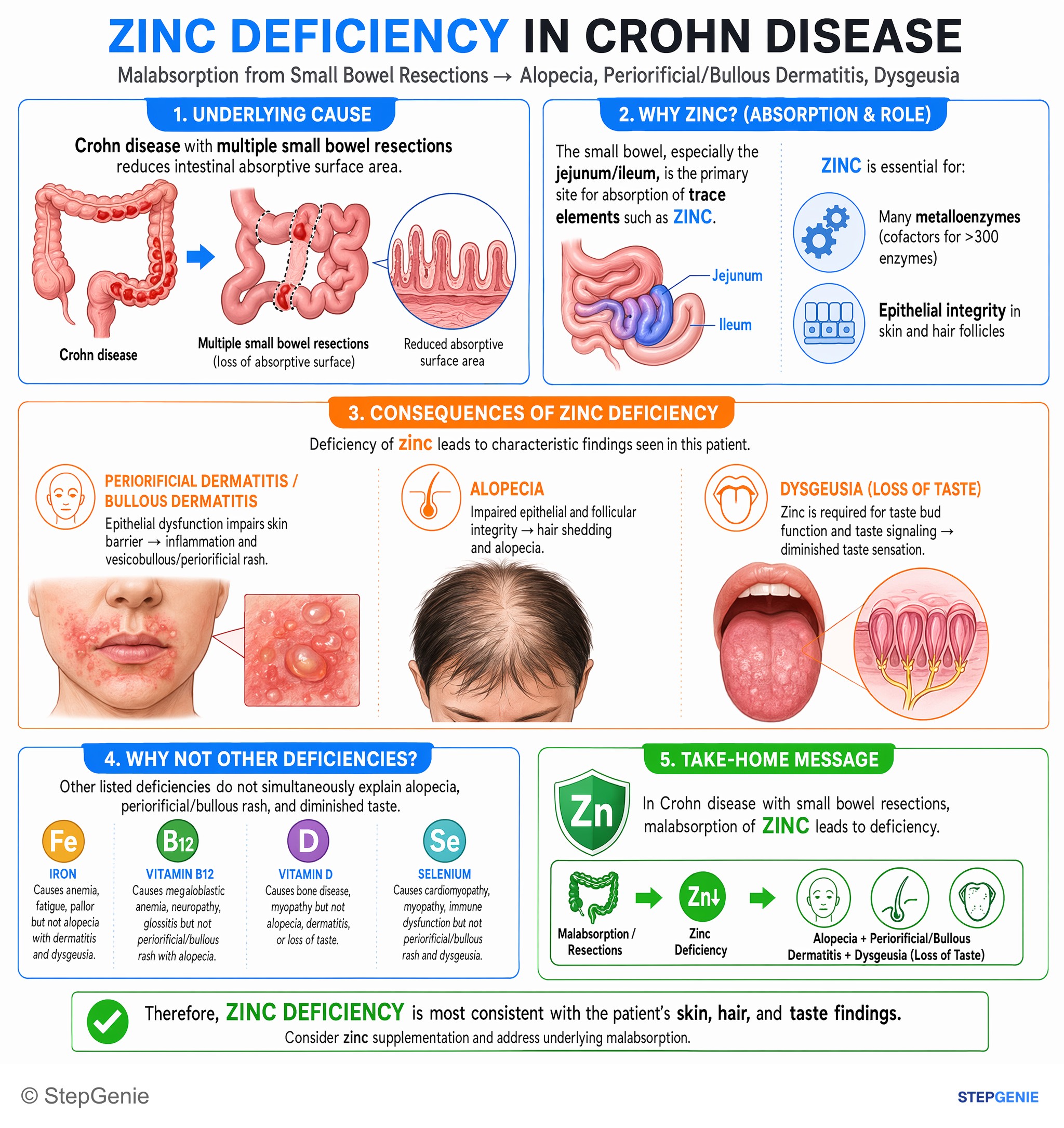
Zinc deficiency from malabsorption/resections in Crohn disease causes alopecia, periorificial/bullous dermatitis, and dysgeusia (loss of…
USMLE Step 1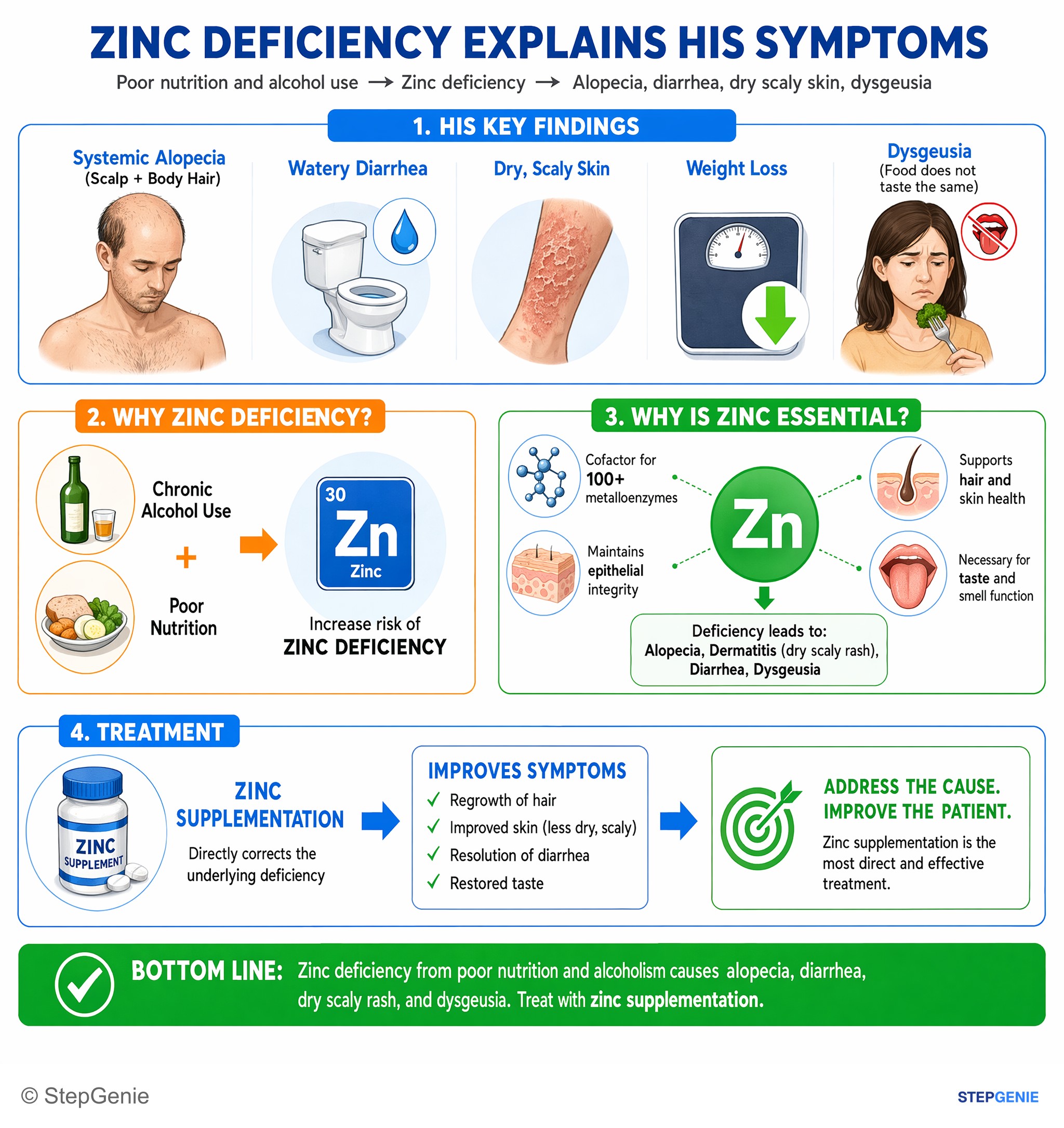
Zinc deficiency from poor nutrition/alcoholism causes alopecia, diarrhea, dry scaly rash, dysgeusia; treat with zinc supplementation.
USMLE Step 2Frequently Asked Questions
What are the classic signs of zinc deficiency on USMLE-style questions?
The classic presentation is dermatitis, diarrhea, and alopecia. The dermatitis is especially high-yield because it is typically periorificial around the mouth and anus and acral on the hands and feet. Poor growth also supports the diagnosis, and some patients can have poor wound healing or impaired taste and smell due to zinc’s role in epithelial integrity and enzyme function.
How do you tell zinc deficiency from niacin deficiency when both cause rash and diarrhea?
Zinc deficiency is favored when the rash is periorificial and acral with alopecia, while niacin deficiency is favored when the dermatitis is photosensitive and accompanied by neuro symptoms. Pellagra from niacin deficiency is remembered as dermatitis, diarrhea, and dementia, often with sun-exposed lesions such as a Casal necklace, so photosensitivity and confusion point away from zinc.
How do you differentiate zinc deficiency from biotin deficiency?
Zinc deficiency is more likely when a child has the triad of dermatitis, diarrhea, and alopecia with the classic periorificial and acral rash pattern. Biotin deficiency can also cause dermatitis and alopecia, sometimes with enteritis, but the strongest clues are a history of raw egg white ingestion or long-term antibiotics, or a question focused on carboxylase-dependent reactions.
What causes the symptoms of zinc deficiency?
Zinc deficiency causes symptoms because zinc is a cofactor for many important enzymes and transcription factors. It is associated with DNA and RNA polymerases, zinc finger transcription factors, alkaline phosphatase, immune function, and epithelial barrier integrity. Impaired epithelial repair and immune dysfunction contribute to dermatitis, diarrhea, and infections, while impaired keratinization helps explain alopecia.
What clinical settings should make you think of zinc deficiency?
Think of zinc deficiency in malabsorption states, chronic alcoholism, prolonged parenteral nutrition without supplementation, diets low in animal products, and inherited acrodermatitis enteropathica. Acrodermatitis enteropathica is an autosomal recessive defect in intestinal zinc absorption that typically presents in infants after weaning, making that age and feeding transition a useful clue.