Pompe disease (glycogen storage disease type II, acid maltase deficiency) is an autosomal recessive deficiency of lysosomal acid α-glucosidase (GAA), so glycogen piles up inside the lysosomes of cardiac, skeletal and respiratory muscle. The classic infant has massive cardiomegaly from hypertrophic cardiomyopathy, profound hypotonia and macroglossia and, untreated, usually dies of cardiorespiratory failure in the first 1 to 2 years; late-onset Pompe has no cardiomyopathy and causes progressive limb-girdle and diaphragm weakness. Treatment is enzyme replacement therapy (ERT), and the fastest hook is "Pompe trashes the Pump."
The POMPE mnemonic, decoded
| Letter | Stands for | What to know | Classic stem clue |
|---|---|---|---|
| P | Pump | Hypertrophic cardiomyopathy with cardiomegaly, usually evident in the first weeks to months of life; ECG shows a short PR interval and very tall QRS complexes | A weak 3-month-old whose chest x-ray shows a huge heart |
| O | Organelle: the lysosome | The glycogen storage disease that is also a lysosomal storage disease; GAA works inside lysosomes | Muscle biopsy with vacuoles that stain positive for glycogen |
| M | Maltase missing → Muscles and Macroglossia | Acid maltase is another name for GAA; "floppy infant," large protruding tongue, moderate hepatomegaly, high CK | Hypotonic infant with a big tongue who feeds poorly |
| P | Pulmonary failure | Diaphragm and intercostal weakness; respiratory insufficiency is the main cause of illness and death in late-onset disease | Adult with hip-girdle weakness plus orthopnea or sleep apnea |
| E | Enzyme replacement | IV recombinant GAA every 2 weeks, taken into cells through mannose-6-phosphate receptors; newborn screening allows an early start | "Which treatment slows progression?" |
Picture it: a floppy baby straining to lift a giant heart-shaped pump stuffed with sugar cubes, tongue out with the effort. The first and fourth letters of P-o-m-P-e are both P, for Pump.
Place it among the glycogen storage diseases: "Very Poor Carbohydrate Metabolism" gives types I, II, III and V in order: von Gierke, Pompe, Cori, McArdle. Type IV is Andersen disease.
Why glycogen gets stuck
- Most glycogen is broken down in the cytosol by glycogen phosphorylase and debranching enzyme. Some glycogen is also delivered to lysosomes, where acid α-glucosidase breaks it down to glucose.
- Without GAA, glycogen accumulates in lysosomes and disrupts muscle cells. The heart, skeletal muscle and respiratory muscles are hit hardest; the liver and nervous system are also involved.
- Residual enzyme activity sets the phenotype. Classic infantile disease has absent or markedly deficient GAA; childhood and adult forms keep some residual activity.
- Blood glucose is not the problem. Hypoglycemia is not a hallmark of Pompe: lysosomal glycogen breakdown contributes little to blood glucose, and the cytosolic enzymes that release glucose from liver glycogen still work. Fasting hypoglycemia with lactic acidosis points to von Gierke disease, not Pompe.
Infantile-onset vs late-onset Pompe
| Feature | Classic infantile-onset (IOPD) | Late-onset (LOPD) |
|---|---|---|
| Definition | Onset before 12 months with cardiomyopathy | Onset before or after 12 months, without cardiomyopathy |
| Typical age | Within the first few months of life | Anywhere from the first to the seventh decade |
| GAA activity | Absent or markedly deficient | Some residual activity |
| Heart | Hypertrophic cardiomyopathy, cardiomegaly, heart failure; short PR, very tall QRS | No cardiomyopathy; significant conduction defects are uncommon; some adults develop arteriopathy such as thoracic aortic dilation |
| Skeletal muscle | Profound generalized hypotonia and weakness | Progressive proximal weakness, mainly legs and trunk; scoliosis is frequent |
| Breathing and feeding | Respiratory distress, feeding difficulty, failure to thrive | Diaphragm weakness: orthopnea, sleep apnea, eventual respiratory failure |
| Tongue and liver | Macroglossia, moderate hepatomegaly | Not part of the classic picture |
| Untreated course | Death usually in the first 1 to 2 years from cardiorespiratory failure | Slowly progressive; respiratory failure drives the outcome |
MedlinePlus also describes a non-classic infantile form, usually apparent by age 1, with delayed motor skills, progressive weakness and an enlarged heart that typically does not cause heart failure; untreated, most of these children live only into early childhood.
Diagnosis and newborn screening
- Newborn screening: Pompe is on the federal Recommended Uniform Screening Panel (RUSP), the list HHS recommends to state programs. Screening measures GAA enzyme activity in dried blood spots.
- Confirmation: deficient GAA activity (for example in leukocytes) plus biallelic pathogenic GAA variants. Pseudodeficiency alleles lower measured activity without causing disease, so a low screening result is not a diagnosis.
- Supporting labs: CK is elevated, most of all in infantile-onset disease (as high as about 2,000 IU/L); urinary glucose tetrasaccharide (Hex4) is a highly sensitive marker in IOPD.
- Infant cardiac workup: chest x-ray (cardiomegaly), ECG (short PR, very tall QRS) and echocardiogram (hypertrophic cardiomyopathy).
- Muscle biopsy, when done, shows vacuoles that stain positive for glycogen.
- Screening also finds late-onset disease, often in babies who will have no symptoms for years; the urgent job is to identify the infantile-onset cases, who need ERT right away.
Treatment: enzyme replacement therapy
| Drug (US brand) | FDA-labeled use | High-yield detail |
|---|---|---|
| Alglucosidase alfa (Lumizyme) | Pompe disease (GAA deficiency); used in infantile- and late-onset disease | The first Pompe ERT (first FDA approval 2006; the Lumizyme label dates from 2010); 20 mg/kg IV every 2 weeks |
| Avalglucosidase alfa-ngpt (Nexviazyme) | Late-onset Pompe disease, age 1 year and older | Approved in 2021; mannose-6-phosphate (M6P) glycans give high-affinity receptor binding |
| Cipaglucosidase alfa-atga (Pombiliti) + miglustat (Opfolda) | Adults with late-onset Pompe disease weighing at least 40 kg who are not improving on their current ERT | Approved in 2023; oral miglustat binds and stabilizes the infused enzyme in the blood and has no glycogen-cleaving activity of its own |
- How ERT gets in: each enzyme binds M6P receptors on the cell surface and is carried to lysosomes. It is the same M6P address tag that lysosomal enzymes never receive in I-cell disease (mucolipidosis II), where the enzymes end up outside the cell.
- Start early: ERT should begin as soon as infantile-onset or symptomatic Pompe disease is diagnosed.
- CRIM-negative infants (no detectable endogenous GAA protein) develop high, sustained anti-drug antibodies and respond poorly, so they need immune tolerance induction with regimens that include drugs such as rituximab, methotrexate, mycophenolate or sirolimus.
- Boxed warnings on all three enzymes: severe hypersensitivity reactions including anaphylaxis, and risk of acute cardiorespiratory failure in susceptible patients, so infusions are given with appropriate medical monitoring.
Mimics and exam traps
| If the stem shows... | Think | Why it is not Pompe |
|---|---|---|
| Floppy infant with tongue fasciculations and hyporeflexia | Spinal muscular atrophy type 1 (SMN1) | Anterior horn cell degeneration; no hypertrophic cardiomyopathy or macroglossia |
| Infant with fasting hypoglycemia, lactic acidosis and a big liver | von Gierke disease (GSD I) | Glucose-6-phosphatase deficiency; a liver disease, not a heart and muscle disease |
| Infant with hypoglycemia, high blood lipids and raised liver enzymes; myopathy later | Cori disease (GSD III) | Debranching enzyme deficiency leaves partially broken-down glycogen in the cytosol |
| Teen or young adult with exercise cramps, red-brown urine and a "second wind" | McArdle disease (GSD V) | Myophosphorylase deficiency; episodic exercise intolerance and rhabdomyolysis, no infant cardiomegaly |
| Child with progressive cirrhosis | Andersen disease (GSD IV) | Branching enzyme deficiency; a liver disease |
| Adult with slowly progressive hip-girdle weakness | Late-onset Pompe vs limb-girdle muscular dystrophy, polymyositis, dystrophinopathy | Respiratory muscle weakness is a hallmark of Pompe; GAA activity and GAA testing decide |
- The heart defines the infantile form. Late-onset disease is defined by the absence of cardiomyopathy, so the adult stem is about weak hips and a weak diaphragm, not a big heart.
- Pompe (II) is not McArdle (V). Both are "muscle" glycogen storage diseases, but Pompe is lysosomal, with fixed weakness (plus cardiomyopathy in infants); McArdle is cytosolic, with exercise-triggered cramps and myoglobinuria.
- Lysosomal, but not a sphingolipidosis. Compare the lipid-storage diseases, such as the foam cells of Niemann-Pick disease; Pompe stores glycogen.
Practice question
Vignette. A 3-month-old girl is brought to the emergency department with poor feeding and rapid breathing. For several weeks she has tired and sweated during feeds. She is markedly hypotonic, has a large protruding tongue and a liver edge 3 cm below the right costal margin; there are no tongue fasciculations. Chest x-ray shows massive cardiomegaly, the ECG shows a short PR interval with very tall QRS complexes, and echocardiography shows severe hypertrophic cardiomyopathy. Serum creatine kinase is elevated and blood glucose is normal. Deficiency of which of the following is the most likely cause?
- A. Glucose-6-phosphatase
- B. Glycogen debranching enzyme
- C. Lysosomal acid α-glucosidase
- D. Myophosphorylase
- E. Survival motor neuron (SMN) protein
Answer: C. Hypertrophic cardiomyopathy with cardiomegaly, hypotonia, macroglossia and hepatomegaly in a young infant is classic infantile-onset Pompe disease, and the ECG pattern and high CK fit. Confirm with GAA enzyme activity and GAA genetic testing, check CRIM status, and start ERT as soon as the diagnosis is established.
Why the others are wrong:
- A (von Gierke): severe fasting hypoglycemia, lactic acidosis and hepatomegaly; this infant's glucose is normal and the problem is the heart and muscles.
- B (Cori): infants present liver-first, with hypoglycemia, high blood lipids and raised liver enzymes; in type IIIa, muscle weakness develops later in life and the heart may be involved. A normal glucose and a floppy infant with macroglossia argue against it.
- D (McArdle): exercise-triggered cramps, rhabdomyolysis and myoglobinuria, usually beginning in adolescence or early adulthood; no infant cardiomegaly.
- E (SMA type 1): also a floppy infant, but with tongue fasciculations and hyporeflexia from anterior horn cell loss, and without hypertrophic cardiomyopathy or macroglossia.
Key takeaways
- Pompe = GSD II = lysosomal acid α-glucosidase (acid maltase) deficiency, autosomal recessive (GAA).
- POMPE: Pump (cardiomegaly, short PR, very tall QRS), Organelle (lysosome), Maltase missing (Muscle weakness, Macroglossia), Pulmonary failure, Enzyme replacement.
- Classic infantile: cardiomegaly + hypotonia + macroglossia + hepatomegaly; usually fatal in the first 1 to 2 years without treatment.
- Late-onset: no cardiomyopathy; proximal limb-girdle and diaphragm weakness; respiratory failure drives the outcome.
- ERT: alglucosidase alfa; avalglucosidase alfa-ngpt (late-onset, age 1 year and older); cipaglucosidase alfa-atga + miglustat (adults of at least 40 kg with late-onset disease not improving on ERT). CRIM-negative infants need immune tolerance induction.
- Screening: Pompe is on the RUSP; dried blood spot GAA activity, confirmed by GAA genetic testing; beware pseudodeficiency alleles.
Sources
- Pompe disease — MedlinePlus Genetics, National Library of Medicine
- Pompe Disease — GeneReviews, NCBI Bookshelf (last update 2025)
- Pompe disease diagnosis and management guideline — ACMG Work Group, Genetics in Medicine (2006)
- Pompe Disease — National Organization for Rare Disorders (NORD)
- Glycogen storage disease due to acid maltase deficiency — Orphanet
- Ellingwood SS, Cheng A. Biochemical and clinical aspects of glycogen storage diseases — Journal of Endocrinology (2018)
- Glycogen Storage Diseases — Merck Manual Professional Edition
- Lumizyme (alglucosidase alfa) prescribing information — DailyMed, NLM
- Nexviazyme (avalglucosidase alfa-ngpt) prescribing information — DailyMed, NLM
- Pombiliti (cipaglucosidase alfa-atga) prescribing information — DailyMed, NLM
- Opfolda (miglustat) prescribing information — DailyMed, NLM
- Recommended Uniform Screening Panel — Health Resources and Services Administration (HRSA)
Visual explanations from the StepGenie QBank
Infographics StepGenie drew to explain questions in its own QBank, matched to this article's topic. Each caption is the takeaway of the question it explains.
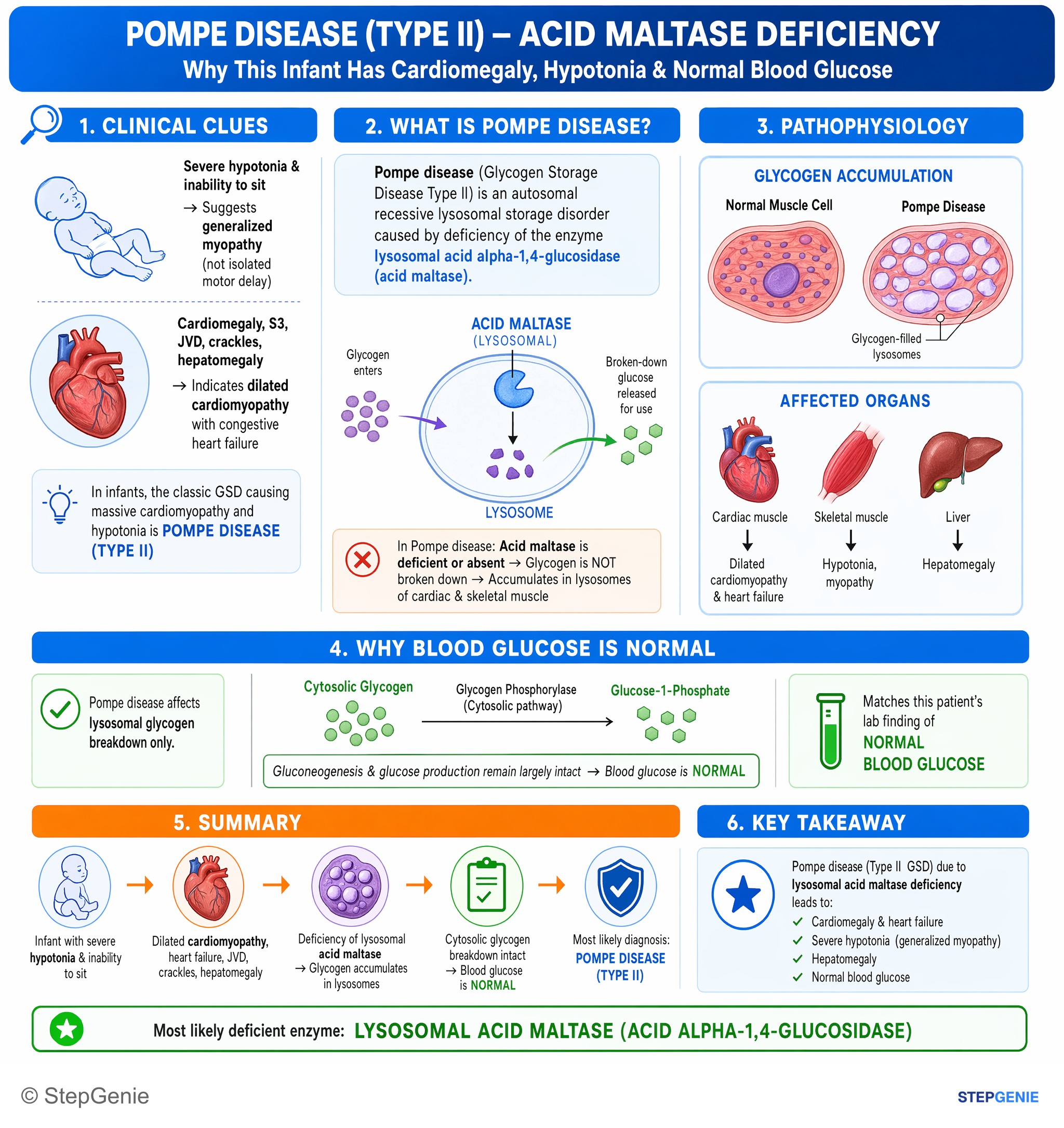
Pompe disease (type II glycogen storage disease) due to acid maltase deficiency → cardiomegaly, heart failure, hypotonia, normal blood…
USMLE Step 1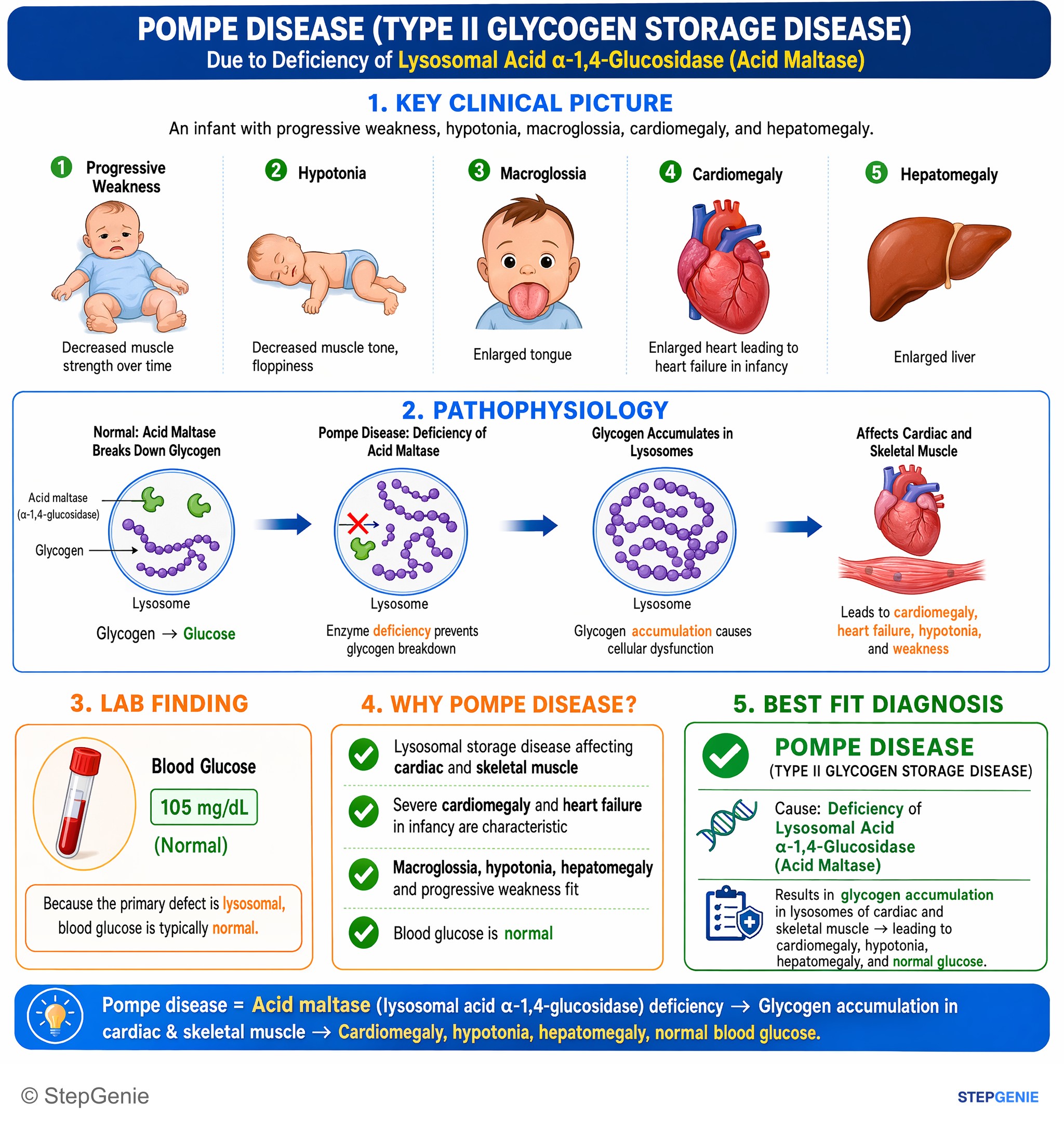
Pompe disease (type II glycogen storage disease) from acid maltase (lysosomal acid α-1,4-glucosidase) deficiency → cardiomegaly…
USMLE Step 1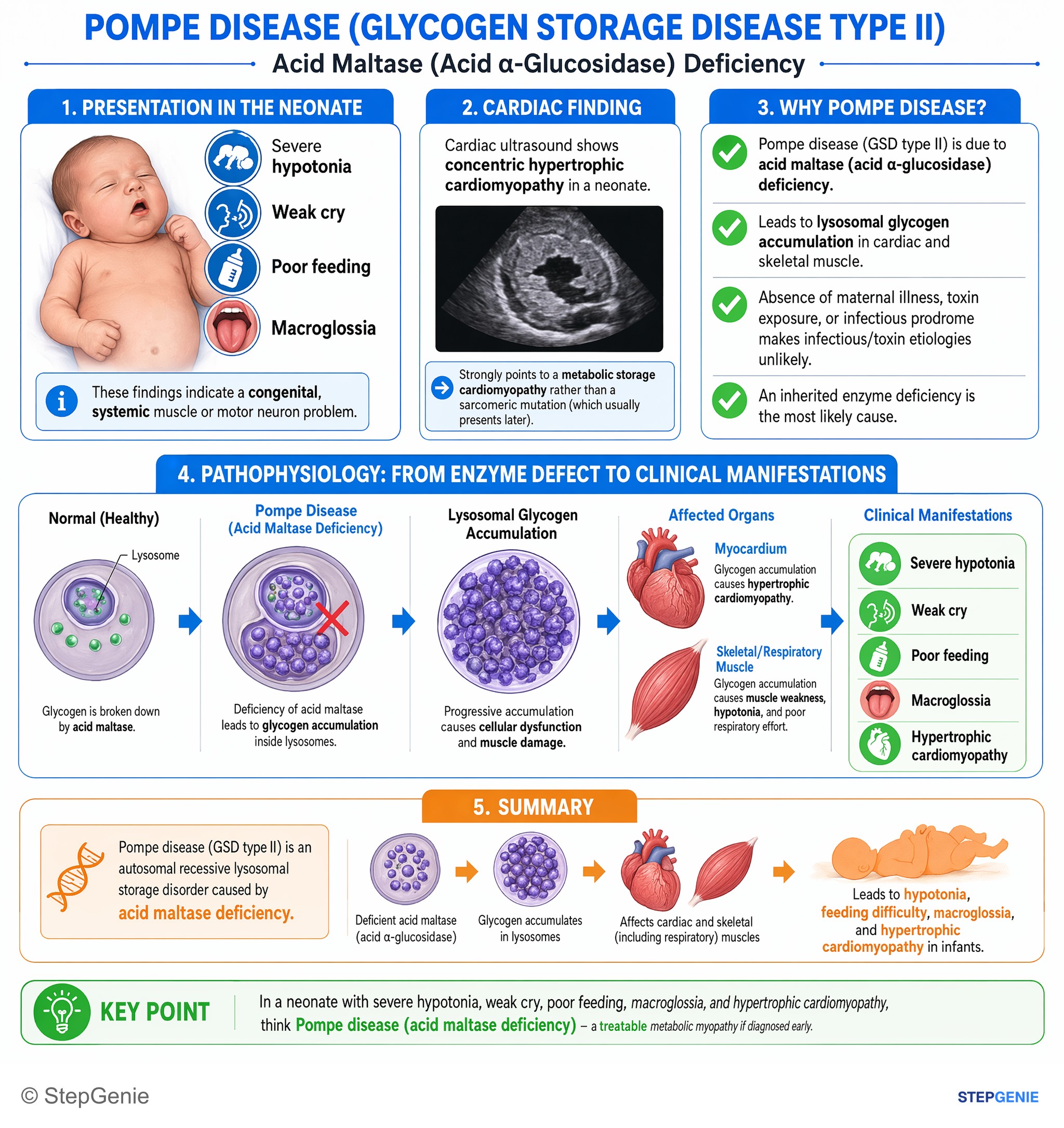
Pompe disease (acid maltase/acid α-glucosidase deficiency) → glycogen accumulation in lysosomes → hypotonia, feeding difficulty…
USMLE Step 1Frequently Asked Questions
What is a good mnemonic for Pompe disease?
The quickest is "Pompe trashes the Pump": the first and fourth letters of Pompe are both P, for the heart that fails in infants. The POMPE mnemonic adds the rest: Pump (hypertrophic cardiomyopathy), Organelle (the lysosome), Maltase missing with Muscle weakness and Macroglossia, Pulmonary failure from respiratory muscle weakness, and Enzyme replacement therapy.
What enzyme is deficient in Pompe disease?
Pompe disease is caused by deficiency of acid alpha-glucosidase (GAA), also called acid maltase, a lysosomal enzyme that breaks glycogen down to glucose. It results from biallelic variants in the GAA gene and is inherited in an autosomal recessive pattern. Without the enzyme, glycogen accumulates inside lysosomes, especially in heart, skeletal and respiratory muscle.
What is the difference between infantile-onset and late-onset Pompe disease?
Infantile-onset Pompe disease starts in the first months of life with hypertrophic cardiomyopathy, profound hypotonia, macroglossia and hepatomegaly, and without treatment it is usually fatal in the first 1 to 2 years. Late-onset Pompe disease has no cardiomyopathy and causes slowly progressive proximal limb-girdle weakness and diaphragm weakness, with onset anywhere from childhood to late adulthood. Respiratory failure is the main cause of illness and death in the late-onset form.
What is the treatment for Pompe disease?
Treatment is enzyme replacement therapy with recombinant acid alpha-glucosidase, infused intravenously every other week. FDA-approved options are alglucosidase alfa (Lumizyme) for Pompe disease, avalglucosidase alfa-ngpt (Nexviazyme) for late-onset disease in patients 1 year and older, and cipaglucosidase alfa-atga (Pombiliti) with oral miglustat (Opfolda) for adults with late-onset disease who weigh at least 40 kg and are not improving on their current enzyme therapy. CRIM-negative infants also need immune tolerance induction because they form high, sustained antibodies against the enzyme.
Is Pompe disease included in newborn screening?
Yes. Pompe disease is on the US Recommended Uniform Screening Panel, the list HHS recommends to state newborn screening programs, and screening measures acid alpha-glucosidase activity in dried blood spots. A low result must be confirmed with enzyme and GAA genetic testing, because pseudodeficiency alleles can lower measured activity without causing disease, and screening also detects late-onset forms that may not cause symptoms for years.
Why does Pompe disease cause cardiomegaly but not hypoglycemia?
Pompe disease blocks glycogen breakdown inside lysosomes, and glycogen-filled lysosomes disrupt cardiac and skeletal muscle cells, causing hypertrophic cardiomyopathy and weakness. Hypoglycemia is not a hallmark, because lysosomal glycogen breakdown contributes little to blood glucose and the cytosolic enzymes that release glucose from liver glycogen during fasting still work. Fasting hypoglycemia with lactic acidosis and hepatomegaly points instead to von Gierke disease.